
Bodybuilding vs. Functional Fitness: Which Arm Position Wins?
Bodybuilding vs Functional Fitness: Discover which arm positioning boosts strength, mobility & performance, choose the right fit!

Bodybuilding vs Functional Fitness: Discover which arm positioning boosts strength, mobility & performance, choose the right fit!

Lateral raise machines: bent vs straight arm? Learn optimal form, muscle targeting, and pro tips to boost fitness safely.

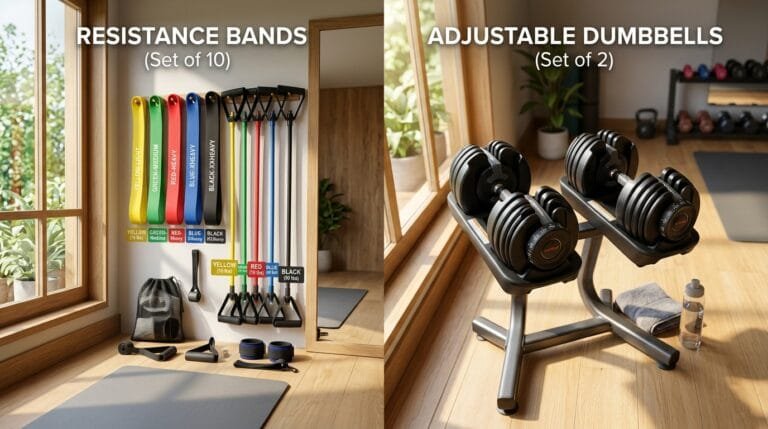
Discover how resistance‑band lateral raises and varied arm angles enhance strength, stability & mobility, for beginners, fitness buffs & rehab.

Compare dumbbells and cables for arm raises, find out what’s best for beginners, strength buffs, and physical therapy

Quick answer: Population-level research (EMG studies, activation data) can tell you general tendencies, but a growing body of research on individual variability shows people respond quite differently to the same training stimulus. Rather than treating “bent vs. straight” as a…

Quick answer: Research directly comparing shoulder press and lateral raise EMG activation found both exercises produce meaningfully high medial deltoid activation — close enough that some lifters question whether dedicated lateral raise work is really needed if they’re already pressing…

Many lifters grind through set after set, only to see minimal progress. But here’s the kicker: the problem might not be your effort, it’s your form.

Quick answer: Push exercises move resistance away from your body (bench press, overhead press, triceps extensions), training muscles responsible for extension. Pull exercises move resistance toward your body (rows, pull-ups, curls), training muscles responsible for flexion and retraction. Balancing both…

Quick answer: You can absolutely build and strengthen your biceps and triceps with targeted exercises, and doing so changes how your arms look and feel. What exercise can’t do is selectively burn fat from just your arms — research consistently…

Quick answer: Training the same muscles daily without adequate recovery can lead to a condition called overtraining syndrome — marked by persistent fatigue, declining performance despite continued effort, mood disturbances, and increased injury risk. Research consistently shows that recovery time…