Electrolyte Needs When You Sweat Heavily in a Hot Garage Gym
Quick Answer
When you sweat heavily in a hot garage gym, electrolyte replacement—especially sodium—becomes important for maintaining performance, preventing excessive fatigue, and reducing the risk of cramps or light-headedness. Plain water is often insufficient once sweat losses are high. Aim to replace fluid regularly and include sodium (and to a lesser extent potassium and magnesium) through electrolyte drinks, salted foods, or supplements. Individual sweat rates and sodium concentrations vary, so adjust based on session length, intensity, visible salt on clothing, and how you feel.
Why Hot Garage Gyms Increase Electrolyte Demands
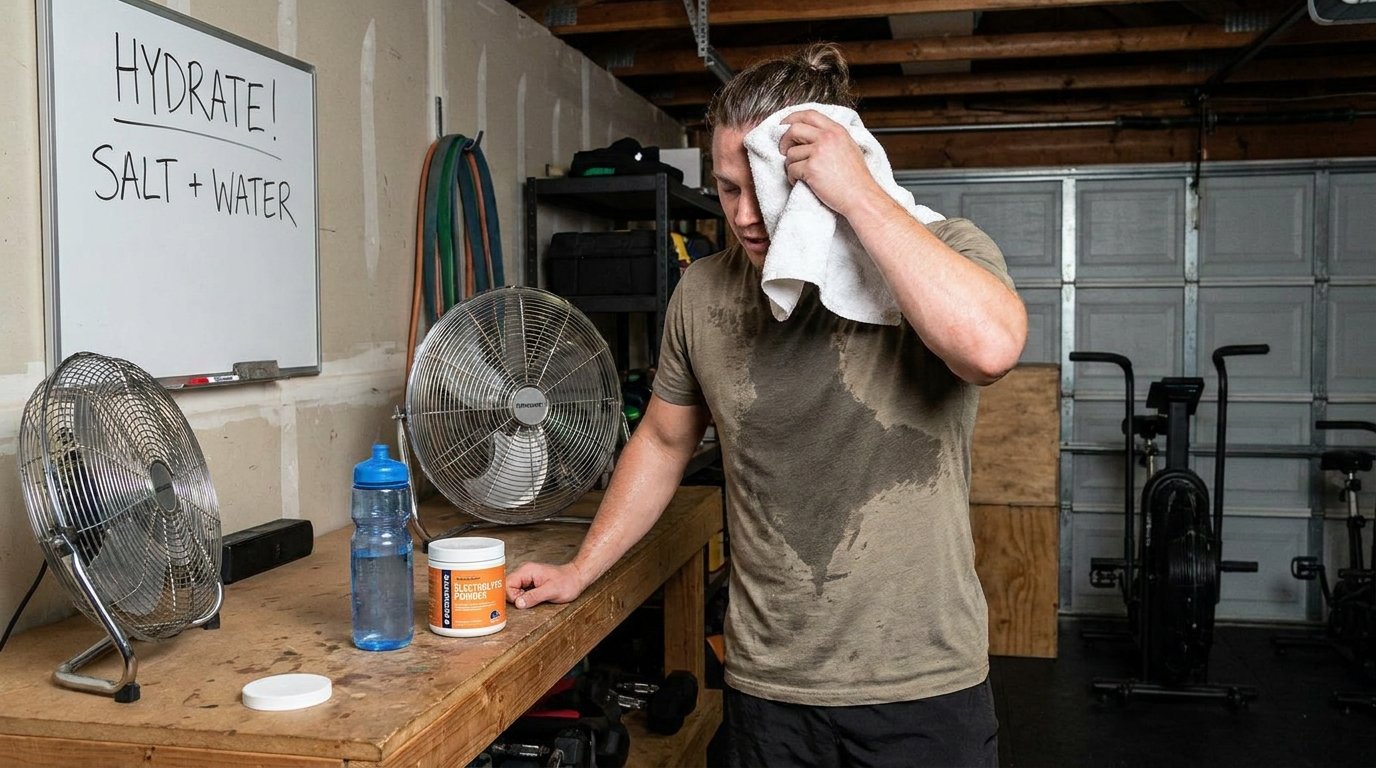
Garage gyms frequently reach temperatures well above indoor climate-controlled spaces. Higher ambient heat and humidity increase sweat rate. Sweat contains water plus electrolytes—primarily sodium, with smaller amounts of potassium, magnesium, and calcium. When sweat losses climb, failing to replace both fluid and sodium can impair performance, elevate perceived effort, and in some cases contribute to muscle cramps or feelings of weakness. Home trainees often underestimate these losses because they are not in a commercial gym with visible water stations or group reminders.
Core Principles of Electrolyte Management in Hot Conditions
- Sodium is the priority electrolyte – It is lost in the greatest quantities and most strongly influences fluid balance and performance.
- Fluid and electrolytes work together – Drinking only water in large amounts without sodium can dilute blood sodium levels.
- Sweat rate and composition are individual – Some people are “salty sweaters” and need more sodium than others.
- Session duration and intensity matter – Longer or denser sessions in heat raise requirements.
- Prevention is easier than correction – Starting sessions hydrated and replacing losses during training works better than reacting after symptoms appear.
- Food sources count – Electrolytes do not have to come exclusively from sports drinks.
Key Electrolytes and Their Roles in Heavy Sweating
| Electrolyte | Primary Function in Training | Typical Loss in Sweat | Practical Replacement Focus |
|---|---|---|---|
| Sodium | Fluid balance, nerve function, muscle contraction | Highest | Primary focus – 300–700+ mg/hour in heavy sweat |
| Potassium | Muscle function, fluid balance | Moderate | Usually met by food; include in recovery meals |
| Magnesium | Muscle relaxation, energy metabolism | Lower | Food-first; supplement if diet is low |
| Calcium | Muscle contraction | Low | Rarely a limiting factor during sessions |
Shoulder-friendly technique and grip work still require stable hydration and electrolyte status for quality performance (Bent Arms vs. Straight Arms in Lateral Raises, The Hidden Mistake in Lateral Raises, 3 Lateral Raise Modifications, and Do Hand Grippers Really Work?).
Step-by-Step Electrolyte Strategy for Hot Garage Sessions
- Begin the session already hydrated
Drink water regularly throughout the day. Pale-yellow urine is a practical indicator. - Assess your sweat rate roughly
Weigh yourself before and after a typical hot session (without drinking). Each kilogram lost ≈ 1 litre of sweat. - Identify whether you are a salty sweater
White residue on dark clothing or a strong salt taste on skin suggests higher sodium losses. - Choose a replacement approach
Options include commercial electrolyte drinks, homemade solutions, salted snacks, or electrolyte tablets/powders. - Replace fluid and sodium during longer sessions
For sessions exceeding 45–60 minutes in significant heat, begin sipping an electrolyte-containing drink early. - Match intake to losses as closely as practical
Aggressive drinking of plain water without sodium is not ideal when sweat rates are high. - Rehydrate fully after training
Continue fluid and sodium intake in the hours following the session, especially if body weight is still down. - Support with daily food sources
Include potassium-rich foods (potatoes, bananas, leafy greens, yogurt) and magnesium sources (nuts, seeds, legumes, whole grains). - Monitor symptoms and performance
Adjust sodium upward if you experience recurring cramps, dizziness, or unusually high fatigue in the heat. - Adapt to seasonal changes
Hotter months or poorly ventilated garages require more attention than cooler periods.
Practical Electrolyte Replacement Options
Commercial Electrolyte Drinks & Powders
Look for products providing 300–500+ mg sodium per serving with moderate carbohydrate if desired. Many low-sugar or sugar-free options exist.
Homemade Electrolyte Drink
- 500–750 ml water
- ¼–½ teaspoon salt (approximately 500–1,000 mg sodium)
- Optional: small amount of citrus juice or no-calorie flavoring
- Optional: 10–20 g carbohydrate if energy is needed
Food-Based Support
- Salted nuts or pretzels
- Pickle juice (small amounts)
- Broth or salted meals post-session
- Cheese, cured meats, or other naturally salty foods
Tablets or Capsules
Convenient for precise sodium dosing without additional fluid volume or flavor fatigue.
Sample Hydration & Electrolyte Protocol for Hot Garage Training
Pre-Session
- 400–600 ml water in the 1–2 hours before training
- Optional small salted snack if the previous meal was low in sodium
During Session (45–90 minutes in heat)
- Sip 400–800 ml of fluid containing sodium
- Adjust volume to thirst, sweat rate, and comfort
Post-Session
- Replace remaining fluid losses over the next 2–4 hours
- Include sodium in the recovery meal or through an electrolyte drink
- Resume normal mixed meals with potassium- and magnesium-containing foods
Signs You May Need More Electrolyte Attention
- Visible salt stains on clothing or equipment
- Muscle cramps that occur mainly in hot sessions
- Light-headedness or unusual fatigue during or after training in heat
- Headaches that improve with fluid plus sodium
- Rapid decline in performance specifically on hot days
- Very large acute body-weight drops after training
Common Mistakes in Hot Garage Hydration
| Mistake | Result | Better Approach |
|---|---|---|
| Drinking only plain water in large volumes | Potential dilution of sodium, reduced performance | Include sodium in replacement fluids |
| Waiting until thirsty to drink | Larger fluid deficits | Sip regularly once sweating heavily |
| Ignoring sodium while focusing only on magnesium | Incomplete replacement | Prioritise sodium first |
| Over-drinking beyond sweat losses | Unnecessary bloating and bathroom breaks | Match intake roughly to losses |
| Using high-sugar drinks exclusively | Digestive discomfort for some | Choose lower-sugar options if preferred |
| Neglecting daily food sources | Higher reliance on supplements | Build electrolyte-rich meals |
Special Considerations
Very High Sweat Rates
Some individuals lose more than 1–1.5 litres per hour. These athletes often need higher sodium intakes (sometimes 1,000 mg or more per hour in extreme conditions).
Shorter Sessions
For 20–40 minute sessions, pre-hydration and post-session replacement are usually sufficient unless temperatures are extreme.
Heart Health or Blood Pressure Concerns
People on sodium-restricted diets or with specific medical conditions should consult a physician before significantly increasing sodium intake.
Acclimatisation
Repeated training in the heat gradually improves the body’s ability to manage fluid and electrolyte balance, but deliberate replacement remains useful during the process.
Strength training performance and safety are supported by intelligent hydration and electrolyte management in challenging environments (strength training guidance). Practical home-gym approaches emphasise simple, sustainable systems that work in real garage conditions (home gym equipment prioritisation and budget home gym principles).
Frequently Asked Questions
Do I need electrolyte drinks for every garage session?
Not necessarily. Short sessions in moderate heat may only require water and normal meals. Longer or hotter sessions benefit more from deliberate sodium replacement.
How much sodium should I target per hour of heavy sweating?
A practical starting range is 300–700 mg of sodium per hour. Salty sweaters or extreme conditions may need more.
Can I just add salt to my water?
Yes. A small pinch to ¼ teaspoon of salt in 500–750 ml of water is a functional homemade electrolyte drink.
Is magnesium supplementation necessary?
Most people meet magnesium needs through food. Supplementation can be considered if dietary intake is low or if muscle cramps persist despite adequate sodium and fluid.
What are the best potassium sources for recovery meals?
Potatoes, sweet potatoes, bananas, yogurt, leafy greens, beans, and avocados.
How do I know if I’m replacing enough fluid?
Body weight should return close to baseline within several hours after training. Persistent thirst, dark urine, or ongoing fatigue suggest under-replacement.
Can too much sodium be a problem?
For healthy individuals during heavy sweating, the bigger risk is usually under-replacement. Those with medical sodium restrictions need personalised advice.
Should I use sports drinks designed for endurance athletes?
Many work well. Look at the sodium content rather than brand marketing. Lower-sugar versions are often preferable for pure strength sessions.
Final Recommendation
Heavy sweating in a hot garage gym increases the need for both fluid and electrolytes—particularly sodium. Begin sessions hydrated, include sodium in replacement fluids during longer or hotter workouts, and continue rehydration with electrolytes afterward. Individual sweat rate and saltiness should guide exact amounts. Daily food sources of potassium and magnesium provide important support.
Assess your next hot garage session by noting sweat rate and any salt residue, then prepare an electrolyte-containing drink or salted option in advance. Start replacing fluid and sodium early in the session rather than waiting for thirst or symptoms. When electrolyte needs are handled deliberately, training quality and safety improve noticeably in the heat. Implement the strategy on your next garage workout—the difference in how you feel and perform is often immediate.