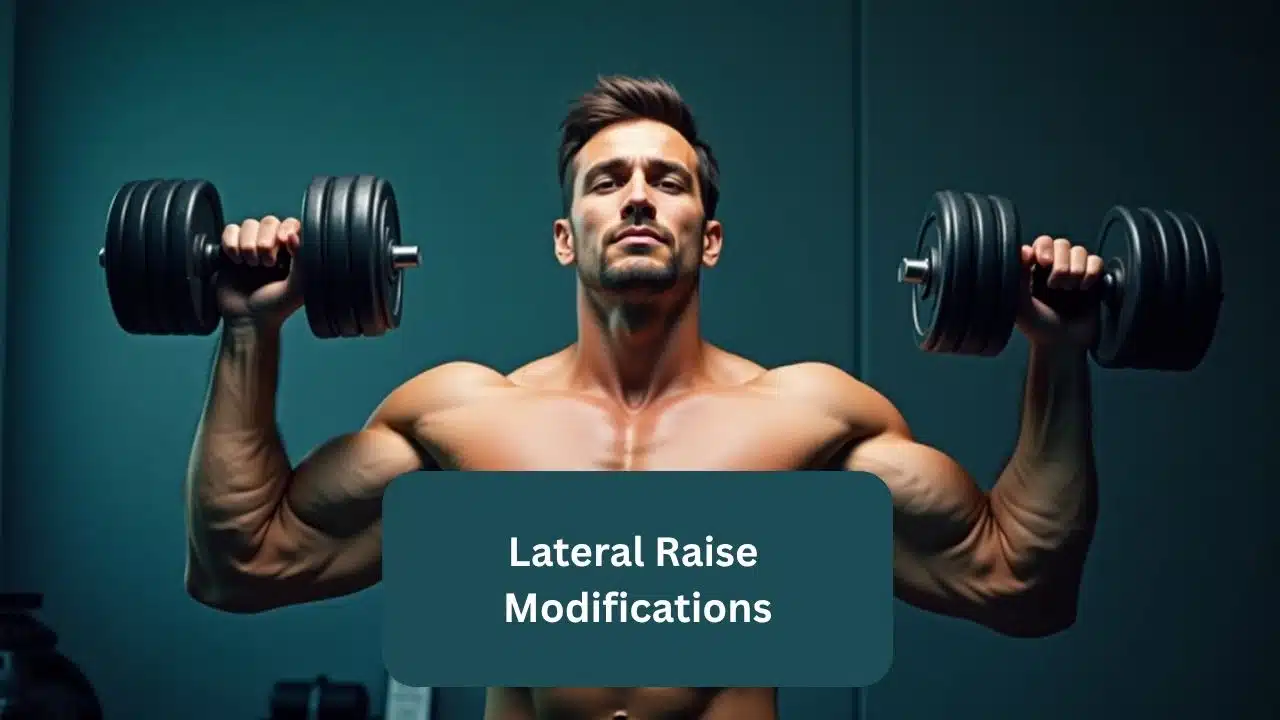
3 Lateral Raise Modifications (Including Bent/Straight Arms) for Every Goal
Quick answer: The right lateral raise modification depends on your specific goal — a bent-arm, moderate-rep version suits strength and joint health, a straighter-arm, higher-rep version suits muscle definition and isolation, and a lighter, scapular-plane-focused version suits injury prevention and rehab. Matching the modification to the goal matters more than finding one universally “correct” version.
Researched and written by the GymGoodies team, fact-checked against manufacturer specs and current fitness guidance.
Lateral raises get treated as a single exercise, but in practice they can be modified several distinct ways depending on what you’re actually training for. Rather than debating bent-vs-straight in isolation, it’s more useful to start from your goal and work backward to the right modification. Here are three practical variations, each suited to a different training outcome.
Modification 1: Strength & Joint-Friendly — Bent Arm, Moderate Reps
Best for: Building baseline shoulder strength while minimizing joint stress, especially useful for beginners or anyone prioritizing longevity over maximum isolation.
How to do it:
- Bend your elbows to roughly 30-45 degrees
- Raise slightly forward of directly lateral, toward the scapular plane
- Use a moderate weight for 8-12 reps per set, focusing on smooth, controlled tempo
- Avoid locking out or fully relaxing at the bottom of each rep to maintain tension
Why this works: The bent-arm position shortens the lever arm your shoulder has to control, reducing torque and joint demand. Our Bent-Arm Lateral Raises guide covers this mechanic in depth, and our piece on whether a bent arm is actually safer discusses why this is a reasonable long-term default rather than just a beginner’s stepping stone.
Modification 2: Definition & Isolation — Straighter Arm, Higher Reps
Best for: Lifters with healthy, well-controlled shoulders looking to maximize deltoid isolation and definition, once baseline stability is established.
How to do it:
- Extend your arm closer to straight, without fully locking the elbow
- Use a lighter weight than your bent-arm sets, since the increased lever arm makes the same weight considerably harder
- Aim for 12-15+ reps per set with strict form, avoiding any torso swing or momentum
- Add a brief pause at shoulder height to maximize time under tension at the peak contraction point
Why this works: A straighter arm increases the lever arm and torque on the deltoid, generally increasing muscle activation for the same relative effort — useful specifically when isolation and definition are the priority. Research on hypertrophy programming, including a comprehensive review of loading and rep-range recommendations, notes that a wide range of rep ranges can build muscle effectively as long as sets are taken close to failure — meaning the higher-rep approach here isn’t about needing exactly this range for growth, but about matching a lighter, controllable load to the increased demand of the straight-arm position. This variation should generally follow, not replace, a foundation of controlled bent-arm work — see our Straight-Arm Lateral Raises guide for the standalone breakdown, and our piece on how arm angle affects joint stress for the underlying mechanics.
Modification 3: Injury Prevention & Rehab — Light Load, Band or Cable, Scapular Focus
Best for: Anyone managing current shoulder sensitivity, returning from injury, or specifically working on scapular control and stability rather than muscle size or strength.
How to do it:
- Use light resistance bands or a cable set to a low weight, rather than dumbbells
- Keep elbows bent and prioritize the scapular-plane angle throughout
- Focus entirely on control and range of motion rather than load — this is not the modification to chase heavier weight with
- Consider pairing with dedicated scapular stabilization work before or after the set
Why this works: Bands and cables offer more control over the lightest, most vulnerable part of the range of motion than dumbbells do, since dumbbells provide little resistance at the bottom of the movement where control matters most during rehab. Our Resistance Bands guide covers this equipment choice in more depth, and our physiotherapist’s take on straight-arm raises discusses when this more conservative approach is specifically warranted.
Choosing Between the Three: A Simple Decision Guide
- New to lateral raises, or prioritizing joint health long-term? Start with Modification 1.
- Comfortable with baseline strength and specifically chasing deltoid definition? Layer in Modification 2, without abandoning Modification 1 entirely.
- Currently managing shoulder sensitivity, pain, or a return from injury? Use Modification 3, ideally with guidance from a physical therapist.
Many well-rounded training programs actually use more than one of these across a week or training cycle — for example, a controlled bent-arm set early in a session, followed by a lighter, higher-rep straight-arm finisher.
Equipment Considerations Across All Three Modifications
- Dumbbells work well for Modifications 1 and 2, offering precise, trackable weight increments.
- Cables or bands are often preferable for Modification 3, due to their more consistent tension through the lightest part of the range. Our Dumbbells vs. Cables guide and Lateral Raise Machines guide both cover how equipment interacts with these goals in more detail.
Common Mistakes Across All Modifications
- Using the same weight and rep range regardless of which modification you’re doing — each variation is calibrated to a different load and rep scheme for a reason.
- Jumping to Modification 2 before establishing control in Modification 1, which increases injury risk unnecessarily.
- Chasing heavier load in Modification 3, when the entire point of that variation is control and stability, not progressive overload.
- Ignoring pain signals in any modification — discomfort beyond normal muscular fatigue is a signal to scale back or seek guidance, not push through.
Frequently Asked Questions
Do I need to pick just one of these modifications permanently?
No — many lifters use different modifications for different phases of training, or even within the same week, depending on current goals and shoulder status.
Which modification builds the most muscle?
Modification 2 (straighter arm, higher reps) is generally best suited for maximizing isolation and definition, but Modification 1 also contributes meaningfully to overall shoulder development while being more joint-friendly.
How do I know if I should be doing Modification 3 instead of 1 or 2?
If you have current shoulder pain, a recent injury, or a diagnosed condition like impingement or rotator cuff tendinopathy, Modification 3 (or professional guidance) is the appropriate starting point rather than either of the other two.
Bottom Line
There’s no single “correct” way to do a lateral raise — the right modification depends entirely on whether you’re prioritizing joint-friendly strength building, maximum deltoid isolation, or injury management and stability. Understanding all three, and matching the right one to your current goal and shoulder status, is more useful than searching for one universally superior version of the exercise.
Which of these three modifications matches where you’re at right now? Let us know in the comments what your current priority is.