Cold-Weather or Hot-Weather Adjustments for Garage Gym Training
Quick Answer
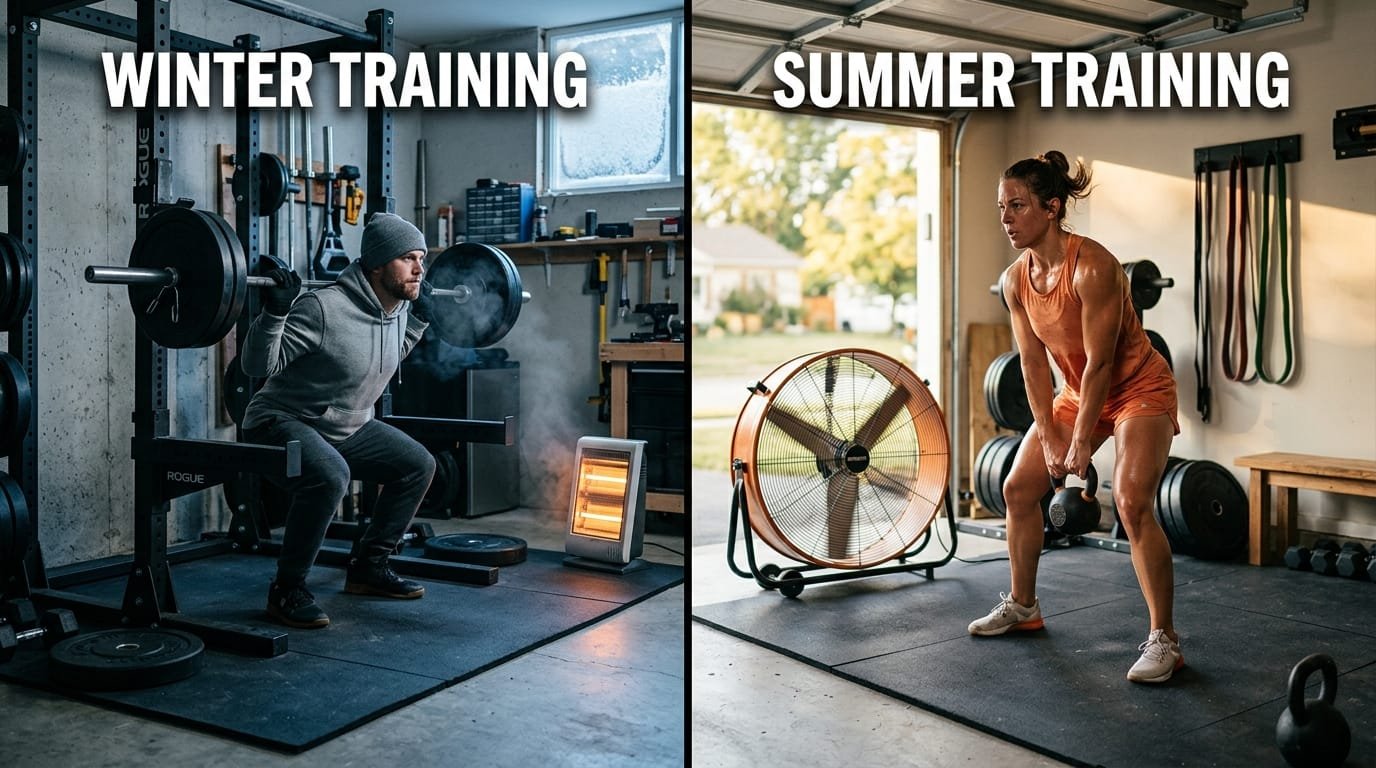
Cold-weather and hot-weather adjustments for garage gym training focus on protecting the body, maintaining equipment function, and preserving training quality when temperatures fall outside the ideal 15–22 °C range. In the cold, extend warm-ups, prioritise mobility, dress in layers, and protect metal equipment from condensation and rust. In the heat, emphasise hydration, reduce volume or intensity when needed, improve airflow, and schedule sessions during cooler parts of the day. These adjustments keep training safe, consistent, and productive year-round.
Why Garage Temperature Swings Matter
Garage gyms are rarely climate-controlled. They experience the full range of outdoor temperatures, humidity, and seasonal extremes. Cold environments reduce tissue elasticity, slow neural drive, and make early sets feel harder. Hot environments increase cardiovascular strain, accelerate dehydration, and raise perceived effort. Equipment also responds: metal becomes uncomfortable or develops condensation, rubber can stiffen or soften, and electronics may be affected. Ignoring these factors leads to poorer performance, higher injury risk, and reduced adherence. Deliberate adjustments solve most of the problems.
Core Principles for Temperature-Resilient Training
- Protect tissue readiness – Warm-ups must match the environment.
- Prioritise safety over ego – Reduce load or volume when thermoregulation is compromised.
- Manage equipment proactively – Moisture, expansion, and material changes require attention.
- Hydration and clothing are training variables – Treat them with the same seriousness as sets and reps.
- Schedule intelligently – Time of day often matters more than willpower.
- Maintain consistency – Adjusted sessions still count; skipped sessions break momentum.
Cold-Weather vs Hot-Weather Challenges
| Factor | Cold-Weather Impact | Hot-Weather Impact | Shared Risk if Ignored |
|---|---|---|---|
| Tissue readiness | Reduced elasticity, higher stiffness | Faster fatigue, reduced recovery between sets | Form breakdown |
| Cardiovascular demand | Lower initially, rises with effort | High from the start | Excessive strain |
| Hydration | Often overlooked | Critical and rapid loss | Performance drop / safety issues |
| Equipment | Condensation, brittle rubber, cold metal | Softened grips, expansion, overheating | Premature wear or failure |
| Motivation | Higher barrier to entry | Discomfort during sessions | Missed training |
| Session structure | Needs longer warm-up | Needs shorter or cooler timing | Incomplete training effect |
Shoulder-friendly technique becomes even more important when tissues are cold or fatigued by heat (Bent Arms vs. Straight Arms in Lateral Raises, The Hidden Mistake in Lateral Raises, and 3 Lateral Raise Modifications). Grip tools and handles can feel very different in temperature extremes and should be checked (Do Hand Grippers Really Work?).
Cold-Weather Adjustments
Warm-Up Extensions
Increase general pulse-raising work to 5–8 minutes and add specific mobility for the joints that will be loaded. Cold tissues need more time to reach optimal temperature and elasticity.
Layered Clothing
Wear moisture-wicking base layers that can be removed as body temperature rises. Keep hands, head, and feet covered at the start of the session if necessary.
Equipment Care
Wipe condensation from bars, dumbbells, and benches. Store bands indoors when possible—extreme cold can make some materials less elastic. Check rubber flooring for stiffness.
Loading and Volume
Start with lighter sets and progress more gradually. Neural drive and mobility may be reduced, so maximal attempts are best reserved for better conditions.
Session Timing
Midday sessions often occur during the warmest part of a cold day. Early morning training in an unheated garage may require even longer preparation.
Motivation Strategies
Lay out clothing and equipment the night before. Commit to a minimum viable session so the barrier to entry stays low.
Hot-Weather Adjustments
Hydration Protocol
Begin the session already hydrated. Keep water easily accessible and sip regularly. For longer or higher-intensity sessions, consider electrolytes if sweat loss is heavy.
Airflow and Cooling
Use fans directed across the training area. Open doors or windows when outdoor air is cooler than the garage. Shade windows if direct sun increases temperature.
Session Timing
Train early in the morning or later in the evening when temperatures are lower. Avoid peak afternoon heat whenever possible.
Volume and Intensity Management
Reduce total sets or shorten rest periods only if recovery between sets remains adequate. In extreme heat, drop intensity and focus on movement quality and consistency.
Clothing
Wear light, breathable fabrics. Avoid heavy layers that trap heat.
Equipment Considerations
Metal can become uncomfortably hot; use chalk or grips if needed. Check that rubber surfaces have not become excessively soft or slippery from heat.
Recovery Between Sessions
Heat increases systemic stress. Prioritise sleep and consider slightly more recovery time between hard sessions during heat waves.
Step-by-Step Seasonal Adjustment Process
- Monitor garage temperature
A simple thermometer provides objective data. - Set threshold guidelines
Decide in advance how sessions will change below or above certain temperatures. - Prepare clothing and tools
Keep layers, fans, towels, and water sources ready. - Adjust warm-up length according to conditions
Longer in the cold, more gradual in the heat. - Modify session expectations
Performance may not match ideal-temperature days—this is normal. - Inspect equipment before loading
Condensation, stiffness, or excessive heat can create safety issues. - Track how you feel and perform
Note temperature alongside training log entries to identify patterns. - Protect recovery
Sleep and hydration become even more important in extremes. - Have a minimum viable session ready
On the most extreme days, a shortened version still maintains momentum. - Reassess after seasonal transitions
Refine the guidelines based on real experience.
Sample Adjusted Session Structures
Cold-Weather Strength Session
- 6–8 minute extended warm-up (pulse raiser + mobility)
- Lighter first working sets
- Normal volume once warm
- Extra attention to controlled tempos
Hot-Weather Strength Session
- Normal or slightly shorter warm-up
- Reduced total sets or longer rest if heart rate stays elevated
- Emphasis on hydration and airflow
- Willingness to stop short of usual volume if overheating occurs
Minimum Viable Session (Either Extreme)
3–4 compound movements, 2 sets each, controlled technique. Completion preserves the habit.
Equipment Maintenance Across Seasons
| Season | Primary Equipment Risk | Preventive Action |
|---|---|---|
| Cold | Condensation and rust | Wipe metal after use, improve airflow, store bands indoors |
| Cold | Stiff rubber and grips | Allow equipment to warm slightly if possible |
| Hot | Softened rubber and grips | Inspect for excessive give or slipperiness |
| Hot | Overheated metal | Use chalk or handle covers if needed |
| Both | Humidity swings | Periodic deep inspection for corrosion |
Common Mistakes in Temperature Extremes
| Mistake | Result | Better Approach |
|---|---|---|
| Skipping warm-up in the cold | Higher injury risk and poor performance | Extend warm-up deliberately |
| Training through extreme heat without adjustment | Overheating and excessive fatigue | Reduce volume or change time of day |
| Ignoring hydration | Rapid performance drop | Pre-hydrate and sip throughout |
| Letting condensation sit on equipment | Accelerated rust | Wipe down after every session |
| All-or-nothing mindset | Missed weeks during weather extremes | Use the minimum viable session |
| Wearing inappropriate clothing | Discomfort and distraction | Layer in cold, light fabrics in heat |
Strength training remains highly effective when environmental constraints are managed intelligently (strength training guidance). Practical home-gym approaches emphasise systems that continue working under real conditions (home gym equipment prioritisation and budget home gym principles).
Frequently Asked Questions
How cold is too cold to train in a garage?
Most people can train productively down to near-freezing temperatures with proper warm-up, clothing, and adjusted expectations. Below that, consider shortening the session or moving key work indoors if possible.
How hot is too hot?
When core temperature and heart rate climb rapidly despite easy pacing, or when dizziness or nausea appear, stop and cool down. Prevention through timing and airflow is better than pushing through.
Should I heat or cool the garage?
Space heaters and fans can help but must be used safely. Avoid open flames near equipment or flooring. Improving passive airflow is often the highest-leverage step.
Do I need different programming in summer and winter?
The core program can stay the same. Adjust warm-up length, session timing, volume, and recovery expectations according to the season.
Can temperature affect strength numbers?
Yes. Cold can reduce early-session performance; heat can increase cardiovascular strain and perceived effort. Track trends over time rather than reacting to single-day fluctuations.
How do I keep bands from degrading in temperature extremes?
Store them indoors when possible. Extreme cold and prolonged heat both accelerate wear.
Is training in a hot garage good for conditioning?
It increases cardiovascular demand, but the risk of overheating rises quickly. Controlled, shorter sessions with good hydration are safer than long, high-intensity efforts.
What is the single most important adjustment?
Matching the warm-up and session expectations to the actual temperature rather than forcing a normal-temperature template onto extreme conditions.
Final Recommendation
Cold-weather and hot-weather adjustments keep garage gym training safe and consistent across the year. In the cold, lengthen warm-ups, dress in layers, protect equipment from condensation, and accept that early sets may feel harder. In the heat, prioritise hydration, airflow, cooler training times, and reduced volume when necessary. Maintain a minimum viable session for the most extreme days so momentum never fully stops.
Install a thermometer in the garage, define your personal temperature thresholds, and prepare the clothing, fans, and water sources you will need. Adjust the next session according to the actual conditions rather than the calendar. When environmental factors are managed deliberately, the garage remains a productive training space in every season. Start with the next workout—the small adjustments you make today protect both performance and long-term consistency.