Year-Round Home Gym Maintenance Tips to Keep Equipment Safe and Long-Lasting
Quick Answer
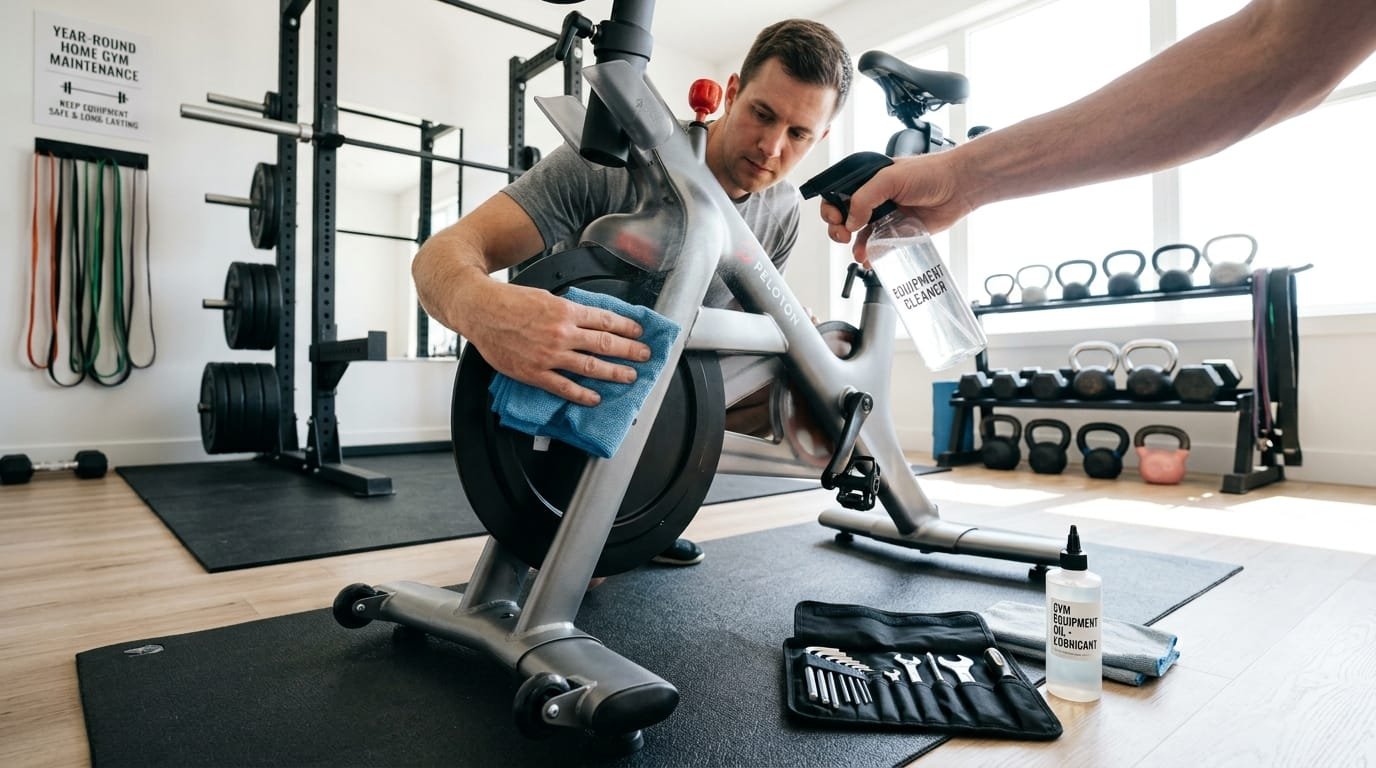
Year-round home gym maintenance centres on regular inspection, cleaning, lubrication, bolt tightening, proper storage, and environmental control. Check racks, bars, benches, cables, and flooring monthly; clean sweat and chalk after sessions; lubricate barbell sleeves and moving parts on schedule; and address small issues before they become safety hazards or costly failures. Consistent light maintenance dramatically extends equipment lifespan, preserves warranty coverage, reduces injury risk, and keeps the training space inviting. A simple 15–30 minute monthly routine plus quick post-session habits is enough for most home gyms.
Why Maintenance Matters More at Home
Commercial gyms employ staff and follow service schedules. At home the responsibility is entirely yours. Sweat, chalk, dust, humidity, temperature swings, and repeated loading slowly degrade metal, rubber, upholstery, and moving parts. Neglect leads to rust, loose bolts, frayed cables, unstable benches, and ultimately unsafe training conditions or premature replacement costs.
Well-maintained equipment lasts decades. Poorly maintained equipment can fail in a few years. The difference is almost always routine care rather than brand or initial price.
Core Maintenance Principles
- Inspect regularly – catch problems early
- Clean consistently – remove corrosive sweat and chalk
- Lubricate correctly – protect moving parts without attracting dirt
- Tighten hardware – vibration loosens bolts over time
- Control the environment – manage humidity, temperature, and sunlight
- Store properly – prevent unnecessary wear and trip hazards
- Replace worn components promptly – safety first
These principles apply to every type of home gym, from a single kettlebell corner to a fully equipped garage.
Equipment-Specific Maintenance Guide
| Equipment | Frequency | Key Actions | Warning Signs |
|---|---|---|---|
| Power rack / squat stand | Monthly + after heavy use | Check welds, tighten all bolts, inspect safety arms, confirm stability | Wobbling, loose uprights, bent safeties |
| Barbell | After each use + monthly deep check | Wipe shaft, brush knurling, lubricate sleeves, check straightness | Sticky sleeves, rust, bent shaft |
| Weight plates | Monthly | Inspect for cracks or loose inserts, clean, store properly | Cracks, deformed centre holes |
| Adjustable bench | Monthly | Tighten frame bolts, check pad condition and adjustment pins | Unstable pad, worn stitching, loose posts |
| Dumbbells & kettlebells | Weekly wipe + monthly inspection | Clean handles, check for loose heads or handle damage | Spinning heads, cracked handles, sharp burrs |
| Resistance bands | Before each use | Inspect for tears, nicks, or loss of elasticity | Visible cracks, thinning, sticky surface |
| Cables & pulleys | Monthly | Check for fraying, ensure smooth travel, lubricate pulleys if recommended | Frayed strands, grinding noise, uneven movement |
| Flooring | Monthly | Sweep, mop, check for gaps or compression | Curling edges, permanent indentations |
| Cardio machines (if any) | Follow manufacturer schedule | Clean, lubricate belt/deck, check tightness | Squeaking, slipping belt, error codes |
Monthly Maintenance Routine (15–30 Minutes)
- Clear the floor and remove plates from the rack.
- Visually inspect the entire rack for cracks, rust, or deformation.
- Systematically tighten every accessible bolt with the correct tool.
- Check safety arms or straps for wear and secure attachment.
- Wipe and inspect the barbell; lubricate sleeves if needed.
- Examine plates, dumbbells, and kettlebells for damage.
- Inspect bands and cables under light tension.
- Sweep and clean flooring; re-level any shifted tiles.
- Test adjustable bench positions and pad security.
- Record any items that need parts or professional attention.
Performing this routine on the first weekend of each month keeps the system reliable.
Post-Session Habits That Prevent Long-Term Damage
- Wipe down bars, dumbbells, kettlebells, and bench pads after every session.
- Remove chalk from knurling with a brush.
- Return plates and dumbbells to designated storage.
- Hang bands rather than leaving them stretched or in a pile.
- Allow sweaty clothing and towels to leave the gym area.
These five-minute habits prevent the majority of corrosion and wear.
Environmental Control for Longevity
Humidity
High humidity accelerates rust. In garages or basements consider a dehumidifier. In dry climates, occasional light oiling of exposed metal helps.
Temperature
Extreme heat can degrade rubber and upholstery; extreme cold can make some materials brittle. Aim for a stable range when possible.
Sunlight
Direct UV exposure degrades bands, upholstery, and some plastics. Store bands away from windows and cover equipment if necessary.
Dust and Debris
Dust mixed with sweat creates a grinding paste on moving parts. Regular sweeping and wiping reduce this risk.
Practical home gym setup resources emphasise controlling the training environment as part of equipment care (home gym organisation and longevity principles and equipment transition guidance).
Lubrication Guidelines
- Barbell sleeves: Use a light machine oil or manufacturer-recommended lubricant sparingly. Avoid heavy grease that attracts dirt.
- Rack adjustment points: Dry film or light oil as specified.
- Cable pulleys: Follow the machine manual; many need only occasional cleaning.
- Never over-lubricate—excess attracts chalk and dust.
Always wipe away surplus lubricant.
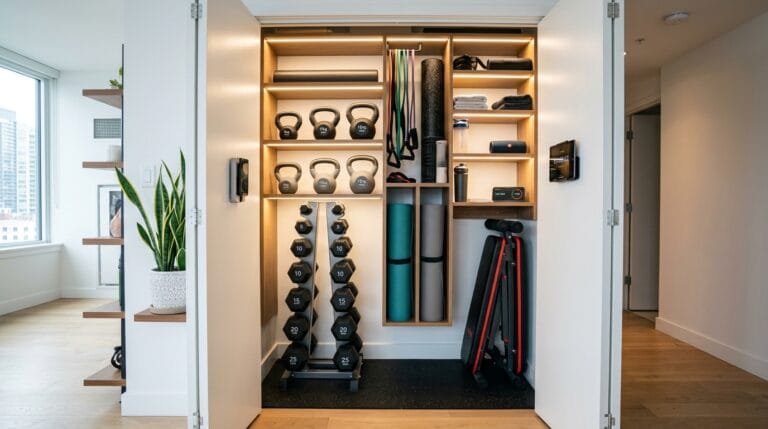
Storage Best Practices
- Store plates on a tree or vertical holder ordered by weight.
- Keep dumbbells on a rack rather than the floor.
- Hang resistance bands on hooks; never leave them stretched.
- Store the barbell on the rack or a dedicated horizontal holder.
- Keep the floor clear of trip hazards.
Good storage reduces accidental damage and makes the next session more inviting.
Safety-Critical Checks Before Heavy Training
Before any heavy squat, bench, or overhead session:
- Confirm safety arms are correctly set and secure.
- Ensure the bench is locked in position.
- Verify the bar is properly loaded and collars are tight.
- Test rack stability with a light load if the equipment has been moved.
Never skip these checks when training alone.
Integrating Maintenance with Training Quality
Well-maintained equipment supports better technique and confidence. Loose benches or sticky bars encourage compensatory movement patterns that can stress joints. Keeping shoulder-friendly technique consistent remains important for long-term training health (Bent Arms vs. Straight Arms in Lateral Raises, The Hidden Mistake in Lateral Raises, and 3 Lateral Raise Modifications). Grip-intensive work also benefits from clean, well-maintained handles (Do Hand Grippers Really Work?).
Strength-training longevity depends on both progressive programming and reliable equipment (strength training guidance).
Seasonal Maintenance Adjustments
Spring
Deep clean after winter humidity or heating-season dryness. Inspect for rust that may have developed.
Summer
Increase attention to sweat corrosion and UV exposure. Clean more frequently in hot weather.
Autumn
Check flooring and rack stability before heavier autumn training blocks. Prepare for possible temperature drops.
Winter
Monitor humidity if heating systems dry the air or if the gym is in an unheated garage. Protect metal surfaces.
Step-by-Step Annual Deep-Maintenance Session
Once per year set aside 60–90 minutes for a comprehensive service:
- Fully unload and photograph the current setup.
- Disassemble non-permanent attachments.
- Deep-clean every surface.
- Inspect all welds and high-stress points.
- Replace any worn cables, pins, or pads.
- Re-torque all structural bolts to specification if available.
- Lubricate according to manufacturer guidelines.
- Reassemble and test every adjustment and safety feature.
- Update your maintenance log.
- Order any needed spare parts before they become urgent.
Common Maintenance Mistakes
| Mistake | Risk | Better Practice |
|---|---|---|
| Ignoring small noises or wobbles | Sudden failure | Investigate immediately |
| Over-lubricating | Dirt accumulation | Use minimal appropriate lubricant |
| Storing bands stretched or in sunlight | Rapid degradation | Hang loosely away from UV |
| Never tightening bolts | Progressive loosening | Monthly torque check |
| Letting chalk and sweat sit overnight | Accelerated corrosion | Wipe down after every session |
| Using damaged bands or frayed cables | Injury | Replace at first sign of wear |
Frequently Asked Questions
How often should I really inspect my rack and bar?
A quick visual check before heavy sessions plus a thorough monthly inspection is sufficient for most home gym users.
What lubricant is safe for barbell sleeves?
A light machine oil or a product specifically recommended by the bar manufacturer. Avoid thick automotive grease.
Can I use household cleaners on equipment?
Mild soap and water or specialised gym cleaners are safest. Avoid harsh solvents that can damage rubber, powder coat, or upholstery.
How long should a quality home gym last with proper care?
Decades. Many well-maintained racks, bars, and benches remain in service for 15–25 years or more.
Is rust on a barbell dangerous?
Surface rust can usually be removed. Deep pitting or rust that affects structural integrity requires replacement or professional evaluation.
Should I cover equipment when not in use?
Covers help in dusty or humid environments and protect from UV if the space has windows. They are optional in climate-controlled rooms.
What is the most commonly neglected item?
Resistance bands and cable systems. Both should be inspected before nearly every use.
Final Recommendation
Year-round home gym maintenance is simple, high-leverage work that protects both your safety and your financial investment. Establish a short post-session cleaning habit, perform a structured monthly inspection and bolt check, control humidity and sunlight, store equipment properly, and address small problems immediately.
A well-maintained rack, bar, bench, and accessories deliver reliable performance for decades and remove a major source of training friction. Combine this physical care with sound technique on shoulder and grip movements so the entire system—equipment and body—stays durable.
Block 20 minutes this week for a full inspection and cleaning. Create a recurring monthly reminder. The equipment that supports your training deserves the same consistency you apply to progressive overload. Start the maintenance habit today and enjoy a safer, longer-lasting, more inviting home gym for years to come.