How to Choose the Right Weight Bench When You Have Limited Floor Space
Quick Answer
When floor space is limited, the best weight bench is usually a compact, foldable, or multi-position adjustable bench with a small footprint, solid stability, and the ability to store vertically or under other furniture. Prioritise benches under 50–55 inches in length when unfolded, with a narrow width, reliable locking mechanisms, and a weight capacity that matches your training needs. Measure your available space first, decide between flat-only, adjustable, or foldable designs, and favour quality construction over extra features that increase size. A well-chosen compact bench supports pressing, step-ups, hip thrusts, and seated work without dominating the room.
Why Limited Floor Space Changes the Decision
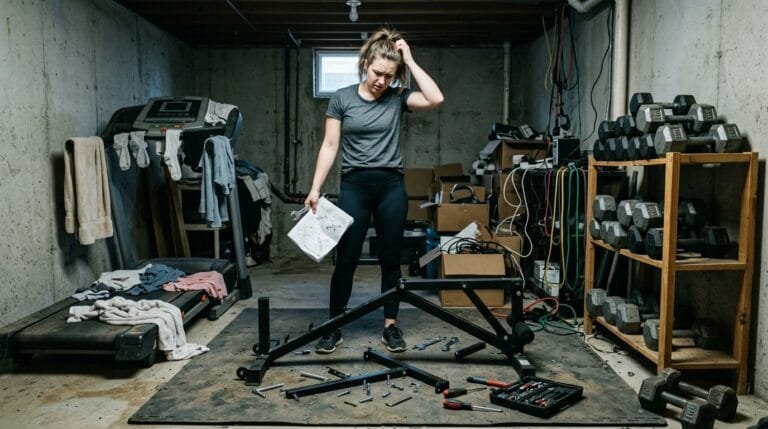
Most commercial-style benches are designed for open gym floors. In apartments, spare bedrooms, garages with shared use, or multi-purpose rooms, a bulky bench becomes a permanent obstacle. The wrong choice leads to constant moving, reduced training frequency, or eventual sale of the equipment. The right choice disappears when not in use, stays stable during heavy presses, and still allows the main movement patterns that drive results.
Space constraints force clearer priorities: footprint, storage method, and versatility per square inch matter more than maximum adjustability or heavy commercial padding.
Step 1: Measure Your Actual Available Space
Before looking at any product, measure:
- Length and width of the clear floor area where the bench will sit during use
- Ceiling height if you plan overhead pressing
- Storage location (closet, under bed, against wall, beside a rack)
- Pathway clearance needed to walk around the bench
Record the maximum length and width you can accept when the bench is in use, and the maximum dimensions when stored. Many people discover they have less usable space than they thought once doors, radiators, or furniture are accounted for.
Key Features That Matter in Tight Spaces
| Feature | Why It Matters for Limited Space | Ideal Specification |
|---|---|---|
| Overall length (in use) | Determines how much floor the bench occupies | Under 50–55 inches preferred |
| Width | Affects stability and walk-around room | 12–18 inches pad width is usually sufficient |
| Foldability | Allows vertical or flat storage | Folds to 10–16 inches thickness ideal |
| Weight capacity | Must still support your bodyweight + load safely | 600 lb+ recommended for most users |
| Adjustability | Adds versatility without needing extra equipment | At least flat + incline if possible |
| Leg design | Wide legs increase stability but enlarge footprint | Look for compact yet stable base designs |
| Pad thickness & density | Comfort and durability without excess bulk | 2–3 inches firm foam preferred |
| Transport wheels or handles | Makes moving easier in small rooms | Useful but not essential |
Types of Weight Benches Best Suited to Limited Space
1. Foldable Adjustable Weight Benches
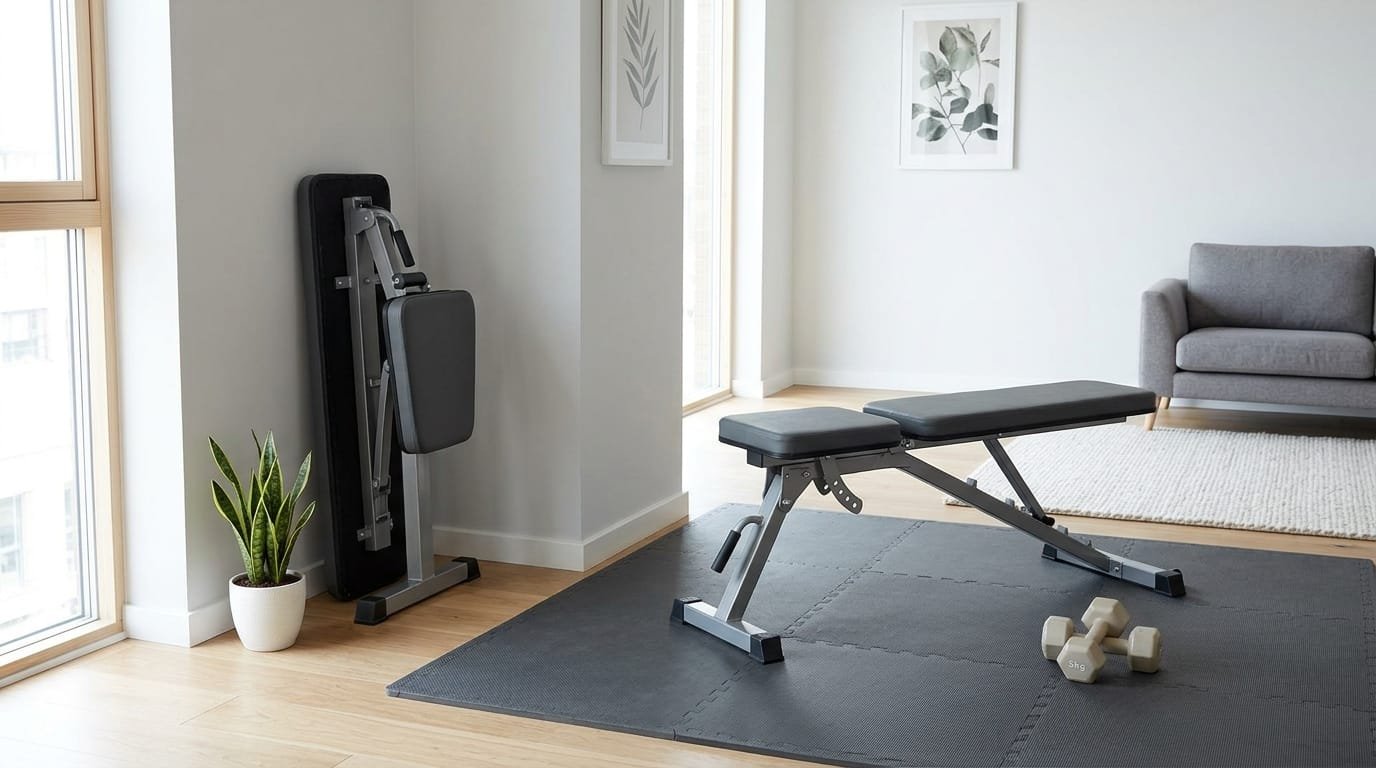
These offer the best balance for most space-constrained lifters. They provide flat, incline, and sometimes decline positions, then collapse for storage. Quality models remain stable when locked. Check reviews specifically for wobble when unfolded and durability of the folding hinges.
2. Compact Flat Weight Benches
Shorter and narrower than standard flat benches. Ideal if you already have a rack with safety arms and mainly need a surface for floor-press alternatives, hip thrusts, or step-ups. Easiest to store vertically or slide under a bed.
3. FID (Flat-Incline-Decline) Weight Benches with Small Footprints
Some modern designs keep the full range of angles while reducing overall length. These suit intermediate lifters who want variety but cannot dedicate a full rack area permanently.
4. Utility or Multi-Purpose Benches
Benches that also serve as step-up boxes, seated preacher surfaces, or storage seats. Useful when every piece of furniture must justify its existence.
Avoid long Olympic-style flat benches and wide commercial FID benches unless you have confirmed the space.
Stability vs Compactness Trade-Off
A bench that folds small is useless if it flexes or tips during heavy dumbbell presses. Look for:
- Wide enough base relative to height
- Secure pin or pop-pin locking systems
- Steel gauge that feels solid under load
- Non-slip feet
Test stability conceptually by imagining a heavy set of dumbbell floor presses or incline presses. If the design looks top-heavy when folded legs are short, prioritise models with proven user feedback on heavy use.
Weight Capacity and Build Quality
Even in a small space you need adequate capacity. A 500–600 lb rating covers most home users performing dumbbell work. Higher ratings provide a safety margin. Check that the capacity includes the user plus the weights. Thicker steel and reinforced joints generally last longer and feel more secure.
Storage Solutions That Make Limited Space Work
- Vertical storage against a wall
- Sliding under a bed or sofa
- Folding and standing beside a power rack or in a closet
- Wall-mounted or vertical rack systems that hold the bench
Measure the stored dimensions as carefully as the in-use dimensions. A bench that folds small but is awkward to move will still frustrate you.
How the Weight Bench Fits into a Complete Small-Space Setup
A compact bench pairs well with:
- Adjustable dumbbells or kettlebells
- Resistance bands
- A doorway pull-up bar or compact rack
- Minimal flooring tiles placed only in the working area
This combination covers pressing, rowing support, hip thrusts, step-ups, and seated shoulder work without requiring a large dedicated footprint. Technique on shoulder movements remains important even with limited equipment — detailed guidance is available in Bent Arms vs. Straight Arms in Lateral Raises, The Hidden Mistake in Lateral Raises, and 3 Lateral Raise Modifications. Grip demands during dumbbell work can also be addressed directly (Do Hand Grippers Really Work?).
Step-by-Step Decision Process
- Measure the exact floor area available for use and for storage.
- Decide the minimum features you need (flat only vs adjustable).
- Set a realistic budget that prioritises stability and capacity.
- Shortlist 3–5 models that fit your measured dimensions.
- Read recent owner reviews focusing on wobble, folding durability, and real-world footprint.
- Confirm weight capacity and pad quality.
- Check return policies in case the bench feels different in your space.
- Purchase and test with moderate loads before heavy training.
- Establish a storage routine so the bench is put away after sessions.
- Re-evaluate after 4–6 weeks whether the chosen bench still meets your needs.
Common Mistakes When Buying for Limited Space
| Mistake | Consequence | Better Approach |
|---|---|---|
| Buying the longest “heavy duty” bench | Permanent space loss | Measure first, choose compact designs |
| Prioritising maximum adjustability | Larger footprint and complexity | Match features to actual exercises used |
| Ignoring stored dimensions | Bench becomes hard to put away | Measure both in-use and stored sizes |
| Choosing ultra-light foldable models | Instability under load | Balance weight capacity with foldability |
| Forgetting walk-around clearance | Constant obstacles | Leave pathway space in measurements |
| Skipping pad density checks | Discomfort on heavier sets | Look for firm 2–3 inch pads |
Budget Considerations
Entry-level foldable benches can work for lighter dumbbell work. Mid-range models generally offer better locking systems, denser pads, and longer durability. Spending more on a stable, space-efficient bench is usually wiser than buying a cheap bulky one that later needs replacement. Practical home-gym guidance consistently favours versatile, well-built pieces that solve real space constraints (home gym equipment prioritisation and budget home gym principles).
Long-Term Use and Maintenance in Small Spaces
- Wipe the pad and frame after sweaty sessions.
- Check folding hinges and locking pins monthly.
- Avoid leaning heavy objects on a folded bench.
- Keep the storage area dry to prevent rust on metal parts.
- Re-tighten bolts periodically.
A compact bench that is easy to store will be used more consistently than a larger one that feels like a chore to set up.
Frequently Asked Questions
Can a foldable bench be stable enough for heavy dumbbell presses?
Yes, provided it has a solid frame, secure locks, and adequate weight capacity. Read recent user reviews that specifically mention heavy use.
Is a flat bench enough if space is very limited?
For many people yes. A flat bench supports floor-press variations, hip thrusts, step-ups, and seated work. Incline can often be approximated with floor variations or bands.
How narrow can a bench be and still feel safe?
Most users find 12–16 inches of pad width acceptable for dumbbell work. Narrower designs exist but may feel less stable for wider-shouldered lifters.
Should I buy a bench with wheels?
Wheels help in small rooms if you move the bench frequently. Ensure they lock or do not compromise stability during use.
What weight capacity do I actually need?
A rating of 600 lb or higher covers the majority of home dumbbell and bodyweight loading scenarios with a safety margin.
Can I use a compact bench inside a power rack?
Many compact benches fit inside racks, but measure both the bench and the rack’s internal width and depth carefully.
How important is pad thickness?
Firm 2–3 inch pads provide better support and durability than thick soft foam that compresses quickly.
Is it worth buying a used bench for space-saving purposes?
Only if you can verify structural integrity, locking function, and dimensions. Safety-critical wear is harder to assess on used adjustable benches.
Final Recommendation
When floor space is limited, choose a weight bench by measuring first, prioritising a compact or foldable design, confirming real-world stability and capacity, and ensuring convenient storage. A well-selected compact adjustable or flat bench supports the main upper- and lower-body patterns without taking over the room.
Focus on footprint, locking security, and build quality rather than maximum features. Pair the bench with versatile tools such as adjustable dumbbells, kettlebells, and bands, maintain good technique on shoulder and grip-intensive movements, and establish a habit of storing the bench after each session.
Measure your space this week, shortlist models that fit both in-use and stored dimensions, and select the bench that solves your spatial constraints while remaining safe under load. The right compact bench removes a major barrier to consistent home training and delivers years of useful service in a small footprint. Start with accurate measurements and a clear list of must-have features—the rest of the decision becomes straightforward.