Why Bones Get Fragile With Age (And How to Prevent It)
Quick answer: Bone is living tissue that’s constantly being broken down and rebuilt. Up until roughly age 30, your body builds slightly more bone than it removes; after that, the balance gradually shifts toward greater breakdown, especially after age 50 — accelerated further in women after menopause due to declining estrogen. This gradual imbalance is what makes bones progressively more fragile with age, and can lead to osteoporosis if the loss becomes significant.
Researched and written by the GymGoodies team, fact-checked against manufacturer specs and current fitness guidance.
Bone fragility isn’t something that happens suddenly — it’s the result of a slow, decades-long shift in how your body maintains its skeleton. Understanding why this happens can help make sense of why prevention starts well before your later years, and why certain lifestyle factors genuinely matter.
Bone Is Living, Constantly Rebuilding Tissue
It’s easy to think of bones as static structural material, but they’re actually living tissue undergoing continuous turnover throughout your life. According to the National Institute of Arthritis and Musculoskeletal and Skin Diseases (NIAMS), osteoporosis develops when bone mineral density and bone mass decrease, or when the structure and strength of bone itself changes — this is a disease process, not simply an inevitable part of getting older, though age is the primary risk factor.
The Basic Timeline of Bone Density Over a Lifetime
According to Johns Hopkins Medicine, bone density generally follows a predictable pattern:
- Up to around age 25: the body builds more new bone than it removes, so density increases.
- Roughly age 25 to 50: bone density tends to stay relatively stable, with formation and breakdown roughly balanced.
- After age 50: bone breakdown starts to outpace formation, and bone loss often accelerates — particularly around the time of menopause for women.
Why Menopause Specifically Accelerates Bone Loss
Estrogen plays a meaningful role in slowing the breakdown of bone tissue. When estrogen levels drop significantly during menopause, that protective slowing effect diminishes, and bone tissue is lost more quickly as a result. This is a major reason osteoporosis is significantly more common in postmenopausal women than in men of a similar age, though men do also experience age-related bone loss, generally at a slower, more gradual pace.
What’s Actually Happening at the Cellular Level
Your skeleton is constantly being remodeled through two competing processes: bone-building cells creating new bone tissue, and bone-removing cells breaking down old bone tissue. As long as these two processes stay roughly balanced, bone mass remains stable. Age-related bone loss occurs when this balance tips — increased bone breakdown combined with reduced new bone formation, leading to progressively less dense, more porous bone structure over time.
Osteopenia vs. Osteoporosis: Understanding the Progression
Bone loss with age typically progresses through stages rather than appearing suddenly:
- Normal age-related bone density decline — a gradual, expected process for essentially everyone as they age
- Osteopenia — bone density lower than normal for your age, but not yet low enough to be classified as osteoporosis; considered an early warning sign
- Osteoporosis — bone density and structural changes significant enough to meaningfully increase fracture risk, sometimes occurring with no symptoms until a fracture actually happens
This is why osteoporosis is often described as a “silent” disease — there’s typically no pain or obvious symptom until a bone actually breaks, which is part of why screening and prevention matter well before symptoms would ever appear.
Why Some People Lose Bone Density Faster Than Others
Several factors influence how quickly this age-related decline progresses:
- Sex and hormones — postmenopausal women face accelerated loss due to declining estrogen; men experience a more gradual decline, partly related to testosterone levels
- Family history — having a parent with a history of fracture is associated with increased personal fracture risk, independent of your own measured bone density
- Ethnicity — some research indicates certain populations have higher rates of osteoporosis and related fractures
- Lifestyle factors — smoking, excessive alcohol consumption, and a sedentary lifestyle are all associated with increased fragility risk
- Certain medications and medical conditions — some long-term medications and inflammatory conditions can accelerate bone loss
Why Muscle Strength Connects to Bone Health
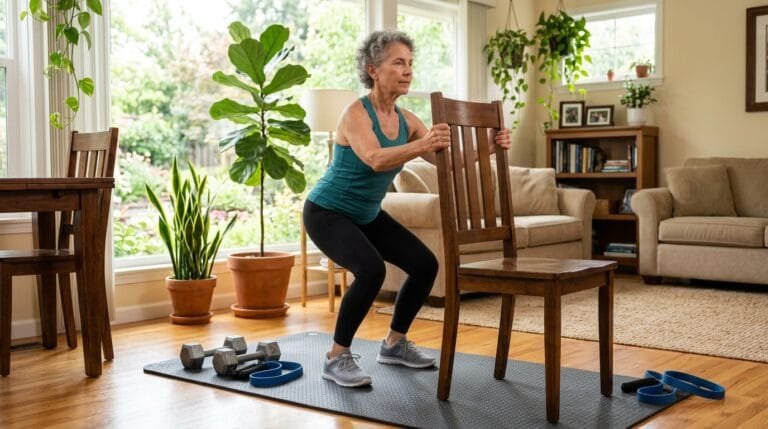
This is genuinely relevant to a fitness-focused audience specifically: research from Johns Hopkins found that people with greater muscle strength were less likely to have low bone mineral density, a connection researchers attribute partly to the fact that activities building strong muscles also place beneficial mechanical stress on bones, which can help stimulate bone maintenance. This is one of the more actionable, well-supported takeaways from bone health research — consistent resistance training isn’t just about muscle, it may meaningfully support skeletal health as well. If you’re building a strength training habit, our kettlebell weight selection guide and 20-Minute Kettlebell Arm Masterclass cover practical ways to get started with resistance training safely.
What You Can Reasonably Influence
While age, sex, and family history aren’t within your control, several factors that affect bone health are:
- Regular weight-bearing and resistance exercise, which places beneficial mechanical stress on bone
- Avoiding smoking and limiting excessive alcohol consumption, both associated with increased fragility risk
- Adequate calcium and vitamin D intake, both essential nutrients for maintaining bone mineral density — a doctor or registered dietitian can help determine what’s appropriate for your specific situation and age
- Regular bone density screening as recommended by your doctor, particularly for postmenopausal women or anyone with risk factors, since earlier detection allows earlier intervention
When to Talk to a Doctor
Since osteoporosis often has no symptoms until a fracture occurs, it’s worth discussing bone health proactively with a doctor rather than waiting for a problem to appear — particularly if you’re postmenopausal, have a family history of fractures, or have other known risk factors. A doctor can determine whether bone density screening is appropriate for your specific situation and discuss any personalized prevention or treatment approach, since this goes beyond general lifestyle advice.
Frequently Asked Questions
At what age should I start worrying about bone density?
Bone density decline is a gradual, lifelong process, and prevention (exercise, nutrition, avoiding smoking) is valuable well before any noticeable decline — many experts recommend building strong bone health habits well before age 50, since the density you’ve built by then affects your baseline going into the higher-risk years.
Is bone loss with age inevitable?
Some gradual decline after age 50 is a normal, expected part of aging for essentially everyone, but the rate and severity of that decline can be meaningfully influenced by lifestyle factors, making significant osteoporosis and related fractures more preventable than many people assume.
Can exercise actually reverse bone loss that’s already occurred?
This varies by individual and situation, and is a question worth discussing directly with a doctor — but regular weight-bearing and resistance exercise is consistently associated with supporting bone health at any stage, making it a reasonable part of a bone-health approach regardless of your current bone density.
Bottom Line
Bones become more fragile with age due to a gradual, natural shift in the balance between bone breakdown and bone formation — a process that typically begins around age 50 and accelerates further in women after menopause due to declining estrogen. While some of this process is outside your control, factors like regular resistance exercise, avoiding smoking, and adequate nutrition can meaningfully support bone health at any age, making prevention a lifelong consideration rather than something to address only once symptoms appear.
Are you incorporating strength training as part of a long-term bone health strategy? Let us know in the comments — and if you have specific concerns about your bone density, that’s a conversation worth having directly with your doctor.