Intermittent Fasting and Home Strength Training: What Actually Works
Quick Answer
Intermittent fasting (IF) can work with home strength training when total daily protein and calories remain adequate and training performance is preserved. The most practical approach for most lifters is a 16/8 or similar time-restricted eating window that still allows 3–4 protein-containing meals. Training can occur in a fasted or fed state depending on personal tolerance. IF does not inherently build more muscle or burn more fat than calorie-matched non-fasting diets; its main advantages are appetite control, schedule simplicity, and adherence for certain people. Protect protein intake, progressive overload, and recovery above any fasting schedule.
What Intermittent Fasting Means for Strength Trainees
Intermittent fasting involves cycling between periods of eating and fasting. The most common versions used by home lifters are time-restricted eating (e.g., 16 hours fasting / 8 hours eating) or occasional longer fasts. Unlike chronic calorie restriction, IF primarily changes when food is consumed rather than automatically reducing total intake. For strength training, the critical variables remain progressive tension, total protein, overall energy availability, and recovery. IF succeeds when it supports these variables and fails when it undermines them.
Core Principles for Combining IF with Home Strength Training
- Protein total and distribution matter more than the fasting window – Aim for 1.6–2.2 g per kilogram of body weight inside the eating window.
- Training performance is the feedback loop – If strength or volume drops consistently, adjust the fasting protocol or training timing.
- Calories still count – IF is not magic; long-term fat loss requires a sustainable energy deficit.
- Convenience can improve adherence – Many home lifters prefer fewer meals and clearer boundaries.
- Individual tolerance varies widely – Some people train well fasted; others need food beforehand.
- Recovery and sleep remain non-negotiable – Fasting does not compensate for poor recovery habits.
Common IF Protocols Compared for Home Lifters
| Protocol | Eating Window | Fasting Window | Suitability for Strength Training | Main Advantage | Main Risk |
|---|---|---|---|---|---|
| 16/8 | 8 hours | 16 hours | High for most | Simple, sustainable | Compressed protein intake if not planned |
| 14/10 | 10 hours | 14 hours | Very high | Easier protein distribution | Milder adherence benefit |
| 18/6 | 6 hours | 18 hours | Moderate | Stronger appetite control | Harder to hit protein; performance risk |
| OMAD (one meal a day) | ~1–2 hours | ~22 hours | Low for most lifters | Extreme simplicity | High risk of under-eating protein & calories |
| 5:2 (two low-calorie days) | Normal most days | Two restricted days | Moderate | Flexibility | Potential recovery disruption on low days |
Shoulder-friendly technique and grip training still require adequate daily protein and energy for recovery, regardless of feeding schedule (Bent Arms vs. Straight Arms in Lateral Raises, The Hidden Mistake in Lateral Raises, 3 Lateral Raise Modifications, and Do Hand Grippers Really Work?).
Step-by-Step Framework for Implementing IF with Home Training
- Define your primary goal
Fat loss, muscle maintenance, schedule simplicity, or a combination. - Choose a moderate protocol first
16/8 or 14/10 is the safest starting point for strength trainees. - Set a realistic eating window that fits your training time
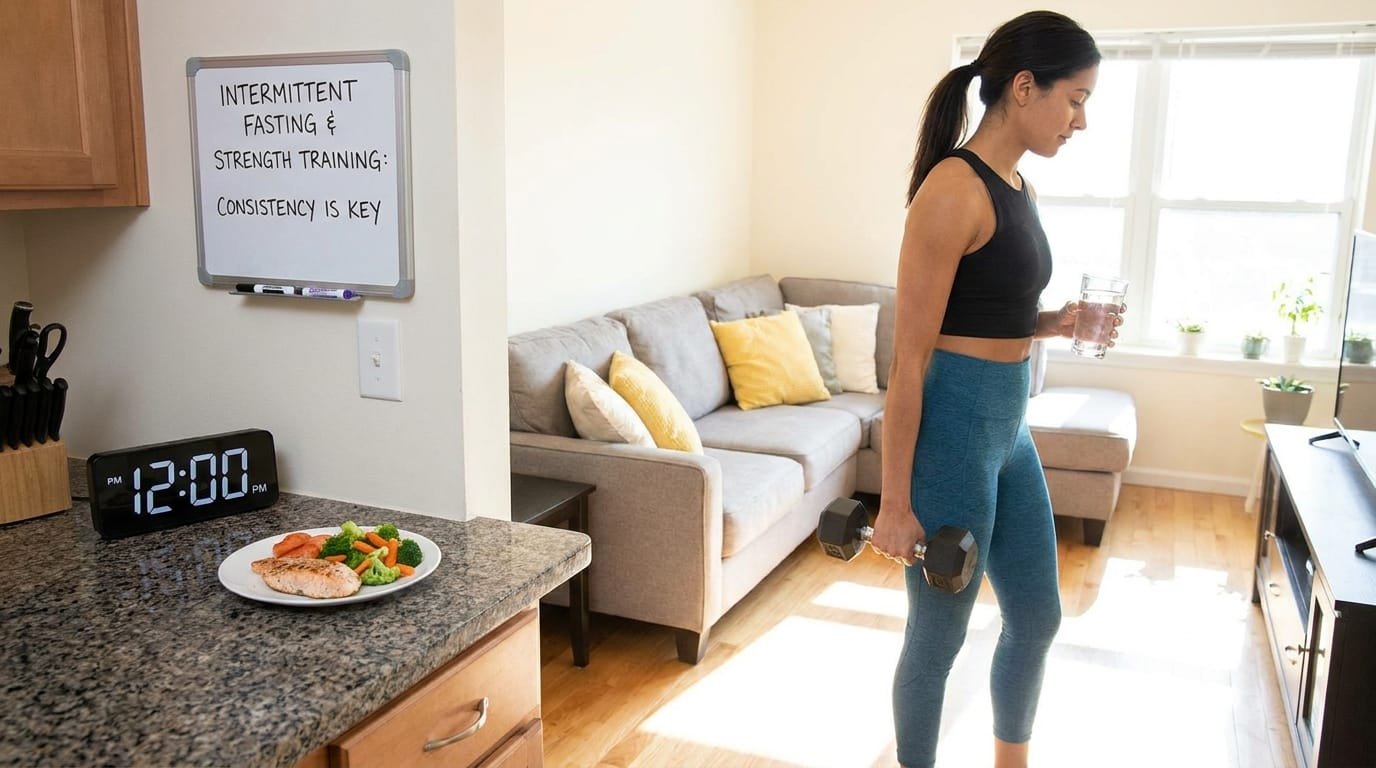
Example: 12:00–20:00 or 10:00–18:00. - Calculate and prioritise daily protein
Hit 1.6–2.2 g/kg inside the window, ideally across 3–4 feedings. - Decide whether to train fasted or fed
Test both and keep the version that maintains performance. - Structure meals for practicality
Include a large protein-containing meal after training when possible. - Monitor key metrics for 2–4 weeks
Training performance, weekly body-weight trend, energy, sleep, and adherence. - Adjust based on evidence
Widen the window, move training, or increase calories if strength declines. - Protect recovery
Do not combine aggressive deficits, high training volume, and long fasting windows simultaneously. - Re-evaluate monthly
Life stress, sleep, and training demands change; the best protocol may shift.
Training Fasted vs Fed While Using Intermittent Fasting
Fasted Training (common with morning sessions)
- Convenient for early home workouts
- Some people feel mentally sharp
- Risk of reduced performance on heavier or higher-volume days
- Requires solid post-workout protein intake once the eating window opens
Fed Training
- Generally supports better strength and volume
- Easier to maintain intensity
- Requires planning a meal or snack before the session while still respecting the window
Most home lifters do best by training in whatever state allows the highest quality work, then ensuring protein is consumed relatively soon after.
Protein Distribution Inside the Eating Window
Because the feeding window is compressed, deliberate planning is required:
- Aim for 3–4 protein feedings
- Target 30–50 g of protein per meal for most adults
- Place one high-protein meal close to the training session (before or after)
- Use convenient sources: Greek yogurt, cottage cheese, lean meats, eggs, protein shakes, canned fish
Failing to hit protein targets is the most common reason IF underperforms for strength athletes.
What the Evidence Suggests
When calories and protein are matched, intermittent fasting produces similar changes in body composition and strength compared with traditional meal patterns for most recreational lifters. Some studies show slightly greater fat loss with IF due to reduced overall intake, but this is an adherence effect rather than a unique metabolic advantage. Muscle retention is excellent when protein is high and resistance training continues. Longer fasting windows (18+ hours) increase the risk of under-eating and training quality decline for many people.
Who Tends to Succeed with IF + Home Strength Training
- People who naturally prefer fewer, larger meals
- Lifters whose schedule makes frequent meals difficult
- Those who find appetite control easier with clear eating boundaries
- Individuals who can still hit protein and calorie targets inside the window
- Trainees whose performance remains stable in a fasted or time-restricted state
Who Should Be Cautious or Avoid Aggressive IF
- Lifters struggling to gain muscle or strength
- People with a history of disordered eating
- Those who experience clear drops in training performance when fasted
- Individuals with very high training volumes or multiple daily sessions
- Anyone who cannot consistently reach protein targets in a short window
- People with certain medical conditions (consult a physician)
Sample 16/8 Day for a Home Lifter
Eating window: 12:00–20:00
- 12:00 – Large lunch with 40–50 g protein + carbohydrates and vegetables
- 15:30 – Protein-rich snack (Greek yogurt, shake, or cottage cheese)
- 17:30–18:15 – Home strength session (fasted or lightly fed earlier if needed)
- 19:00 – Dinner with 40–50 g protein + remaining carbohydrates and fats
- Optional small protein feeding before the window closes if totals are short
This structure keeps protein high while maintaining a clear daily rhythm.
Common Mistakes When Combining IF and Strength Training
| Mistake | Result | Better Approach |
|---|---|---|
| Neglecting total protein | Muscle loss or stalled progress | Prioritise 1.6–2.2 g/kg inside the window |
| Choosing an overly aggressive window | Performance drop and under-eating | Start with 16/8 or 14/10 |
| Training intensely while under-fueled and in a steep deficit | Excessive fatigue and injury risk | Separate aggressive fat loss from high training stress |
| Assuming IF burns more fat automatically | Disappointment when calories aren’t reduced | Track overall intake and adjust deliberately |
| Ignoring training performance feedback | Long-term strength stagnation | Modify protocol if lifts consistently suffer |
| Using IF to justify poor food quality | Micronutrient gaps | Keep nutrient-dense foods inside the window |
Strength training remains the primary driver of muscle and strength gains; nutrition timing strategies must support, not undermine, that process (strength training guidance). Practical home-gym approaches emphasise sustainable systems that fit real schedules and preferences (home gym equipment prioritisation and budget home gym principles).
Frequently Asked Questions
Does intermittent fasting burn muscle?
Not when protein intake is high and progressive resistance training continues. Muscle loss risk rises mainly when protein and total calories are too low.
Is it better to train fasted or fed while doing IF?
Whichever allows better performance. Many people train well fasted on shorter sessions; heavier sessions often improve with some food beforehand.
Can I build muscle while intermittent fasting?
Yes, provided you are in a slight calorie surplus or at maintenance, hit protein targets, and progress your training. The fasting window itself does not prevent hypertrophy.
What is the best IF protocol for strength training?
16/8 or 14/10 are the most practical and sustainable for the majority of home lifters.
Do I need to take BCAAs or protein during the fast?
No. True fasting means avoiding calories. Protein intake belongs inside the eating window.
How long should I try IF before deciding if it works?
Give a moderate protocol 3–4 weeks while tracking training performance, energy, and body-weight trend.
Can women use intermittent fasting with strength training?
Many women do well with moderate protocols (14/10 or 16/8). Longer or more aggressive fasting can disrupt energy or menstrual function in some individuals and should be approached cautiously.
Should I stop IF on high-volume or heavy training days?
Some lifters widen the window or shift training timing on the hardest days. Performance feedback should guide the decision.
Final Recommendation
Intermittent fasting can work effectively with home strength training when protein targets are hit, calories support the goal, and training performance remains stable. A moderate 16/8 or 14/10 schedule is the most practical starting point for most people. Treat IF as a tool for adherence and schedule simplicity rather than a superior fat-loss or muscle-building method. Protect progressive overload, daily protein, and recovery above any fasting protocol.
Choose a moderate eating window that fits your training time, calculate your protein target, and structure 3–4 protein-containing meals inside that window. Test fasted versus fed training and keep the version that preserves session quality. Monitor results for 3–4 weeks and adjust based on real data. When implemented this way, intermittent fasting becomes a sustainable option rather than a source of under-fueling or stalled progress. Start with the next planned window—the combination of intelligent fasting and consistent home strength training works when the fundamentals stay in place.