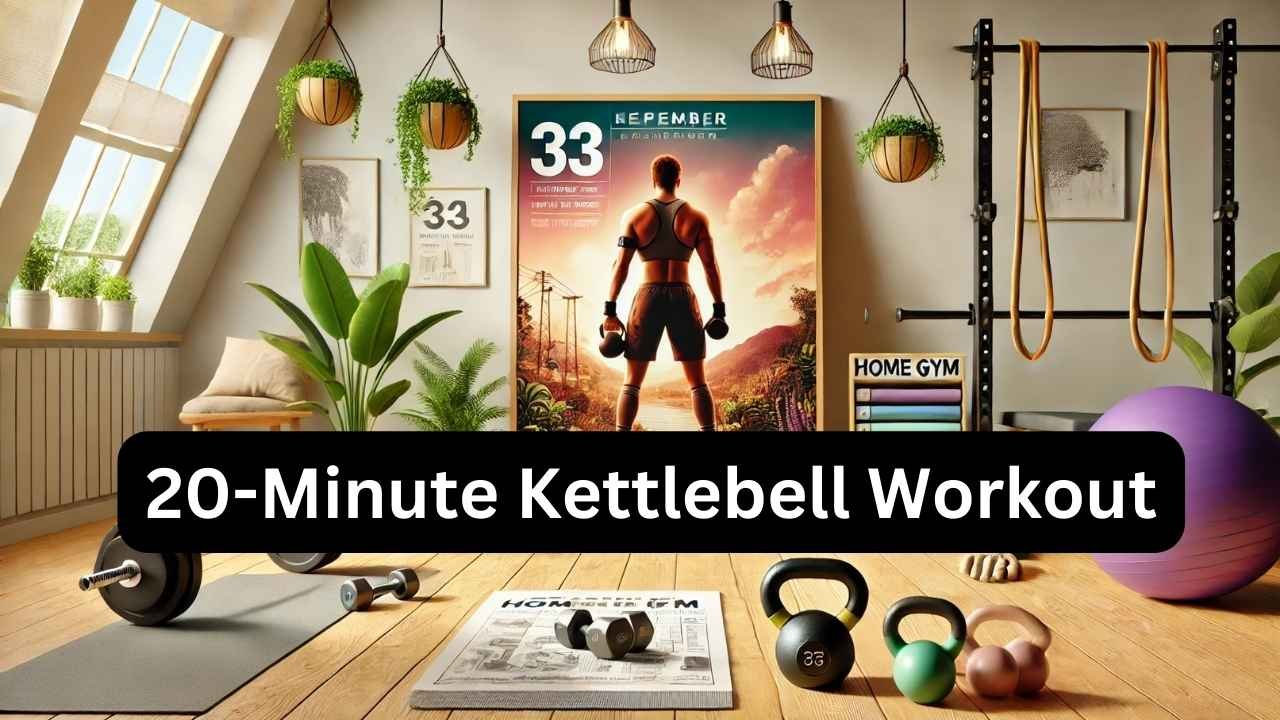
20-Minute Kettlebell Arm Masterclass
Quick answer: A focused 20-minute kettlebell routine can build real arm and grip strength by combining compound movements (cleans, presses, swings) rather than isolated curls — the key is picking a weight that lets you maintain control through the full set, not just moving heavy weight.
Researched and written by the GymGoodies team, fact-checked against manufacturer specs and current fitness guidance.
Most people default to endless bicep curls or triceps kickbacks when they want stronger, more defined arms — but kettlebells work differently. Because a kettlebell’s weight is offset from the handle, your arms have to stabilize and control it throughout each movement, not just lift it. That means compound kettlebell exercises train your arms as part of a full kinetic chain, alongside your core, back, and legs, rather than in isolation. This guide walks through a complete 20-minute arm-focused routine you can do with a single adjustable kettlebell.
Why Kettlebell Training Builds Arms Differently Than Isolation Work
A few things make kettlebell training distinct from dumbbell curls or machine-based arm work:
- Grip demands — simply holding and controlling a kettlebell engages your forearms and biceps dynamically throughout a movement, not just during the “working” portion of a rep.
- Deceleration control — swings and cleans require your arms and shoulders to stabilize the bell explosively at the top and control it on the way down, building strength through a fuller range of motion.
- Core-to-arm force transfer — your lats and core help transfer force through your arms during presses and cleans, which can reduce isolated joint strain compared to pure arm-isolation exercises.
If you want a deeper look at picking the right kettlebell weight for these movements before starting, see our guide on how heavy your adjustable kettlebell should be.
What the Research Actually Shows
Kettlebell training has a reasonable body of independent research behind it, not just anecdotal enthusiasm. A study sponsored by the American Council on Exercise, conducted with researchers at the University of Wisconsin-La Crosse, found that participants who completed an eight-week kettlebell training program saw measurable improvements in aerobic capacity, grip strength, core strength, and dynamic balance compared to a control group. Separate research on the kettlebell swing specifically has found it can meaningfully increase both maximal and explosive strength when performed with proper technique. You can read more about the ACE-sponsored kettlebell research study directly, along with ACE’s technique breakdown of the two-handed kettlebell swing if you want to review proper form before adding load.
Why Grip Endurance Matters More Than People Realize
Your grip is often the limiting factor in kettlebell training — it tends to fatigue before your biceps or shoulders do, which naturally caps how much volume you can safely do in a session and can help prevent overtraining larger muscle groups.
A simple way to gauge your current grip endurance:
- Hold a kettlebell by the horns (bottom-up position) at shoulder height.
- Time how long you can maintain control before your grip starts to shake or fail.
- As a rough benchmark, being able to hold a moderate weight for 45-60+ seconds suggests solid grip endurance for your current training level.
If your grip fails well before your arms feel fatigued, that’s a sign to work grip endurance directly — dead hangs and farmer’s carries are simple additions for this.
Myth: “Heavier Weight Always Means Better Arm Results”
More weight isn’t inherently wrong, but it’s incomplete without matching technique. Kettlebell training in particular rewards control and movement quality over raw load — swinging a kettlebell that’s too heavy for your current skill level tends to produce jerky, momentum-driven movement rather than smooth, controlled reps. For arm-focused kettlebell work specifically, many lifters get better results from a lighter-to-moderate weight performed with strict control and higher reps than from grinding through a heavy weight with compromised form.
The 20-Minute Kettlebell Arm Routine
Follow this sequence 2-3x per week, resting a day between sessions to allow recovery:
Phase 1: Warm-Up (3 minutes)
- Arm circles — 30 seconds each direction
- Dead hang (from a pull-up bar, if available) — up to 1 minute, or as long as comfortable
Phase 2: Strength Work (12 minutes)
- Kettlebell clean + press — 3 sets of 8 per side. Hinge slightly at the hips to clean the bell into the rack position, then press overhead without arching your lower back.
- Half-kneeling kettlebell curl — 3 sets of 10 per side. Kneeling on one knee helps isolate the arm and limits momentum from the legs or torso.
Phase 3: Conditioning Finisher (5 minutes)
- Kettlebell swings — 10 swings at the start of every minute (EMOM style) for 5 minutes total. As you progress, you can add a push-up at the top of each interval for extra volume.
Common Mistakes in This Routine
- Using too heavy a kettlebell for the clean + press, which often causes the elbow to flare or the lower back to arch to complete the rep — a sign to drop weight and rebuild the movement pattern first.
- Rushing the half-kneeling curl, using momentum from the torso rather than isolating the bicep — slow the tempo down if you notice this.
- Skipping the warm-up, especially the dead hang, which primes grip and shoulder stability before the working sets.
Recovery Basics Worth Knowing
Muscle recovery after training depends heavily on the basics: adequate protein intake throughout the day, staying hydrated, and allowing enough rest between sessions targeting the same muscle group. If you’re training arms 2-3x per week with this routine, make sure you’re not also hammering the same movement patterns elsewhere in your training without adjusting overall volume.
Frequently Asked Questions
Do I need more than one kettlebell for this routine?
No — a single adjustable kettlebell covers this entire routine, since you can drop the weight for the curl and press if needed and increase it for swings, without needing separate equipment.
How long until I see results from this routine?
Most people notice improved grip endurance and movement control within a few weeks of consistent training; visible strength and definition changes typically take longer and depend on overall training volume, nutrition, and consistency.
Can beginners do this routine?
Yes, with a lighter starting weight (see our kettlebell weight guide if you’re unsure where to start) and a focus on mastering the clean and swing pattern before adding significant load.
Key Takeaways
- Train arms as part of a full-body movement system rather than in isolation for better carryover to real-world strength.
- Grip endurance is often the real bottleneck — test and build it directly if it’s limiting your sets.
- Prioritize control and full range of motion over simply using the heaviest kettlebell you can manage.
- A focused 20-minute session, done consistently, can be enough — consistency matters more than session length.
Have you tried kettlebell training for arm strength before? Let us know in the comments what weight you started with and how your grip endurance has progressed.