
Get Strong in 15 Minutes: Barbell Basics for Beginners
Quick answer: Barbell training for beginners centers on a small set of compound movements — the squat, deadlift, bench press, and overhead press — performed with an empty bar or light weight until your technique is solid, then progressed gradually by adding small amounts of weight session to session. This simple, well-established approach (often called a “novice linear progression”) is one of the most reliable ways for new lifters to build real strength safely.
Researched and written by the GymGoodies team, fact-checked against manufacturer specs and current fitness guidance.
Walking up to a barbell for the first time can feel intimidating, especially watching more experienced lifters load plates and move serious weight. The good news: barbell training for beginners is actually built around simplicity — a handful of foundational movements, conservative starting weights, and a gradual, predictable progression.
The Core Barbell Movements Every Beginner Should Learn
1. The Squat
A foundational lower-body movement training your quadriceps, glutes, and core together. Beginners should start with just the empty barbell (typically 45 lbs/20 kg for a standard bar) to build the movement pattern before adding weight.
2. The Deadlift
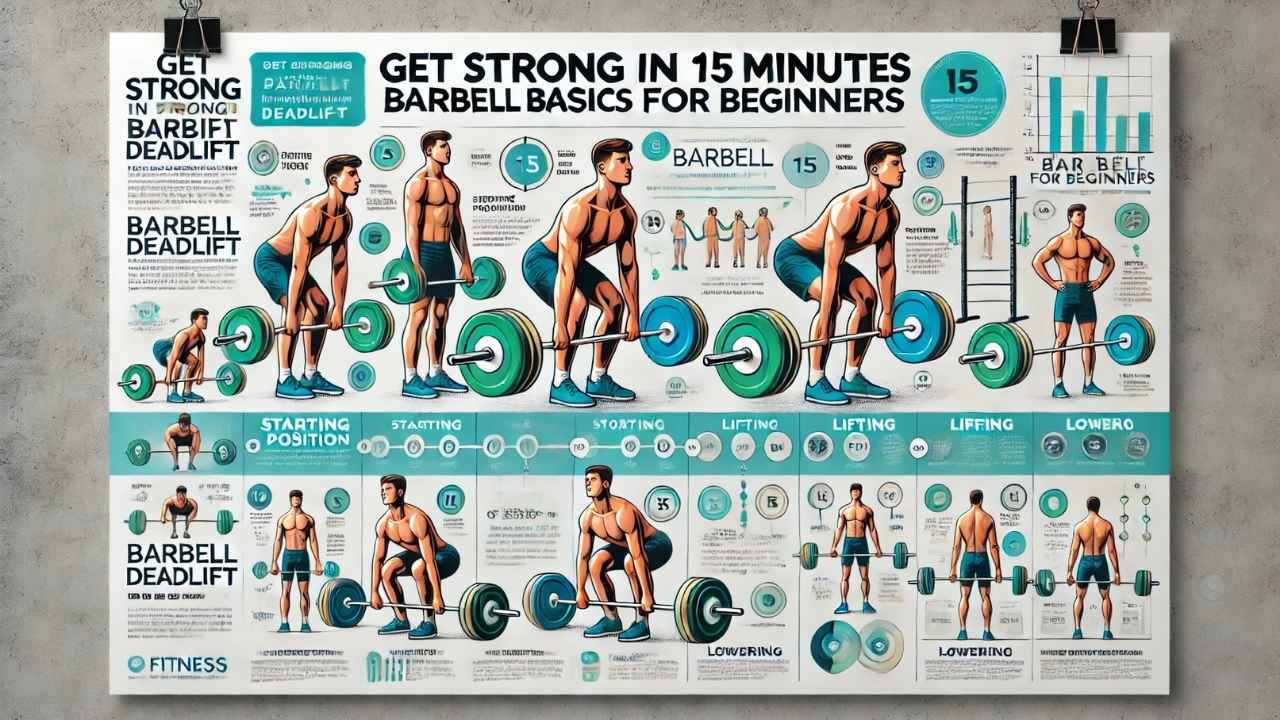
Trains your posterior chain — hamstrings, glutes, and lower back — through a hip-hinge pattern. Because it starts from a dead stop on the floor, it’s typically programmed with less total volume than other lifts to manage overall fatigue.
3. The Bench Press
A foundational upper-body pushing movement, training your chest, shoulders, and triceps together. Given the barbell is over your body during this lift, using a spotter or safety pins in a power rack is an important safety consideration for beginners specifically.
4. The Overhead Press
Trains shoulder strength and stability by pressing the barbell overhead from shoulder height, engaging your shoulders, triceps, and core for stability throughout.
Why Compound Barbell Movements Make Sense for Beginners
These four lifts share a few practical advantages for someone just starting out: they train multiple muscle groups simultaneously (efficient use of training time), they mimic natural movement patterns like squatting and hip-hinging, and they’re easy to load incrementally with small weight increases, which matters significantly for the progression approach described below.
Starting Weight: Why Beginners Should Start Lighter Than They Think
A common instinct is to start with a weight that feels “challenging” right away — but for barbell movements specifically, starting conservatively (often with just the empty bar) serves a real purpose: it lets you build correct movement patterns and comfort with the bar before adding load, which matters more for barbell lifts than for many other exercises given how much technique affects both safety and long-term progress.
The Novice Linear Progression: A Well-Established Beginner Framework
One of the most widely used approaches for beginner barbell training is a structure often called a novice linear progression, popularized through resources like the Starting Strength program and explained in detail by organizations like Barbell Logic. The core structure:
- Train 3 non-consecutive days per week (e.g., Monday, Wednesday, Friday)
- Alternate between two workouts — typically Workout A (squat, bench press or overhead press, deadlift) and Workout B (squat, the other press, deadlift)
- Perform 3 sets of 5 reps for squat and pressing movements, and typically 1 set of 5 for the deadlift, since it’s a comparatively more fatiguing lift performed from a dead stop each rep
- Add a small, fixed amount of weight to the bar each session — often 5 lbs for upper body lifts and slightly more for squats and deadlifts, which respond well to faster loading early on
This approach works specifically because true beginners can typically add weight almost every single session for a period of weeks to months — a stage of rapid, predictable progress that doesn’t last indefinitely, but is genuinely valuable while it does.
Why General Resistance Training Guidelines Support This Approach
Beyond specific program structures, broader resistance training research supports the underlying principles this approach is built on. Progressive overload — gradually increasing the demand placed on your muscles over time — is a foundational, well-established principle for building strength, consistent with the guidance found in position statements from major sports medicine organizations on structuring resistance training programs for measurable, sustained strength gains.
Technique Fundamentals to Prioritize From Day One
Since barbell movements load your spine, hips, and shoulders directly, getting technique right early matters more than rushing to add weight:
- Squat: keep your chest up, push your knees out in line with your toes, and descend to at least parallel or below with control
- Deadlift: keep the bar close to your body throughout the lift, maintain a neutral spine (avoid excessive rounding), and drive through your heels
- Bench press: keep your shoulder blades pulled back and down, maintain a stable arch, and lower the bar with control to your chest before pressing
- Overhead press: brace your core throughout, avoid excessive lower back arch, and press the bar in a controlled path close to your face and forehead
Safety Considerations for Beginners
- Use a power rack with safety pins/arms set at an appropriate height for squats and bench press, so a failed rep doesn’t trap you under the bar
- Consider working with a coach or experienced lifter initially, even briefly, to check your form on these foundational movements before training independently
- Don’t rush weight progression past what your technique can actually support — adding weight faster than your form can handle increases injury risk without genuinely building useful strength
How Barbell Training Fits Into a Broader Program
These four lifts map cleanly onto the push/pull framework we’ve covered elsewhere on the site — bench press and overhead press are push movements, while the deadlift functions as a pulling/hip-hinge pattern. Our Push vs. Pull Exercises guide covers why balancing these patterns matters for long-term joint health, a principle worth keeping in mind as you build out a complete program beyond just these four lifts. The squat also directly trains the muscles covered in our guide on the muscles used for sitting and standing, connecting barbell training to genuinely functional, everyday strength.
What Happens After the Beginner Phase
The rapid, session-to-session progression of a novice linear progression naturally slows down as your strength increases — this is normal and expected, not a sign anything is wrong. Most lifters eventually transition to more complex programming (varying rep ranges, weekly rather than session-to-session progression) once simple linear progression stops producing consistent gains, typically after weeks to a few months of consistent training, depending on the individual.
Common Mistakes Beginners Make With Barbell Training
- Starting too heavy, skipping the empty-bar or light-weight technique-building phase entirely.
- Adding weight too aggressively, outpacing what current technique can safely support.
- Skipping the deadlift or overhead press due to intimidation, missing out on genuinely valuable movement patterns.
- Training without safety equipment (rack pins, spotter) on lifts like the bench press where a failed rep carries real risk.
- Not tracking weights and progress, making it hard to know when and how much to increase load each session.
Frequently Asked Questions
Do I need a coach to start barbell training safely?
It’s not strictly required, but having someone experienced check your form on these four lifts early on — even just for a session or two — can help you avoid technique habits that are harder to correct later.
How quickly should I expect to progress as a beginner?
Many true beginners can add weight nearly every session for several weeks to a few months, which is one of the more encouraging aspects of starting barbell training — though this rate naturally slows as you move beyond the beginner stage.
Is starting with just the empty bar really necessary if I already feel strong?
Yes, generally — general strength from other activities doesn’t always translate directly to correct barbell technique, and building that movement pattern correctly from the start matters more than the modest weight of an empty bar might suggest.
Bottom Line
Barbell training for beginners doesn’t need to be complicated — a small set of compound movements (squat, deadlift, bench press, overhead press), started conservatively and progressed gradually through small, consistent weight increases, is a well-established, effective approach for building real strength safely. Prioritizing technique early, using appropriate safety equipment, and trusting the gradual progression process sets up a solid foundation for whatever more advanced training comes next.
Are you just getting started with barbell training, or working through a progression like this already? Let us know in the comments how it’s going and which lift you’ve found most challenging to learn.