30-Day Challenge Ideas Using Only a Kettlebell and Resistance Bands
Quick Answer
A well-structured 30-day challenge using only a kettlebell and resistance bands can produce clear improvements in strength, muscle tone, work capacity, and body composition. The most effective approach combines progressive full-body strength sessions with denser conditioning circuits, trains 4–6 days per week with planned recovery, emphasises compound movements (swings, goblet squats, hinges, presses, rows, and carries), and progresses through added repetitions, reduced rest, stronger band tension, or more challenging variations. Consistency and simple progressive overload matter far more than complicated programming. Most people finish the month stronger, leaner, and more confident using nothing beyond these two versatile tools.
Why Kettlebell + Resistance Bands Form an Ideal Minimalist Challenge Pair
A single kettlebell delivers ballistic power development, loaded strength work, grip challenge, and cardiovascular demand in one compact implement. Resistance bands supply joint-friendly variable resistance, easy regressions and progressions, excellent activation and posture tools, and high portability. Together they cover every fundamental movement pattern—squat, hinge, push, pull, carry, and core anti-movement—without needing a bench, rack, cables, or large footprint.
This pairing is especially powerful for 30-day challenges because it removes decision fatigue, works in small spaces or while travelling, and still allows meaningful progressive overload. Research and practical coaching experience consistently show that full-body, compound-focused training performed with moderate-to-high effort produces robust strength and conditioning adaptations even with limited equipment (strength training principles).
Complete Movement Library for the Challenge
Primary Kettlebell Exercises
- Two-hand and one-hand swings
- Goblet squat
- Romanian deadlift and single-leg Romanian deadlift
- Clean and strict press or push press
- Single-arm row
- Turkish get-up or partial get-up progressions
- Farmer carry, suitcase carry, and rack carry
- Halo, around-the-body pass, and figure-8
Primary Band Exercises
- Band pull-aparts and face pulls
- Seated or standing band rows
- Banded glute bridges, hip thrusts, and lateral walks
- Band-resisted push-ups or standing chest presses
- Band good mornings or pull-throughs
- Band overhead press or careful lateral-raise variations
- Band dead bugs, pallof presses, and anti-rotation holds
- Band-assisted or band-resisted pull-apart variations for shoulder health
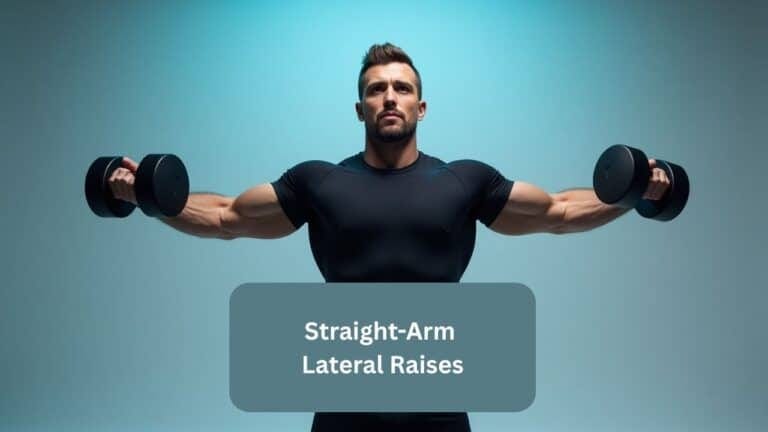
For shoulder-raising patterns, prioritise joint-friendly technique. Detailed comparisons of arm position and common errors appear in Bent Arms vs. Straight Arms in Lateral Raises, The Hidden Mistake in Lateral Raises, and 3 Lateral Raise Modifications. Grip endurance, which often limits carries and rows, improves with dedicated work (Do Hand Grippers Really Work?).
Challenge Format Options – Choose One Primary Structure
| Challenge Type | Main Goal | Typical Weekly Frequency | Progression Emphasis | Ideal For |
|---|---|---|---|---|
| Strength Builder | Maximal strength & muscle | 4 strength days + 1–2 lighter | Load, reps, tempo | Adding strength and shape |
| Conditioning Crusher | Work capacity & fat loss | 5 circuit days + 1–2 recovery | Density, rounds, shorter rest | Improving conditioning and body composition |
| Hybrid Balanced | Strength + conditioning | 3 strength + 2 conditioning | Both load and density | Overall fitness and sustainability |
| Minimalist Daily | Habit formation | 20–30 min most days | Consistency first | Building the training habit |
| Skill + Strength | Technique mastery | Emphasis on get-ups, cleans, complex work | Skill quality + load | Improving kettlebell proficiency |
Most people achieve the best balance of results and adherence with the Hybrid format.
Detailed Hybrid 30-Day Challenge Template
Weekly Structure
- Day 1 – Strength A (Squat + Push focus)
- Day 2 – Conditioning Circuit
- Day 3 – Strength B (Hinge + Pull focus)
- Day 4 – Active recovery (mobility, light band work, walking)
- Day 5 – Strength A or full-body density session
- Day 6 – Conditioning or longer carry + core session
- Day 7 – Full rest or easy walk
Strength A Example
- Goblet squat – 4 sets of 8–12
- Kettlebell Romanian deadlift – 3–4 sets of 8–10
- Band or kettlebell floor press / push-up variation – 3 sets of 8–12
- Band pull-apart – 3 sets of 15–25
- Core: band dead bug or plank variation – 2–3 sets
Strength B Example
- Kettlebell swing – 5 sets of 10–20
- Single-arm kettlebell row – 3 sets of 8–12 per side
- Kettlebell or band overhead press – 3 sets of 6–10
- Band face pull or pull-apart – 3 sets of 12–20
- Farmer or suitcase carry – 3 sets of 30–45 seconds
Conditioning Circuit Example (perform 3–6 rounds)
- 15–20 kettlebell swings
- 10–15 goblet squats
- 10 band rows per side
- 8–12 push-ups (add band resistance if desired)
- 15–25 band pull-aparts
Rest 45–90 seconds between rounds.
Four-Week Progressive Overload Plan
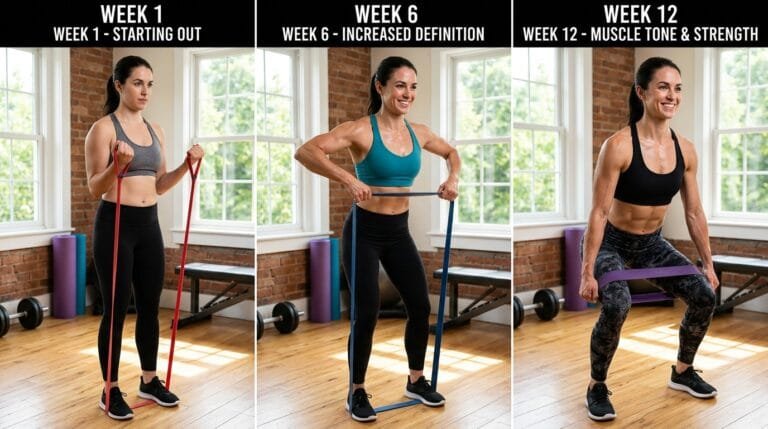
Week 1 – Technique & Baseline
Focus on perfect form. Use conservative loads and full rest periods. Record every set, rep, and how the session felt. Establish baseline numbers for key lifts and one benchmark circuit.
Week 2 – Volume Increase
Add 1–3 repetitions to most sets or one additional round on circuit days. Keep rest periods similar. Maintain strict technique.
Week 3 – Density Focus
Reduce rest intervals by 10–20 seconds or increase band tension. Hold kettlebell loads steady or make small increases only where form remains excellent.
Week 4 – Peak & Retest
Push performance on strength lifts and circuits. On day 28–30 retest the exact benchmark circuit or strength session from Week 1 and compare total repetitions, rounds, or load used.
Step-by-Step Implementation Guide
- Select your challenge format and write the weekly template on paper or in a notes app.
- Choose a kettlebell that allows 10–15 controlled swings and 8–12 goblet squats with solid form (have a lighter option if possible).
- Gather at least two or three band strengths (light, medium, heavy).
- Block training times in your calendar as non-negotiable appointments.
- Begin every session with a 5-minute warm-up (light movement, band pull-aparts, bodyweight squats and hinges).
- Record every workout in detail (exercises, sets, reps, band used, rest, RPE).
- Progress only one variable at a time.
- Prioritise 7–9 hours of sleep and adequate protein intake.
- Insert an extra rest day if joint or systemic fatigue accumulates.
- On day 30, retest and document improvements in strength, conditioning, energy, and clothing fit.
Warm-Up and Cool-Down Protocols
Warm-up (5–8 minutes)
- Easy marching, jumping jacks, or light skipping
- Band pull-aparts and face pulls
- Bodyweight squats and hip hinges
- Kettlebell halos or light deadlifts
- One light preparatory set of the first main exercise
Cool-down (5 minutes)
- Band-assisted chest, hip flexor, and hamstring stretches
- Gentle thoracic rotations
- Slow breathing or short walk
Goal-Specific Customisation
Fat-Loss Emphasis
Increase circuit frequency and density, keep rest periods shorter, add swing or band-complex finishers, and maintain a modest calorie deficit while keeping protein high.
Maximum Strength Emphasis
Lower the repetition range on kettlebell lifts (5–8 reps), lengthen rest periods, use slower eccentric tempos, and treat bands primarily as activation and higher-rep accessory tools.
Beginner Version
Reduce total sets and rounds, use lighter kettlebell or band-only options for some movements, and allow 2–3 full rest days per week.
Advanced Version
Incorporate single-leg and single-arm variations, kettlebell complexes (clean + press + squat), shorter rest, and higher total round counts.
Safety, Recovery, and Longevity Guidelines
- Master the hip-hinge pattern before loading swings heavily.
- Keep the kettlebell close to the body during cleans and presses.
- Select band tension that permits full control through the entire range of motion.
- Stop any exercise that produces sharp joint pain.
- Protect shoulder health by using controlled ranges and proven technique cues (see the lateral-raise resources linked above).
- Address grip limitations with carries and dedicated holds.
- Sleep, protein intake, and stress management strongly influence recovery and results.
- If recovery lags, reduce volume or insert an extra easy day rather than pushing through accumulating fatigue.
External resources on minimal-equipment and kettlebell-based training support the effectiveness of progressive full-body work with limited tools for both strength and conditioning goals (NPR strength exercises resource).
Simple Tracking System
Record for every session:
- Date and session type
- Kettlebell weight used
- Band colour or tension
- Sets, repetitions, or rounds completed
- Rest intervals
- Rate of perceived exertion (1–10)
- Optional notes on energy, sleep, or technique
Weekly review of these numbers makes progress visible even when scale weight or mirror changes are slow.
Frequently Asked Questions
What kettlebell weight should I choose?
Select a load that allows 10–15 solid two-hand swings and 8–12 goblet squats with good form. Many women start successfully with 8–16 kg; many men with 16–24 kg. Own or have access to a lighter option for higher-rep or skill work.
Can meaningful results really occur with only these two tools?
Yes. When compound movements are trained progressively, the combination supplies sufficient stimulus for strength, hypertrophy, and conditioning improvements over 30 days.
How many rest days are optimal?
Most trainees do well with one or two full rest or active-recovery days each week. Adjust according to joint feel and overall fatigue.
What should I do if I miss a scheduled session?
Continue with the next planned session. Avoid doubling volume to “catch up.”
Is this challenge appropriate for true beginners?
Yes, provided loads stay light, volume is reduced, and technique remains the top priority. Extra rest days are encouraged.
Should additional cardio be added?
Swings and circuits already supply substantial conditioning. Extra walking on rest days supports recovery and overall activity levels.
How do I continue progressing after the kettlebell feels manageable?
Increase repetitions, slow the tempo, shorten rest, advance to single-arm or single-leg versions, or combine movements into complexes.
Can I run the challenge while travelling?
Yes. Bands pack easily and a single kettlebell (or a suitable substitute) is sufficient. Many hotels or parks allow space for the sessions.
How important is nutrition during the 30 days?
Very important. Adequate protein intake and overall energy balance strongly influence strength gains, recovery, and body-composition changes.
What is the best way to measure success at the end of 30 days?
Retest a benchmark circuit or strength session, compare total work performed, note improvements in daily energy and clothing fit, and evaluate consistency (how many sessions you completed).
Final Recommendation
A 30-day challenge built exclusively around one kettlebell and a set of resistance bands is one of the most efficient, low-barrier ways to improve strength, conditioning, and body composition. Select a clear structure (the hybrid model suits most people), train consistently 4–6 days per week, progress systematically through volume, density, or load, and track every session.
Master the fundamental kettlebell patterns, use bands for balanced pulling, activation, and joint-friendly work, protect your shoulders with sound technique, and support the month with sufficient sleep and protein. At the end of 30 days you will possess objective evidence of progress and a repeatable training template you can extend or intensify.
Choose your kettlebell and bands, schedule the first session this week, and begin. Thirty focused days with these two tools can meaningfully change how you look, feel, and perform—start now and let consistent effort compound.