Shoulder Health Routine to Pair with Lateral Raise Training
Quick Answer
A dedicated shoulder health routine paired with lateral raise training should prioritise rotator cuff external rotation, scapular stabilisation (especially lower trapezius and serratus anterior), posterior shoulder endurance, and controlled mobility. Perform the routine 2–4 times per week using light resistance bands or bodyweight. Core exercises include band pull-aparts, face pulls with external rotation, side-lying or standing external rotations, wall slides, and serratus punches. This work improves humeral head centring, reduces impingement risk, supports cleaner lateral-raise technique, and enables sustainable progressive overload on the side deltoids. Keep loads light, emphasise control over intensity, and never train through sharp pain.
Why Shoulder Health Work Must Accompany Lateral Raises
Lateral raises are among the highest-value exercises for building the lateral deltoid and creating visible shoulder width. They place the arm in abduction, a position that narrows the subacromial space and demands precise coordination between the deltoid, rotator cuff, and scapular muscles. When the smaller stabilisers are relatively weak or poorly timed, the deltoid dominates, the humeral head can migrate superiorly, and irritation or impingement-type symptoms frequently develop.
A structured health routine restores muscular balance, improves scapular upward rotation and posterior tilt, and strengthens the external rotators that keep the humeral head centred. Multiple prehab and rehabilitation sources emphasise external rotation strength, scapular control, and posterior shoulder endurance as foundational for pain-free raising and pressing (shoulder stability exercise principles). When these qualities improve, lateral raises feel smoother, technique improves, and trainees can progress loads more safely over time.
Key Muscles and Their Roles
| Muscle / Group | Primary Function Relevant to Lateral Raises | Consequence of Weakness | Priority Health Exercises |
|---|---|---|---|
| Infraspinatus & Teres Minor | External rotation & humeral head depression | Poor centring, increased impingement risk | Side-lying/standing external rotation |
| Lower & Middle Trapezius | Scapular depression, retraction, upward rotation | Upper-trap dominance, poor scapular mechanics | Band pull-aparts, face pulls, prone Y-T |
| Serratus Anterior | Scapular protraction & upward rotation | Winging, incomplete upward rotation | Serratus punches, wall slides, push-up plus |
| Posterior Deltoid & Rhomboids | Horizontal abduction & posture support | Rounded shoulders, reduced posterior strength | Face pulls, reverse flyes, pull-aparts |
| Rotator Cuff (overall) | Dynamic stability of the glenohumeral joint | Instability or compensatory patterns | Combined external rotation + scapular work |
The Complete Shoulder Health Routine
Perform this routine 2–4 times per week. It works well as a 8–15 minute warm-up before lateral raises, as a standalone session on recovery days, or after upper-body training. Use light bands or very light dumbbells — the goal is precise activation, motor control, and muscular endurance rather than fatigue that impairs later performance.
1. Band Pull-Apart
Hold a light-to-moderate band at shoulder height with arms extended and palms facing each other or slightly down. Pull the band apart by retracting and slightly depressing the scapulae while externally rotating the arms. Keep the ribs down and avoid shrugging. Pause briefly at peak contraction.
Sets/Reps: 2–3 × 12–20
Tempo: Controlled, 1–2 second squeeze
2. Face Pull with External Rotation
Anchor a band at approximately face height. Grip with thumbs up or neutral, pull toward the forehead or upper chest while driving the elbows high and finishing with clear external rotation (thumbs point backward). Emphasise scapular retraction and posterior tilt.
Sets/Reps: 2–3 × 12–15
This movement simultaneously trains rear delts, external rotators, and scapular retractors.
3. Side-Lying External Rotation (or Standing Band External Rotation)
Side-lying: Lie on the non-working side with the working elbow bent to 90° and pinned against the ribs. Hold a very light dumbbell or band. Rotate the forearm upward against gravity, pause, and lower slowly.
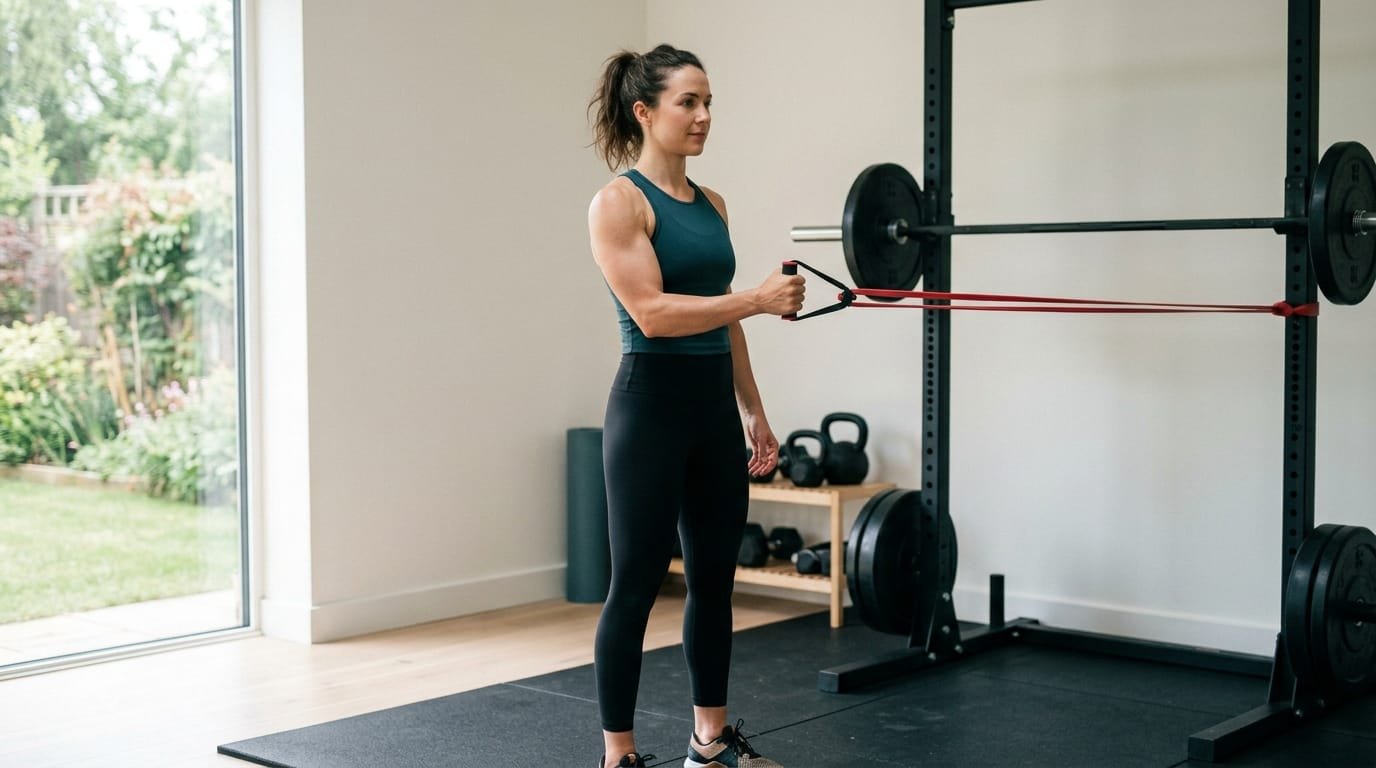
Standing alternative: Anchor a band at elbow height and externally rotate while keeping the elbow fixed at the side.
Sets/Reps: 2–3 × 10–15 per side
This is one of the highest-value exercises for infraspinatus and teres minor strength (evidence-based rotator cuff activation).
4. Wall Slides / Scapular Wall Slides
Stand with your back, head, and arms against a wall in a “goal-post” or “W” position. Slowly slide the arms upward while maintaining contact with the wall as long as possible, focusing on scapular upward rotation and avoiding excessive upper-trap shrugging. Return under control.
Sets/Reps: 2–3 × 8–12
Excellent for teaching coordinated scapular motion required during abduction and overhead patterns.
5. Serratus Punch or Push-Up Plus
Band version: Wrap a light band around the upper back and punch forward, fully protracting the scapulae at the end.
Bodyweight version: From a plank or elevated push-up position, push the floor away at the top to protract the scapulae (the “plus”).
Sets/Reps: 2–3 × 10–15
Strengthens serratus anterior, critical for preventing winging and supporting upward rotation.
Optional High-Value Additions
- Prone Y-T-W raises (bodyweight or very light weights) for lower trapezius and posterior shoulder
- Band diagonal lifts or chops for multi-planar control
- Controlled scaption raises (thumbs-up, 30° forward of the frontal plane) with very light load
Step-by-Step Integration with Lateral Raise Training
- Complete 5–12 minutes of the health routine as activation before any lateral-raise work.
- Execute lateral raises with strict form: slight elbow bend, lead with the elbows, avoid shrugging, control the eccentric, and stay within a pain-free range. Detailed technique and impingement-friendly modifications are covered in How to Perform Safe Lateral Raises if You Have Shoulder Impingement History.
- Keep lateral-raise loads moderate enough that perfect form is maintained — progressive overload should never come at the expense of control.
- Add a second, slightly higher-volume health session on a separate day if recovery allows.
- Monitor for early warning signs (pinching during the raise, residual ache, or loss of range) and reduce volume or range immediately if they appear.
- Progress the health work only after control is excellent — move to a slightly stronger band or add short pauses rather than chasing fatigue.
- Maintain balanced pulling volume (rows, face pulls, pull-aparts) throughout the week.
- Manage total weekly shoulder stress; more is not always better.
- Support training with adequate sleep, protein intake, and overall recovery.
- Reassess form and comfort every 4–6 weeks and adjust volume or exercise selection as needed.
Sample Weekly Templates
Template A – Integrated Warm-Up Style
- Day 1: Full health routine → Lateral raises + upper-body training
- Day 3: Health routine (focus on external rotation & face pulls)
- Day 5: Full health routine → Lateral raises
Template B – Higher Health Frequency
- Four short (8–12 minute) health sessions spread across the week
- Lateral-raise work included on two of those days or within full upper-body sessions
Programming Variables and Progression
- Frequency: 2–4 times per week
- Intensity: Light — activation and control are the goals
- Volume: 8–15 total sets across the routine is sufficient for most trainees
- Progression hierarchy: Improve control and endurance → add brief pauses → use a slightly stronger band → increase total sets modestly
Elastic resistance has demonstrated positive effects on shoulder strength and function in multiple studies when applied consistently and with proper technique (elastic resistance shoulder training outcomes).
Supporting Training Elements
Strong grip improves control of bands and dumbbells during both health work and lateral raises — develop it with the methods in grip strength guidance. Once the foundation is solid, kettlebell bottoms-up presses or carries can further challenge shoulder stability (kettlebell sizing guide).
Core stability enhances overall force transfer and bracing; progressions toward an ab roller are useful. Low-impact conditioning options are discussed in manual treadmill guidance. A budget massage gun can help manage residual tension in the upper back, rear delts, and rotator cuff area. For selecting appropriate bands, see Resistance Bands Buying Guide: Loop vs. Tube vs. Fabric – Which Wins?.
Further evidence-based exercise selection and activation strategies appear in practical prehab resources (evidence-based shoulder exercises and shoulder stability routines).
Common Mistakes and Corrections
- Using heavy resistance on prehab exercises → switch to lighter bands and prioritise perfect control
- Skipping external rotation work → make side-lying or standing external rotation a non-negotiable
- Performing lateral raises with momentum or excessive shrugging → reduce the load and focus on strict form
- Ignoring early discomfort → regress volume or range immediately
- Overloading both heavy raises and high-volume prehab without recovery → manage total weekly stress
- Allowing daily posture (rounded shoulders, forward head) to counteract training gains → add awareness and mobility work
Frequently Asked Questions
How often should the shoulder health routine be performed?
2–4 times per week is effective for the majority of trainees. It can serve as a warm-up or as independent short sessions.
Can I perform the routine on the same day as heavy lateral raises?
Yes. Place it before the raises as activation. Keep the prehab light so residual fatigue does not compromise main-lift performance.
What if I already experience shoulder pain?
Stop or significantly reduce aggravating movements (including lateral raises) and seek assessment from a qualified professional. The routine is designed for health and prevention, not as treatment for acute injury.
Are bands superior to light dumbbells for this work?
Both are excellent. Bands excel for pull-aparts, face pulls, and standing external rotation; light dumbbells are ideal for side-lying external rotation and prone raises.
How soon will I notice benefits?
Improved control and reduced residual soreness often appear within 2–4 weeks. Greater resilience and ability to progress lateral-raise loading typically develop over 6–12 weeks of consistent work.
Do I still need face pulls if I already perform a lot of rows?
Yes. Face pulls emphasise a higher-elbow, externally rotated position that standard rows often under-train.
Is this routine sufficient to prevent all shoulder issues?
No routine can guarantee complete injury prevention, but systematically strengthening the rotator cuff and scapular stabilisers addresses several of the most common risk factors associated with lateral raises and pressing.
Should the health work be done to failure?
No. Stop each set while form remains excellent and before true muscular failure. The goal is quality activation and endurance, not exhaustion.
Final Recommendation
Pair every lateral-raise focused session with a consistent shoulder health routine that targets external rotation, scapular stabilisation, and posterior shoulder strength. Use light bands or bodyweight for pull-aparts, face pulls, external rotations, wall slides, and serratus work 2–4 times per week. Keep the prehab controlled and submaximal, prioritise strict lateral-raise technique, and carefully manage total weekly volume.
This combination produces better movement quality, greater training longevity, and continued progressive overload on the side delts. Begin with the core five exercises, integrate them as a warm-up or short separate sessions, and remain consistent. Healthy, well-balanced shoulders allow productive lateral-raise training for years instead of being limited by irritation or compensatory patterns. Start today, focus on control, and build resilient shoulders that support long-term progress.