Resistance Bands Buying Guide: Loop vs. Tube vs. Fabric – Which Wins?
Quick Answer For most home gym users in 2026, long loop (power) bands offer the greatest overall versatility and progressive resistance range, making them the strongest single-type choice for full-body strength, assisted pull-ups, and mobility work. Tube bands with handles excel at cable-machine-style isolation exercises and feel most familiar to beginners transitioning from free weights. Fabric (usually mini-loop) bands win for lower-body and glute training because they resist rolling and feel more comfortable against the skin. The ideal setup for many people is a combination: a set of long loop bands plus a tube set or fabric mini bands, depending on primary goals. Match the type to your main training needs rather than chasing a universal “best.”
Why Resistance Bands Belong in Nearly Every Home Gym
Resistance bands deliver variable resistance, joint-friendly loading, extreme portability, and a low barrier to entry. They require almost no floor space, travel easily, and scale from rehabilitation to advanced strength work. When paired with a weight bench, adjustable dumbbells, or an adjustable kettlebell, bands fill gaps that fixed weights cannot address as efficiently—especially accommodating resistance, warm-up activation, and travel training.
Modern bands have improved significantly in material quality, resistance consistency, and durability. Understanding the three primary categories—loop, tube, and fabric—prevents buying the wrong tool for the job.
The Three Main Types Explained
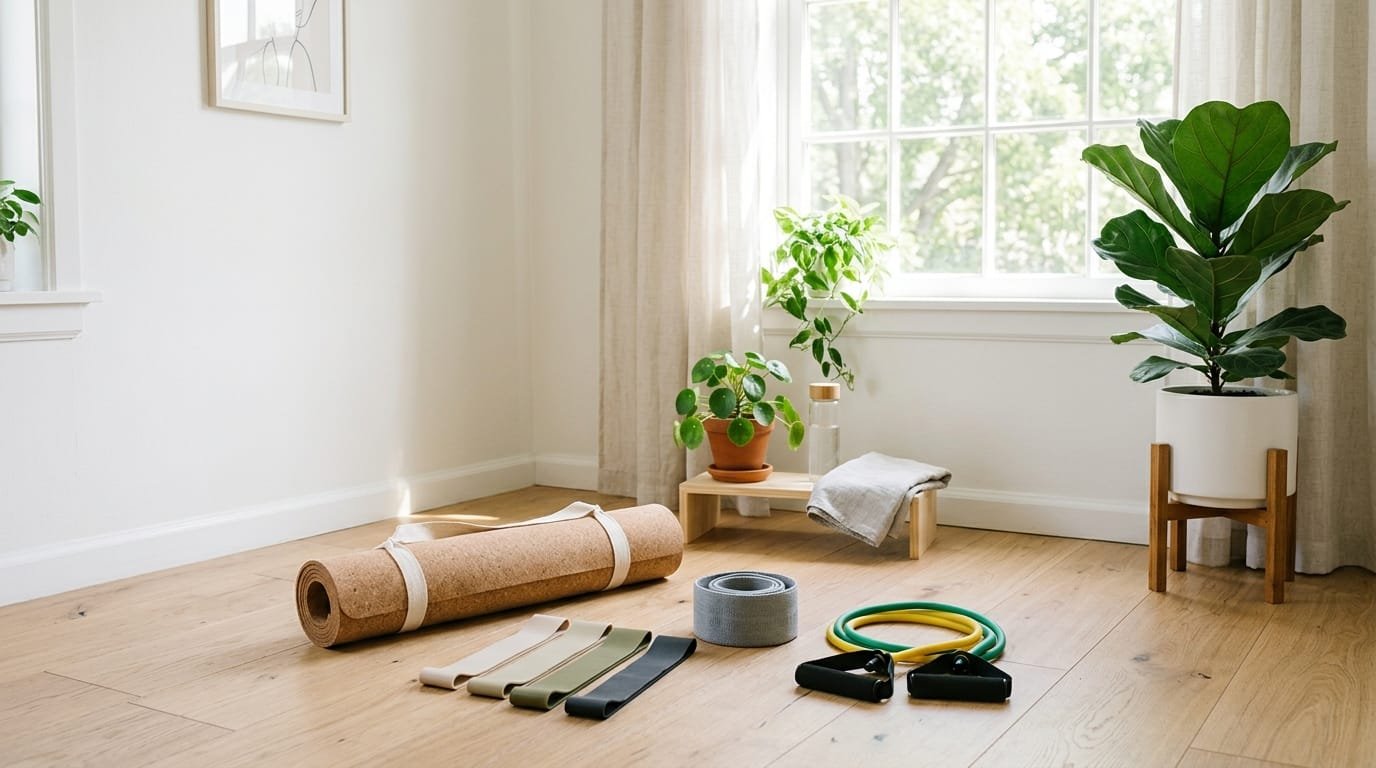
Loop Bands (Power Bands / Long Loops and Mini Loops) These are continuous closed loops of latex or similar elastic material. Long loops (typically around 41 inches) are thick and powerful, used for assisted pull-ups, banded barbell work, heavy lower-body movements, and full-body conditioning. Mini loops are shorter (usually 9–12 inches) and primarily target glutes, hips, and activation drills.
Tube Bands Hollow rubber tubes, usually with handles (fixed or clip-on) at each end. Many sets include a door anchor and ankle straps. They excel at standing or seated cable-style movements such as rows, chest presses, curls, and lateral raises. Stackable designs allow users to combine tubes for higher resistance.
Fabric Bands Typically short loops made from woven fabric (often with an elastic core). They are designed mainly for lower-body work. The fabric exterior resists rolling up the legs during lateral walks, hip thrusts, and squats, and feels more comfortable on bare skin than raw latex.
Head-to-Head Comparison
| Feature | Loop Bands (Long/Power) | Tube Bands with Handles | Fabric Mini Bands |
|---|---|---|---|
| Versatility | Highest | High for upper body | Specialized (lower body) |
| Max Practical Resistance | Very high (50–200+ lb) | Moderate (often stackable to 50–100 lb) | Low to moderate |
| Comfort on Skin | Moderate (can pinch) | High (handles) | Highest |
| Rolling Tendency | Can roll if thin | N/A | Minimal |
| Best Primary Uses | Pull-up assist, compounds, mobility | Cable-style isolation, beginners | Glute activation, hip work |
| Portability | Excellent | Very good | Excellent |
| Durability (quality sets) | High | Good (watch handles/clips) | High |
| Beginner Friendliness | Moderate learning curve | Highest | High for lower body |
| Typical Price (set) | $25–$80 | $30–$70 | $15–$40 |
Data synthesized from independent testing and user feedback patterns reported by sources such as Garage Gym Reviews and Wirecutter.
Detailed Pros and Cons of Each Type
Loop Bands Pros: Unmatched exercise variety; progressive resistance that grows with strength; excellent for assisted bodyweight movements and barbell accommodating resistance; compact storage. Cons: Raw latex can irritate skin or roll; learning curve for some setups; very heavy bands require careful handling to avoid snap-back. Best for: Full-body training, pull-up progression, travelers who want maximum utility in minimal space.
Tube Bands Pros: Familiar handle grip; easy to learn; door-anchor versatility creates many angles; stackable for progressive overload. Cons: Handles and clips are potential failure points; less effective for heavy compound or pull-up assistance; can feel less stable under high tension. Best for: Beginners, upper-body isolation, home workouts that mimic cable machines, people who prefer a traditional grip.
Fabric Bands Pros: Comfortable and non-rolling; excellent grip on clothing or skin; durable woven construction; ideal for high-rep lower-body work. Cons: Limited resistance ceiling and exercise range; primarily lower-body focused; generally more expensive per band than basic latex mini loops. Best for: Glute-focused training, hip stability, users with latex sensitivity, anyone frustrated by rolling latex mini bands.
How to Choose Based on Your Goals
Primary Goal: General Strength & Full-Body Training Start with a graduated set of long loop bands. Add tube bands later if you want more isolation options.
Primary Goal: Glute & Lower-Body Emphasis Fabric mini bands (or high-quality non-roll latex mini loops) are the clear winner. Pair with longer loops for heavier compound work.
Primary Goal: Beginner-Friendly Upper-Body Work Tube bands with handles and a door anchor provide the gentlest learning curve and most familiar movement patterns.
Primary Goal: Travel or Minimal Storage Long loop bands or a compact tube set both pack extremely well. Fabric mini bands add almost no bulk.
Primary Goal: Pull-Up Assistance or Heavy Banded Work Long power loop bands are essentially required.
Latex Allergy or Skin Sensitivity Prioritize fabric bands or explicitly labeled latex-free (TPE) options.
Step-by-Step Buying Process
- Define your top 2–3 training priorities (e.g., glutes, pull-ups, general strength).
- Decide whether you need handles or prefer continuous loops.
- Check material preferences (latex vs. fabric vs. latex-free).
- Look for clearly labeled resistance levels and a progressive range.
- Prefer sets with multiple bands over single ultra-heavy bands for better progression.
- Read recent long-term reviews focusing on snap resistance, handle durability, and actual measured resistance consistency.
- Confirm warranty and return policy.
- Start with moderate resistances and progress gradually—bands feel different from free weights.
Integrating Bands into a Complete Home Setup
Resistance bands shine when combined with other compact tools. Use them for activation before sessions with adjustable dumbbells or a weight bench. Add band resistance to kettlebell movements for accommodating resistance. Finish lower-body sessions with fabric band lateral walks or hip thrusts. For conditioning, bands pair efficiently with a manual treadmill.
Strong grip strength improves control when holding tubes or wrapping loops. Maintain solid scapular positioning during band presses and rows—apply the same principles covered in our lateral raise form articles.
Safety and Care Tips
- Inspect bands before every use for nicks, cracks, or thinning.
- Never stretch a band beyond the manufacturer’s recommended limit.
- Secure door anchors properly and test before loading.
- Avoid sharp edges, jewelry, or abrasive surfaces that can cut the material.
- Store away from direct sunlight and extreme heat.
- Clean according to material type; wipe latex bands after sweaty sessions.
- Replace bands at the first sign of significant wear.
Frequently Asked Questions
Which type of resistance band is best overall? Long loop (power) bands offer the highest versatility for most users. Many people eventually own both loops and tubes.
Do fabric bands provide enough resistance for strength gains? They work well for high-rep glute and hip work and activation. For heavier progressive strength, combine them with long loop bands or free weights.
Are tube bands safer than loop bands? Quality tube sets with internal safety cords (such as certain Bodylastics models) reduce snap risk. Loop bands require careful anchoring and progressive loading.
How many bands do I need to start? A 5-band progressive loop set or a stackable tube set covers most beginners. Add fabric mini bands if lower-body activation is a priority.
Can resistance bands replace free weights? They complement free weights extremely well and can serve as a primary tool for travel, rehabilitation, or space-constrained training, but progressive overload with measurable loads is often easier with dumbbells or barbells for pure strength goals.
How long do quality resistance bands last? With proper care, good latex or fabric bands often last 1–3+ years of regular use. Cheap bands may degrade much faster.
Should I buy latex or fabric? Latex (or TPE) for maximum stretch and resistance range; fabric for comfort and anti-roll performance on lower-body work.
Final Recommendation
There is no single winner for every situation. Long loop bands deliver the broadest utility and progressive capacity for full-body training. Tube bands win for handle-based isolation and beginner accessibility. Fabric bands dominate comfort and performance for glute and hip-focused work.
Most effective home setups eventually include at least two categories. Start with the type that matches your primary current goal, then expand as your training evolves. Pair the bands with consistent progressive overload, solid form, and complementary equipment such as adjustable dumbbells or a bench.
Measure your needs against the comparison table above, prioritize material quality and clear resistance labeling, and choose a set you will actually use. Resistance bands remain one of the highest-value, lowest-space tools available for building strength, improving mobility, and maintaining training consistency anywhere.
Ready to add bands to your setup? Identify your top training priority, select the matching type, and begin with moderate resistance while mastering the movement patterns. Consistent use produces results that far outweigh the modest investment.