Hydration Strategies for Early-Morning Home Sessions
Quick Answer
For early-morning hydration strategies for home sessions, begin rehydrating shortly after waking with 300–500 ml of water, then sip additional fluid as needed before and during training. Overnight breathing and minimal fluid intake create a mild fluid deficit, so starting the session already behind reduces performance and increases perceived effort. Most people do well with 400–700 ml total fluid in the 30–60 minutes before training, adjusted for body size, sweat rate, and climate. Plain water is sufficient for short sessions; add electrolytes when sweating heavily or training in a hot garage. Prioritise consistency over complex protocols.
Why Early-Morning Hydration Needs Special Attention
During sleep the body continues to lose fluid through respiration and insensible perspiration while receiving no replacement. Many people also wake slightly dehydrated because they stop drinking in the evening. When a home training session begins within 30–60 minutes of waking, this overnight deficit is still present. Starting a workout in a fluid-depleted state elevates heart rate, increases perceived exertion, and can impair strength and power output. Because home sessions are often short and time-constrained, an efficient, low-friction hydration strategy is essential.
Core Principles of Morning Hydration for Home Lifters
- Replace the overnight deficit first – Do not wait until you feel thirsty during the session.
- Start modestly to avoid discomfort – Large volumes immediately upon waking can cause nausea or frequent bathroom breaks.
- Sip rather than chug when possible – Steady intake improves absorption and comfort.
- Match fluid to session length and environment – Short technique sessions need less than longer or hotter workouts.
- Plain water works for most short sessions – Electrolytes become more important with heavy sweating or extended duration.
- Post-session rehydration completes the process – Continue fluid intake with breakfast or the first meal.
Morning Hydration Needs Compared by Session Type
| Session Type | Overnight Deficit Focus | Pre-Session Fluid Target | During Session | Electrolyte Need | Notes |
|---|---|---|---|---|---|
| Short technique (20–30 min) | Moderate | 300–500 ml | Optional sips | Low | Water usually sufficient |
| Standard strength (35–50 min) | Moderate–High | 400–600 ml | 200–400 ml if sweating | Low–Moderate | Monitor comfort |
| Higher-density or longer (50–70 min) | High | 500–700 ml | 300–600 ml | Moderate | Consider sodium |
| Hot garage environment | High | 500–700+ ml | Regular sips | Higher | Sodium becomes relevant |
| Very early + low appetite | Moderate | 300–400 ml (slow) | Minimal | Low | Prioritise comfort |
Shoulder-friendly upper-body work and grip training still perform better when hydration status is solid (Bent Arms vs. Straight Arms in Lateral Raises, The Hidden Mistake in Lateral Raises, 3 Lateral Raise Modifications, and Do Hand Grippers Really Work?).
Step-by-Step Morning Hydration Protocol
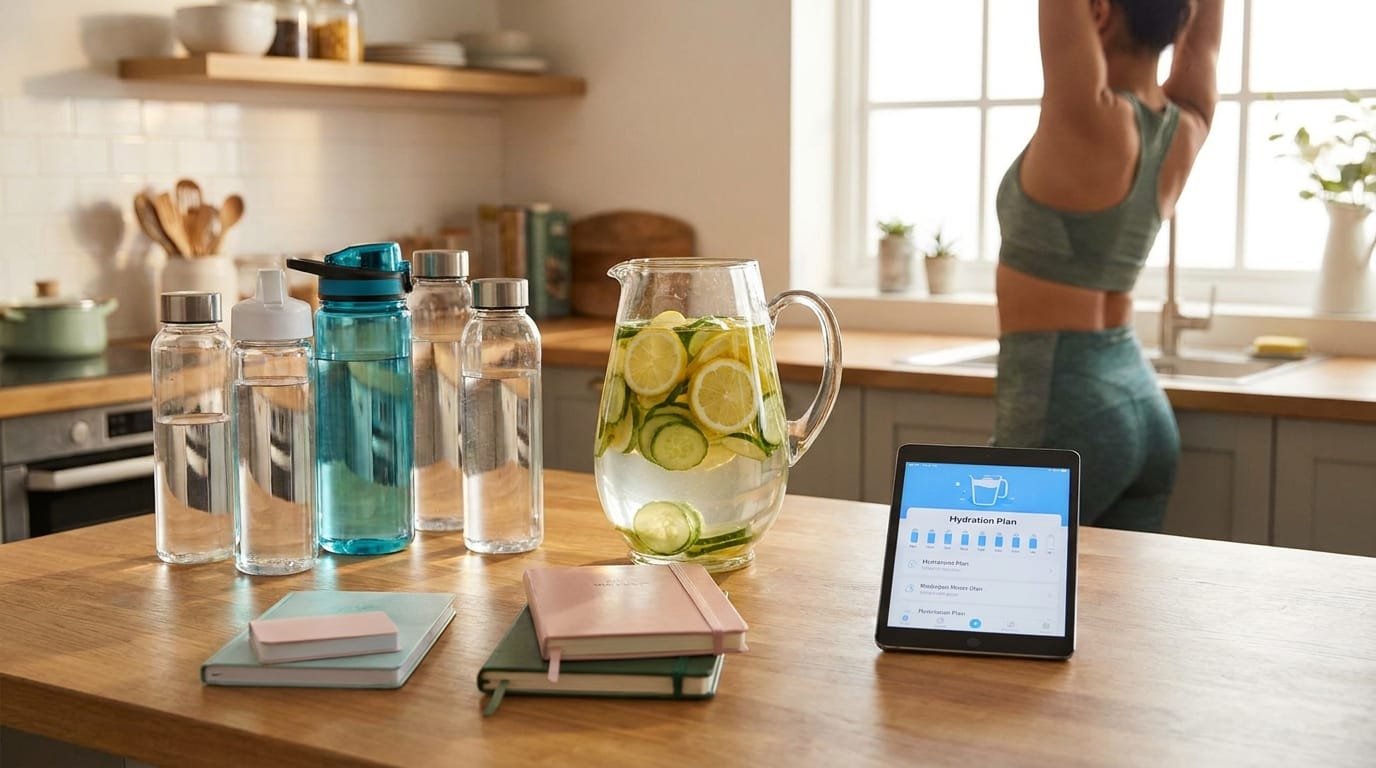
- Keep a water bottle at the bedside or bathroom
Make the first action after waking automatic. - Drink 300–500 ml shortly after rising
This begins replacing overnight losses before you start moving. - Allow 10–20 minutes for initial absorption
Use this time for bathroom, mobility, or setup. - Sip an additional 100–300 ml while preparing to train
Adjust based on thirst, urine colour, and how you feel. - Begin the session without feeling sloshy
Comfort is more important than hitting a precise number. - Keep fluid accessible during the workout
Take small sips between sets if the session exceeds 35–40 minutes or if you are sweating noticeably. - Note sweat rate and environmental conditions
Hotter garages or heavier sweating require more total fluid. - Rehydrate after training with breakfast or the next meal
Include fluid and, if needed, some sodium. - Track practical indicators for a week
Energy, performance, urine colour, and any headaches or excessive fatigue. - Refine the volumes based on real feedback
Individual needs differ; let results guide small adjustments.
Practical Fluid Targets and Timing
Upon Waking (0–5 minutes)
300–500 ml of water. This is the single most important step for early-morning trainees.
Pre-Session Window (10–40 minutes after waking)
Additional 100–300 ml as tolerated. Total pre-session fluid often lands between 400–700 ml for most people.
During Session
- Sessions under 30 minutes: usually unnecessary if pre-hydration was adequate
- Sessions 35–60 minutes: 200–400 ml sipped between sets
- Hot or high-sweat sessions: increase toward 400–600 ml
Post-Session
Continue with 300–600 ml alongside breakfast or the first meal. Include a sodium source if sweat losses were high.
Electrolytes in the Early-Morning Context
For most short-to-moderate home sessions performed in comfortable temperatures, plain water is sufficient. Electrolytes (especially sodium) become useful when:
- The garage is hot and sweat rate is high
- Sessions regularly exceed 50–60 minutes
- You notice salt residue on skin or clothing
- You experience recurring cramps or light-headedness
In these cases, a modest amount of sodium (300–500 mg) in the pre- or intra-session fluid is often helpful. Potassium and magnesium are better addressed through daily food intake rather than acute morning dosing.
Sample Early-Morning Hydration Timelines
Example 1 – 5:45 a.m. Wake, 6:15 a.m. Train (30–40 min session)
- 5:45 – 400 ml water
- 6:00–6:10 – Additional 150–200 ml while setting up
- During session – Sips if desired
- Post-session – Fluid with breakfast
Example 2 – 6:00 a.m. Wake, 6:20 a.m. Train (hot garage, 45–60 min)
- 6:00 – 500 ml water
- 6:10 – 200 ml water with a pinch of salt or electrolyte tablet
- During session – 300–500 ml sipped regularly
- Post-session – Continued rehydration with breakfast
Example 3 – Low Appetite / Sensitive Stomach
- Upon waking – 300 ml sipped slowly
- Pre-session – Another 100–150 ml only if comfortable
- Rely more on post-session rehydration
Signs of Under-Hydration in Morning Sessions
- Unusually high heart rate at normal loads
- Elevated perceived effort
- Headache during or after training
- Dark urine
- Rapid fatigue or light-headedness
- Noticeably reduced strength or power
Common Morning Hydration Mistakes
| Mistake | Result | Better Approach |
|---|---|---|
| Drinking nothing until after the session | Starting in a deficit | 300–500 ml upon waking |
| Chugging a large volume immediately | Nausea or discomfort | Sip progressively |
| Ignoring environmental heat | Larger unreplaced losses | Increase fluid and consider sodium |
| Over-drinking beyond need | Frequent bathroom breaks and discomfort | Match intake to thirst, urine colour, and session demands |
| Relying only on thirst during short sessions | Mild chronic under-hydration | Proactive morning intake |
| Forgetting post-session fluid | Incomplete recovery | Continue rehydration with the first meal |
Special Considerations
Very Early Sessions (before 5:30 a.m.)
Smaller initial volumes and more gradual intake often improve comfort.
Combined with Intermittent Fasting
Water, black coffee, and plain tea do not break a fast. Prioritise fluid even if food is delayed.
Caffeine Use
Coffee or tea has a mild diuretic effect but still contributes to net hydration for most people. Account for it in total fluid planning.
Hot or Humid Garages
Treat these sessions more like longer endurance efforts: higher total fluid and deliberate sodium replacement.
Strength training quality and safety improve when hydration status supports normal physiological function (strength training guidance). Practical home-gym approaches emphasise simple systems that work with real early-morning constraints (home gym equipment prioritisation and budget home gym principles).
Frequently Asked Questions
How much water should I drink right after waking up?
Most people do well with 300–500 ml. Adjust based on body size, overnight comfort, and how you feel.
Can I train immediately after drinking?
Yes, if the volume is moderate. Allowing 10–20 minutes improves comfort for many people.
Do I need electrolytes every morning?
No. Plain water is sufficient for the majority of short-to-moderate sessions in temperate conditions. Add sodium when sweat losses are high.
Is coffee okay before an early session?
Yes for most people. It contributes to fluid intake and can enhance alertness. Keep total fluid in mind.
What if drinking in the morning makes me nauseous?
Reduce the initial volume, sip more slowly, or shift more of the fluid to the post-session period.
How do I know if my morning hydration strategy is working?
Urine colour should be pale yellow by mid-morning, sessions should feel physiologically normal, and excessive fatigue or headaches should diminish.
Should I drink during every home workout?
For sessions under 30 minutes with good pre-hydration, it is often unnecessary. Longer or hotter sessions benefit from intra-workout sips.
Does overnight dehydration affect strength significantly?
Mild deficits can raise perceived effort and reduce performance. Correcting them is one of the simplest ways to improve early-morning session quality.
Final Recommendation
Early-morning home sessions begin with a mild overnight fluid deficit. The most effective strategy is to drink 300–500 ml of water shortly after waking, sip additional fluid as needed before training, and continue rehydration afterward. Adjust total volume for session length, heat, and personal tolerance. Plain water meets the needs of most short sessions; add sodium when sweating heavily.
Place a water bottle where you will see it immediately upon waking and begin the protocol tomorrow morning. Track how sessions feel for a week and refine the amounts. When morning hydration is handled deliberately, early training becomes more productive and sustainable. Start with the first glass of water tomorrow—the simplest habits often produce the most reliable improvements in training quality.