How to Perform Lateral Raises Safely If You Have a History of Shoulder Issues
Quick Answer
If you have a history of shoulder issues, perform lateral raises with a bent-elbow position, in the scapular plane (slightly forward of pure lateral), using light loads, controlled tempo, and a limited range that stays below the painful arc (often stopping at or before 80–90 degrees). Avoid full straight-arm raises, internal rotation (thumbs-down), heavy weights, and shrugging. Prioritise scapular control, thorough warm-up of the rotator cuff, and pain-free execution. These modifications significantly reduce joint stress while still training the medial deltoid effectively. Stop any variation that produces sharp or pinching pain.
Why Standard Lateral Raises Can Aggravate Existing Shoulder Problems
The classic straight-arm lateral raise moves the arm through the “painful arc” (roughly 60–120 degrees of abduction) where the greater tuberosity of the humerus can reduce space under the acromion. When the arm is also internally rotated or the scapula fails to upwardly rotate and posteriorly tilt properly, the rotator cuff tendons and bursa are more likely to be compressed. Previous impingement, rotator-cuff irritation, AC-joint sensitivity, or general instability makes this position especially provocative.
The good news is that the medial deltoid can still be trained productively with intelligent modifications that respect joint anatomy and individual tolerance.
Core Safety Principles for Compromised Shoulders
- Reduce joint torque – Bend the elbows to shorten the lever arm.
- Stay in the scapular plane – Raise the arms 20–30 degrees forward of pure side-raise.
- Limit range of motion – Stop before the painful arc or at a comfortable height (often 70–90 degrees).
- Maintain external rotation bias – Lead with the thumbs or keep a neutral grip.
- Eliminate shrugging – Keep the upper trapezius quiet; drive the movement from the deltoid.
- Use light loads and high control – Tempo and mind-muscle connection matter more than weight.
- Warm the rotator cuff first – Prepare the joint before loading.
These principles form the foundation of every safe variation.
Preferred Safe Variations
1. Bent-Arm Scapular-Plane Lateral Raise (Best Default)
This is the highest-value option for most people with a shoulder history.
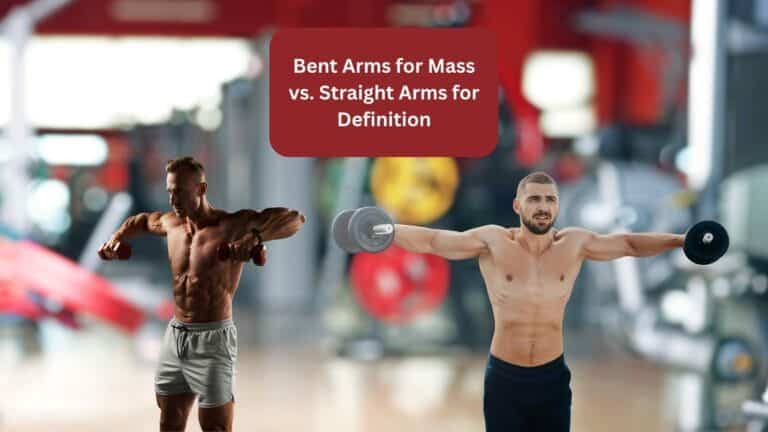
- Hold light dumbbells with elbows bent 30–45 degrees.
- Raise in the scapular plane (slightly forward).
- Stop at or just below shoulder height.
- Lower under control (2–3 seconds).
- Keep the shoulder blades down and stable; avoid shrugging.
Detailed comparisons of bent versus straight arms and common technique errors are covered in Bent Arms vs. Straight Arms in Lateral Raises, The Hidden Mistake in Lateral Raises, and 3 Lateral Raise Modifications.
2. Supported or Chest-Supported Lateral Raise
Lying chest-down on an incline bench removes the need to stabilise the torso and reduces compensatory shrugging. Use very light weights and the same bent-arm, scapular-plane path.
3. Cable or Band Lateral Raise with Limited Range
Cables and bands provide accommodating resistance and allow precise control of the resistance curve. Set the cable low and raise only through the pain-free arc. Bands are especially useful for home training and for finer load progression.
4. Partial-Range or “Bottom-Focused” Raises
Some lifters tolerate the bottom half of the movement far better than the top. Emphasise the portion from the side of the thigh to roughly 60–70 degrees with a controlled squeeze.
Comparison of Lateral Raise Styles for Sensitive Shoulders
| Variation | Joint Stress | Deltoid Stimulus | Ease of Control | Recommended for Shoulder History |
|---|---|---|---|---|
| Straight-arm, pure lateral, full ROM | High | High | Moderate | Rarely |
| Bent-arm, scapular plane, limited ROM | Low–Moderate | Moderate–High | High | Strongly preferred |
| Chest-supported bent-arm | Low | Moderate | Very High | Excellent |
| Cable/band limited range | Low–Moderate | Moderate–High | High | Excellent |
| Thumbs-down / internal rotation | Highest | Variable | Low | Avoid |
Step-by-Step Safe Execution Protocol
- Warm-up thoroughly (5–8 minutes)
- Arm circles, band pull-aparts, light external rotations, scapular clocks or wall slides.
- Perform 1–2 very light sets of the chosen lateral-raise variation.
- Set up the body
- Stand tall or use chest support.
- Soft knees, braced core, shoulder blades gently depressed and retracted.
- Choose the implement and load
- Start lighter than you think you need.
- Prefer dumbbells, cables, or bands that allow smooth tension.
- Execute each repetition
- Initiate by driving the elbows outward in the scapular plane.
- Keep a slight bend in the elbows throughout.
- Raise only as high as remains completely pain-free.
- Pause briefly at the top without shrugging.
- Lower slowly (2–4 seconds).
- Reset scapular position between reps if needed.
- Volume and progression
- Begin with 2–3 sets of 10–15 controlled repetitions.
- Progress by adding repetitions, slowing the eccentric, or making very small load increases only when the current work feels easy and symptom-free for several sessions.
- Monitor response
- Note any during-exercise pain, evening discomfort, or next-day irritability.
- Reduce range, load, or volume at the first sign of aggravation.
Supporting Exercises That Make Lateral Raises Safer
- Serratus anterior work (scapular push-ups, band punches)
- Low-load external rotations (side-lying or cable)
- Face pulls or band pull-aparts for posterior shoulder balance
- Thoracic mobility drills
- Grip and forearm work to improve overall upper-limb stability (Do Hand Grippers Really Work?)
These movements improve the muscular environment around the shoulder joint so that lateral raises become better tolerated over time.
When to Avoid or Further Modify Lateral Raises
- Sharp or pinching pain during the movement
- Pain that increases after the session or the following day
- Current acute flare of impingement, tendinopathy, or instability
- Inability to control the scapula even with light loads
In these cases, substitute with pain-free alternatives such as partial-range front raises in the scapular plane, Y-raises on an incline, or machine/cable work that keeps the arm below the painful height. Reintroduce lateral raises only when symptoms have settled and basic scapular control is reliable.
Programming Guidelines for Long-Term Shoulder Health
- Place lateral-raise variations after compound pressing or on dedicated shoulder/upper-body days.
- Keep absolute loads conservative; focus on quality and pump.
- Use higher repetitions (12–20) with lighter weights more often than heavy low-rep sets.
- Include deload periods every 4–8 weeks.
- Balance pushing volume with adequate horizontal and vertical pulling.
Strength training performed with respect for individual joint history remains one of the best ways to build resilient tissue (strength training guidance). Practical home-gym approaches emphasise controlled, joint-friendly variations over maximal loading (home gym equipment prioritisation and budget home gym principles).
Common Mistakes That Reintroduce Risk
| Mistake | Why It Aggravates Shoulders | Correction |
|---|---|---|
| Using weights that are too heavy | Forces shrugging and poor path | Reduce load until form is perfect |
| Raising above the painful arc | Compresses subacromial space | Stop at the first sign of discomfort |
| Leading with the hands (straight arm + internal rotation) | Increases impingement risk | Lead with the elbows, thumbs up or neutral |
| Allowing the upper traps to dominate | Turns the raise into a shrug | Cue “shoulders down, elbows out” |
| Skipping warm-up | Loads cold, under-prepared tissue | Always prepare the rotator cuff and scapulae |
| Pushing through sharp pain | Reinforces pathological loading | Stop and regress immediately |
Frequently Asked Questions
Can I ever return to straight-arm lateral raises?
Some people can after building substantial scapular control and tissue tolerance, but many with a significant shoulder history do better permanently favouring bent-arm or limited-range versions.
How light should the weights be?
Light enough that you can perform every repetition with perfect control and zero pain. Ego has no place here—progress is measured by consistency and symptom-free training.
Are cables better than dumbbells for sensitive shoulders?
Often yes. Cables provide constant tension and make it easier to stay in a precise plane and range.
Should I do lateral raises if I currently have pain at rest?
No. Resolve resting and daily-activity symptoms first, then reintroduce very light, controlled variations under guidance if needed.
How many sets and reps are safe?
Start with 2–3 sets of 10–15. Quality and recovery response matter more than volume.
Is the scapular plane really necessary?
For most people with a shoulder history, yes. It aligns the movement more closely with the natural orientation of the shoulder blade and typically feels better tolerated.
What if even modified lateral raises bother me?
Substitute with other medial-deltoid or shoulder-health options (partial front raises, Y-raises, carefully executed face pulls) and consult a qualified clinician for individualised assessment.
Final Recommendation
A history of shoulder issues does not mean you must abandon lateral raises. It means you must perform them intelligently: bent elbows, scapular plane, limited pain-free range, light loads, strict control, and thorough preparation. These adjustments dramatically reduce compressive stress on the joint while still providing an effective stimulus for the medial deltoid.
Master the bent-arm scapular-plane version, support it with rotator-cuff and serratus work, and progress only when the movement remains completely comfortable. Pair this approach with balanced programming and attentive recovery.
Start with the lightest effective load, film your sets to confirm form, and treat symptom-free execution as the primary metric of success. When performed this way, lateral raises can remain a productive part of a long-term training plan even after previous shoulder problems. Choose control over load, respect your current tolerance, and build from a foundation of safety.