Can You Build Real Muscle with Only Bodyweight and a Pull-Up Bar?
Quick Answer Yes. You can build real, measurable muscle using only bodyweight exercises and a pull-up bar when progressive overload is applied and sets are taken close to muscular failure. A 2017 study by Kikuchi and Nakazato found that progressive push-up training produced strength and muscle-thickness gains statistically similar to bench-press training over eight weeks when loads were matched . A pull-up bar enables high-quality vertical pulling for the back, biceps, and rear shoulders. Lower-body growth is achievable through advanced unilateral progressions. Results depend on consistency, systematic progression, sufficient volume, proximity to failure, and adequate protein — not on barbells or machines.
The Science: Hypertrophy Does Not Require External Weights
Muscle hypertrophy is driven primarily by mechanical tension. When muscle fibres experience sufficient tension through a challenging range of motion and sets are performed near failure, mechanosensitive pathways (including mTOR signalling) increase muscle protein synthesis.
A landmark 2017 meta-analysis by Schoenfeld, Grgic, Ogborn, and Krieger published in the Journal of Strength and Conditioning Research demonstrated that low-load resistance training (≤60% of 1RM) produces hypertrophy outcomes comparable to traditional high-load training when sets are taken close to muscular failure. You can read the full abstract and details here: Strength and Hypertrophy Adaptations Between Low- vs. High-Load Resistance Training.
Bodyweight exercises generate this tension through leverage changes, increased range of motion, tempo manipulation, unilateral loading, and skill progressions.
The key direct comparison comes from the 2017 study by Kikuchi and Nakazato in the Journal of Exercise Science & Fitness. They compared load-matched push-ups with bench-press training. Both groups achieved statistically similar increases in pectoralis major and triceps muscle thickness as well as strength over eight weeks. Full study details are available on PubMed and the open-access version can be found via ScienceDirect.
Additional research comparing progressive calisthenics protocols with traditional free-weight training has shown comparable early- and intermediate-stage hypertrophy when progressive overload is applied systematically. The resistance source (bodyweight versus barbell) is secondary to the quality of the stimulus. A pull-up bar simply expands the available vertical-pulling options, making balanced upper-body development far more practical and effective.
Upper-Body Muscle Building with a Pull-Up Bar
A sturdy pull-up bar transforms bodyweight training for the entire upper body by enabling high-tension vertical pulling that floor-based work alone cannot match.
Key movement families and progressions include:
- Pull-ups and chin-ups (pronated, supinated, and neutral grips)
- Full continuum: dead hangs → active hangs → scapular pulls → band-assisted pull-ups → full pull-ups → chest-to-bar → archer pull-ups → one-arm progressions
- Horizontal pulling: Australian/inverted rows with progressive foot elevation or archer variations
- Core: hanging knee raises → hanging leg raises → toes-to-bar → windshield wipers → L-sit work
- Grip and scapular control: passive and active hangs, scapular depressions
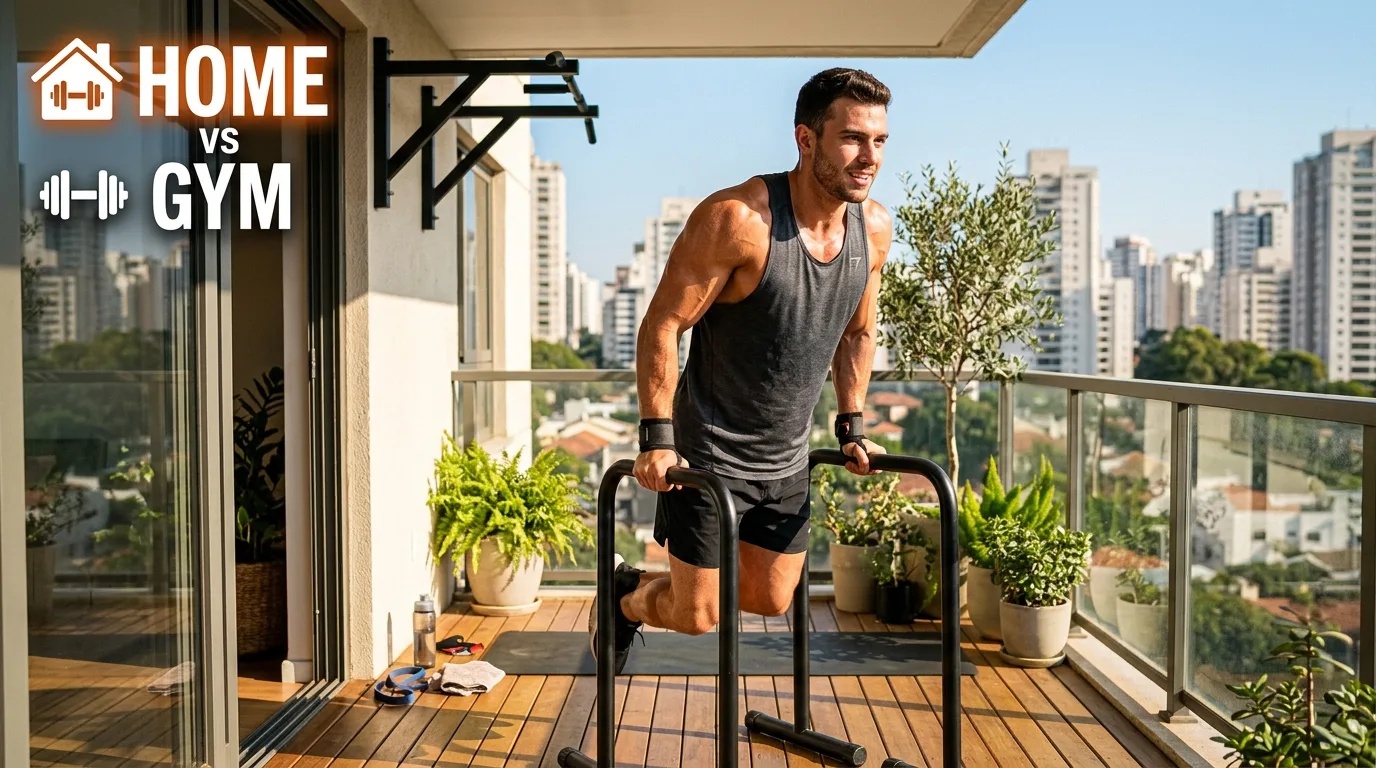
These movements heavily load the latissimus dorsi, teres major, rhomboids, middle and lower trapezius, rear deltoids, biceps, brachialis, and forearm flexors. When combined with progressive pushing (standard to decline to archer push-ups, pike push-ups, and handstand push-up progressions) and dipping variations on parallel surfaces if available, a complete upper-body hypertrophic stimulus is readily achievable.
Lower-Body Development: Realistic Potential and Solutions
Bilateral bodyweight squats and hinges become relatively easy for intermediate trainees, limiting further overload. Effective solutions include:
- Unilateral progressions: reverse lunges → Bulgarian split squats → shrimp squats → pistol squat progressions
- Increased range of motion via deficit or elevated variations
- Slow eccentrics (3–5 second lowers) and paused repetitions
- High-effort sets taken close to failure
- Nordic curl regressions and progressions for the hamstrings and posterior chain
- Single-leg hip thrust or elevated glute-bridge variations
While maximal long-term lower-body hypertrophy may eventually benefit from external loading for convenience, substantial and visible development is realistic for beginners through intermediates when these progressions are applied consistently and with high effort.
Detailed Comparison Table
| Factor | Bodyweight + Pull-Up Bar | Traditional Free Weights / Machines | Practical Implication |
|---|---|---|---|
| Early-to-intermediate hypertrophy | High when progressive and near failure | High | Comparable for most people |
| Progressive overload methods | Leverage, ROM, tempo, unilateral, volume, skill progressions | Add external load | Both effective; bodyweight requires more planning |
| Upper-body stimulus | Excellent with pull-up bar | Excellent | Pull-up bar largely equalises the stimulus |
| Lower-body stimulus | Good with advanced unilateral work | Easier heavy progressive overload | Weights simpler for advanced lower-body growth |
| Cost & accessibility | Extremely low | Higher | Bodyweight superior for home convenience |
| Skill & athleticism demand | Higher | Moderate | Bodyweight builds greater coordination and control |
| Joint-stress profile | Generally favourable with good form | Dependent on load and technique | Both safe when programmed well |
Step-by-Step Framework for Building Muscle
- Master technical proficiency in the fundamental patterns (horizontal/vertical push, horizontal/vertical pull, squat, hinge, core anti-extension/flexion).
- Train each major pattern 2–3 times per week.
- Perform the majority of working sets within 0–3 repetitions of failure.
- Apply progressive overload every 1–2 weeks: add repetitions, advance to a harder variation, slow the eccentric, increase range of motion, or reduce assistance.
- Accumulate sufficient weekly volume (approximately 6–20 hard sets per major muscle group).
- Emphasise controlled tempos and the largest controllable range of motion.
- Consume adequate protein (approximately 1.6–2.2 g per kg of body weight) and align total calories with your primary goal.
- Log every session (variation used, repetitions, tempo, perceived effort) to ensure objective progression.
- Insert a deload week (reduced volume or intensity) every 4–8 weeks or when performance stagnates.
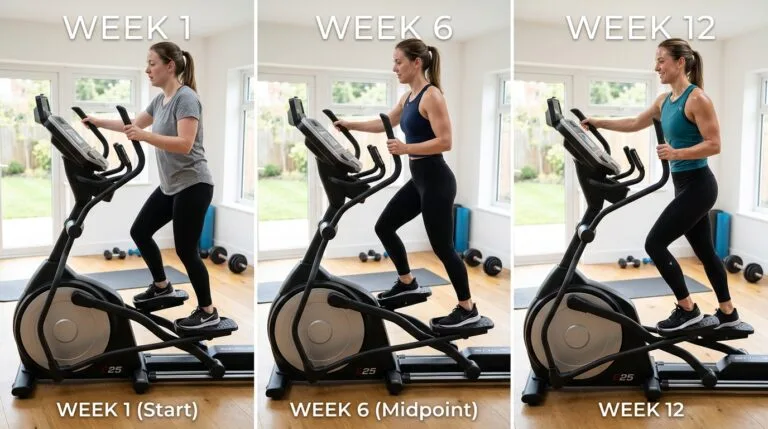
- Remain consistent for at least 8–12 weeks before evaluating overall results.
Sample Progressive Continuums
Vertical Pull (Pull-Up Bar) Dead hang → active hang → scapular pulls → band-assisted pull-ups → full pull-ups → chest-to-bar → archer → assisted one-arm work.
Horizontal Pull Australian rows → feet-elevated rows → archer rows → one-arm inverted rows.
Pushing Incline push-ups → standard → decline → diamond/archer → pseudo-planche leans → pike push-ups → wall handstand push-up progressions.
Legs Bodyweight squats → reverse lunges → Bulgarian split squats → shrimp squat progressions → pistol progressions → Nordic curl regressions.
Core Hollow-body holds → hanging knee raises → hanging leg raises → toes-to-bar → windshield wipers → L-sit progressions.
Realistic Results Timeline
- Weeks 1–4: Rapid neural adaptations, improved technique and control, noticeable strength increases on basic variations.
- Weeks 4–8: Early measurable hypertrophy, ability to progress to harder variations, improved work capacity and recovery.
- Weeks 8–12: Visible muscle development for consistent trainees (especially upper body), clearer changes in progress photos and measurements.
- Beyond 12 weeks: Continued growth requires ongoing creative progression; advanced trainees may eventually add external load (backpack, weight vest, or dumbbells) for further overload, particularly on lower-body movements.
Beginners and early intermediates can achieve impressive, visible transformations. Long-term advanced hypertrophy remains possible but demands higher training sophistication and consistency.
Common Limitations and Evidence-Based Solutions
- Plateau on basic variations → Advance systematically to unilateral or reduced-leverage progressions.
- Difficulty overloading the legs → Prioritise single-leg work, slow tempos, paused reps, and near-failure effort.
- Grip failing before the back on pull-ups → Add dedicated dead hangs, active hangs, and grip-specific work.
- Lack of objective tracking → Maintain a detailed training log of variations, reps, tempos, and effort.
- Insufficient proximity to failure → Ensure most working sets reach 0–3 reps in reserve rather than stopping far from failure.
- Neglecting recovery → Manage total weekly volume and schedule regular deloads.
- Poor protein or calorie intake → Treat nutrition as non-negotiable regardless of training modality.
Integrating Bodyweight Training with Complementary Home Practices
A pull-up bar and bodyweight foundation integrate seamlessly with other minimal equipment. Progressive resistance bands can assist pull-ups or add resistance to push-ups and squats. Adjustable dumbbells or a kettlebell can later create hybrid overload sessions if desired. Strong grip endurance directly improves pull-up performance and hanging volume. Core strength developed through ab roller variations transfers to better hollow-body control and hanging leg raises.
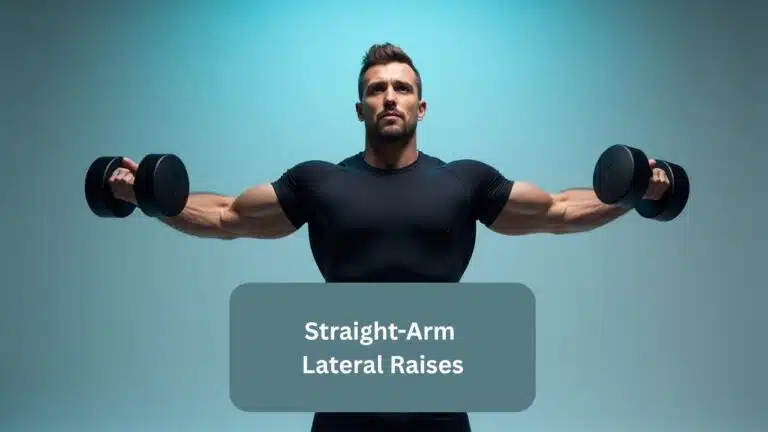
Low-impact conditioning on a manual treadmill supports work capacity without excessive joint stress. A budget massage gun helps manage residual muscle tension. Continue applying sound shoulder-mechanics principles from your lateral raise guidance so pushing, dipping, and inverted work remain joint-friendly and sustainable over the long term.
Frequently Asked Questions
Can true beginners build muscle with only bodyweight and a pull-up bar? Yes. Beginners typically experience rapid neural and early hypertrophic gains when progressive variations and near-failure sets are used consistently. Supporting evidence includes the load-matched push-up versus bench-press findings from Kikuchi and Nakazato (2017).
Is upper-body growth limited without free weights? No. A pull-up bar combined with progressive push-up, dip, and handstand variations provides an excellent stimulus for the back, chest, shoulders, and arms.
How do I continue progressing once I can perform 15–20 strict pull-ups? Advance to harder variations (archer, slower eccentrics, paused reps, chest-to-bar, or one-arm progressions), increase total volume, or add external load via a backpack or weight vest if available.
Will results match those of someone training in a full gym? For the first one to three years of proper training, outcomes can be very similar when effort, volume, and progressive overload are equated. Advanced trainees may eventually find external loading more convenient for maximal lower-body or absolute-strength overload. Meta-analytic evidence on low-load versus high-load training supports this equivalence when effort is matched .
Must every set be taken to complete failure? Most working sets should reach 0–3 repetitions in reserve. True muscular failure on every set is unnecessary and can impair recovery if overused.
How critical is nutrition? Extremely. Adequate protein and appropriate total energy intake remain essential regardless of whether the resistance comes from bodyweight or external loads.
Can women build meaningful muscle with this approach? Yes. The same physiological principles apply. Absolute gains may differ on average due to hormonal factors, but relative strength improvements and visible development are readily achievable.
Final Recommendation
You can build real, visible muscle with only bodyweight exercises and a pull-up bar. The fundamental drivers of hypertrophy — mechanical tension, progressive overload, and training close to failure — apply fully to calisthenics, as confirmed by direct comparative studies . Upper-body development is especially effective once a pull-up bar is available; lower-body growth is attainable through systematic unilateral and advanced progressions.
Master movement quality, progress difficulty deliberately, train with high effort, track your sessions objectively, and support the work with sufficient protein and recovery. Consistency across successive 8–12 week blocks produces meaningful and lasting results. When these elements are in place, a pull-up bar and your own bodyweight form a complete, low-cost, highly effective muscle-building system that requires no gym membership and delivers real hypertrophy.