Home Workout Plan for Busy Professionals Using Minimal Equipment
Quick Answer
Busy professionals can build meaningful strength, muscle, and conditioning at home with three to four 30–45 minute sessions per week using minimal equipment—primarily adjustable dumbbells or kettlebells, resistance bands, and bodyweight. The highest-return approach is full-body training that emphasises compound movements, progressive overload, and consistency rather than long or complicated workouts. Focus on squats, hinges, pushes, pulls, and core work, keep rest periods moderate, and support training with adequate sleep and protein. Results come from repeated execution of simple, progressive sessions—not from perfect conditions or marathon workouts.
Why Minimal-Equipment Training Succeeds for Busy Schedules
Time is the primary constraint for most professionals. Evidence and real-world coaching experience show that total weekly training volume and progressive overload drive results more than individual session length. Short, focused full-body workouts performed three to four times per week produce substantial strength and muscle gains while remaining realistic alongside demanding careers and family responsibilities.
Minimal equipment dramatically reduces friction: no travel, no waiting for machines, and almost zero setup time. The decisive factor is selecting movements that deliver the greatest stimulus per minute and eliminating everything that does not directly contribute to progress. Time-efficient strength training principles are well supported by practical programming resources for busy individuals.
Essential Minimal Equipment for Professionals
| Item | Primary Purpose | Priority | Practical Notes |
|---|---|---|---|
| Adjustable dumbbells or 1–2 kettlebells | Progressive loading for all major patterns | Highest | Single best investment for long-term progress |
| Resistance bands (light to strong) | Warm-ups, pull-aparts, assisted work, travel | High | Extremely portable and versatile |
| Doorway pull-up bar or sturdy inverted-row setup | Vertical and horizontal pulling | High | Essential for balanced upper-body development |
| Exercise mat | Floor-based work and joint comfort | Medium | Useful but not mandatory |
| Optional: Jump rope or open floor space | Short conditioning finishers | Low | Bodyweight options are sufficient |
With adjustable dumbbells or a kettlebell, a set of bands, and a way to perform rows or pull-ups, you possess a complete training system that can support years of progress.
Core Training Principles for Time-Constrained Professionals
- Full-body sessions – Hitting major muscle groups multiple times per week maximises results from limited training days.
- Compound movements first – Squats, hinges, presses, and rows produce the majority of strength and muscle adaptations.
- Progressive overload – Systematically increase weight, repetitions, or sets over time.
- Moderate rest periods – 60–90 seconds maintains session efficiency while still allowing quality performance.
- Consistency over perfection – Three solid sessions performed weekly outperform sporadic perfect workouts.
- Recovery awareness – Sleep quality and protein intake strongly influence adaptation when training volume is moderate.
The 30–45 Minute Full-Body Framework
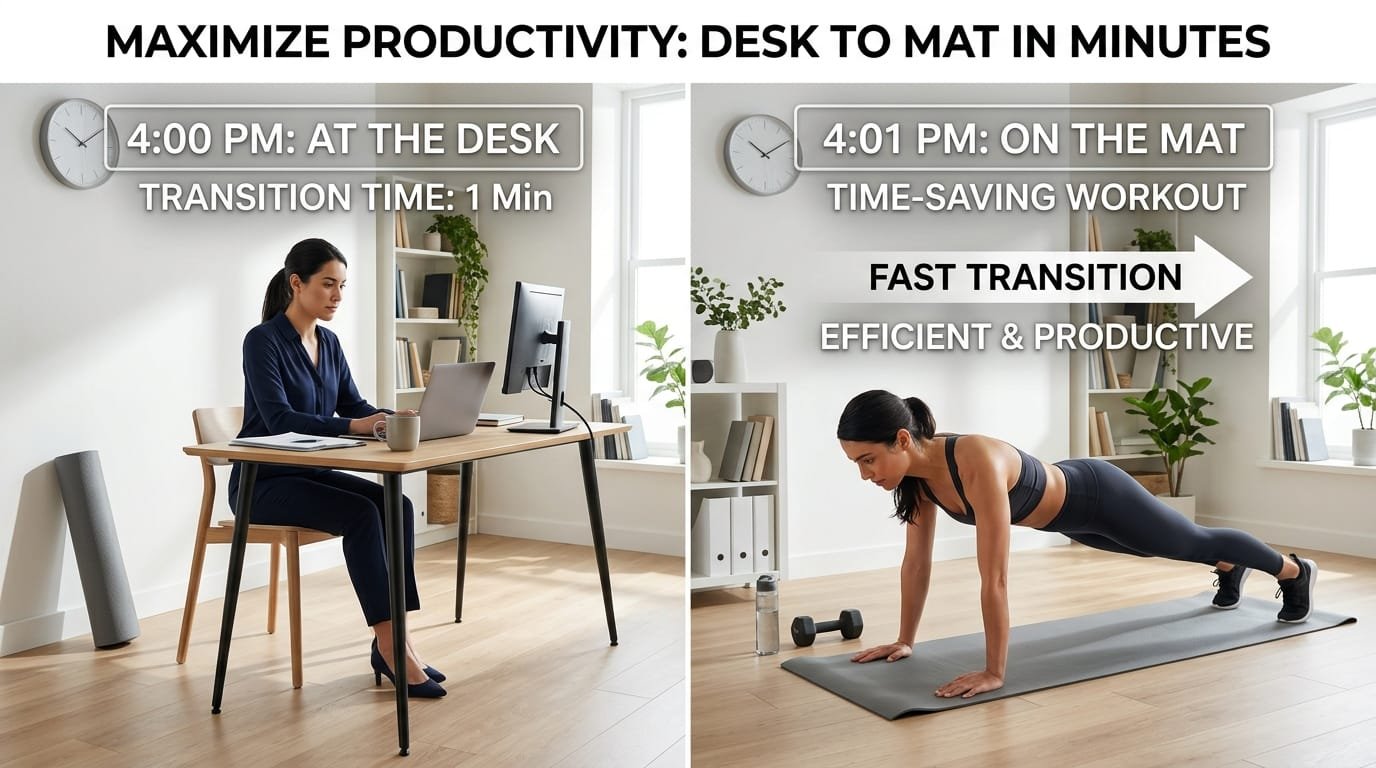
Complete this structure three to four days per week on non-consecutive days when possible (e.g., Monday/Wednesday/Friday or a flexible equivalent).
Warm-up (4–6 minutes)
- 1–2 minutes of light cardio (marching in place, jumping jacks, or easy cycling)
- Band pull-aparts and arm circles
- Bodyweight squats and hip hinges
- One light preparatory set of the first main lift
Main Strength Block (25–35 minutes)
Workout A
- Goblet Squat or Dumbbell Front Squat – 3–4 sets of 6–10
- Dumbbell or Kettlebell Romanian Deadlift – 3–4 sets of 6–10
- Push-Up or Dumbbell Floor Press – 3–4 sets of 6–12
- Single-Arm Dumbbell Row or Band Row – 3–4 sets of 8–12 per side
- Core finisher: Plank or Dead Bug – 2–3 sets
Workout B
- Bulgarian Split Squat or Reverse Lunge – 3 sets of 6–10 per leg
- Dumbbell Overhead Press or Landmine-style Press – 3–4 sets of 6–10
- Pull-Up progression, Band-Assisted Pull-Up, or Inverted Row – 3–4 sets of controlled maximum reps
- Kettlebell Swing or Dumbbell Hip Thrust – 3 sets of 8–15
- Core finisher: Side Plank or anti-rotation hold – 2–3 sets
Rest 60–90 seconds between sets. Emphasise a controlled eccentric phase of approximately two seconds on every repetition.
Optional Conditioning Finisher (3–6 minutes)
- Kettlebell swings
- Burpee variations
- Band-resisted mountain climbers
- Jump rope or high knees
Keep finishers brief so total session time remains under 45 minutes.
Practical Weekly workout plan for Professionals
| Schedule Style | Example Days | Best Suited For |
|---|---|---|
| Classic 3-day | Mon / Wed / Fri | Highest long-term adherence for most busy professionals |
| 4-day flexible | Any four non-consecutive days | Those who prefer slightly higher frequency |
| Minimum effective dose | 2 full-body + 1 short session | Peak workload or travel periods |
| Morning-focused | Early sessions before work | Professionals who prefer to protect evenings |
The optimal schedule is the one you can execute consistently for months, not the theoretically perfect one.
Progression Methods When Time Is Limited
- Add one or two repetitions per set while maintaining excellent form.
- Increase load once you reach the upper end of the target rep range with solid technique.
- Shorten rest periods slightly as work capacity improves.
- Add a set only when recovery and available time comfortably allow.
- Introduce advanced techniques (paused reps, slower tempos, or single-limb emphasis) before increasing training frequency.
Sample 4-Week On-Ramp for Busy Professionals
Weeks 1–2
Establish the habit and movement quality. Use conservative loads. Record every session (exercises, sets, reps, and how you felt).
Weeks 3–4
Add load or repetitions wherever form remains crisp. Keep total session duration constant. Note improvements in strength and work capacity.
After four weeks, evaluate adherence, energy, and progress before making programme adjustments.
Time-Saving Execution Tactics
- Lay out equipment the night before or keep it permanently visible.
- Pair non-competing exercises (for example, an upper-body push with an upper-body pull) when extremely short on time.
- Use a timer for rest periods to prevent unintentional drift.
- Film one working set of each main lift weekly for quick form review.
- Accept that some sessions will be abbreviated—completing a shortened workout is almost always superior to skipping entirely.
Integrating Minimal Equipment with Broader Home Training
Even with limited gear, balanced development remains achievable:
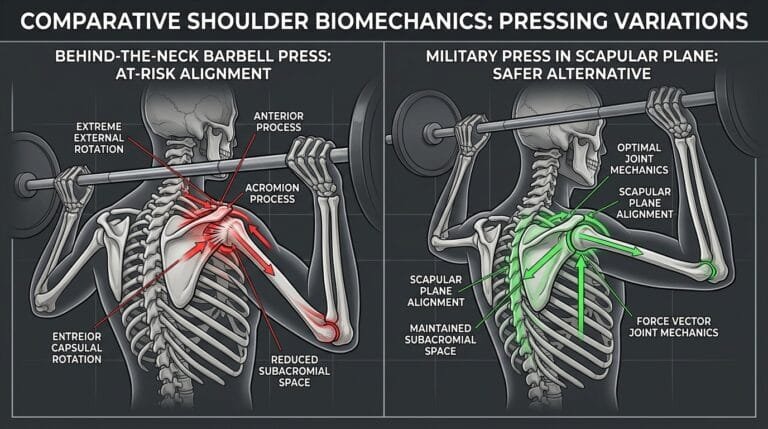
- Shoulder health and lateral-raise technique should follow established safe practices (safe lateral-raise guidance and shoulder health routine).
- Kettlebell swings, goblet squats, and carries rank among the highest-value minimal-equipment movements (kettlebell sizing guide).
- Grip strength directly supports rowing, hanging, and carrying performance (grip strength guidance).
- Resistance bands excel for warm-ups, activation, and travel training (Resistance Bands Buying Guide).
- Core training can progress to the ab roller once basic stability is established.
- Short conditioning bouts can include treadmill intervals or incline walking when time and space permit (manual treadmill guidance).
Recovery practices are non-negotiable for professionals under chronic time pressure (Best Post-Workout Recovery Tools, Best Massage Gun for Post-Workout Recovery on a Budget, and Sleep and Recovery Strategies). Simple tracking keeps progress visible and motivating (Best Ways to Track Progress Without a Gym or Personal Trainer).
External resources on efficient training for busy people reinforce that full-body, compound-focused programmes performed consistently produce strong results without requiring long gym sessions (time-efficient strength training approaches and practical minimal-equipment programming).
Nutrition and Lifestyle Anchors
- Target adequate protein intake (approximately 1.6–2.2 g per kilogram of body weight daily).
- Keep several high-protein, low-preparation meals or snacks readily available.
- Protect sleep aggressively—7–9 hours supports both physical recovery and cognitive performance at work.
- Manage overall stress load; chronic elevation impairs recovery and adherence.
- Maintain consistent hydration throughout the workday.
Common Pitfalls and Practical Solutions
| Pitfall | Likely Consequence | Solution |
|---|---|---|
| Waiting for a perfect 60-minute window | Frequent missed sessions | Commit to 30–40 minute sessions as the standard |
| Changing programmes every week | Absence of progressive overload | Stay with one template for 8–12 weeks |
| Neglecting pulling movements | Muscular imbalance around the shoulder | Match or exceed pushing volume with pulling |
| Skipping warm-ups to save minutes | Elevated injury risk | Keep warm-ups to a strict 5-minute maximum |
| All-or-nothing mindset | Extended layoffs after a missed workout | Use minimum-effective sessions when time is tight |
| Undervaluing sleep | Impaired recovery and slower results | Treat sleep duration and quality as part of the programme |
Frequently Asked Questions
How many training days per week are realistic for most busy professionals?
Three full-body sessions produce excellent results for the majority. Four sessions are beneficial when recovery and schedule allow.
Can meaningful progress occur in only 30 minutes?
Yes. When sessions centre on compound movements and progressive overload, 30–40 minutes is highly productive.
What should I do during extremely busy periods when only two sessions are possible?
Two full-body sessions still maintain and often improve strength. Retain the main compound lifts and accept a temporary reduction in rate of progress.
Is dedicated cardio necessary?
Some conditioning supports health and work capacity. Short finishers or brisk walking meetings frequently meet the requirement.
How quickly can results appear?
Strength improvements are often noticeable within 3–6 weeks. Visible body-composition changes typically require 8–12 weeks of consistent training and supportive nutrition.
Is morning or evening training better?
The superior time is the one you can protect most reliably. Many professionals achieve higher adherence with morning sessions.
Can resistance bands alone maintain results?
Yes for defined periods, especially during travel. Progressive loading remains easier with dumbbells or kettlebells for long-term advancement.
How do I stay consistent when work travel is frequent?
Pack bands and plan bodyweight-plus-band sessions. Protect the habit even if the stimulus is temporarily reduced.
Final Recommendation
Busy professionals achieve the best home-training results by combining minimal equipment, full-body compound movements, and unwavering consistency. Three to four 30–45 minute sessions each week using adjustable dumbbells or kettlebells, resistance bands, and a pulling solution deliver strong outcomes in strength, muscle, and conditioning without dominating the calendar.
Apply the templates provided, warm up efficiently, progress one variable at a time, and safeguard sleep and protein intake. Integrate shoulder-health practices, grip work, and basic recovery tools. The programme that produces results is the one you can repeat for months—not the most elaborate design.
Schedule three sessions this week, keep your equipment visible and ready, and focus on quality of effort inside the time you actually have. Sustainable progress compounds rapidly when training fits real professional life instead of competing with it. Begin today with the resources already available—the cumulative effect of consistent, focused sessions will deliver the results you want.