How to Choose the Best Adjustable Dumbbells for Home Gyms
Quick Answer For most home gym users in 2026, the best adjustable dumbbells balance a usable weight range (ideally starting at 5 lb and reaching at least 50 lb per hand), fast and reliable weight changes, reasonable durability for controlled training, and space efficiency. The Bowflex Results Series SelectTech 552 (5–52.5 lb) remains the strongest all-around choice for beginners and intermediate lifters thanks to its simple dial system, fine increments, and compact storage tray. Serious strength trainees who need higher loads and drop tolerance should look at expandable PowerBlock Elite EXP systems or higher-capacity options like NÜOBELL or REP × Pépin models that reach 80–90+ lb. Prioritize weight range that exceeds your current max by 10–20 lb, adjustment speed that matches your training style (circuits vs. pure strength), and a design you will actually use consistently.
Why Adjustable Dumbbells Belong in Nearly Every Home Gym
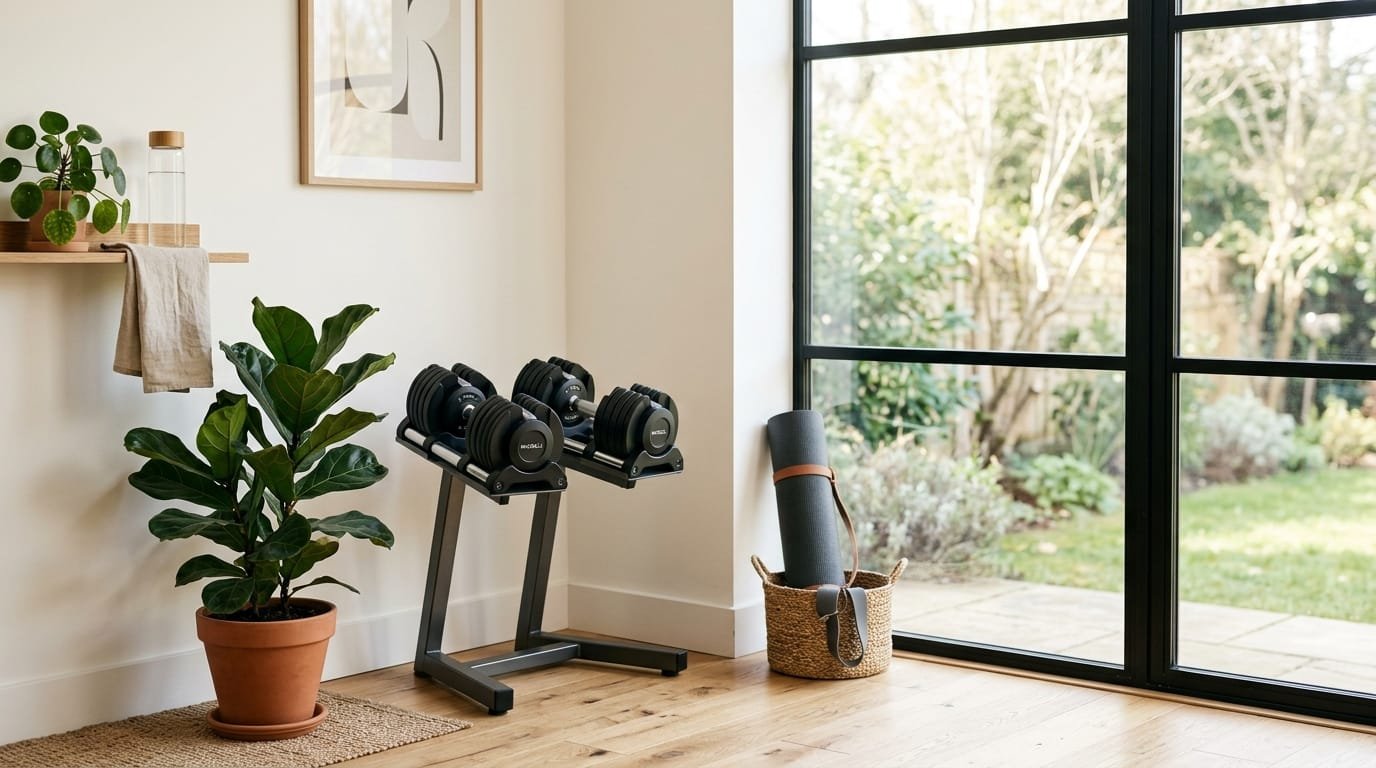
Fixed dumbbell racks look impressive but demand significant floor space and a large upfront investment. A single pair of quality adjustable dumbbells can replace 10–15 pairs of fixed weights while occupying roughly the footprint of two standard dumbbells on a tray or stand. This space-saving advantage is decisive for apartments, spare rooms, and garage gyms that must share space with cars or other equipment.
Beyond space, adjustable dumbbells support progressive overload—the fundamental driver of strength and muscle gains. As you get stronger, you simply dial, pin, or twist to the next increment instead of buying another pair. Modern 2026 designs have improved locking mechanisms, reduced rattle, and better handle ergonomics compared with earlier generations, making them practical for everything from rehabilitation work to heavy compound movements.
They also pair excellently with other compact tools. Use them alongside an adjustable kettlebell for swings and cleans, resistance bands for warm-ups, or a manual treadmill for conditioning finishers. The versatility turns a small footprint into a complete strength station.
The 7 Critical Factors for Choosing Adjustable Dumbbells
Use these criteria as a checklist before buying. Independent testing from sources such as Garage Gym Reviews and Wirecutter consistently highlights the same core priorities.
1. Weight Range This is the most important specification. Choose a maximum that is higher than the heaviest weight you currently use for your strongest lifts (typically goblet squats, Romanian deadlifts, or floor presses). A common recommendation is to leave 10–20 lb of headroom so the set remains useful for 1–2 years of progress.
- Beginners and general fitness: 5–50 or 5–52.5 lb is usually sufficient.
- Intermediate to advanced: Look for 5–80 lb or expandable systems that reach 90 lb per hand.
- Very strong lifters: Consider loadable or high-capacity options above 90 lb, or accept that fixed heavy dumbbells may still be needed for certain movements.
2. Weight Increments Smaller jumps (2.5 lb) make progressive overload smoother, especially for upper-body isolation work and for women or beginners whose strength increases gradually. Many quality sets offer 2.5 lb increments in the lower range and 5 lb jumps higher up. Large 5–10 lb jumps can force form breakdown when you are not quite ready for the next step.
3. Adjustment Mechanism How quickly and reliably you change weight affects workout flow.
- Dial systems (Bowflex-style): Fastest for most people—usually 2–4 seconds. Excellent for circuits and supersets.
- Twist-handle systems (NÜOBELL-style): Very quick and produce a more traditional dumbbell feel.
- Selector-pin or magnetic pin (PowerBlock-style): Highly durable and compact; slightly slower but extremely reliable.
- Plate-loaded/spin-lock: Cheapest and infinitely expandable with standard plates, but slowest to change.
Faster mechanisms suit high-volume or metabolic training. Durability-focused lifters often prefer pin systems. Detailed mechanism comparisons are well covered in the Garage Gym Builders buying guide.
4. Durability and Drop Tolerance Most selectorized adjustable dumbbells are not designed to be dropped like competition bumper plates. Dropping them can damage internal mechanisms or plates. PowerBlock and certain all-metal designs tolerate more abuse. If you train to failure on presses or regularly need to bail, either buy a drop-rated model or keep a pair of fixed rubber hex dumbbells for those specific exercises.
5. Handle Feel, Length, and Balance A comfortable handle diameter (typically 30–36 mm) and good knurling or texture improve grip security—especially when hands get sweaty. Some designs stay the same length at every weight (more traditional feel); others change length. Longer dumbbells can interfere with certain movements or brush against the body on presses. Test the balance if possible; poorly balanced units feel awkward at heavier settings.
6. Footprint, Storage, and Noise Measure your available space. Most pairs fit on a tray roughly 17 × 9 inches or less. Some come with stands for waist-height access. Quieter mechanisms matter in apartments. Check whether the set rattles during movement—excessive noise and vibration reduce training enjoyment.
7. Price, Warranty, and Expandability Expect $350–$500 for solid mid-range pairs reaching ~50 lb, $600–$900+ for premium or high-capacity sets. Expandable systems (PowerBlock) cost more initially but can be upgraded later, improving long-term value. Look for at least a 2-year warranty; lifetime or multi-year coverage on frames and mechanisms is a strong plus. Avoid the cheapest no-name sets—poor locking mechanisms and low-quality plastics fail under repeated use.
Step-by-Step Process to Choose Your Pair
- Assess your current strength levels on key movements (e.g., what weight do you use for 8–12 reps on dumbbell bench press, rows, and goblet squats?).
- Decide your primary training style: pure strength, hypertrophy circuits, or mixed.
- Measure available floor or shelf space and decide if a stand is needed.
- Set a realistic budget including possible future expansion.
- Shortlist 2–3 models that meet your weight range and mechanism preference.
- Read recent owner reviews focusing on long-term durability (6+ months of use) and customer service experiences.
- Confirm return policy and warranty details before purchasing.
- Once acquired, start with lighter weights to master form, then progress.
Comparison of Leading 2026 Options
| Model / Type | Weight Range (per hand) | Adjustment Style | Best For | Approx. Price Range (pair) | Key Strengths | Main Limitations |
|---|---|---|---|---|---|---|
| Bowflex Results Series 552 | 5–52.5 lb | Dual dial | Most users, beginners | $350–$450 | Fast changes, fine increments, tray | Not drop-safe, fixed max weight |
| PowerBlock Elite EXP | 5–50 lb (expandable to 90) | Magnetic/selector pin | Strength progression | $400–$550 base | Compact, durable, expandable | Block shape, slightly slower |
| NÜOBELL / SMRTFT 80 lb | 5–80 lb | Twist handle | Traditional feel | $700–$800 | Excellent feel, fast, compact | Higher price, careful handling |
| REP × Pépin / similar high-end | Up to 100–125 lb possible | Fast selector | Advanced / heavy lifters | Premium | High capacity, durability | Cost |
| NordicTrack Select-A-Weight | 10–55 lb | Selector | Budget mid-range | $300–$400 | Value | Starts higher, fewer low options |
| Core Home Fitness / similar | 5–50 lb | Twist | Fast one-hand changes | $300–$400 | Speed | Max weight ceiling |
Prices fluctuate with sales; always verify current pricing and the exact model year (especially for Bowflex post-redesign units). For deeper testing data, see the latest roundups from Garage Gym Reviews and Strong Home Gym.
Recommendations by User Type
Beginners and general fitness Start with a dial-style set in the 5–52.5 lb range. The learning curve is minimal, increments support gradual progress, and the included tray keeps the area tidy. Pair them with bodyweight movements and lighter accessory work.
Intermediate lifters focused on muscle growth A 50–80 lb capacity with reasonably fast changes works well. You will use the upper end for compound lifts and the lower end for isolation and higher-rep work.
Advanced strength trainees Prioritize expandable or high-capacity systems with proven durability. Consider owning both an adjustable pair for volume work and a few fixed heavy pairs for maximal efforts if dropping is required.
Shared household or couples Choose a set with a wide range and fine low-end increments so both users can train effectively. Expandable systems grow with the stronger partner.
Small-space or apartment users Prioritize the most compact footprint and quietest mechanism. PowerBlock-style or certain twist-handle designs excel here.
Integrating Adjustable Dumbbells into Effective Training
Adjustable dumbbells shine in full-body routines, upper/lower splits, and push-pull-legs templates. Classic movements include:
- Presses (floor, bench, or standing)
- Rows and single-arm rows
- Goblet squats and lunges
- Romanian deadlifts and hip hinges
- Overhead presses and lateral raises
- Farmer carries and loaded carries
- Core work (Russian twists, weighted sit-ups if appropriate)
When performing lateral raises or other shoulder work, maintain the same attention to arm path and scapular control discussed in our guides on straight-arm versus bent-arm lateral raises and joint stress. Proper form remains more important than the exact weight selected.
For grip-intensive work, adjustable dumbbells complement dedicated hand-gripper training. Stronger grip allows safer handling of heavier loads and better control during rows and carries.
Combine them with cardio tools such as a manual treadmill or elliptical for efficient conditioning finishers, or use an adjustable kettlebell for ballistic movements that pure dumbbells handle less efficiently.
Safety, Setup, and Maintenance Tips
- Always place the dumbbells fully and correctly into their tray or cradle after changing weights so the locking mechanism engages properly.
- Start every session with a thorough warm-up, including lighter sets and mobility work for the shoulders and thoracic spine.
- Avoid dropping most adjustable models. If you need to bail, guide the weight down controlled or use fixed dumbbells for high-risk sets.
- Inspect locking mechanisms, pins, and plates periodically for wear or debris.
- Keep the units dry and wipe them after sweaty sessions. Store them off the floor if possible to protect both the equipment and your flooring.
- Progress weight only when you can complete the target reps with solid form. Jumping too quickly increases injury risk.
Frequently Asked Questions
How heavy should my adjustable dumbbells go? Aim for a maximum at least 10–20 lb above your current heaviest working weight on compound movements. Most people never need more than 50–70 lb per hand for home training if form stays strict.
Are adjustable dumbbells as effective as fixed ones? Yes for the vast majority of training goals, provided the set offers appropriate increments and you maintain good form. The convenience often leads to higher training consistency.
Can I drop adjustable dumbbells? Generally no. Most dial and twist systems are not rated for drops. PowerBlock and certain all-metal designs tolerate more impact, but check the manufacturer’s guidelines.
How long do quality adjustable dumbbells last? With proper care (no dropping, correct storage, occasional inspection), many last 5–10+ years. Expandable systems and those with strong warranties offer better long-term value.
Should I buy one dumbbell or a pair? Always a pair. Bilateral movements and balanced training require two matched units.
What about budget options under $200? They exist but often sacrifice durability, smooth adjustment, or weight range. For frequent use, investing in a mid-range set usually proves more economical over time.
Do I still need a bench or other equipment? A sturdy adjustable bench multiplies the exercise library (incline presses, supported rows, etc.). Many effective programs can still be performed with floor presses, standing work, and bodyweight variations if space or budget is limited.
Final Recommendation and Next Steps
In 2026 the smartest purchase for most home gym owners is a well-reviewed dial or twist-handle set in the 5–50/52.5 lb range if you train primarily for general fitness and hypertrophy, or an expandable PowerBlock-style system if progressive strength is the priority. Measure your space, list your current working weights, and choose the mechanism you will actually enjoy using day after day.
Once you have the dumbbells, pair them with solid programming, progressive overload, and attention to recovery. Revisit technique resources on this site regularly—especially for shoulder health and grip strength—so the new equipment delivers results rather than frustration.
Ready to build or upgrade your home setup? Start by confirming your current strength numbers, then compare the shortlisted models against the factors above. Consistent training with the right tools produces far better outcomes than chasing the “perfect” piece of equipment. If you already own related gear such as kettlebells or cardio machines, integrate the dumbbells thoughtfully for balanced full-body sessions.
Train smart, progress gradually, and enjoy the convenience of a compact, versatile strength solution that grows with you.