Best Home Gym Setup Under $500 for Full-Body Workouts
Quick Answer Yes, you can build a complete, highly effective home gym for full-body strength, muscle growth, and conditioning for under $500. The optimal setup centres on a pair of adjustable dumbbells (or a solid fixed set in the right weight range), a sturdy adjustable or flat bench, a doorway pull-up bar, a quality resistance-band set, and basic floor protection. This combination covers every major movement pattern — push, pull, squat, hinge, carry, and core — while allowing progressive overload for months or years. Realistic totals for good-quality budget gear fall between $350 and $480, leaving room for a kettlebell or jump rope. Focus on multi-use tools and progressive resistance rather than single-purpose machines or flashy all-in-one systems.
Why a Sub-$500 Home Gym Is Fully Viable in 2026
Commercial gym memberships often cost $40–$80 per month. Over a year that totals $480–$960 — more than enough to own equipment that pays for itself in a few months and remains available 24/7 with zero commute. Independent budget-build analyses and practical testing from home-gym resources consistently show that a well-chosen minimal setup delivers the majority of the training stimulus most people need for strength, hypertrophy, and general fitness.
The key is prioritising versatility and progressive overload potential. Adjustable dumbbells replace an entire rack of fixed weights. A bench unlocks horizontal and incline pressing plus supported rows. A pull-up bar supplies high-value vertical pulling. Resistance bands fill assistance, mobility, and extra-resistance gaps. Together these items support hundreds of exercises and allow systematic progression without requiring a power rack, barbell, or large footprint.
Core Recommended Setup Under $500 (2026 Pricing)
| Item | Typical Cost Range | Primary Role | Why It Earns Its Place |
|---|---|---|---|
| Adjustable dumbbells (approx. 5–50 lb) | $180–$280 | Full-body strength & progressive overload | Highest exercise variety and long-term value per dollar |
| Adjustable or flat weight bench | $90–$150 | Pressing, rows, step-ups, hip thrusts | Turns dumbbells into a complete station |
| Doorway pull-up bar | $25–$40 | Vertical pull, hangs, core | Outstanding strength-to-cost ratio |
| Resistance band set (loops + tubes) | $20–$40 | Assistance, mobility, added resistance, travel | Extremely versatile and portable |
| Exercise mat or basic flooring | $20–$50 | Floor protection, comfort, core work | Protects floors and joints |
| Optional: Kettlebell or jump rope | $15–$60 | Swings, conditioning | Adds variety if budget remains |
Realistic total: $350–$480. This configuration is repeatedly endorsed in 2026 budget-build guides as the highest-return approach for most people (see detailed examples at Home Gym Foundry).
Detailed Equipment Guidance
1. Adjustable Dumbbells – The Foundation ($180–$280) These are the single most important purchase. A quality pair in the 5–50 lb (or similar) range replaces 10–15 pairs of fixed dumbbells and occupies minimal space. Look for secure locking mechanisms (dial, pin, or selector), comfortable handles, and a weight capacity that allows progression for at least 12–18 months.
Budget-friendly options commonly recommended in current reviews deliver reliable performance for home use. For in-depth selection criteria — weight range, adjustment speed, durability, and common pitfalls — see our complete guide: How to Choose the Best Adjustable Dumbbells for Home Gyms in 2026.
2. Bench ($90–$150) A stable bench multiplies the usefulness of dumbbells. It enables flat and incline presses, seated overhead presses, supported rows, hip thrusts, Bulgarian split squats, and step-ups. Prioritise a weight capacity of at least 500–600 lb total user + weights, firm padding, and a non-slip base. Folding models are excellent for small spaces. Flat benches are sufficient for most users; adjustable incline/decline models add versatility if the budget allows.
3. Doorway Pull-Up Bar ($25–$40) Few items deliver more training value per dollar. Pull-ups, chin-ups, neutral-grip variations, hanging leg raises, and dead hangs become available immediately. Choose a model with multiple grip positions and secure, damage-free mounting. Pair with bands for assistance if full pull-ups are not yet possible. This single tool dramatically improves upper-back, bicep, and core development.
4. Resistance Bands ($20–$40) A combination of loop bands and tube bands with handles covers face pulls, band pull-aparts, assisted pull-ups, lateral walks, monster walks, and added resistance for squats or presses. They are ideal for warm-ups, mobility, and travel. Different materials and strengths serve different purposes — see our detailed comparison: Resistance Bands Buying Guide: Loop vs. Tube vs. Fabric – Which Wins?.
5. Mat / Flooring ($20–$50) Protects floors from dropped weights and provides cushioning for floor-based exercises and core work. Interlocking puzzle mats or a thick yoga-style mat both work well at this price point.
Optional High-Value Add-Ons
- One kettlebell (25–53 lb range) for swings, cleans, and carries — guidance on sizing is available here: How Heavy Should My Adjustable Kettlebell Be?
- Jump rope for efficient conditioning
- Basic foam roller for recovery
Full-Body Movement Coverage
With the recommended setup you can effectively train:
- Push: Dumbbell bench press, incline press, overhead press, push-ups (band-resisted), triceps work
- Pull: Pull-ups/chin-ups (assisted as needed), single-arm and two-arm dumbbell rows, band face pulls, band pull-aparts
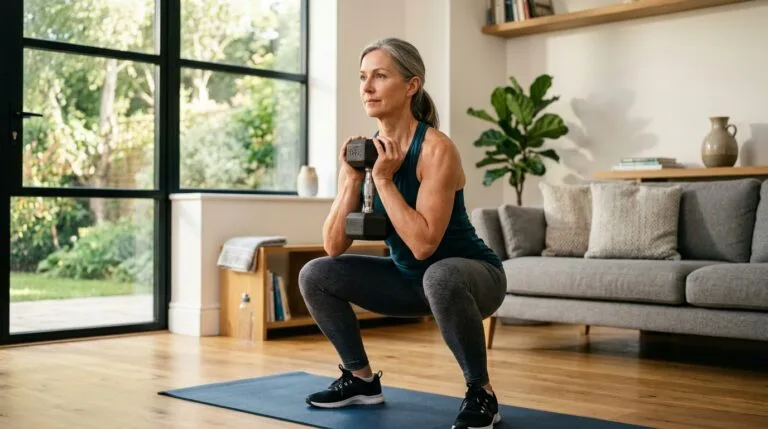
- Squat / Lunge: Goblet squats, rear-foot-elevated split squats, walking lunges, step-ups
- Hinge: Romanian deadlifts, good mornings, kettlebell swings
- Carry: Farmer carries or suitcase carries with dumbbells
- Core: Hanging leg raises, planks, ab-wheel rollouts (inexpensive add-on), band anti-rotation presses
This covers all major muscle groups and movement patterns required for balanced strength and physique development.
Step-by-Step Guide to Building and Launching Your Gym
- Measure available space and decide on a dedicated training zone.
- Allocate the largest portion of the budget to adjustable dumbbells.
- Purchase a stable bench next.
- Add the pull-up bar and resistance bands.
- Protect the floor with a mat.
- Consider the used market (Facebook Marketplace, Craigslist) for higher-capacity adjustable dumbbells to stretch the budget.
- Set up the equipment in a consistent location to reduce friction.
- Design a simple progressive programme (3–4 full-body or upper/lower sessions per week).
- Track loads, repetitions, and exercise variations for progressive overload.
- Re-evaluate after 3–6 months and upgrade only when current resistance levels are genuinely insufficient.
Sample Progressive 3-Day Full-Body Programme
Day A Goblet squat – 3–4 sets of 8–12 Dumbbell bench press – 3–4 sets of 8–12 Pull-ups or band-assisted pull-ups – 3 sets to near failure Dumbbell Romanian deadlift – 3 sets of 10–12 Band face pulls – 3 sets of 15–20
Day B Dumbbell overhead press – 3–4 sets of 8–12 Single-arm dumbbell row – 3 sets of 10–12 per side Bulgarian split squat – 3 sets of 8–10 per leg Hanging knee raises or leg raises – 3 sets of 10–15 Jump rope or band complex – 8–12 minutes
Day C Incline dumbbell press – 3 sets of 10–12 Chin-ups or neutral-grip pull-ups – 3 sets to near failure Walking lunges or reverse lunges – 3 sets of 10 per leg Kettlebell swing (if available) or hip thrust – 3 sets of 12–15 Core finisher (plank variations or ab wheel)
Progress by increasing weight, adding repetitions, or advancing to harder variations when current targets become achievable with good form.
Budget Allocation and Common Mistakes
Recommended spending split
- 40–60 % on dumbbells
- 20–30 % on the bench
- Remainder on pull-up bar, bands, and flooring
Frequent mistakes to avoid
- Buying an inexpensive all-in-one multi-gym that lacks progressive overload and takes up excessive space
- Neglecting vertical pulling
- Choosing the absolute cheapest dumbbells that feel unstable or have poor locking mechanisms
- Skipping floor protection
- Purchasing highly specific single-use items too early
- Failing to plan for progressive overload from day one
Integrating the Setup with Technique and Recovery Practices
This equipment pairs naturally with sound training principles. Maintain healthy shoulder mechanics on pressing and raising movements by following guidance such as safe lateral-raise technique. Develop grip strength to improve pull-up performance and loaded carries. Strengthen the core with ab-roller progressions once basic stability is established.
For conditioning, outdoor walking, running, or a future manual treadmill can complement the strength work. Recovery tools such as a budget massage gun or foam rolling further support consistency.
External pricing and build examples are regularly updated on independent sites including Home Gym Foundry’s $500 builds and practical retailer comparisons.
Frequently Asked Questions
Is it realistic to train effectively with only $500 of equipment? Yes. Adjustable dumbbells, a bench, pull-up bar, and bands cover all fundamental patterns and support progressive training for beginners through early intermediates.
Adjustable or fixed dumbbells? Adjustable are superior at this budget for space efficiency and cost. Fixed sets become expensive and storage-heavy very quickly.
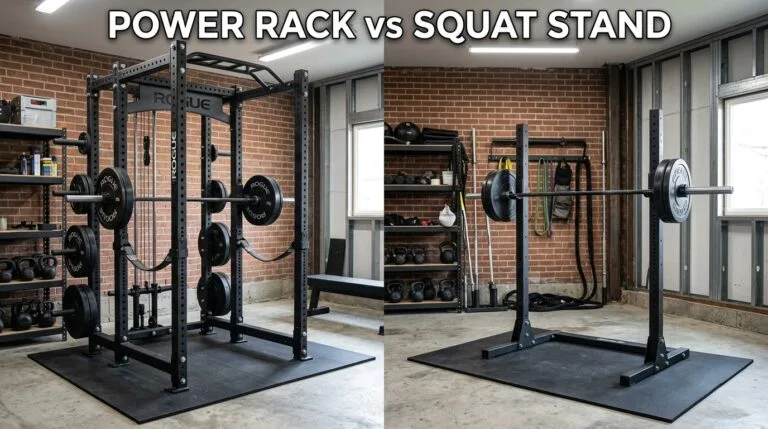
Can I include a power rack or barbell under $500? A basic squat stand plus used barbell and plates is sometimes possible if prioritising barbell lifts and buying second-hand, but it usually requires sacrificing dumbbell versatility. Most people achieve better overall results starting with the dumbbell-centric approach.
How long before I outgrow this setup? With consistent progressive overload many users train productively for 12–24 months or longer before needing significantly heavier resistance or additional tools.
What about cardio equipment? Bodyweight circuits, jump rope, and outdoor activity cover conditioning needs. Dedicated machines typically consume the majority of a $500 budget and reduce strength-training options.
Where is the best place to buy? Major online retailers for new items with return policies, and the used market (Facebook Marketplace, Craigslist, local groups) for higher-capacity adjustable dumbbells. Always verify weight ratings and condition.
Will this build muscle and strength? Yes, provided progressive overload, sufficient protein, and consistency are present. The equipment supplies the necessary mechanical tension; results depend on programming and recovery.
Final Recommendation
A complete, results-oriented home gym for full-body workouts is entirely achievable under $500 by focusing on adjustable dumbbells, a stable bench, a doorway pull-up bar, resistance bands, and basic flooring. This combination maximises exercise variety, progressive overload potential, and long-term value while remaining compact and affordable.
Begin with the dumbbells and bench, add the pull-up bar and bands, protect your floor, and follow a progressive full-body programme. Track your lifts, prioritise technique, and upgrade only when you have genuinely outgrown the current resistance. With these choices, your sub-$500 setup becomes a powerful, sustainable foundation for strength, muscle, and fitness that outperforms both expensive under-used equipment and a neglected gym membership.