Flooring and Mat Solutions for Apartments with Strict Rules
Quick Answer
For apartments with strict rules, the best flooring and mat solutions are thick, non-permanent, high-density rubber or foam tiles and rollable exercise mats that protect the building floor, reduce noise and vibration, and can be fully removed without residue or damage. Prioritise interlocking rubber tiles (¾-inch or thicker), horse-stall mats cut to size, or multi-layer systems that stay in place during training yet lift cleanly afterward. Combine these with controlled exercise technique to meet most lease requirements while still allowing effective strength training.
Why Flooring Matters in Rule-Strict Apartments
Apartment leases frequently prohibit damage to flooring, excessive noise, and permanent modifications. Dropped weights, moisture, and repeated impact can scuff, dent, or stain hardwood, laminate, vinyl, or carpet. Noise and vibration travel through floor assemblies and generate complaints. The right mat system solves three problems simultaneously: surface protection, sound/vibration dampening, and full removability. When flooring is handled correctly, serious training becomes compatible with strict building rules.
Core Requirements for Apartment-Compliant Flooring
- Non-damaging – No adhesives that leave residue, no staining, no abrasion of the finished floor.
- Fully removable – Must lift cleanly for inspections, moves, or daily living.
- Impact and abrasion resistant – Protects against dumbbell contact, foot traffic, and moisture.
- Noise and vibration reducing – Dense materials that absorb rather than transmit energy.
- Stable underfoot – Does not slide or bunch during training.
- Reasonable storage or permanence – Either stays neatly in place or packs away quickly.
Flooring and Mat Options Compared
| Solution | Thickness / Density | Protection Level | Noise Reduction | Removability | Best Use Case | Notes |
|---|---|---|---|---|---|---|
| Interlocking rubber tiles (¾”+) | High | Excellent | High | Excellent | Dedicated or semi-permanent zone | Most popular balanced choice |
| Horse-stall mats (¾”–1″) | Very high | Excellent | Very high | Good (heavy) | Heavy lifting areas | Cut to size; very durable |
| Multi-layer system (foam + rubber) | Variable | Excellent | Very high | Excellent | Maximum isolation | More expensive, superior dampening |
| Thick rollable exercise mat (½”+) | Moderate–high | Good | Moderate | Excellent | Bodyweight & light dumbbells | Easy storage |
| Puzzle-piece foam tiles | Low–moderate | Moderate | Low–moderate | Excellent | Budget / temporary | Less durable under weights |
| Commercial gym flooring rolls | High | Excellent | High | Moderate | Larger budgets | May require professional cut |
Detailed Solution Breakdown
Interlocking Rubber Tiles
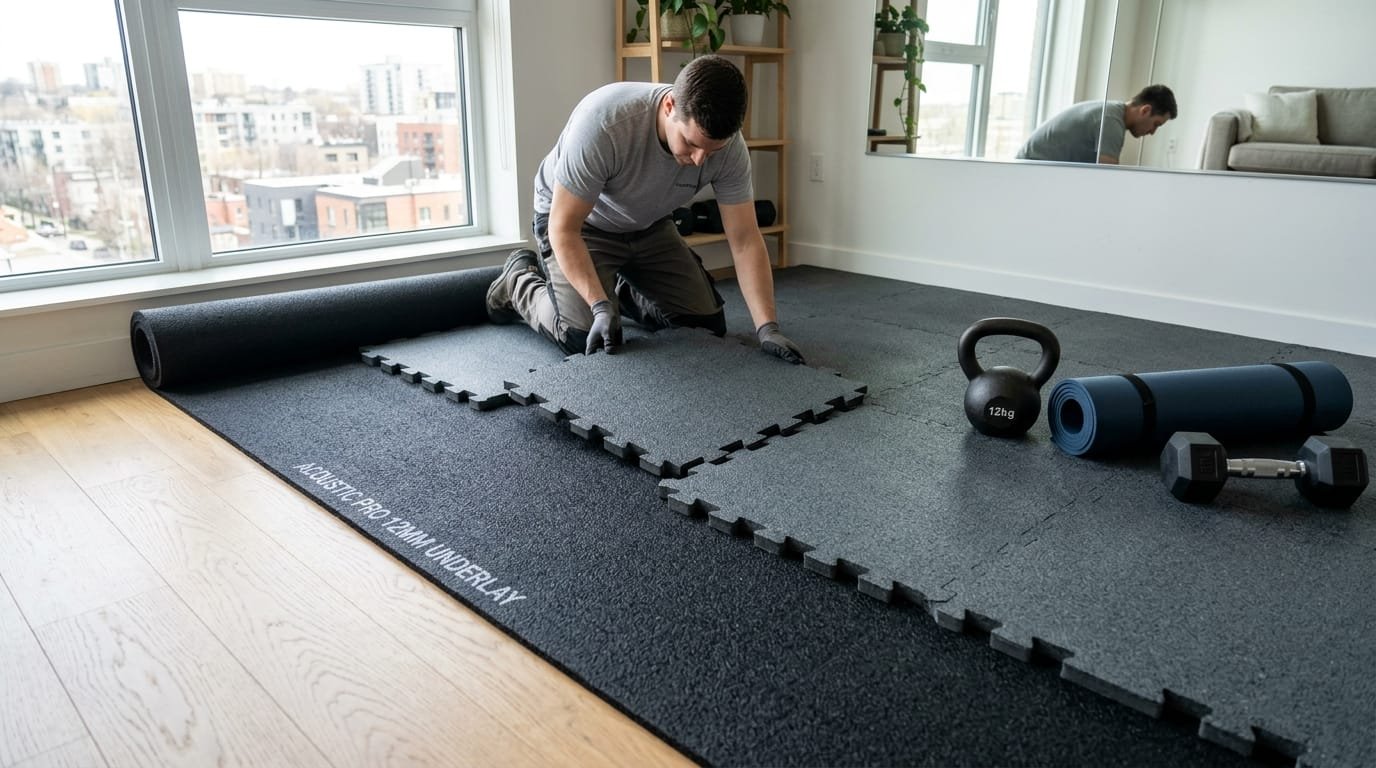
These are the most practical solution for most apartments. Choose high-density rubber in ¾-inch or 1-inch thickness. They protect the floor from impact and abrasion, significantly reduce noise transmission, and can be assembled into any shape. When the lease ends or the layout changes, they lift without residue. Look for tiles with interlocking edges that stay tight under foot traffic and light lateral forces.
Horse-Stall Mats
Typically ¾-inch or 1-inch solid rubber, these offer outstanding protection and dampening. They are heavier and less modular than interlocking tiles but extremely durable. Many trainees cut them to exact platform dimensions. Place a thin protective layer (cardboard, thin plywood, or specialised underlayment) underneath if the apartment floor is particularly delicate.
Multi-Layer Systems
For maximum noise control, combine a dense rubber top layer with a shock-absorbing foam or crumb-rubber underlayment. This approach is common in apartments with sensitive downstairs neighbours. The system remains fully removable if no permanent adhesive is used.
Thick Rollable Mats
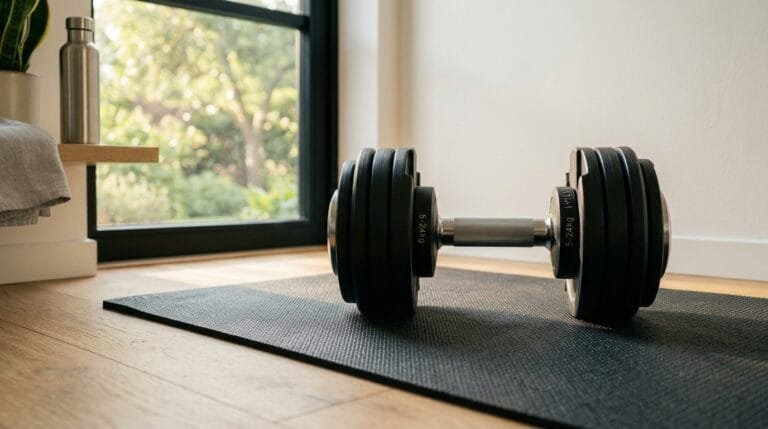
High-quality ½-inch or thicker exercise mats work well for bodyweight training, floor presses, and light dumbbell work. They store easily and leave zero footprint when put away. They are less ideal as the sole solution for heavier strength training because they compress more under load.
What to Avoid
Thin yoga mats, low-density foam tiles, and any product requiring permanent adhesive. These fail on protection, noise reduction, or removability.
Step-by-Step Installation for Rule Compliance
- Check the lease and any building guidelines for flooring, noise, and modification rules.
- Photograph the existing floor condition before installing any mats (documentation protects the deposit).
- Clean the floor thoroughly so no grit becomes trapped underneath.
- Test a small section for colour transfer or finish reaction (especially on hardwood or vinyl).
- Lay tiles or mats without adhesive whenever possible. Use gravity, interlocking edges, and friction.
- Add a thin, non-staining underlayment if extra floor protection is required.
- Create a defined training zone rather than covering the entire room.
- Establish a quick inspection routine: lift a corner weekly to check for moisture or debris.
- Keep a simple teardown plan if the mats must be removed for cleaning or inspections.
- Re-evaluate after the first month of real use and adjust thickness or coverage as needed.
Pairing Flooring with Quiet Training Technique
Even the best mat system works better when technique minimises impact:
- Default to controlled 3–4 second eccentric phases
- Lower dumbbells and kettlebells deliberately rather than dropping
- Eliminate jumping and ballistic movements
- Prefer floor presses, Romanian deadlifts, and split squats over high-impact variations
Shoulder-friendly, controlled technique further reduces both noise and joint stress (Bent Arms vs. Straight Arms in Lateral Raises, The Hidden Mistake in Lateral Raises, and 3 Lateral Raise Modifications). Grip work can stay quiet with towel holds or short band work (Do Hand Grippers Really Work?).
Practical Layouts for Different Apartment Constraints
Small dedicated corner
Cover a 6×6 ft or 8×8 ft area with interlocking tiles. Store a rollable mat vertically for additional floor work if needed.
Fully convertible living space
Use a thick rollable mat or a small set of interlocking tiles that are put away after every session. Prioritise bodyweight and band exercises on these days.
Maximum noise isolation
Multi-layer system in the training zone plus strict controlled-tempo rules. Schedule higher-effort sessions at neighbour-friendly times.
Maintenance and Long-Term Care
- Sweep or vacuum underneath periodically to prevent grit damage to the apartment floor
- Wipe rubber surfaces with mild cleaner; avoid harsh solvents that can degrade the material
- Allow mats to dry fully if moisture from sweat or cleaning is present
- Rotate or flip tiles occasionally for even wear
- Keep original packaging or purchase records in case the landlord requests removal verification
Common Mistakes That Violate Rules or Cause Damage
| Mistake | Risk | Better Approach |
|---|---|---|
| Using permanent adhesive | Lease violation, deposit loss | Friction and interlocking edges only |
| Choosing thin or low-density mats | Floor damage, noise complaints | ¾-inch+ high-density rubber |
| Ignoring colour transfer | Staining of finished floors | Test a small area first |
| Covering the entire room permanently | Visual and practical conflict | Defined, removable zone |
| Neglecting underneath cleaning | Trapped grit and moisture | Weekly or bi-weekly lift-and-clean |
| Dropping weights on any mat | Noise and accelerated wear | Controlled lowering every rep |
Strength training with proper floor protection remains highly effective for building and maintaining muscle and strength (strength training guidance). Practical home-gym approaches emphasise solutions that respect apartment constraints and long-term living arrangements (home gym equipment prioritisation and budget home gym principles).
Frequently Asked Questions
Will thick rubber mats damage hardwood or laminate?
High-quality, non-staining rubber used without adhesive and kept clean underneath is generally safe. Always test a small area and document the floor condition.
How thick should the mat be for noise control?
¾-inch high-density rubber is the practical minimum for most apartments. 1-inch or multi-layer systems provide superior isolation when downstairs neighbours are sensitive.
Can I leave interlocking tiles down permanently?
Yes if the lease allows and the floor is protected. Many tenants still lift them periodically for cleaning and inspection.
Are horse-stall mats practical in apartments?
Yes. They offer excellent protection and dampening. Their weight makes frequent moving harder, so they suit more permanent zones.
What is the best budget option?
A thick rollable exercise mat combined with controlled technique. Upgrade to interlocking rubber tiles when budget allows.
How do I prove to a landlord that the floor is protected?
Keep dated photos of the floor before installation, use only removable solutions, and maintain a clean interface between mat and floor.
Do I still need controlled technique if I have thick mats?
Yes. Mats reduce but do not eliminate noise and impact. Controlled lowering remains essential for neighbour relations and equipment longevity.
Can I train seriously with only a rollable mat?
Yes for bodyweight, band, and light-to-moderate dumbbell work. Heavier strength training benefits from denser rubber coverage.
Final Recommendation
Apartment-compliant flooring centres on thick, high-density, fully removable rubber or multi-layer systems that protect the building floor, reduce noise and vibration, and leave no residue. Interlocking rubber tiles (¾-inch or thicker) and horse-stall mats are the most effective practical solutions; thick rollable mats serve well for lighter training or fully convertible spaces. Pair the flooring with controlled exercise technique, a defined training zone, and simple maintenance.
Photograph the existing floor, test for colour transfer, install without adhesive, and keep the system clean underneath. When protection, noise reduction, and removability are handled correctly, serious strength training becomes compatible with even strict apartment rules. Choose the solution that matches your load, noise sensitivity, and storage constraints, then train with confidence that both your results and your deposit remain intact.