How to Choose Yoga Blocks and Straps That Actually Improve Your Practice
Quick Answer Choose high-density cork or firm foam yoga blocks (standard 9 × 6 × 4 inches) for stability and support in standing, balancing, and restorative poses, and an 8-foot cotton strap with a secure D-ring or similar buckle for most practitioners. Cork offers superior grip (especially when sweaty) and durability; foam prioritizes lightness and comfort. A quality strap extends reach safely, improves alignment, and deepens stretches without compromising form. Two blocks plus one well-chosen strap deliver the biggest immediate improvement in accessibility, safety, and progressive practice for nearly every level.
Why Yoga Blocks and Straps Matter More Than Most People Realize
Yoga props are not “cheating.” They are tools that make proper alignment possible, reduce injury risk, and allow you to experience the full benefit of a pose rather than forcing yourself into a shape that creates compensation. Blocks bring the floor closer so you can maintain a neutral spine and open hips or shoulders safely. Straps act as an extension of your arms so tight hamstrings, shoulders, or hips no longer force you to round the back or collapse the chest.
Used intelligently, these simple tools accelerate progress in flexibility, strength, and body awareness. They also make yoga more inclusive for beginners, taller or shorter practitioners, those recovering from injury, and anyone with limited range of motion. Guidance from sources such as Yoga Journal and clinical perspectives consistently shows that props help students stay in poses longer with better form—the exact conditions that drive real adaptation.
Yoga Blocks: Materials, Size, and What Actually Improves Practice
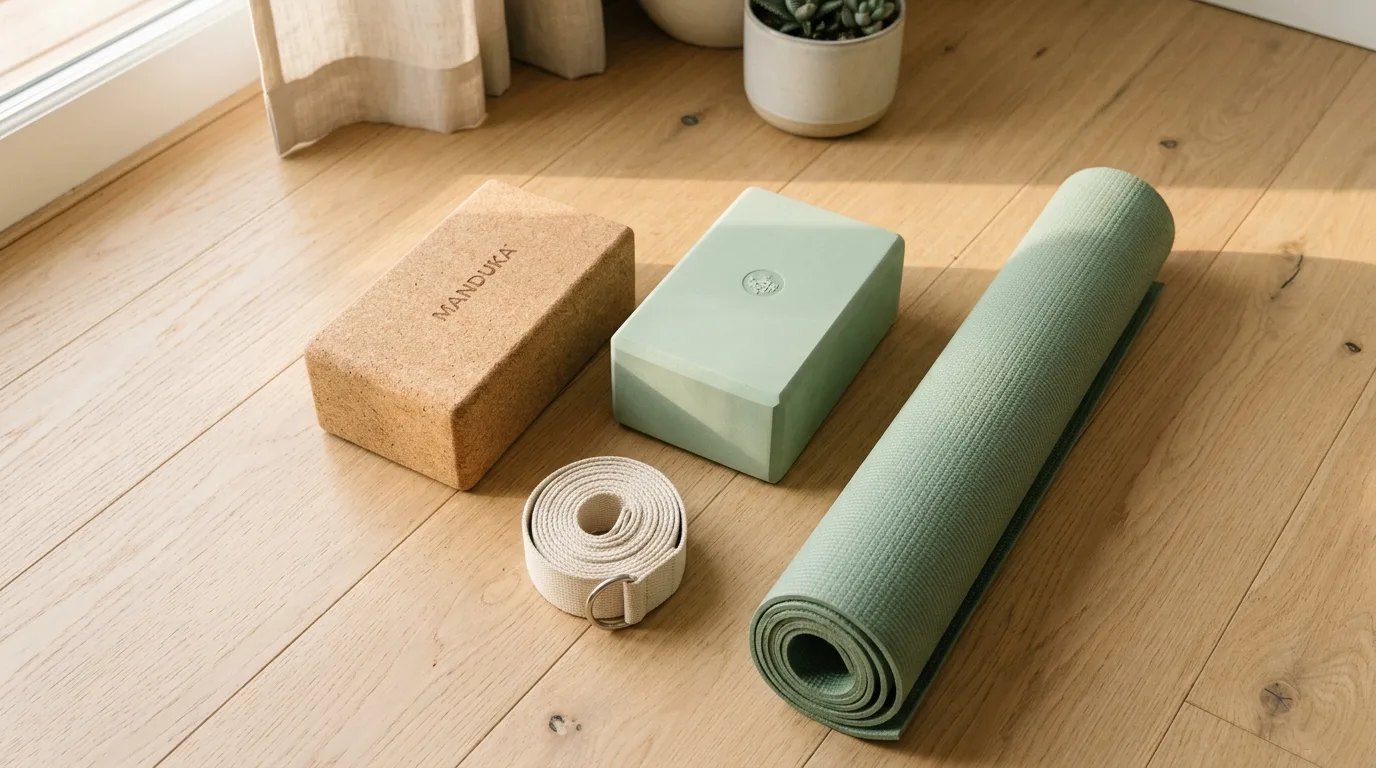
Standard Size Most yoga blocks measure approximately 9 × 6 × 4 inches. This size allows three useful heights: the full 9-inch side for maximum height, the 6-inch side for medium support, and the 4-inch side for subtle elevation. Some brands offer “lean” or half-size options for smaller hands or more advanced work.
Material Comparison
| Feature | Foam (EVA) | Cork | Wood / Bamboo |
|---|---|---|---|
| Weight | Lightest | Medium | Heaviest |
| Stability | Good (can compress) | Excellent | Maximum |
| Grip (dry/sweaty) | Moderate / can slip | Excellent (improves when damp) | Moderate / can slip when wet |
| Comfort | Softest, best for resting | Firm but comfortable | Hardest |
| Durability | Good, may dent over time | Excellent | Outstanding |
| Eco-friendliness | Varies (recycled options exist) | High (renewable bark) | High (if sustainably sourced) |
| Best for | Beginners, restorative, travel | All-around, hot yoga, balance | Maximum stability, aesthetics |
| Typical price range | Lowest | Mid | Highest |
Cork is frequently recommended as the best overall material by experienced teachers and independent tests (including detailed evaluations from Wirecutter and Outdoor Gear Lab) because it balances firmness, natural grip, and longevity. Foam remains the most beginner-friendly and portable option. Wood provides unmatched rigidity but can feel unforgiving in restorative poses and may be noisy or slippery when wet.
How Blocks Improve Practice
- Shorten the distance to the floor in standing poses (Triangle, Half Moon, Side Angle) so the spine stays long.
- Provide stable support under the hands, hips, or head in balancing and inverted work.
- Allow safer, longer holds in restorative and yin poses.
- Create feedback for alignment (e.g., squeezing a block between the thighs in Bridge to keep knees tracking properly).
- Progressively reduce height as mobility improves, turning the prop into a measurable training tool.
Yoga Straps: Length, Material, and Buckle Design
Length Guidelines
- 6 feet: Suitable for smaller frames or basic seated stretches.
- 8 feet: The most versatile “gold standard” for average-height practitioners and most poses.
- 10 feet: Ideal for taller individuals (generally over 6 feet), very tight hamstrings, or complex restorative wrapping and binding.
Material and Hardware Cotton offers the best natural grip and feels soft against the skin; it is preferred by many for both dry and slightly sweaty practice. Nylon or polyester is more durable and easier to clean but can feel slippery. Look for a secure metal or high-quality plastic D-ring (or similar adjustable buckle) that holds without slipping once tightened. Some straps feature multiple loops for progressive stretching, which can be useful for physical-therapy-style work or precise tracking of range-of-motion gains.
How Straps Improve Practice
- Extend reach in forward folds and hamstring stretches so the spine remains neutral.
- Assist shoulder openers and binds without forcing the joint.
- Support safe progression in poses that require greater flexibility than you currently have.
- Enable active engagement (pulling against the strap) rather than passive hanging.
Side-by-Side Decision Framework
| Priority | Recommended Blocks | Recommended Strap |
|---|---|---|
| Beginners / restorative | Firm foam or cork | 8-foot cotton with D-ring |
| Hot / sweaty practice | Cork | Cotton (better grip) |
| Maximum stability / balance | Cork or wood | Any secure buckle |
| Portability / travel | Lightweight foam | 6- or 8-foot compact cotton |
| Tall practitioners | Standard size cork/foam | 10-foot |
| Eco-conscious | Cork or sustainably sourced wood | Organic cotton or recycled options |
| Budget | High-density foam | Basic cotton D-ring |
Step-by-Step Guide to Choosing and Using Props
- Assess your primary practice style (vinyasa, yin, restorative, hot, alignment-based).
- Decide on block material based on the comparison table above—most people benefit from owning at least one pair of cork or firm foam blocks.
- Select strap length according to height and intended use; when in doubt, choose 8 feet.
- Verify density and construction: blocks should feel solid under body weight without excessive give; straps should not stretch significantly under tension.
- Buy two blocks rather than one—many poses require bilateral support.
- Test grip and comfort if possible, or rely on detailed reviews from trusted sources such as Yoga Journal and Wirecutter.
- Introduce props gradually: start by using them to maintain form in poses you already know, then explore deeper variations.
- Clean and care for them properly (wipe cork and foam; air-dry cotton straps) so they remain hygienic and functional.
- Re-evaluate after several months: as mobility improves you may use lower block heights or longer strap loops, turning the props into progressive tools.
Integrating Blocks and Straps with Broader Training
Yoga props shine when combined with strength and mobility work. Improved shoulder openness from strap-assisted stretches supports safer pressing and lateral raise variations. Better hip and hamstring mobility from block- and strap-supported forward folds enhances hinge patterns used with adjustable kettlebells and deadlift variations. Core control developed in supported poses transfers to ab roller work and stability training.
Strong grip endurance helps you hold straps and blocks securely during longer holds. Complementary cardio on a manual treadmill or recovery sessions can be paired with gentle prop-supported mobility work. Resistance bands also pair well with straps for added progressive tension.
Common Mistakes That Limit Progress
- Using blocks only as a “crutch” instead of a tool for better alignment and measurable progression.
- Choosing the softest, cheapest foam that compresses under load and undermines stability.
- Selecting a strap that is too short, forcing spinal rounding.
- Ignoring grip and buckle security—slipping props create frustration and risk.
- Neglecting to clean props, especially cork that can absorb moisture and odor.
- Treating props as beginner-only tools rather than lifelong aids for refinement and recovery.
Frequently Asked Questions
Do I really need two yoga blocks? Yes for most practitioners. Many poses require support under both hands or both sides of the body, and stacking two blocks creates additional height options.
Are cork blocks better than foam? Cork generally offers superior stability, grip, and durability, making it the preferred choice for many active and hot-yoga practitioners. Foam is lighter, softer, and often more comfortable for pure restorative work or travel. Detailed comparisons are available from Outdoor Gear Lab and Wirecutter.
What length yoga strap should I buy? An 8-foot strap suits the majority of people. Choose 6 feet if you are smaller or prioritize portability; choose 10 feet if you are tall or need extra length for binding and deep stretches.
Can props help prevent injury? Yes. By allowing proper alignment and reducing compensatory patterns, blocks and straps decrease stress on joints and the spine while still delivering the intended stretch or strengthening stimulus.
How do I know when to stop using a prop? You can reduce or remove a prop when you can maintain the same alignment, breath quality, and ease without it. Many experienced practitioners continue using props strategically for deeper exploration or recovery.
Are expensive branded props worth it? Not always. Focus on material quality, density, grip, and secure hardware rather than brand name. Well-reviewed mid-range cork blocks and cotton straps from reputable makers deliver excellent performance.
Final Recommendation
Invest in two high-quality yoga blocks—preferably cork for all-around performance or firm foam for lightness and comfort—and one 8-foot cotton strap with a reliable buckle. These three simple items will improve alignment, accessibility, safety, and progressive capacity in nearly every style of yoga. Used intentionally, they turn limitation into opportunity and help you experience poses more fully rather than forcing shapes that create strain.
Start with the props that match your current practice and body, introduce them where form currently breaks down, and treat them as training tools rather than temporary aids. Over time you will notice cleaner alignment, longer sustainable holds, and measurable gains in mobility and confidence. Pair thoughtful prop use with consistent practice and complementary strength work, and your yoga will become both safer and more transformative.
Choose solid materials, the right dimensions, and secure hardware once—then let the props quietly elevate every session on the mat.