Common Mistakes New Home Gym Owners Make (and How to Avoid Them)
Common Mistakes New Home Gym Owners Make (and How to Avoid Them)
Quick Answer
New home gym owners most often fail by buying too much low-quality equipment too quickly, choosing the wrong priority order, neglecting flooring and safety, underestimating space and noise requirements, lacking a clear training plan, and expecting instant commercial-gym variety. Avoid these pitfalls by defining your goals first, purchasing versatile foundational pieces in the correct sequence (rack/barbell/bench before accessories), investing in proper flooring, measuring your space accurately, starting with a simple progressive programme, and treating the home gym as a long-term training environment rather than a one-time shopping spree. A deliberate approach saves money, prevents injury, and produces far better consistency and results.
Why These Mistakes Are So Common
Moving from a commercial gym (or from no gym at all) to a home gym setup removes external structure. Without the constraints of a membership, class schedule, or limited machine selection, it becomes easy to overspend, under-plan, or create an environment that looks impressive but is rarely used effectively. The good news is that nearly every frequent error is preventable with clear priorities and a phased mindset.
Mistake 1: Buying Too Much Equipment Too Soon
The Problem
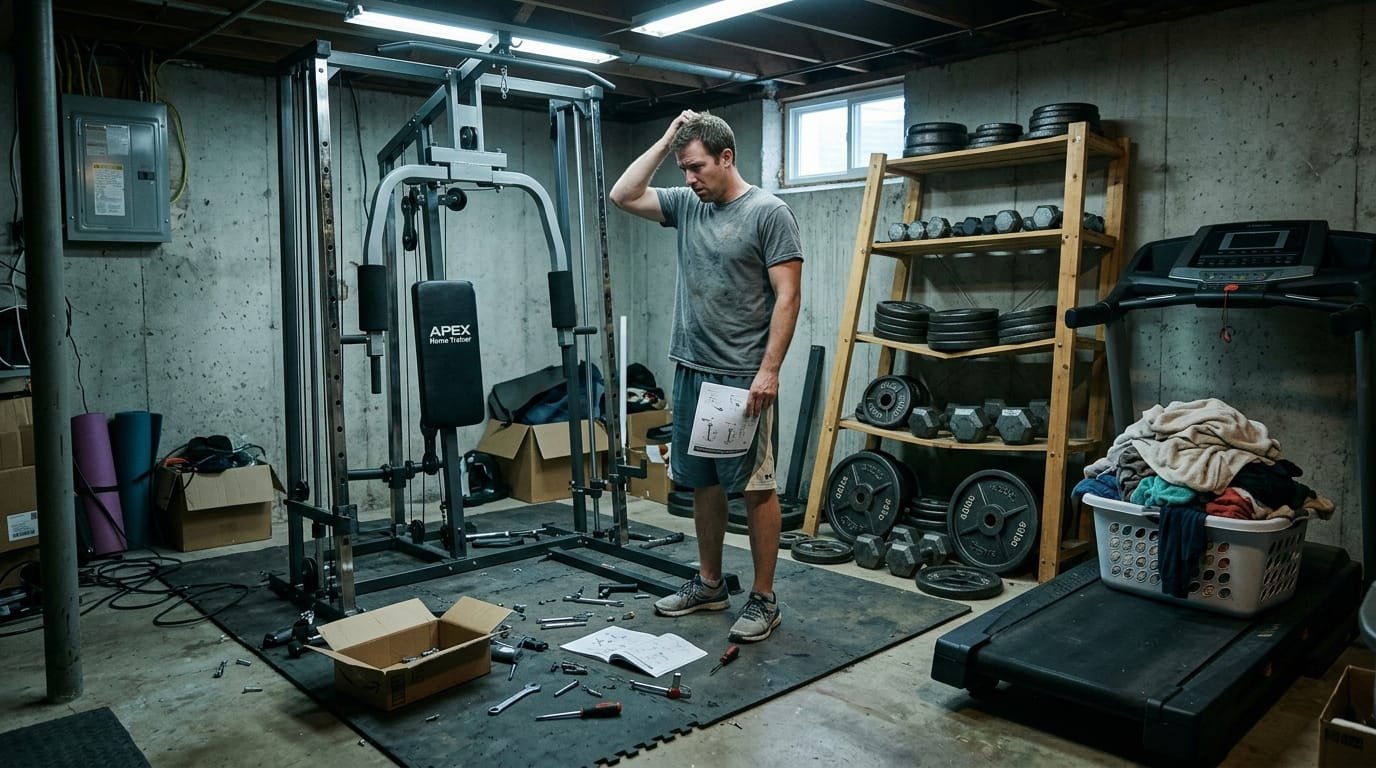
Excitement leads to purchasing every accessory, specialised machine, or “must-have” item seen online. The result is a cluttered space, wasted money on rarely used gear, and decision fatigue that reduces training frequency.
How to Avoid It
Follow a strict priority sequence:
- Power rack or squat stand with safety arms
- Olympic barbell and weight plates
- Adjustable bench
- Adjustable dumbbells or kettlebells
- Proper flooring
- Resistance bands and basic accessories
- Cardio or specialised tools only after the foundation is solid
This order maximises training capacity at every budget stage and is consistently recommended by experienced home gym builders (home gym transition equipment prioritisation and budget home gym build order).
Mistake 2: Choosing Low-Quality or Undersized Core Equipment
The Problem
Budget racks that wobble, bars that bend, or benches that feel unstable create safety risks and force early replacement. Many new owners buy according to current strength levels instead of projected strength one to two years ahead.
How to Avoid It
Invest in the highest-quality versions of the foundational pieces you can afford. A solid rack, bar, and bench will last decades. Match weight capacity to your expected future loads, not just today’s numbers. Read independent reviews and prioritise structural integrity over cosmetic features.
Mistake 3: Neglecting Flooring and Floor Protection
The Problem
Dropping weights on unprotected floors damages the subfloor, creates noise complaints, and makes the space feel unstable. Thin or incomplete matting is a frequent oversight.
How to Avoid It
Install interlocking rubber tiles or thick horse-stall mats before heavy equipment arrives. Cover the entire lifting area and any zones where plates or dumbbells may be set down. Proper flooring is infrastructure, not an optional accessory.
Mistake 4: Underestimating Space, Ceiling Height, and Layout
The Problem
A rack that does not fit, a bench that cannot be positioned safely, or insufficient clearance for barbell movements turns the space into a daily frustration.
How to Avoid It
Measure length, width, and ceiling height precisely (many racks require at least 2.4 m / 8 ft). Account for the full range of motion of every major lift, plate-change clearance, and walkways. Sketch a simple layout before purchasing. Leave open space rather than filling every square metre.
Mistake 5: Ignoring Noise and Neighbour Considerations
The Problem
Bumper plates, dropped dumbbells, and early-morning or late-night sessions create conflict with household members or neighbours, especially in apartments or shared walls.
How to Avoid It
Use rubber bumper plates, thick flooring, and controlled lowering whenever possible. Schedule noisier sessions at considerate times. Communicate with neighbours if needed. Consider a folding rack or quieter conditioning tools if noise is a major constraint.
Mistake 6: Lacking a Clear Training Plan
The Problem
Without the machines, classes, or social pressure of a commercial gym, many new owners default to random workouts or lose motivation within weeks.
How to Avoid It
Write a simple progressive programme focused on the main compound movements before the equipment arrives. Track every session. Treat home training with the same schedule discipline you would apply to a paid membership or class. Technique resources for shoulder work (lateral raises in particular) help maintain balanced development — see Bent Arms vs. Straight Arms in Lateral Raises, The Hidden Mistake in Lateral Raises, and 3 Lateral Raise Modifications. Grip strength often becomes a limiting factor in home pulling and carrying work and can be improved directly (Do Hand Grippers Really Work?).
Mistake 7: Expecting Exact Replication of the Commercial Gym
The Problem
Trying to recreate every machine and cardio option leads to overspending and disappointment when the home setup inevitably differs.
How to Avoid It
Accept that a well-designed home gym delivers 80–90 % of the training stimulus with far greater convenience. Focus on the movements that drive the majority of results (squat, hinge, press, pull, carry). Use bands, dumbbells, and bodyweight for the rest. Add specialised pieces only when a clear, repeated need appears.
Mistake 8: Overlooking Safety Features for Solo Training
The Problem
Training alone without safety arms, proper spotting options, or stable equipment increases injury risk, especially on barbell squats and bench presses.
How to Avoid It
Prioritise a rack with reliable safety arms or straps. Learn how to fail lifts safely. Start conservatively with new movements. Consider a home gym camera or training partner for heavier sessions if desired.
Mistake 9: Poor Storage and Organisation
The Problem
Plates, dumbbells, and bands left scattered create trip hazards, visual clutter, and reduced motivation to train.
How to Avoid It
Plan storage from day one: plate trees, dumbbell racks, wall hooks for bands, and designated zones. A tidy space is used more consistently.
Mistake 10: Neglecting Long-Term Maintenance and Progression
The Problem
Equipment is purchased and then left static. Bolts loosen, bars rust, and programming stagnates.
How to Avoid It
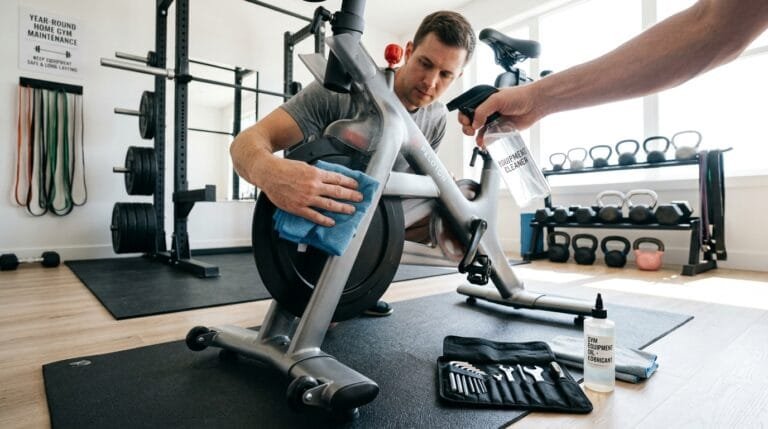
Inspect and tighten hardware regularly. Keep bars clean and lightly lubricated. Continuously apply progressive overload. Reassess the setup every 6–12 months and add pieces only when they solve a genuine limitation.
Comparison Table: Costly vs. Smart Approaches
| Area | Costly Mistake | Smart Alternative |
|---|---|---|
| Equipment order | Accessories first | Rack + bar + bench first |
| Quality | Cheapest options | Best quality on core pieces |
| Flooring | None or thin mats | Full rubber coverage |
| Space planning | Buy then measure | Measure then buy |
| Programming | Random sessions | Written progressive plan |
| Safety | No spotter arms | Rack with safeties |
| Mindset | Replicate commercial gym | 80/20 results with less |
Step-by-Step Guide to Avoiding the Major Pitfalls
- Write down your primary training goals and available space measurements.
- Set a realistic total budget and stick to the priority purchase order.
- Research and buy the foundational strength pieces first.
- Install flooring before the heavy equipment arrives.
- Create a simple layout that leaves clearance and walkways.
- Write a basic progressive full-body or upper/lower programme.
- Schedule training sessions as fixed appointments.
- Track workouts and review progress every 4 weeks.
- Add new equipment only when a clear training need justifies it.
- Maintain the equipment and the habit with equal seriousness.
Frequently Asked Questions
What is the single biggest mistake new home gym owners make?
Buying too many non-essential items before securing a solid rack, barbell, bench, and flooring.
How much should I budget for a functional starting home gym?
A highly effective foundation can be built for $800–$2,000 depending on quality and whether items are purchased new or used.
Do I really need a power rack?
For safe solo barbell squatting and bench pressing, yes. Alternatives exist but involve meaningful compromises in safety or exercise selection.
How do I stay motivated without the gym environment?
Fixed schedule, visible progress tracking, good lighting and music, and treating the space as a dedicated training zone help most people.
Is it better to buy everything at once or phase the purchases?
Phased purchasing following the priority order is almost always superior for both budget and decision quality.
What about cardio equipment?
Add it after the strength foundation is complete, or use bodyweight conditioning, jumping rope, or outdoor walking/running in the meantime.
How important is technique once I have the equipment?
Critical. Poor technique is harder to correct at home without external feedback. Use reliable form resources, especially for shoulder work and grip-intensive movements.
Final Recommendation
New home gym owners succeed when they treat the project as a long-term training system rather than a shopping event. Define goals, measure space, follow a strict equipment priority order, install proper flooring, write a simple progressive programme, and protect safety and organisation from day one.
Avoid the urge to recreate an entire commercial gym. Focus on the versatile tools that enable the main compound lifts, maintain high technical standards (including careful shoulder and grip work), and build the habit of consistent training in your own space.
A thoughtfully created home gym removes friction, reduces long-term cost, and gives you complete control over your training environment. Start with clarity and the foundational pieces, and the rest of the setup can evolve naturally as your needs and experience grow. The difference between a dusty collection of equipment and a productive training space is almost always planning and discipline—apply both and the results will follow.