Soft Medicine Ball vs. Hard Slam Ball: Training Applications
Quick Answer
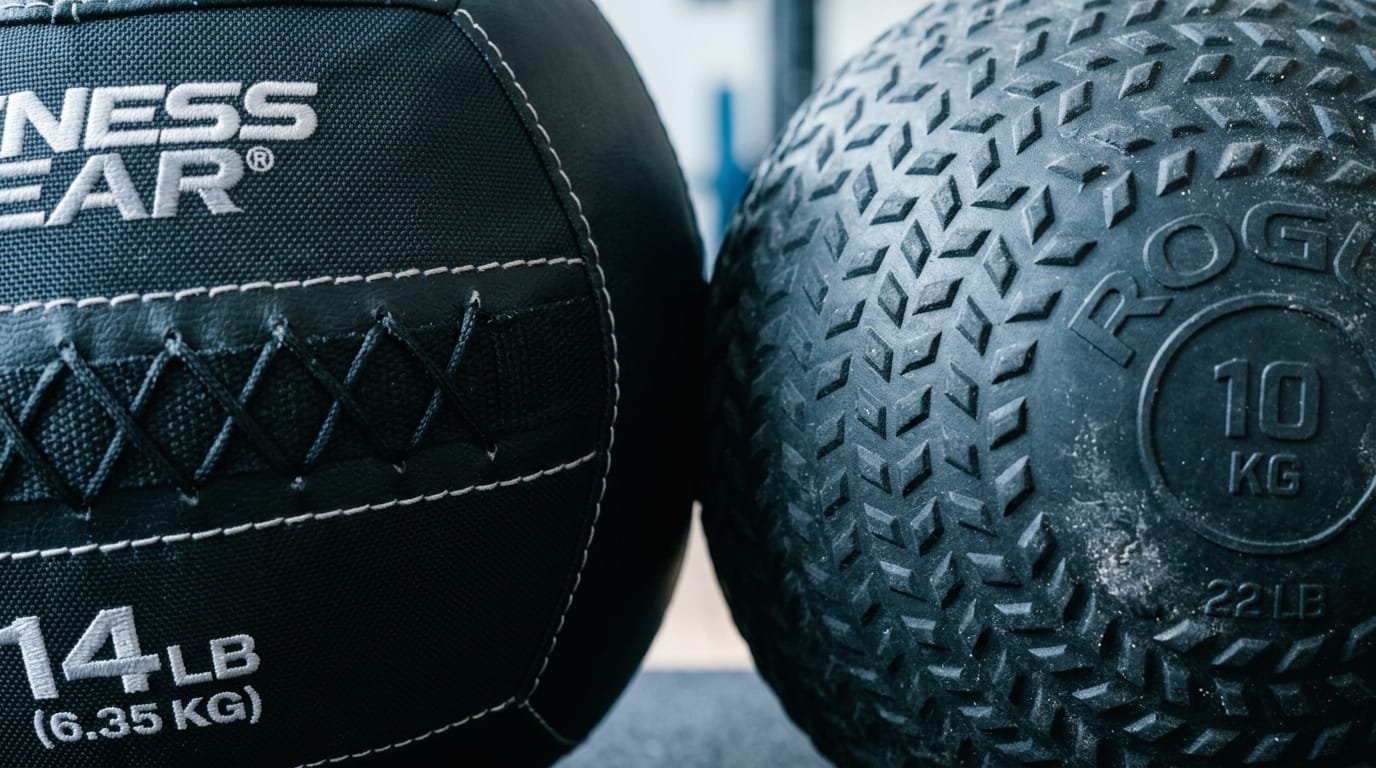
Soft medicine balls (including traditional firm medicine balls and wall balls) are better suited for throws, wall passes, partner drills, and controlled rotational exercises because they offer rebound or give. Hard slam balls are purpose-built for high-impact floor slams and explosive conditioning; they do not bounce and safely absorb force on impact. For the majority of home trainees, a hard slam ball is the single most practical purchase because the overhead slam is one of the highest-value medicine-ball movements and can be performed safely alone. Soft medicine balls remain superior for rebound-based throws and partner work. Many lifters ultimately benefit from owning both types to cover the full spectrum of power and rotational training.
Core Design and Construction Differences
| Feature | Soft Medicine Ball / Wall Ball | Hard Slam Ball | Practical Consequence |
|---|---|---|---|
| Bounce / Rebound | Moderate to high (or soft give) | Virtually none | Soft = continuous throws; Slam = floor impact |
| Outer shell | Leather, synthetic leather, or softer rubber | Thick, dense, durable rubber | Slam balls withstand repeated high-force impacts |
| Internal density | Variable (some firmer, some softer) | High density, “dead” feel | Slam balls feel heavier and more compact |
| Primary design intent | Throwing, catching, wall work | Slamming into the floor | Different movement applications |
| Floor behaviour after impact | Rebounds or rolls | Stays put | Slam balls safer and more convenient for solo training |
| Durability under slamming | Limited – can tear or deform | Excellent | Soft balls are poor choices for repeated floor slams |
| Noise profile | Can be louder on rebound | Generally lower (no bounce) | Context-dependent in apartments |
These construction differences dictate safe and effective training applications. Using the wrong ball for a given movement reduces training quality and increases unnecessary risk.
Why Ball Type Directly Affects Training Outcomes
Medicine-ball training develops rate of force development, rotational power, and core stiffness through high-velocity, multi-planar movements. Research and coaching practice support medicine-ball programmes for improvements in core power and athletic qualities when movements are performed with intent and consistency.
However, the tool must match the task:
- A bouncing soft medicine ball used for floor slams creates unpredictable rebounds that interrupt flow and raise injury risk (facial contact, awkward catches, or loss of control).
- A hard slam ball used for wall throws or partner exchanges is uncomfortable, can damage surfaces, and lacks the rebound needed for continuous explosive repetitions.
Matching ball type to movement maximises both safety and the quality of the training stimulus.
Detailed Training Applications
Hard Slam Ball – Optimal Uses
- Overhead medicine-ball slams
- Rotational side slams into the floor
- Burpee-to-slam combinations
- High-intensity conditioning circuits
- Explosive full-body power development
- Solo training environments where rebound would be problematic
Soft Medicine Ball – Optimal Uses
- Chest passes against a wall
- Rotational throws to a wall or partner
- Overhead throws and catches
- Partner drills (sit-up throws, rotational exchanges)
- Wall-ball shots (squat + throw to a target)
- Controlled Russian twists and rotational reaches
- Certain stability drills where slight give improves comfort
Exercise-Specific Recommendations
| Exercise | Preferred Ball | Why | Key Coaching Points |
|---|---|---|---|
| Overhead Slam | Hard slam ball | No rebound, high durability | Full hip extension, follow the ball down |
| Rotational Wall Throw | Soft medicine ball | Controlled rebound or easy retrieval | Initiate with hips, keep arms relaxed |
| Chest Pass | Soft medicine ball | Continuous explosive reps via rebound | Generate force from the ground up |
| Wall-Ball Shot | Soft wall ball | Designed for high-rep squat-to-throw | Consistent target height, full squat depth |
| Rotational Side Slam | Hard slam ball | Safe floor impact | Pivot through the hips, finish tall |
| Russian Twist | Either (soft often more comfortable) | Both effective | Move from the ribcage, control the tempo |
| Burpee Slam | Hard slam ball | Seamless transition, no bounce | Maintain rhythm and core stiffness |
| Partner Sit-Up Throw | Soft medicine ball | Safe catching and exchanging | Synchronise timing with partner |
Goal-Based Decision Guide
| Primary Goal | Recommended Starting Ball | Why | When to Add the Other Type |
|---|---|---|---|
| Maximal power & conditioning (solo) | Hard slam ball | Highest-value movements, safest for floor work | Add soft ball for throws later |
| Rotational power & wall work | Soft medicine ball | Better for throws and continuous reps | Add slam ball for floor impact |
| Partner training | Soft medicine ball | Safe exchanges | — |
| Limited space / one-ball solution | Hard slam ball | Most versatile solo tool | — |
| Mixed power development | Both | Covers all patterns | Ideal long-term setup |
| Beginners learning patterns | Lighter soft medicine ball | More forgiving | Progress to slam ball when ready |
How to Choose the Right Ball for Home Use
Select a Hard Slam Ball if you:
- Primarily want overhead and rotational floor slams
- Train alone most of the time
- Have limited storage space
- Want one ball that safely handles the highest-intensity medicine-ball work
Select a Soft Medicine Ball if you:
- Want to emphasise wall throws and chest passes
- Occasionally train with a partner
- Prefer rebound for continuous explosive efforts
- Already own a slam ball and want to expand movement options
Ideal Long-Term Home Setup
Most trainees achieve the best results by starting with a quality 6–10 kg hard slam ball. Add a soft medicine ball (or wall ball) later if rotational wall throws or partner work become regular priorities.
Step-by-Step Implementation Plan
- Clarify your main medicine-ball goals (slams vs throws vs mixed).
- Purchase the ball that matches your dominant application.
- Master movement technique at moderate speed before adding maximal intent.
- Begin with two focused sessions per week.
- Progress by increasing movement speed, repetitions, or ball weight.
- Reserve hard slam balls exclusively for floor-impact work.
- Reserve soft medicine balls for wall throws, chest passes, and partner drills.
- Combine medicine-ball power work with strength training for balanced development.
- Track performance metrics (reps, movement quality, circuit times).
- Allow adequate recovery between high-velocity sessions.
Sample Programmes
Slam-Focused Power Session (Hard Slam Ball)
- Overhead Slams – 5 sets of 8–12 reps
- Rotational Side Slams – 4 sets of 6–8 reps per side
- Burpee Slams – 3 sets of 8–10 reps
Rest 60–90 seconds between sets. Emphasise maximal intent on each repetition.
Throw-Focused Power Session (Soft Medicine Ball)
- Chest Passes against wall – 4 sets of 8–10 reps
- Rotational Wall Throws – 4 sets of 6–8 reps per side
- Overhead Throw to wall – 3 sets of 8 reps
Focus on crisp hip drive and soft catches where applicable.
Mixed Conditioning Circuit (If Both Balls Are Available)
Alternate slam-ball and soft-ball movements, or select the more appropriate ball for each exercise. Keep total work time 12–20 minutes with controlled rest.
Integration with Complete Home Training
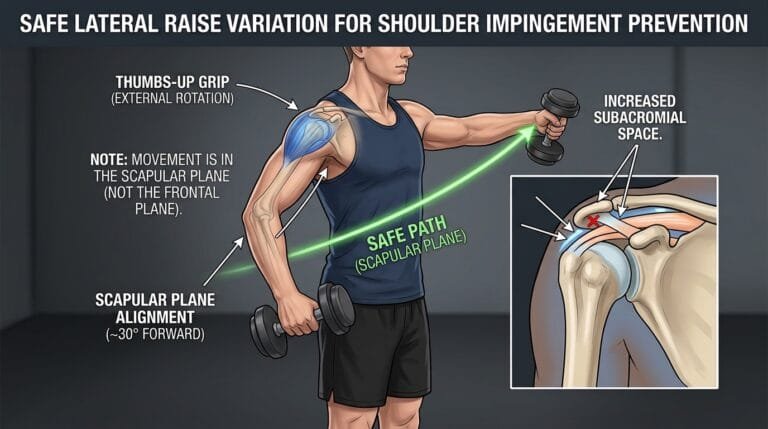
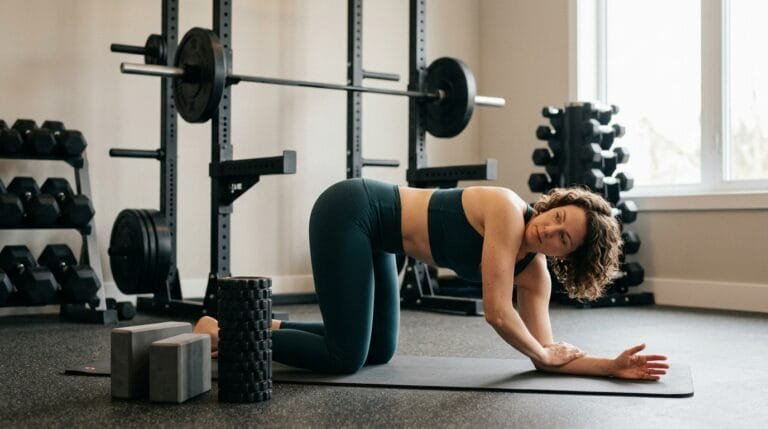
Medicine-ball training develops rotational power and core resilience that enhance performance in pressing, pulling, and overhead movements. Maintain healthy shoulder mechanics by applying the principles in safe lateral-raise technique and the complementary shoulder health routine.
Kettlebell swings and medicine-ball slams both train powerful hip extension and can be programmed together or on alternating days (kettlebell sizing guide. Grip strength improves control during throws, catches, and slams (grip strength guidance.
Bands are excellent for activation and lateral stability before explosive ball work (Resistance Bands Buying Guide. Core progressions such as the ab roller complement dynamic rotational training. Conditioning sessions on a treadmill or bike can finish with short slam or throw circuits (manual treadmill guidance.
Recovery tools and sleep are especially important after high-velocity sessions (Best Post-Workout Recovery Tools, Best Massage Gun for Post-Workout Recovery on a Budget, and Sleep and Recovery Strategies. Tracking ensures continued progress (Best Ways to Track Progress Without a Gym or Personal Trainer.
External coaching resources and practical guides emphasise matching ball type to movement — slam balls for floor impact and soft medicine balls for throws and rebounds — to maximise safety and training effect (medicine ball and slam ball training applications).
Common Mistakes and Corrections
- Using a soft bouncing ball for floor slams → Switch to a hard slam ball immediately.
- Using a hard slam ball for partner catching drills → Use a soft medicine ball for any exchange work.
- Choosing a ball that is too heavy and losing speed → Prioritise velocity; drop the weight if technique or speed suffers.
- Generating force primarily with the arms → Initiate throws and slams with the hips and core.
- Skipping warm-up before maximal-intent work → Perform light activation and movement preparation first.
- Overusing one pattern (only slams or only twists) → Include a balanced mix of sagittal and rotational movements.
Frequently Asked Questions
Can I use a soft medicine ball for overhead slams?
It is not recommended. The rebound is unpredictable and increases injury risk. Always use a hard slam ball for floor-impact work.
Can I use a hard slam ball for wall throws?
Possible but suboptimal. Slam balls lack useful rebound and can be harsh on walls and hands during high-volume throwing.
Which ball is better for beginners?
A lighter soft medicine ball is more forgiving when learning movement patterns. A light slam ball is also appropriate if the main goal is learning slams.
What weight should most adults choose?
6–10 kg (13–22 lb) works well for the majority of trainees with either ball type. Focus on speed and control rather than maximal load.
Do I need both types of ball?
Not at the beginning. Start with a hard slam ball for the highest-value solo exercises. Add a soft medicine ball when wall throws or partner work become regular priorities.
How long do quality slam balls and medicine balls last?
With normal home use, well-made versions last several years. Avoid rough outdoor surfaces if the cover is not specifically rated for it.
Are slam balls suitable for apartment living?
Yes, provided you have reasonable flooring. Because they do not bounce, they often produce less disruptive noise than people expect.
Can medicine-ball training replace traditional core work?
No. It complements planks, dead bugs, ab-wheel rollouts, and other stability drills by adding high-velocity and rotational challenges.
Final Recommendation
Soft medicine balls and hard slam balls are complementary tools with distinct strengths. Soft medicine balls excel at throws, wall work, and partner drills thanks to their rebound characteristics. Hard slam balls are the superior choice for overhead and rotational floor slams, making them the more practical single purchase for most home trainees who train alone.
Begin with a quality 6–10 kg hard slam ball if your priority is explosive, high-return movements that can be performed safely in a solo setting. Add a soft medicine ball when rotational wall throws or partner training become important. Always match the ball to the movement, prioritise crisp technique and high velocity, and integrate medicine-ball work with your existing strength, mobility, and recovery practices. This approach develops powerful, athletic qualities without requiring an extensive equipment collection. Choose the correct ball for each job, train with clear intent, and the improvements in power, core resilience, and conditioning will compound over time.