Doorway Pull-Up Bar vs. Freestanding Power Tower: Safety and Versatility
Quick Answer
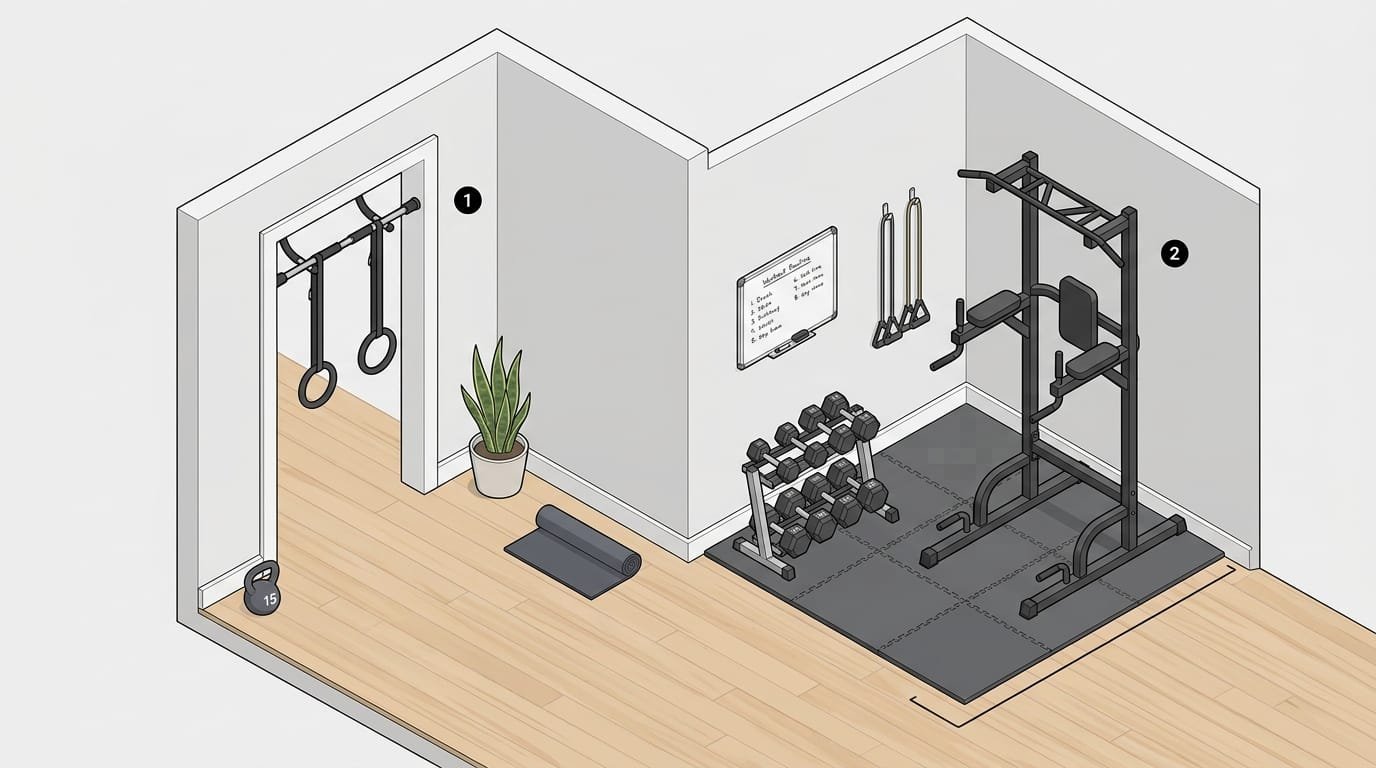
A doorway pull-up bar is the most space-efficient and affordable solution for strict pull-ups and chin-ups at home, but it offers limited exercise variety and depends entirely on the strength and dimensions of your door frame for safety. A freestanding power tower provides far greater versatility—pull-ups, dips, hanging knee raises, push-up stations, L-sits, and more—while requiring no wall or door-frame attachment. It demands significant floor space, costs more, and must be stable on level ground. For renters or minimal-space setups focused purely on pull-ups, a quality doorway bar is often sufficient. For broader calisthenics development, progressive strength, and long-term training options, a well-built freestanding power tower delivers superior overall value and safety when space allows.
Core Differences at a Glance
| Factor | Doorway Pull-Up Bar | Freestanding Power Tower | Practical Winner |
|---|---|---|---|
| Floor space | Almost none | Large (typically 1.1–1.5 m² footprint + clearance) | Doorway bar |
| Cost | Low | Moderate to high | Doorway bar |
| Installation | Seconds to minutes, tool-free (lever style) | Full assembly required | Doorway bar |
| Safety dependency | Door-frame strength, trim quality, correct width | Frame rigidity, base width, floor levelness | Context-dependent |
| Exercise variety | Pull-ups, chin-ups, hangs, limited hanging core | Pull-ups, dips, knee/leg raises, push-ups, supports, more | Power tower |
| Dynamic movement safety | Poor (not designed for kipping or swinging) | Better on quality wide-base models | Power tower |
| Portability | Excellent | Poor once assembled | Doorway bar |
| Typical weight rating | 100–150 kg | 120–200+ kg | Power tower (usually) |
| Best environment | Apartments, rentals, multi-use rooms | Dedicated training space, garage, basement | Depends on constraints |
In-Depth Safety Analysis
Doorway Pull-Up Bar Safety
Lever-style doorway bars work by bracing against the door trim and jamb. Safety depends on:
- Solid, well-attached wooden or metal trim
- Correct door-frame width (usually 60–90 cm / 24–36 inches)
- Proper placement and full engagement of the lever mechanism
- User body weight within the rated capacity
- Strict, controlled movements only
These bars are not designed for kipping, butterfly pull-ups, muscle-ups, or aggressive swinging. Lateral and dynamic forces can cause the bar to shift or dislodge, leading to serious falls. Always test with partial body weight first, inspect contact points regularly, and avoid any explosive or swinging variations.
Freestanding Power Tower Safety
Stability comes from base width, overall mass, steel gauge, and level flooring. Key risks include:
- Narrow or lightweight bases that rock during dips or vigorous knee raises
- Incorrect assembly (under-tightened bolts)
- Uneven floors that reduce contact points
- Insufficient ceiling height causing head or bar collisions
Quality power towers with wide bases and sufficient weight feel solid for controlled calisthenics. Cheap models can flex or tip. Always assemble according to instructions, place on a level surface, and begin with strict movements before exploring more advanced variations.
Universal Safety Principles
- Never exceed the manufacturer’s weight rating.
- Inspect equipment before every session.
- Progress gradually—master strict form before adding intensity or load.
- Use appropriate flooring protection.
- Stop immediately if any shifting, creaking, or instability appears.
Versatility and Training Potential
Doorway Pull-Up Bar Capabilities
- Strict pull-ups and chin-ups (multi-grip models offer more options)
- Dead hangs and active hangs for grip and shoulder health
- Scapular pulls and basic hanging shoulder work
- Limited hanging knee raises (doorway clearance often restricts full range)
- Minimal core variety beyond hanging variations
Freestanding Power Tower Capabilities
- Pull-ups and chin-ups with multiple grip positions
- Parallel-bar dips (a major upper-body pushing movement)
- Vertical knee raises, leg raises, and progressions toward toes-to-bar
- Push-up handles or stations
- L-sits, support holds, and tucked variations
- Some models include additional attachments or broader grip options
- Greater freedom for weighted calisthenics once the unit is proven stable
The power tower functions as a compact calisthenics multi-station. The doorway bar remains a single-purpose (or very limited) tool.
Long-Term Progression Considerations
A doorway bar is excellent for building the foundation of strict pulling strength. Once multiple sets of clean pull-ups are achievable, further progress often involves:
- Added weight
- Harder variations (archer, typewriter, one-arm progressions)
- Complementary movements such as dips and hanging leg raises
These advanced or complementary movements are safer and more practical on a stable power tower. Many trainees eventually outgrow a doorway bar’s limitations and move to a power tower, wall-mounted bar, or power rack with pull-up capabilities.
Space, Cost, and Lifestyle Fit
Doorway Bar Advantages
- Leaves the floor completely free when removed
- Ideal for rentals and shared living spaces
- Lowest financial barrier to entry
- Easy to store or travel with
Power Tower Advantages
- No dependence on door frames or walls
- Supports a much broader range of upper-body and core movements
- Feels more like a permanent training station
- Better long-term platform for progressive calisthenics
Ceiling Height Note
Most power towers stand 200–230 cm tall. Confirm you have adequate clearance above the highest bar for full elbow extension and head safety.
Step-by-Step Decision and Setup Guide
- Measure available floor space and ceiling height accurately.
- Determine whether you can or want to use a door frame.
- Clarify primary goals: pure pull-up strength vs complete upper-body + core development.
- Inspect door frames for solid trim and correct width if considering a doorway bar.
- Set a realistic budget and prioritise stability over extra features.
- Choose the option that best matches your constraints.
- Assemble or install carefully and test with partial body weight.
- Begin with strict, controlled movements only.
- Plan progression (more reps, harder variations, or added equipment).
- Reassess after several months of consistent use.
Who Should Choose Which Option
Choose a Doorway Pull-Up Bar if you:
- Live in a small apartment or rental property
- Primarily want to train pull-ups and chin-ups
- Need something removable and portable
- Have a suitable, solid door frame
- Are working with a limited budget
Choose a Freestanding Power Tower if you:
- Have dedicated floor space available
- Want dips, hanging leg raises, and broader calisthenics options
- Prefer not to rely on door frames or walls
- Plan long-term progressive bodyweight strength training
- Can invest more for greater exercise variety and independence
Integration with Complete Home Training
Both tools develop upper-body pulling strength that balances pressing movements. Maintain shoulder health by applying proper technique on lateral raises and including dedicated rear-delt work (safe lateral-raise guidance and shoulder health routine.
Kettlebell training pairs effectively with pull-up work for full-body strength and conditioning (kettlebell sizing guide. Grip strength is essential for high-volume hanging and pull-up progress (grip strength guidance.
Resistance bands are excellent for assisted pull-ups and activation work (Resistance Bands Buying Guide. Core strength developed through hanging knee raises or dedicated stations complements ab roller progressions. Conditioning options such as treadmill work remain valuable for overall fitness (manual treadmill guidance.
Recovery practices support consistent pulling volume and joint health (Best Post-Workout Recovery Tools, Best Massage Gun for Post-Workout Recovery on a Budget, and Sleep and Recovery Strategies. Systematic tracking of pull-up performance drives progress (Best Ways to Track Progress Without a Gym or Personal Trainer.
External comparisons consistently emphasise the doorway bar’s convenience and low cost versus the power tower’s greater exercise variety and structural independence (doorway bar vs power tower analysis and practical home-gym evaluations).
Common Mistakes to Avoid
- Performing kipping or swinging movements on a doorway bar
- Failing to test a doorway bar gradually with partial body weight
- Assembling a power tower incorrectly or placing it on uneven flooring
- Exceeding the rated capacity of either unit
- Neglecting regular inspection of contact points, bolts, and padding
- Choosing a power tower without confirming ceiling clearance
- Expecting a basic doorway bar to support advanced calisthenics skills
Frequently Asked Questions
Is a doorway pull-up bar safe for regular use?
Yes for strict pull-ups and hangs when installed on a suitable door frame and used within its weight rating. It is not safe for dynamic or kipping variations.
Can a power tower fully replace a doorway bar?
Yes for nearly all training purposes. It offers more exercises and does not depend on a door frame.
Which option is better for absolute beginners?
A doorway bar is often sufficient and more approachable for learning strict pull-ups. A power tower provides additional movement options as strength improves.
Do freestanding power towers wobble?
Lower-quality or narrow-base models can. Choose units with wide bases, adequate weight, and positive long-term stability feedback.
Can I perform weighted pull-ups on these tools?
On a doorway bar only with extreme caution and a very solid frame. On a quality power tower, weighted pull-ups become more realistic once stability is confirmed.
What if I rent my home?
A lever-style doorway bar is usually the most renter-friendly option because it requires no drilling or permanent modification.
How critical is ceiling height for a power tower?
Very important. You need full elbow extension plus head clearance above the highest bar.
Which is better for long-term calisthenics progress?
A stable freestanding power tower generally supports broader skill development and progressive overload more effectively.
Final Recommendation
For maximum space efficiency, minimal cost, and focused strict pull-up training, a quality doorway pull-up bar remains an excellent solution—provided your door frame is solid and you restrict yourself to controlled movements. For greater exercise variety, long-term calisthenics development, and independence from walls or door frames, a well-built freestanding power tower is the superior investment when adequate floor space and ceiling height are available.
Match the tool to your specific constraints and goals. Prioritise safety through correct installation or assembly, gradual loading, and strict technique. Combine either option with balanced pushing work, grip training, core development, and consistent recovery practices. Whether you begin with the minimalist doorway bar or invest in the more capable power tower, regular progressive training will produce strong, functional upper-body results at home. Assess your space, budget, and objectives honestly, choose the safer and more sustainable option for your situation, and start building strength with confidence.