Upper-Back and Rear-Delt Work to Balance Pressing Volume
Quick Answer
Upper-back and rear-delt work balances pressing volume by strengthening the muscles that retract and stabilise the scapulae and externally rotate the shoulders. Include horizontal rows, face pulls, band pull-aparts, and reverse-fly variations 2–4 times per week, aiming for equal or greater pulling volume relative to pressing. Controlled technique, progressive overload, and consistent frequency improve posture, shoulder health, and pressing performance while reducing the risk of overuse irritation.
Why Balancing Pressing Volume Matters
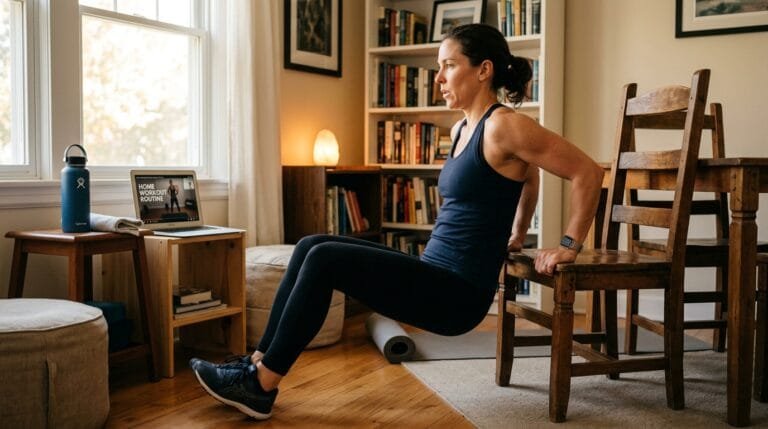
Pressing movements (push-ups, floor presses, overhead presses, dips) strengthen the chest, anterior shoulders, and triceps. When these muscles dominate without corresponding upper-back and rear-delt strength, the shoulders tend to round forward, scapular control declines, and the risk of anterior shoulder irritation rises. Adequate horizontal pulling and rear-delt work restore muscular balance, support better scapular positioning, and create a more stable base for pressing. This balance is especially important in home training, where pressing variations are often convenient and therefore over-emphasised.
Core Principles for Upper-Back and Rear-Delt Training
- Volume balance – Pulling volume should meet or exceed pressing volume over the week.
- Scapular control first – Teach the shoulder blades to retract and depress before adding heavy load.
- Full controlled ranges – Emphasise the contracted position of the upper back and rear delts.
- Progressive overload – These muscles respond to gradual increases in tension like any other muscle group.
- Frequency over occasional high volume – 2–4 sessions per week produce better results than rare exhaustive workouts.
- Technique over momentum – Controlled tempos maximise muscle recruitment and minimise joint stress.
High-Value Exercises for Upper Back and Rear Delts
| Exercise | Primary Target | Equipment Needed | Key Technique Cues | Progression Options |
|---|---|---|---|---|
| Single-Arm Dumbbell or Band Row | Upper back, lats, rear delts | Dumbbell or band | Scapula initiates, elbow drives back, no torso rotation | Load, tempo, pause |
| Two-Arm Band or Inverted Row | Upper back and rear delts | Band or bodyweight | Maintain rigid body line, full scapular retraction | Angle, tempo, pause |
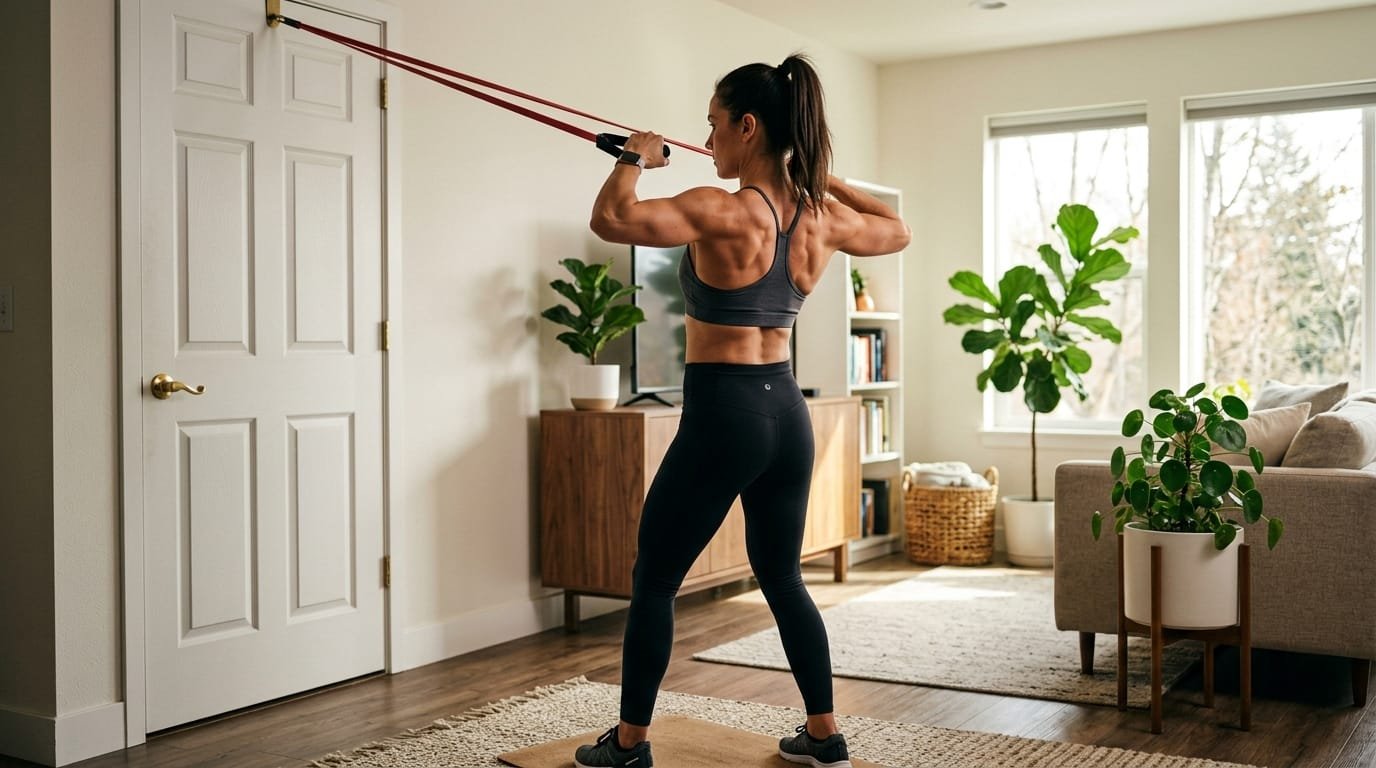
| Face Pull | Rear delts, external rotators, upper back | Band | Elbows high, external rotation at the end range | Band tension, pause, tempo |
| Band Pull-Apart | Rear delts and mid-traps | Band | Arms straight or slightly bent, squeeze shoulder blades | Band strength, tempo, pause |
| Reverse Fly (Bent-Over or Prone) | Rear delts | Dumbbells or band | Slight elbow bend, controlled arc, no swinging | Load, tempo, range |
| Chest-Supported Row | Upper back with lower-back support | Dumbbells and bench/chair | Full retraction, controlled lowering | Load, pause, tempo |
| Prone Y-Raise or T-Raise | Lower traps and rear delts | Bodyweight or light weights | Thumbs up, controlled lift, ribs down | Range, tempo, light load |
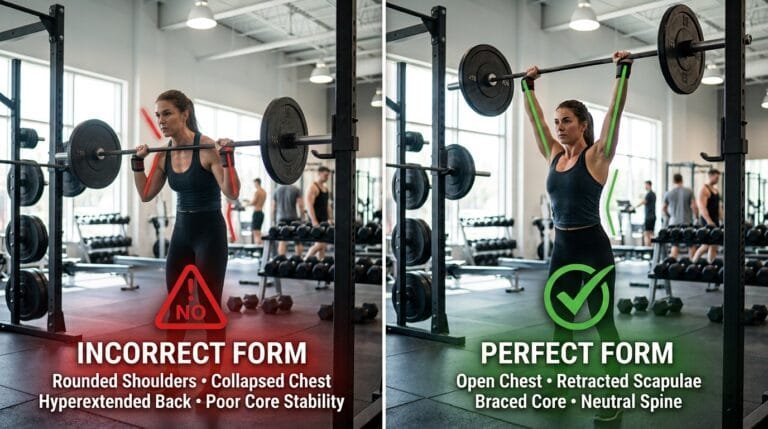
Shoulder-friendly technique is critical when training the rear delts and upper back to avoid compensatory patterns (Bent Arms vs. Straight Arms in Lateral Raises, The Hidden Mistake in Lateral Raises, and 3 Lateral Raise Modifications). Grip strength supports rowing variations and can be trained alongside this work (Do Hand Grippers Really Work?).
Step-by-Step Programming for Balance
- Audit current pressing volume
Count hard pressing sets per week (push-ups, presses, dips, etc.). - Match or exceed that volume with pulling
Aim for at least a 1:1 ratio of hard pulling sets to pressing sets; 1.5:1 is often better. - Select 2–4 upper-back and rear-delt exercises
Include at least one horizontal row and one face-pull or pull-apart variation. - Train these muscles 2–4 times per week
They recover relatively quickly and benefit from frequent practice. - Use moderate-to-high repetitions
8–20 reps works well for most upper-back and rear-delt exercises. - Emphasise the contracted position
Pause briefly when the scapulae are fully retracted or the rear delts are shortened. - Progress systematically
Add repetitions, slow the tempo, add pauses, or increase resistance. - Pair with pressing sessions
Perform upper-back work on the same day as pressing or on alternate days. - Track both pressing and pulling volume
Keep the ratio visible in your log. - Reassess every 4–6 weeks
Adjust volume or exercise selection based on posture, shoulder comfort, and strength.
Sample Sessions Emphasising Upper-Back and Rear-Delt Balance
Session A – Press + Pull Focus
- Floor press or push-up variation – 3 × 8–12
- Single-arm row – 3 × 10–15 per arm
- Band face pulls – 3 × 12–20
- Band pull-aparts – 2–3 × 15–20
- Optional: reverse fly – 2 × 12–15
Session B – Upper-Back Priority
- Inverted row or two-arm band row – 3 × 8–12
- Chest-supported or single-arm row – 3 × 10–15
- Prone Y-raises or band external rotations – 3 × 10–15
- Face pulls – 3 × 12–20
- Optional: light rear-delt isolation – 2 sets
Keep rest periods moderate and tempos controlled. Total added time for upper-back work is usually 10–15 minutes when paired with pressing.
Progressive Overload Methods for Upper Back and Rear Delts
- Increase repetitions within the target range
- Slow the eccentric phase (2–4 seconds)
- Add a 1–2 second pause at peak contraction
- Move to a stronger band or heavier dumbbell
- Advance from two-arm to single-arm variations
- Improve body angle on inverted rows (more horizontal = harder)
These methods allow continuous progress with minimal equipment.
Technique Priorities That Maximise Results
Rows
- Initiate the movement by retracting the scapula
- Drive the elbow back rather than pulling solely with the arm
- Avoid excessive torso rotation or momentum
- Control the lowering phase
Face Pulls and Pull-Aparts
- Keep the elbows relatively high
- Emphasise external rotation at the end of the face pull
- Maintain a neutral neck and ribs-down position
- Squeeze the rear delts and mid-traps
Reverse Flies
- Use a slight bend in the elbows
- Lead with the elbows or pinkies according to the variation
- Avoid swinging or using lower-back momentum
Common Mistakes That Reduce Effectiveness
| Mistake | Result | Better Approach |
|---|---|---|
| Treating upper-back work as an afterthought | Persistent pressing dominance | Schedule it with equal priority |
| Using excessive momentum | Reduced muscle tension | Slow the tempo and reduce load |
| Neglecting the end-range contraction | Incomplete development | Pause at peak scapular retraction |
| Over-relying on one exercise | Limited overall development | Rotate 2–4 variations |
| Ignoring volume balance | Continued postural imbalance | Track pressing vs pulling sets |
| Poor scapular control | Neck and upper-trap dominance | Practice retraction drills with light resistance |
Equipment Options for Home Upper-Back Training
| Equipment | Effectiveness | Best Uses | Storage |
|---|---|---|---|
| Resistance bands | Very high | Face pulls, pull-aparts, rows | Excellent |
| Dumbbells | Very high | Single-arm rows, reverse flies | Good |
| Suspension trainer or inverted-row setup | High | Bodyweight rows at adjustable angles | Low |
| Bodyweight only | Moderate–high | Inverted rows under a sturdy table | Perfect |
| Cable machine (if available) | High | Constant-tension face pulls and rows | High space requirement |
Bands alone can cover the majority of needs for most home trainees.
Recovery and Integration with Overall Training
Upper-back and rear-delt muscles generally recover quickly. They can be trained frequently as long as total volume stays reasonable and pressing volume is not excessive. Maintain overall recovery through sleep, protein intake, and planned deloads every 4–8 weeks.
Strength training that includes balanced pushing and pulling produces better long-term shoulder health and performance (strength training guidance). Practical home-gym approaches emphasise simple, sustainable systems that prevent muscular imbalances (home gym equipment prioritisation and budget home gym principles).
Frequently Asked Questions
How much upper-back work do I need relative to pressing?
Aim for at least a 1:1 ratio of hard pulling sets to pressing sets. Many people benefit from a 1.5:1 or higher ratio of pulling to pressing.
Can I train upper back every day?
Possible with low volume and intensity, but most people progress well on 2–4 focused sessions per week.
Are face pulls really necessary?
They are one of the highest-value exercises for rear delts and external rotators. Band pull-aparts are a solid alternative or complement.
What if I feel neck strain during rows?
Reduce the load, focus on initiating with the scapula, keep the neck long, and avoid shrugging. Film your sets to check for compensations.
How long before I notice better posture or shoulder comfort?
Many people feel improved shoulder comfort within 2–4 weeks. Visible postural change usually requires 6–12 weeks of consistent work.
Should upper-back work come before or after pressing?
Either works. Performing it after pressing is common; doing it before can improve scapular activation for the pressing sets.
Can bands alone build a strong upper back?
Yes, especially when progressive overload is applied through band strength, stretch, tempo, and pauses.
Is rear-delt isolation required if I row heavily?
Rows train the rear delts, but dedicated face pulls, pull-aparts, or reverse flies often improve rear-delt development and shoulder balance further.
Final Recommendation
Upper-back and rear-delt work balances pressing volume by strengthening the muscles responsible for scapular retraction, depression, and external rotation. Include horizontal rows, face pulls, band pull-aparts, and reverse-fly variations 2–4 times per week, and keep weekly pulling volume equal to or higher than pressing volume. Use controlled tempos, emphasise the contracted position, and progress systematically.
Audit your current pressing sets today, add an equal or greater number of quality pulling sets, and choose 2–4 of the recommended exercises. Perform them consistently, track the volume ratio, and prioritise technique. When the upper back and rear delts are trained with the same seriousness as pressing, shoulder health, posture, and overall upper-body strength improve together. Start with the next session—the balance you build now pays dividends for years of sustainable training.