Essential Home Gym vs. Nice-to-Have Equipment for a Beginner
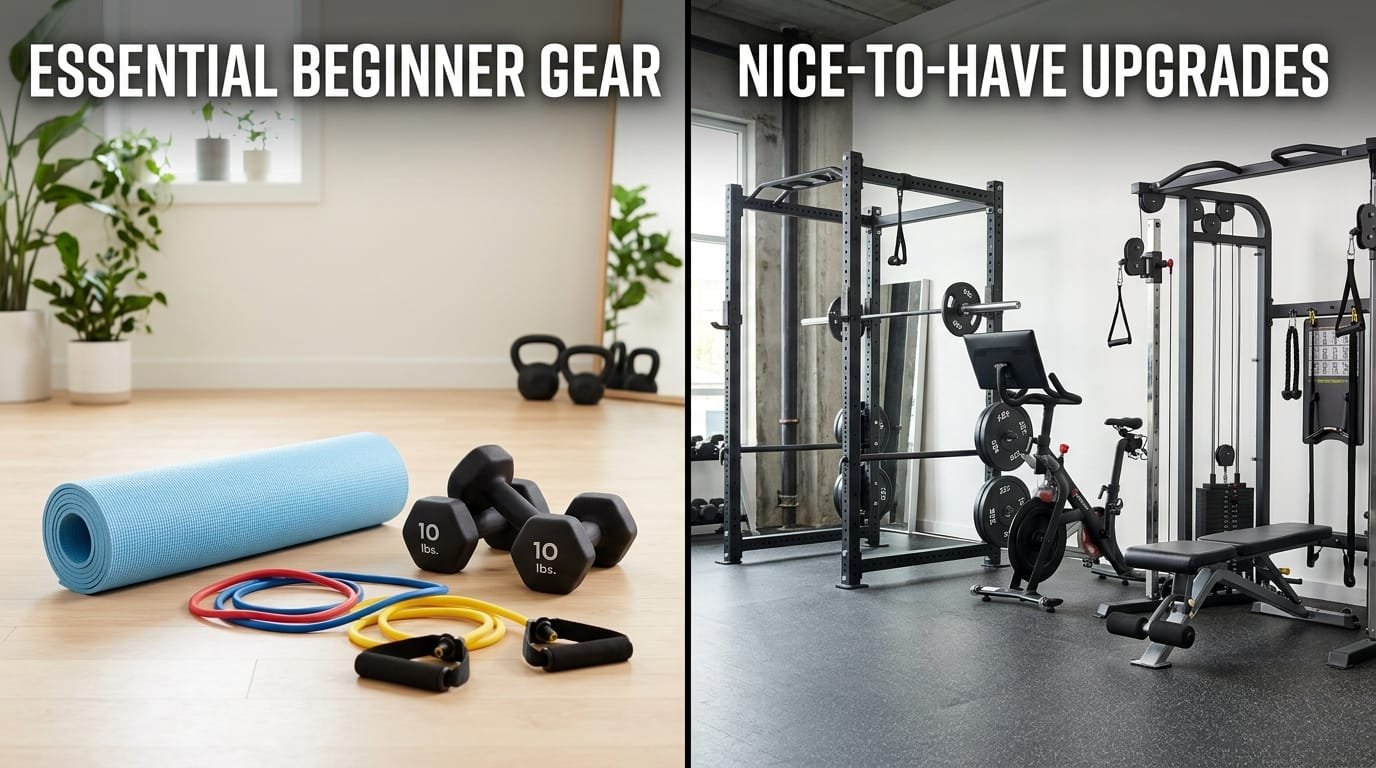
Quick Answer For a beginner home gym, the true essentials are a pair of adjustable dumbbells (or a basic fixed set in a usable range), a stable bench (flat or adjustable), a doorway pull-up bar, a resistance-band set, and basic floor protection or a mat. These five items enable progressive full-body training covering every major movement pattern at minimal cost and space. Everything else — kettlebells, specialized machines, fancy cardio equipment, power racks, or extensive accessory kits — falls into the “nice-to-have” category and should only be added after the core setup is mastered and outgrown. Prioritising essentials first prevents wasted money, clutter, and decision paralysis while still delivering excellent strength, muscle, and conditioning results.
Why Distinguishing Essential from Nice-to-Have Matters
Beginners frequently overbuy. They purchase complicated multi-gyms, dozens of fixed dumbbells, treadmills, or specialised tools that sit unused because the fundamentals were never established. Research and practical experience from budget home-gym builders show that a minimal, high-quality core set produces the majority of results for the first 6–18 months of consistent training. Nice-to-have items become valuable only after progressive overload on the basics has been maximised and specific needs (greater load, variety, or recovery) emerge.
The goal for a beginner is sustainable progress, not equipment accumulation. A lean essential setup encourages consistency, simplifies programming, and leaves budget and space for future upgrades that actually matter.
Essential Equipment for a Beginner Home Gym
These items form the non-negotiable foundation. Without them (or close equivalents), full-body progressive training becomes significantly harder or incomplete.
| Essential Item | Why It Is Essential | Approximate Cost Range | Key Selection Criteria | Primary Exercises Enabled |
|---|---|---|---|---|
| Adjustable dumbbells (or solid fixed set) | Highest exercise variety and progressive overload potential | $150–$300 | Secure locking, useful weight range (5–50 lb+), comfortable handles | Presses, rows, squats, lunges, hinges, carries |
| Stable bench (flat or adjustable) | Unlocks horizontal and incline work plus support | $90–$160 | 500+ lb capacity, firm padding, non-slip base | Bench press, incline press, supported rows, hip thrusts |
| Doorway or removable pull-up bar | Provides vertical pulling that bodyweight alone cannot match | $25–$50 | Multi-grip, secure/no-damage install | Pull-ups, chin-ups, hangs, leg raises |
| Resistance band set | Assistance, mobility, extra resistance, warm-ups | $20–$45 | Mix of loops and tubes with handles | Face pulls, assisted pull-ups, lateral work, mobility |
| Mat or basic flooring | Floor protection, joint comfort, clean surface | $20–$50 | Durable, non-slip, easy to store | Floor presses, core work, mobility |
Total for a quality essential setup: typically $300–$550. This combination covers push, pull, squat, hinge, carry, and core patterns with clear progression paths.
Adjustable Dumbbells in Detail These are the single highest-leverage purchase. One pair replaces an entire rack. For selection guidance on weight range, adjustment mechanisms, and durability, see our full article: How to Choose the Best Adjustable Dumbbells for Home Gyms in 2026.
Bench A bench multiplies the usefulness of dumbbells dramatically. Flat models suffice for most beginners; adjustable versions add incline options if budget allows.
Pull-Up Bar Vertical pulling is frequently the missing piece in pure bodyweight or dumbbell-only programmes. A simple doorway bar solves this at very low cost.
Resistance Bands Bands fill gaps that dumbbells and bodyweight cannot easily cover (especially shoulder health work and assistance). Full comparison of types: Resistance Bands Buying Guide: Loop vs. Tube vs. Fabric – Which Wins?.
Mat / Flooring Protects floors, improves comfort, and creates a defined training surface.
Nice-to-Have Equipment (Add Only After Essentials Are Mastered)
These items provide value but are not required for effective beginner training. Adding them too early often leads to under-use and wasted budget.
| Nice-to-Have Item | Potential Benefit | When It Becomes Worth Buying | Approximate Cost | Notes / Alternatives |
|---|---|---|---|---|
| Kettlebell (single or pair) | Ballistic movements, swings, carries | After mastering dumbbell hinges and wanting variety | $30–$80 | See kettlebell sizing guidance |
| Jump rope | Efficient conditioning | When looking for low-space cardio | $10–$30 | Outdoor walking/running is free alternative |
| Foam roller or massage gun | Recovery and mobility | When soreness or tightness limits training frequency | $20–$100 | Budget massage gun options |
| Ab wheel / roller | Advanced core challenge | After basic core strength is established | $10–$25 | Progressions detailed in ab roller guide |
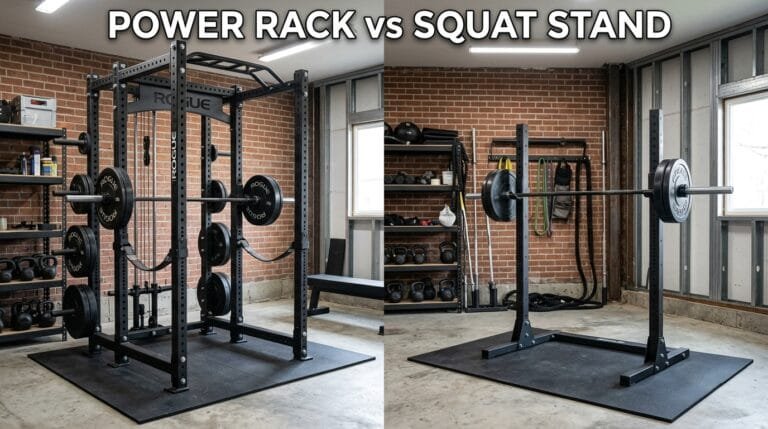
| Power rack or squat stand | Heavier barbell work and safety | When dumbbell progressive overload is maxed and barbell training is desired | $150–$400+ | Usually exceeds beginner needs and space |
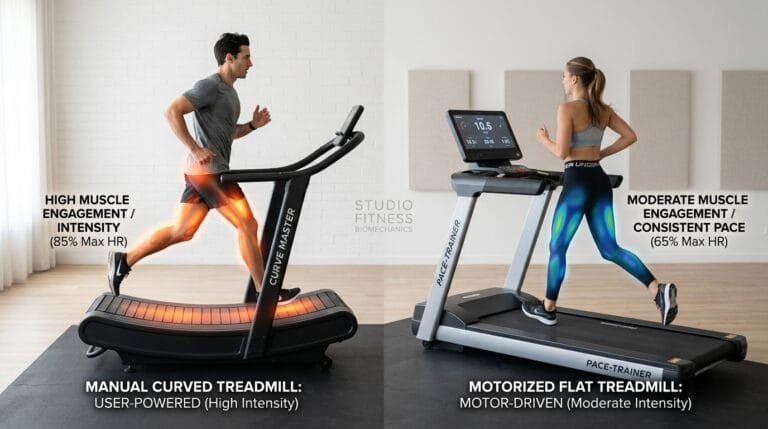
| Dedicated cardio machine (treadmill, rower, bike) | Convenient indoor conditioning | When outdoor options are limited and budget allows | $200–$500+ | Manual treadmill discussion: Does a Manual Treadmill Burn Belly Fat? |
| Extensive fixed dumbbell sets or specialty bars | Greater load or variety | Rarely for true beginners | High | Adjustable dumbbells are more efficient |
| Cable systems or functional trainers | Constant tension and variety | Intermediate stage or specific rehabilitation needs | $300–$1,000+ | Bands cover many of the same patterns at far lower cost |
Nice-to-have items should be purchased only when a clear, recurring limitation in the essential setup has been identified through consistent training.
Step-by-Step Guide to Building a Beginner Home Gym the Smart Way
- Define your primary goals (strength, muscle, general fitness, fat loss support) and available space.
- Set a realistic total budget and protect the majority of it for essentials.
- Purchase adjustable dumbbells first — they deliver the highest return.
- Add a stable bench next.
- Install a pull-up bar and acquire a resistance-band set.
- Protect the floor with a mat.
- Create a simple progressive full-body or upper/lower programme using only these tools.
- Train consistently for 8–12 weeks while tracking loads and repetitions.
- Identify genuine limitations (e.g., need for heavier loads, desire for swings, recovery issues).
- Only then consider adding one nice-to-have item that directly solves the limitation.
Sample Beginner Full-Body Programme Using Only Essentials
Session A Goblet squat – 3–4 sets of 8–12 Dumbbell bench press – 3–4 sets of 8–12 Pull-ups or band-assisted pull-ups – 3 sets near failure Dumbbell Romanian deadlift – 3 sets of 10–12 Band face pulls – 3 sets of 15–20
Session B Dumbbell overhead press – 3–4 sets of 8–12 Single-arm dumbbell row – 3 sets of 10–12 per side Reverse lunges or Bulgarian split squats – 3 sets of 8–10 per leg Hanging knee raises or lying leg raises – 3 sets of 10–15 Band pull-aparts – 3 sets of 15–20
Progress by adding weight, increasing repetitions, or advancing variations (e.g., from assisted to full pull-ups). Maintain healthy shoulder mechanics on pressing and isolation work by following principles such as those in safe lateral-raise technique. Develop grip strength to improve pulling performance.
Budget Allocation Recommendations
- 40–60 % of total budget → adjustable dumbbells
- 20–30 % → bench
- Remaining → pull-up bar, bands, mat
This allocation maximises long-term training capacity. External budget-build examples and current pricing discussions can be found in independent resources such as Home Gym Foundry’s budget setups.
Common Beginner Mistakes to Avoid
- Buying a large multi-gym or cable machine before mastering free-weight basics
- Accumulating fixed dumbbells that consume space and budget
- Neglecting vertical pulling
- Purchasing recovery tools or cardio machines before establishing a consistent strength habit
- Choosing the absolute cheapest versions of essentials that feel unstable or fail quickly
- Failing to programme progressive overload from the start
Integrating Recovery and Technique from Day One
Even with a minimal setup, recovery and form matter. Use bands for shoulder health work. Consider a basic foam roller or, later, a budget massage gun once training frequency increases. Core development can progress toward ab-roller variations when ready. Low-impact conditioning options such as walking or a future manual treadmill can complement strength work without requiring early investment.
Frequently Asked Questions
What is the absolute minimum equipment a beginner needs? Adjustable dumbbells (or a usable fixed set), a pull-up solution, and a mat. A bench and bands dramatically improve the setup and are strongly recommended as true essentials.
Should I buy a kettlebell as a beginner? Not required. Master dumbbell hinges and rows first. Add a kettlebell later for variety and ballistic work if desired.
Is a power rack necessary for beginners? No. Most beginners make excellent progress for a year or more without one. It becomes relevant when heavier barbell training is prioritised and space/budget allow.
How long should I train with only essentials before adding nice-to-haves? At least 8–12 weeks of consistent progressive training, ideally longer. Let real limitations guide purchases rather than excitement.
Can I build muscle and strength with only the essentials? Yes. Mechanical tension, progressive overload, and sufficient protein drive results. The essential list supplies all necessary patterns.
What if my budget is under $300? Prioritise the best adjustable dumbbells you can afford, a basic pull-up bar, bands, and a mat. Add a bench as soon as possible. Used markets can help stretch the budget.
Are all-in-one home gym machines good for beginners? Usually not. They often lack progressive overload flexibility, take significant space, and become limiting quickly compared with free-weight essentials.
Final Recommendation
Start with the essentials: adjustable dumbbells, a stable bench, a pull-up bar, resistance bands, and basic floor protection. These items deliver complete full-body progressive training at low cost and minimal space while building the habit and strength base that make future upgrades meaningful. Treat everything else as nice-to-have and add it only when a clear, recurring need appears after consistent use of the core setup.
This disciplined approach prevents clutter, saves money, and produces better long-term results than an expensive but under-used collection of equipment. Master the essentials, track your progress, prioritise technique and recovery, and expand strategically. Your beginner home gym will remain effective, sustainable, and focused on what actually drives results.