Sleep and Recovery Strategies When Training with Heavy Home Weights
Quick Answer
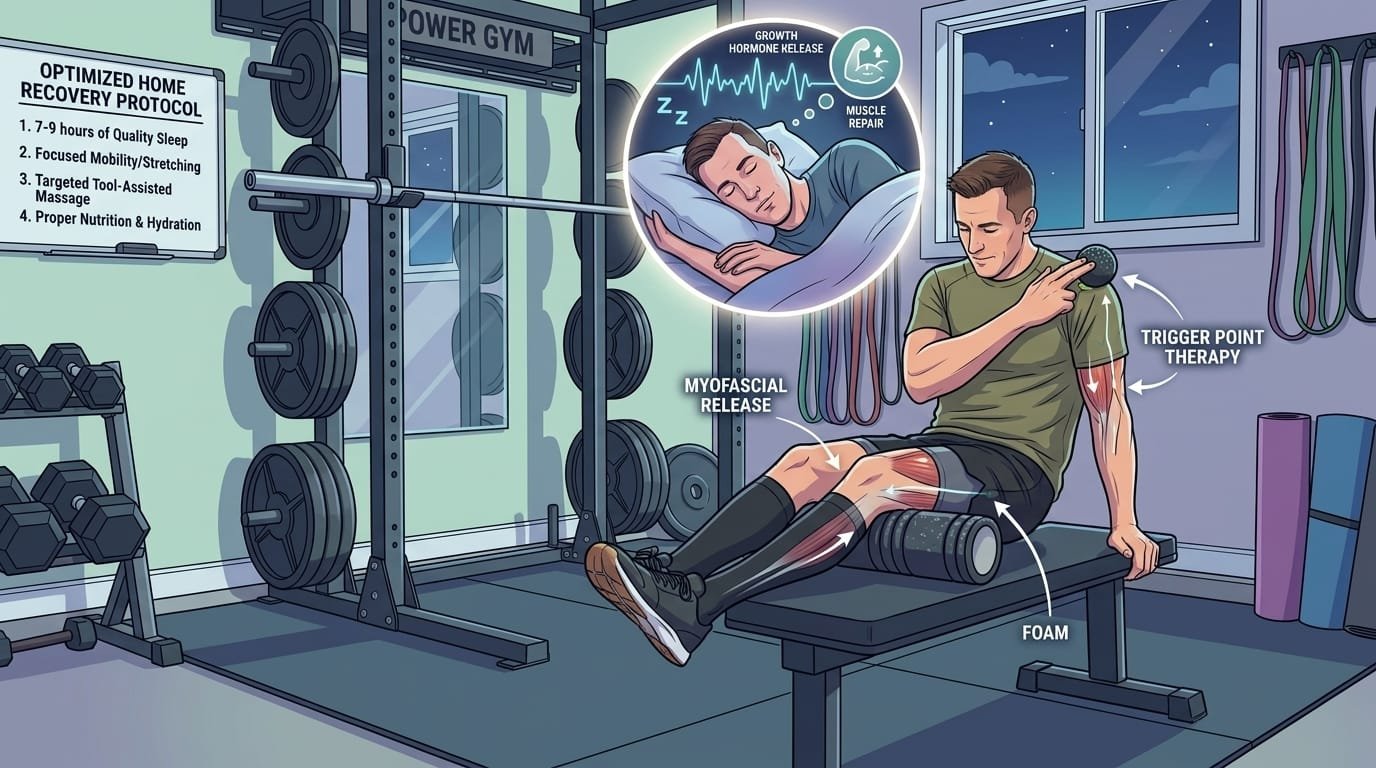
When training with heavy home weights (dumbbells, kettlebells, loaded carries, or advanced bodyweight progressions), quality sleep each night on a consistent schedule is the single most important recovery strategy . Support this foundation with adequate protein and energy intake, intelligent management of training volume, planned deload periods, and simple recovery tools such as foam rolling or a massage gun. Sleep is when the majority of growth hormone release and elevated muscle protein synthesis occur; chronic short sleep impairs strength gains, muscle growth, and raises injury risk. No gadget or supplement fully compensates for inadequate sleep.
Why Sleep Dominates Recovery from Heavy Training
Heavy resistance training produces two distinct forms of fatigue: peripheral (muscle damage, glycogen depletion, local inflammation) and central (reduced neural drive, coordination, and motivation). Muscle repair and growth require amino acids and anabolic signalling, while the nervous system needs time to restore maximal force production.
The large majority of daily growth hormone secretion occurs during deep sleep. Sleep restriction has been shown to reduce lean mass gains, increase fat retention during energy deficits, lower muscle protein synthesis rates, and elevate injury risk. One night of severe sleep loss can reduce the body’s ability to build muscle from protein by approximately 18 %, even when protein intake remains the same. Across broader performance data, acute sleep loss impairs exercise performance, with skill and coordination tasks suffering more than pure maximal strength (sleep loss and performance evidence).
For home lifters progressively overloading goblet squats, Romanian deadlifts, presses, rows, swings, and carries, protecting sleep is the highest-leverage recovery action available. Research consistently ranks sleep above all other recovery modalities in importance (muscle recovery evidence hierarchy).
Core Recovery Pillars for Heavy Home Training
| Pillar | Evidence-Based Target | Impact on Heavy Training Adaptation | Key Actions |
|---|---|---|---|
| Sleep duration & quality | 7–9 hours, consistent timing | Growth hormone, MPS, neural restoration | Fixed schedule, cool dark room, wind-down routine |
| Protein & energy | 1.6–2.2 g/kg protein, sufficient calories | Muscle repair and training quality | Distribute protein, avoid aggressive deficits while progressing |
| Training stress management | Sustainable progressive overload | Prevents non-functional overreaching | Track performance, schedule deloads every 4–8 weeks |
| Soft-tissue & light movement | Daily or post-session | Reduces perceived soreness, maintains mobility | Foam rolling, massage gun, easy walking |
| Lifestyle stress control | Manage non-training stressors | Cortisol and recovery interact strongly | Evening routines, limit late stimulants |
Optimising Sleep Architecture and Hygiene
Duration
Most people performing regular heavy resistance training recover and adapt best with 7–9 hours of sleep per night. Consistently landing under 7 hours impairs long-term progress.
Consistency
Fixed bed and wake times (including weekends) stabilise circadian rhythms and improve sleep efficiency. Large swings in schedule reduce the amount of deep and REM sleep obtained.
Sleep Environment
- Room temperature approximately 15–19 °C (60–67 °F)
- Near-total darkness (blackout curtains or eye mask)
- Low noise or consistent white noise
- Comfortable mattress and pillows supporting neutral spinal alignment
Pre-Sleep Routine (30–90 minutes)
- Dim lights and reduce bright screen exposure
- Avoid caffeine after early afternoon and limit alcohol near bedtime
- Light mobility, reading, or breathing exercises
- Keep the bedroom reserved primarily for sleep
Interestingly, resistance training itself is one of the most effective non-pharmacological ways to improve sleep quality. Network meta-analyses and multiple trials show that regular strength training enhances sleep metrics, often outperforming or matching aerobic exercise (resistance training and sleep quality evidence and broader analyses confirming strength training benefits for sleep).
Managing the Stress of Heavy Home Loads
Heavy dumbbells and kettlebells create substantial systemic fatigue. Effective strategies include:
- Progress load or volume in small, planned increments
- Leave 1–3 repetitions in reserve on the majority of sets
- Insert deload weeks every 4–8 weeks (reduce volume or intensity by roughly 40–60 %)
- Monitor objective and subjective markers: bar speed, motivation, morning resting heart rate, mood, and persistent soreness
- Avoid consecutive high-fatigue sessions without adequate recovery
Home training offers excellent progressive overload potential, yet the nervous system still requires periodic reduction in stress to continue adapting.
Nutritional Support for Recovery
- Anchor protein intake at 1.6–2.2 g per kilogram of body weight per day, distributed across 3–5 feedings
- Maintain sufficient total energy so that recovery and performance are not compromised by large deficits while loads are progressing
- Include carbohydrates to support glycogen replenishment, particularly around lower-body or high-volume sessions
- Stay consistently hydrated
Full practical guidance is available in Nutrition Tips to Maximize Results from Your Home Gym Equipment.
Practical Recovery Tools and Methods
Foam Rolling
Spend 30–90 seconds per major muscle group after training or on rest days. Useful for reducing perceived soreness and maintaining short-term range of motion.
Massage Gun
Apply 30–60 seconds to targeted hotspots. Convenient for areas a roller cannot easily reach. Selection and usage details appear in Best Massage Gun for Post-Workout Recovery on a Budget and the broader overview in Best Post-Workout Recovery Tools for Home Lifters (Foam Roller, Massage Gun, etc.).
Light Active Recovery
Easy walking, mobility flows, or technique work with very light loads promote blood flow without adding meaningful fatigue.
Temperature-based methods (contrast showers, occasional cold exposure) are optional adjuncts; evidence for superior long-term adaptation remains limited compared with sleep and nutrition.
Step-by-Step Recovery System
- Establish a consistent bedtime and wake time.
- Design a 30–60 minute wind-down routine (dim lights, limited screens, light mobility or reading).
- Optimise the bedroom: cool, dark, and quiet.
- Finish demanding training sessions at least 2–3 hours before bed when schedule allows.
- Include a protein-containing evening meal or snack if it fits your overall intake.
- Perform brief soft-tissue work post-training or in the evening if it aids relaxation.
- Log sleep duration and subjective quality for 1–2 weeks to identify patterns.
- Schedule deload periods proactively every 4–8 weeks.
- Protect sleep equally on training and non-training nights.
- Temporarily reduce training volume if sleep is consistently poor, then rebuild once recovery improves.
Linking Recovery to Specific Home Gym Work
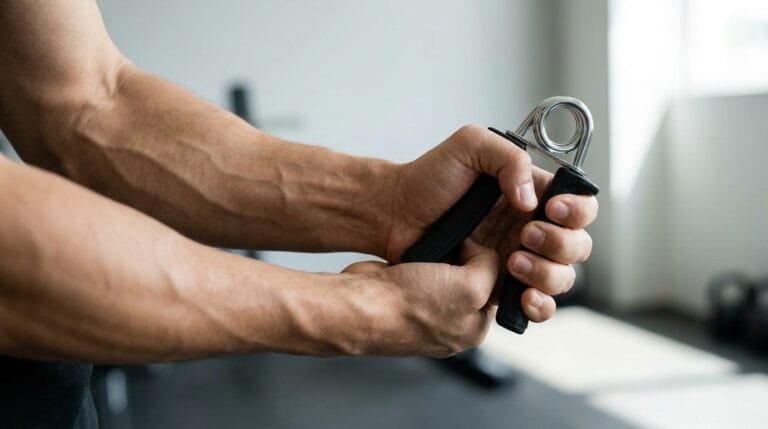
Heavy kettlebell and dumbbell sessions create significant fatigue that requires full recovery for continued progress (kettlebell sizing guide). Grip-intensive training and hanging also benefit from complete restoration (grip strength guidance).
Maintain healthy shoulder function during raising and pressing work by applying the principles in safe lateral-raise technique and the shoulder health routine. Core progressions such as the ab roller recover more effectively when sleep is prioritised. Low-impact conditioning options described in manual treadmill guidance can be placed on recovery-focused days. Band work for activation and mobility pairs well with good sleep habits (Resistance Bands Buying Guide).
Common Mistakes That Undermine Recovery
- Habitually sleeping under 7 hours while attempting progressive overload
- Training to failure too frequently without planned recovery weeks
- Consuming caffeine late in the day and disrupting sleep onset
- Ignoring early fatigue signals (stalled lifts, persistent soreness, declining motivation)
- Investing in recovery gadgets while neglecting sleep duration and consistency
- Allowing large variability in bedtime and wake time across the week
Frequently Asked Questions
How many hours of sleep are optimal when lifting heavy at home?
Most trainees recover and adapt best with 7–9 hours per night. Individual variation exists, but consistently falling below 7 hours impairs long-term results.
Can I still make progress on limited sleep?
Short-term progress is possible, yet chronic restriction reduces muscle protein synthesis, strength gains, and increases injury risk. Sleep is not optional for optimal adaptation.
Does training time of day affect sleep?
Both morning and evening training can improve sleep quality for many people. Evening sessions sometimes produce slightly better sleep outcomes provided they finish well before bedtime and are not overly stimulating. Experiment and prioritise total sleep obtained.
Are naps useful?
Short naps (20–30 minutes) can help when night sleep is insufficient, but they should supplement, not replace, consistent nocturnal sleep.
How often should deloads occur?
Every 4–8 weeks is a practical starting framework for intermediate lifters using heavy loads. Adjust frequency based on performance trends and recovery markers.
Can foam rollers or massage guns replace good sleep?
No. These tools are helpful adjuncts for perceived soreness and mobility but cannot substitute for the hormonal and neural recovery that occurs during sleep.
What if my schedule makes long sleep difficult?
Maximise the quality of the sleep you can obtain, reduce non-essential evening demands, and temporarily lower training volume until sleep duration improves.
Final Recommendation
When training with heavy home weights, treat 7–9 hours of consistent, high-quality sleep as the non-negotiable foundation of recovery. Build a cool, dark sleep environment, establish a reliable wind-down routine, maintain adequate protein and energy intake, manage training volume intelligently, and use simple soft-tissue practices as supporting tools. Schedule deloads before fatigue accumulates and monitor both performance and how you feel.
Sleep determines how effectively the hard work performed with dumbbells, kettlebells, and bodyweight converts into strength and muscle. Master sleep and basic recovery first — every other variable becomes more productive once this foundation is secure. Begin tonight by setting a consistent bedtime and creating the conditions for deep, restorative sleep.