How to Prevent Overuse Injuries When Training Alone at Home
Quick Answer
Preventing overuse injuries when training alone at home requires managing training load (avoid sudden spikes), prioritising strict technique, balancing pushing and pulling movements, incorporating prehabilitation for common weak points (rotator cuff, scapular stabilisers, posterior chain, core), allowing adequate recovery, and listening to early warning signals. Progress volume and intensity by roughly 10% or less per week, film your lifts, schedule deloads every 4–8 weeks, and address muscle imbalances proactively. Most overuse injuries in resistance training arise from accumulated stress rather than single traumatic events — consistency with smart progression is safer and more productive than aggressive training.
Understanding Overuse Injuries in Home Strength Training
Overuse injuries develop gradually when the cumulative stress placed on tissues (muscles, tendons, ligaments, joints) exceeds the body’s ability to recover and adapt. In contrast to acute injuries (sudden strains or sprains), overuse problems often start as mild discomfort that worsens if ignored.
Common sites in resistance training include the shoulders, lower back, elbows, knees, and wrists. A systematic review noted that overuse injuries account for a substantial portion of sport-related injuries, with the spine, shoulder, and knee frequently involved in resistance-training populations. Traditional strength training has a relatively low injury incidence compared with many other activities when technique and load are managed properly, but unsupervised home training increases risk if form breaks down or volume spikes suddenly (injury patterns in resistance training).
Training alone removes external feedback. Without a coach watching, small technical errors can accumulate across hundreds of repetitions, turning minor issues into persistent problems.
Primary Causes of Overuse Injuries at Home
| Cause | How It Develops | Prevention Focus |
|---|---|---|
| Sudden load spikes | Weekly volume or intensity jumps >10–20% | Gradual progression, track workload |
| Poor or inconsistent technique | Repeated stress on vulnerable tissues | Film lifts, prioritise form over load |
| Muscle imbalances | Dominant pushing vs weak pulling/rear delts | Balance programme, prehab work |
| Insufficient recovery | Training same tissues hard too frequently | Space sessions, prioritise sleep |
| Neglecting mobility & stability | Restricted range or poor control under load | Dedicated mobility + stabiliser work |
| Ignoring early pain signals | “Training through” mild discomfort | Differentiate soreness from pain |
Core Prevention Strategies
1. Manage Training Load Progressively
The acute:chronic workload ratio concept shows that injury risk rises when current week’s load significantly exceeds the average of the previous 3–4 weeks. A practical guideline is to limit increases in total training stress (sets × reps × load) to roughly 10% per week.
Track your key lifts and total sets. Avoid adding multiple new variables (heavier weight + more sets + new exercises) in the same week.
2. Prioritise Technique Above Load
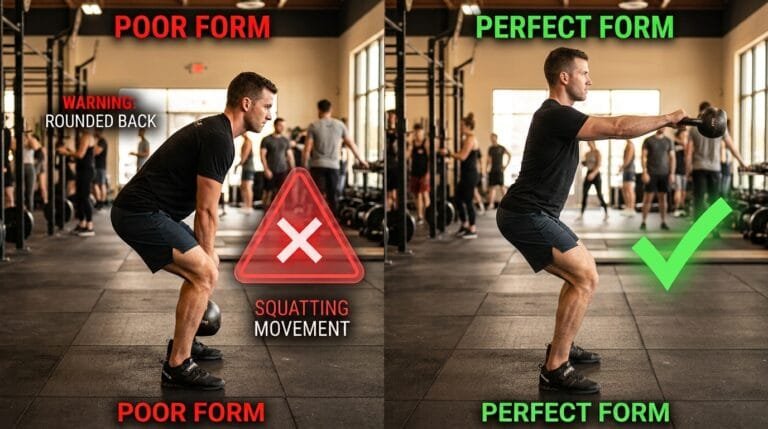
Film your main movements regularly from side and front angles. Look for:
- Rounded lower back on hinges and squats
- Excessive elbow flare or shrugging on presses and raises
- Loss of scapular control on pulling movements
- Knee valgus (caving) on single-leg work
Leave 1–3 repetitions in reserve on most sets so form stays crisp. Ego lifting is a frequent precursor to overuse problems.
3. Balance Your Programme
For every pressing or raising movement, include adequate horizontal and vertical pulling plus rear-delt and external-rotation work. Upper-crossed and lower-crossed imbalances are common drivers of shoulder and lower-back issues.
Dedicated upper-back and rear-delt sessions, along with the shoulder health routine, are highly protective (Upper-Back and Rear-Delt Focus Session and Shoulder Health Routine to Pair with Lateral Raise Training).
4. Include Prehabilitation and Stabiliser Work
Strengthen the rotator cuff, scapular stabilisers, glute medius, deep core, and forearm extensors. These smaller muscles improve joint centring and force distribution.
Examples:
- Band pull-aparts, face pulls, external rotations
- Single-leg glute bridges and lateral band walks
- Dead bugs and pallof variations
- Wrist extension work and grip balance exercises (grip strength guidance)
5. Warm Up Properly
Use a progressive warm-up: light cardio or joint circles → dynamic mobility → activation (band pull-aparts, glute bridges) → ramp-up sets with increasing load. Cold tissues and unprepared nervous systems are more vulnerable.
6. Respect Recovery
- Sleep 7–9 hours consistently (Sleep and Recovery Strategies When Training with Heavy Home Weights)
- Space hard sessions for the same muscle groups 48–72 hours apart
- Schedule deload weeks every 4–8 weeks
- Use soft-tissue tools (foam roller, massage gun) for perceived soreness (Best Post-Workout Recovery Tools and Best Massage Gun for Post-Workout Recovery on a Budget)
7. Address Mobility Restrictions
Limited thoracic extension, hip flexor tightness, or ankle mobility restrictions alter movement patterns and increase stress elsewhere. Incorporate daily or frequent mobility work for key areas.
Common Home Training Injury Sites and Specific Prevention
Shoulders
Often linked to excessive pressing/raising volume relative to pulling and external rotation strength, plus poor scapular control.
Prevention: Follow safe lateral-raise form (How to Perform Safe Lateral Raises if You Have Shoulder Impingement History), maintain high pulling volume, and perform regular rotator cuff and scapular work.
Lower Back
Usually related to loss of neutral spine under fatigue, weak glutes/core, or excessive spinal flexion under load.
Prevention: Master bracing, strengthen the posterior chain (RDLs, hip thrusts, back extensions), and keep most hinge and squat work within technical proficiency.
Elbows and Wrists
Common with high pressing, curling, or gripping volume and poor wrist alignment.
Prevention: Balance flexion and extension work, vary grip positions, and avoid locked-out hyperextension under heavy load.
Knees
Often associated with poor tracking, weak hips, or sudden increases in single-leg or jumping volume.
Prevention: Strengthen glute medius, control knee position, and progress unilateral work gradually.
Step-by-Step Injury-Prevention System for Home Lifters
- Film and assess technique on all main lifts monthly.
- Track weekly sets and loads for key movement patterns.
- Limit week-to-week progression to ~10% total stress.
- Perform a structured warm-up before every session.
- Include dedicated rear-delt, external-rotation, and scapular work 2–4 times per week.
- Balance every push with adequate pull volume.
- Schedule a deload every 4–8 weeks.
- Prioritise 7–9 hours of sleep and solid nutrition (Nutrition Tips to Maximize Results from Your Home Gym Equipment).
- Use soft-tissue tools and light movement on recovery days.
- Stop or regress any exercise that produces sharp or worsening joint pain.
Integrating Prevention with Your Existing Home Programme
Apply these principles across all training:
- Kettlebell swings and hinges benefit from strong posterior chain and core control (kettlebell sizing guide).
- Band work is excellent for prehab and balanced resistance (Resistance Bands Buying Guide).
- Core progressions such as the ab roller require good bracing and gradual advancement.
- Low-impact conditioning options (manual treadmill guidance) can be used on recovery-focused days without adding high joint stress.
Warning Signs That Require Immediate Attention
- Sharp or localised joint pain during or after lifts
- Pain that worsens across consecutive sessions
- Swelling, locking, or instability
- Persistent night pain or pain at rest
- Noticeable strength or range-of-motion loss on one side
Differentiate normal muscle soreness (diffuse, improves with movement) from joint or tendon pain (localised, sharp, worsens with specific actions). When in doubt, reduce load and consult a qualified professional.
Frequently Asked Questions
How common are overuse injuries in home strength training?
They form a significant portion of resistance-training injuries. Risk rises with unsupervised training, sudden load jumps, and poor technique, but remains relatively low when progression and form are managed carefully.
Is the 10% rule strict?
It is a useful heuristic rather than an absolute law. Some trainees tolerate slightly faster progress; others need slower. The key principle is avoiding large, abrupt spikes.
Can I prevent all injuries?
No programme eliminates risk entirely. Smart training dramatically reduces the likelihood and severity of overuse problems.
Should I train through mild discomfort?
Mild muscle fatigue and delayed soreness are normal. Sharp joint pain, compensating form, or worsening symptoms are signals to stop or regress.
How important is a deload?
Very. Planned reductions in volume or intensity allow tissues to adapt fully and reduce the risk of accumulated fatigue turning into injury.
Do I need expensive equipment for prevention?
No. Resistance bands, bodyweight, light dumbbells, and a pull-up bar cover most prehab and balancing needs.
When should I see a professional?
If pain persists beyond a few days of rest, worsens, or interferes with daily activities, seek assessment from a doctor or physiotherapist experienced in strength training.
Final Recommendation
Prevent overuse injuries when training alone at home by combining gradual load progression, strict technique, balanced programming, targeted prehabilitation, and consistent recovery practices. Film your lifts, limit weekly stress increases, strengthen the rear delts, rotator cuff, scapular stabilisers, and posterior chain, and prioritise sleep and deloads.
Home training can be extremely safe and effective when these principles are followed. Treat prevention as part of the programme rather than an afterthought. Start by auditing your current technique and weekly volume, implement the warm-up and prehab work, and progress patiently. Sustainable training over years produces far better results than aggressive short-term efforts interrupted by injury.