
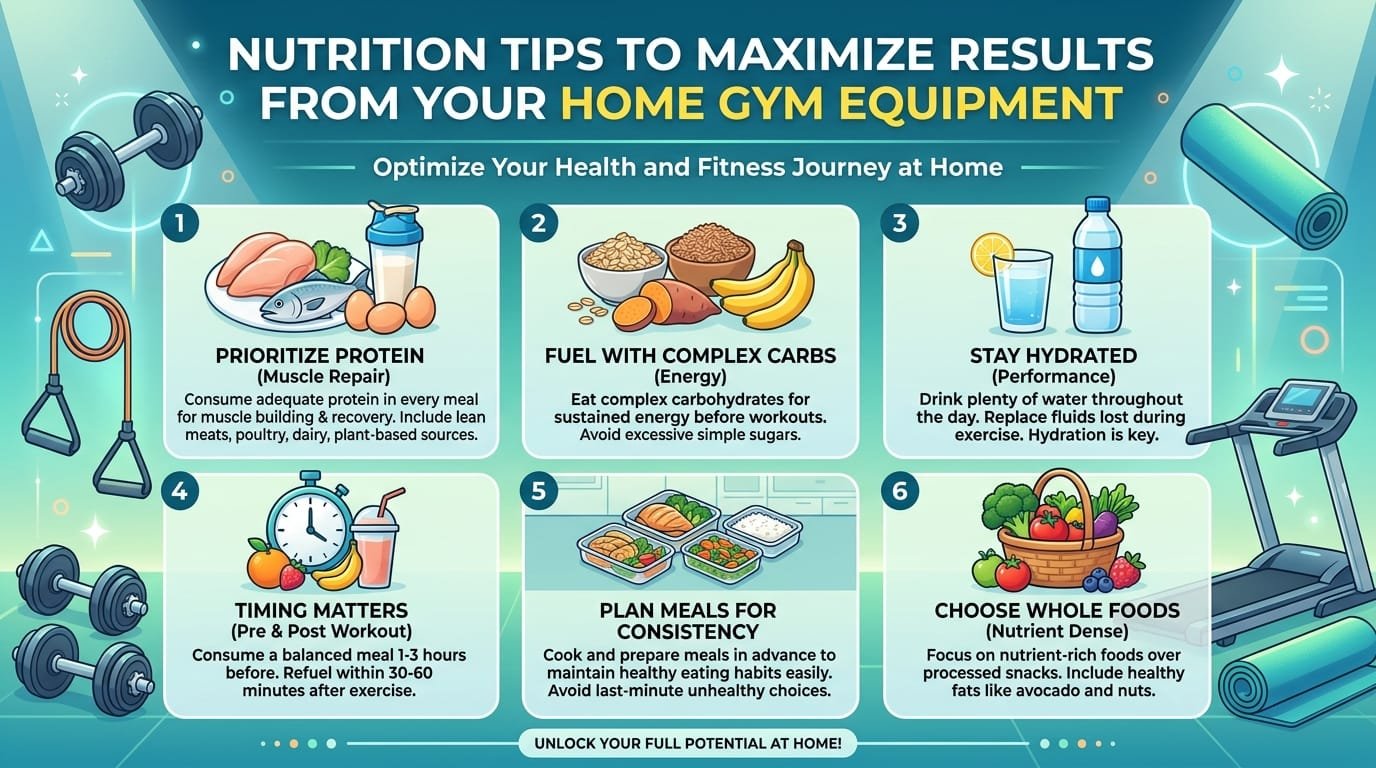
Nutrition Tips to Maximize Results from Your Home Gym Equipment
Nutrition Tips to Maximize Results from Your Home Gym Equipment
Quick Answer
To maximise results from your home gym equipment, prioritise a modest calorie surplus (for muscle gain) or controlled deficit (for fat loss), consume 1.6–2.2 g of protein per kilogram of body weight daily, distribute protein across 3–5 meals, and support training with adequate carbohydrates and overall energy availability. Timing protein and carbs around workouts aids recovery, while consistent hydration, sleep, and food quality amplify the stimulus created by dumbbells, kettlebells, bands, pull-up bars, and bodyweight training. Nutrition does not replace progressive overload, but it determines how effectively your body adapts to the work you perform at home.
Why Nutrition Determines Home Gym Progress
Home gym equipment — adjustable dumbbells, kettlebells, resistance bands, pull-up bars, and bodyweight movements — provides an excellent mechanical stimulus. However, muscle protein synthesis, recovery, energy for progressive overload, and body-composition changes depend heavily on what and how much you eat. Without sufficient protein and total energy, even well-designed training produces suboptimal results. Conversely, solid nutrition allows modest home equipment to drive impressive long-term progress.
Core Nutritional Pillars for Strength and Physique Goals
| Pillar | Recommendation | Why It Matters for Home Training | Practical Target |
|---|---|---|---|
| Protein | 1.6–2.2 g/kg body weight/day | Maximises muscle repair and growth | 20–40 g per meal, 3–5 times daily |
| Total Calories | Surplus for growth, deficit for fat loss, maintenance for recomposition | Provides energy for performance and recovery | Adjust based on weekly scale and measurement trends |
| Carbohydrates | Moderate to high depending on volume | Fuels intense sets and replenishes glycogen | 3–6+ g/kg depending on training load |
| Fats | 0.6–1.0 g/kg or 20–35% of calories | Hormone support and overall health | Include sources of essential fatty acids |
| Hydration | Consistent fluid intake | Performance, recovery, joint health | Clear urine, thirst as guide + extra around training |
| Meal Timing | Protein distribution + peri-workout nutrition | Supports muscle protein synthesis and recovery | Protein every 3–5 hours; feed around sessions |
Protein: The Highest-Leverage Nutrient
Resistance training increases the need for dietary protein. Meta-analyses and position stands support intakes of approximately 1.6–2.2 g per kilogram of body weight per day for individuals engaged in regular strength training to maximise muscle gains. Higher intakes (up to ~2.7 g/kg) are sometimes used during aggressive fat-loss phases to help preserve lean mass.
Distribute protein across the day in 20–40 g doses. Each dose should ideally contain sufficient leucine (roughly 2–3 g) to trigger muscle protein synthesis. High-quality sources include lean meats, poultry, fish, eggs, dairy, Greek yogurt, cottage cheese, whey or casein protein, and well-planned plant combinations (soy, pea, rice + legumes, etc.).
Practical examples for a 75 kg individual aiming for 1.8 g/kg (135 g protein):
- Breakfast: 3 eggs + Greek yogurt
- Lunch: Chicken or tofu portion + legumes
- Post-workout: Protein shake or lean meat + carbs
- Dinner: Fish or lean red meat + vegetables
- Optional evening: Cottage cheese or casein
Calories and Body-Composition Goals
- Muscle gain: Small surplus (200–400 kcal above maintenance) supports progressive overload and recovery without excessive fat gain.
- Fat loss: Moderate deficit (300–500 kcal below maintenance) while keeping protein high helps retain muscle built with home equipment.
- Recomposition: Maintenance calories combined with progressive training and high protein can produce simultaneous fat loss and muscle gain, especially for beginners and intermediates.
Track weight and measurements weekly. Adjust calories based on trends rather than daily fluctuations.
Carbohydrates and Fats
Carbohydrates fuel high-effort sets and support recovery between sessions. Home gym trainees performing full-body or lower-body focused workouts benefit from moderate-to-high carbohydrate availability, particularly around training.
Dietary fats support hormone production and overall health. Extremely low-fat diets are rarely necessary or helpful for most home lifters. Include sources of omega-3 fatty acids (fatty fish, walnuts, flax, chia) regularly.
Peri-Workout Nutrition tips
Consuming protein (20–40 g) and some carbohydrate in the hours surrounding training supports muscle protein synthesis and replenishes glycogen. The “anabolic window” is wider than once believed — total daily intake matters most — yet practical pre- and post-workout meals remain useful for performance and recovery, especially when training fasted or with limited recovery time between sessions.
Examples:
- Pre-workout (1–2 hours before): Yogurt with fruit, chicken and rice, or a mixed shake
- Post-workout: Protein shake with banana, eggs on toast, or a balanced meal
Hydration and Micronutrients
Dehydration impairs strength, focus, and recovery. Drink fluids consistently throughout the day and increase intake around training.
Emphasise nutrient-dense foods to cover micronutrient needs: colourful vegetables, fruit, quality protein sources, whole grains or starchy vegetables, and some dairy or fortified alternatives. A basic multivitamin can serve as insurance if dietary variety is limited, but food first remains the priority.
Supplements with Evidence for Home Lifters
- Whey or plant protein powder: Convenient way to hit protein targets.
- Creatine monohydrate (3–5 g daily): One of the most researched and effective supplements for strength and muscle gains.
- Caffeine: Can enhance performance when timed before training.
- Vitamin D: Relevant if sun exposure or dietary intake is low (test levels when possible).
Most other supplements produce smaller or less consistent benefits. Food and total protein remain foundational.
Step-by-Step Nutrition Setup for Home Gym Progress
- Calculate approximate maintenance calories (online calculators provide a starting point; refine with real-world tracking).
- Set protein at 1.6–2.2 g/kg and lock this in first.
- Allocate remaining calories to carbohydrates and fats according to preference and training volume.
- Plan 3–5 protein-containing meals or snacks spaced across the day.
- Add a practical pre- and/or post-workout feeding.
- Track weight, measurements, and training performance for 2–3 weeks.
- Adjust calories up or down based on progress toward your goal.
- Prioritise sleep (7–9 hours) — nutrition and recovery interact strongly.
- Review and refine every 4–6 weeks.
- Stay consistent; adherence outperforms perfection.
Matching Nutrition to Common Home Gym Goals
Strength and Muscle Gain
Higher calories, high protein, sufficient carbs to fuel progressive overload on goblet squats, Romanian deadlifts, rows, presses, and pull-ups.
Fat Loss While Keeping Muscle
Controlled deficit, protein at the upper end of the range, maintain training intensity on key compound movements.
General Fitness and Recomposition
Maintenance calories, solid protein distribution, focus on progressive training with kettlebells, bands, and bodyweight.
Integration with Your Home Training
Nutrition supports every major pattern you train at home. Adequate protein and energy improve recovery from lateral raises and pressing work (see safe lateral-raise technique and the shoulder health routine).
Higher protein intakes help preserve muscle during hard lower-body sessions using goblet squats, split squats, and hinges. Grip-intensive work and kettlebell training also benefit from solid recovery nutrition (grip strength guidance and kettlebell sizing guide).
Core training and hanging work recover better with sufficient total energy and protein; progressions toward an ab roller are no exception. Low-impact conditioning options discussed in manual treadmill guidance still require appropriate fuelling. For band-based training, maintain the same nutritional principles outlined in Resistance Bands Buying Guide. A budget massage gun can complement nutrition by aiding perceived recovery.
External evidence supports protein intakes in the 1.6–2.2 g/kg range and the value of distributed protein feedings for maximising adaptation to resistance training (protein and resistance training recommendations and nutritional strategies for recovery).
Common Nutrition Mistakes That Limit Home Gym Results
- Under-eating protein while training hard
- Large calorie deficits that impair recovery and strength progression
- Inconsistent daily intake (big swings between weekdays and weekends)
- Relying solely on supplements while neglecting whole-food protein sources
- Ignoring hydration
- Expecting nutrition to compensate for lack of progressive overload
- Changing too many variables at once so you cannot identify what works
Frequently Asked Questions
How much protein do I really need?
Most home lifters maximise results between 1.6 and 2.2 g per kilogram of body weight per day. Higher intakes are useful during fat-loss phases.
Do I need to eat immediately after training?
Total daily protein and energy matter most. A practical meal or shake within a few hours of training is beneficial, especially if the next meal is delayed.
Can I build muscle in a calorie deficit at home?
Beginners and those returning after a layoff often can. Intermediate and advanced trainees typically need maintenance calories or a small surplus for optimal muscle gain.
Are protein shakes necessary?
No, but they are convenient for hitting targets. Whole-food protein sources work equally well.
How important are carbohydrates for home strength training?
They support performance and recovery, particularly on higher-volume or lower-body focused days. Very low-carb approaches are rarely optimal for strength progression.
Should I track calories and macros?
Tracking for a few weeks educates you on portions and needs. Many people then transition to consistent meal patterns with periodic check-ins.
Does meal timing around sleep matter?
Consuming protein in the evening (including slower-digesting sources) can support overnight muscle protein synthesis and is a useful habit.
Final Recommendation
Maximise results from your home gym equipment by anchoring nutrition around high protein intake (1.6–2.2 g/kg/day), appropriate total calories for your goal, and consistent meal patterns that support training and recovery. Distribute protein across the day, fuel sessions with adequate carbohydrates, stay hydrated, and prioritise sleep.
These nutritional practices allow the stimulus created by dumbbells, kettlebells, bands, pull-up bars, and bodyweight exercises to translate into measurable strength, muscle, and body-composition improvements. Start by locking in your daily protein target, set calories according to your primary goal, and refine based on real-world progress. When training and nutrition work together, even a modest home gym becomes a powerful tool for long-term results.