Are Behind-the-Neck Presses Dangerous? Physiotherapist Perspective
Quick Answer Behind-the-neck presses are not inherently dangerous for every person, but they are high-risk for most lifters due to the extreme external rotation, abduction, and cervical positioning required. From a physiotherapist’s perspective, the movement is only appropriate for individuals with excellent shoulder external rotation, thoracic extension, and scapular control who experience zero discomfort. For the majority of people—especially those with desk-job posture, previous shoulder issues, or limited mobility—safer front-press variations deliver comparable or better results with far lower risk of impingement, rotator-cuff irritation, or cervical strain.
Why This Exercise Became Controversial
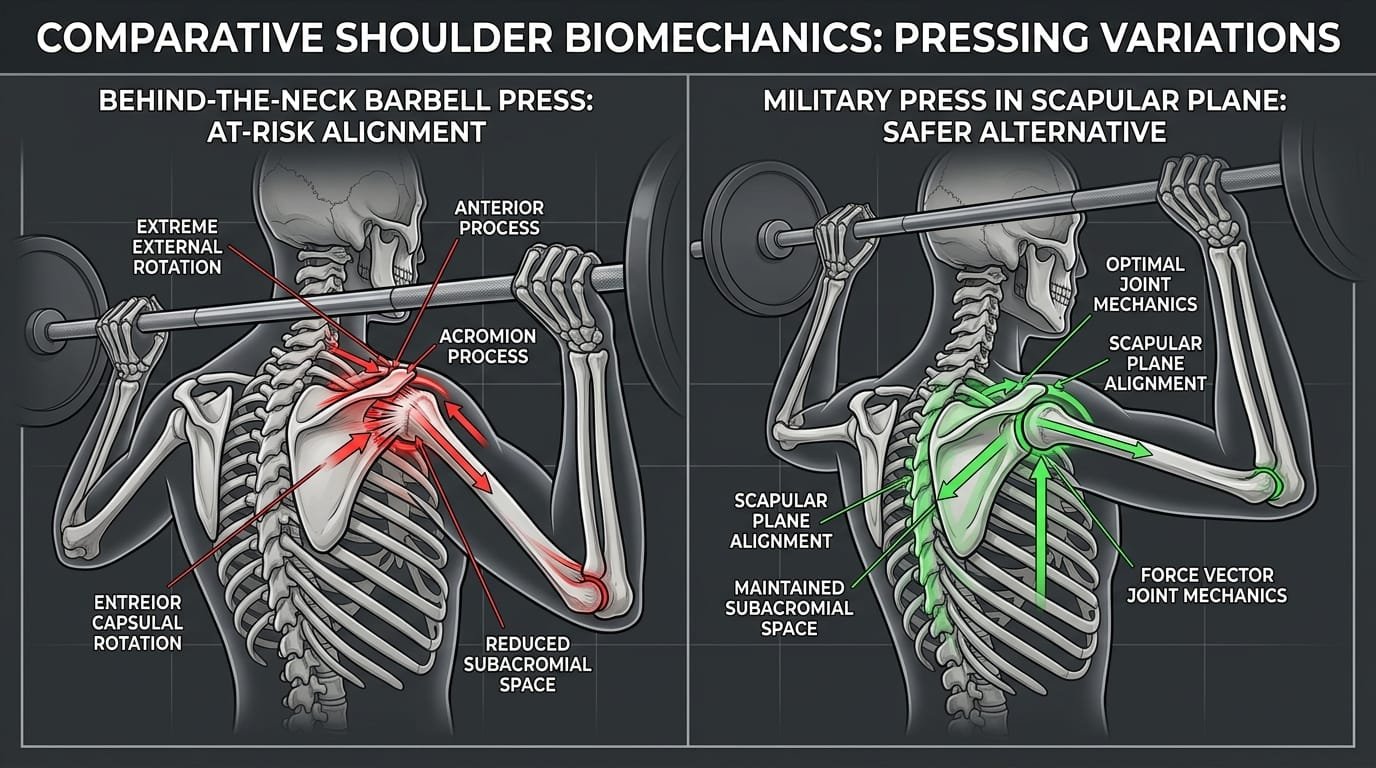
The behind-the-neck (BTN) press places the shoulders into end-range abduction and external rotation while the cervical spine often flexes forward to clear the bar path. This “high-five” position under load has been linked in clinical observation and some biomechanical analyses to increased anterior humeral translation, reduced subacromial space in certain individuals, and higher compressive forces on the cervical spine.
Physiotherapists and strength coaches have long debated the lift. Some research (including kinematic studies on overhead pressing) shows that, for people with ideal passive range of motion and trunk stability, both front and behind-the-neck variations can stay within physiological limits. However, the margin for error is small. Most recreational lifters do not possess the required mobility, which is why many physical therapists default to recommending against the movement for the general population.
Biomechanical Demands of the Behind-the-Neck Press
- Significant glenohumeral external rotation under load
- High degrees of shoulder abduction
- Potential anterior tipping and downward rotation of the scapula if mobility is lacking
- Forward head posture / cervical flexion to allow the bar to travel behind the head
- Greater demand on the rotator cuff to stabilise the humeral head in an open-packed position
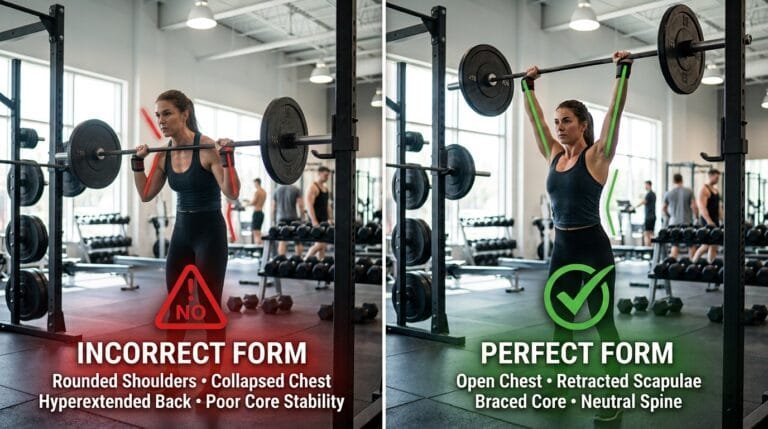
When mobility is insufficient, the body compensates with excessive lumbar extension, scapular winging, or cervical strain. Over time these compensations can contribute to impingement symptoms, rotator-cuff tendinopathy, or neck discomfort. Chronic neck issues that many people begin to accept as “normal” (see discussion on how neck pain becomes normal) can be aggravated by repeated end-range loading in this position.
Who Can Safely Perform Behind-the-Neck Presses?
A physiotherapist screening typically looks for:
- Ability to sit or stand with the back against a wall and place a bar or stick behind the head with arms fully extended overhead, without pain, excessive forward head posture, or lumbar compensation.
- Full, pain-free external rotation and abduction range.
- Adequate thoracic extension and scapular upward rotation.
- No history of shoulder instability, labral issues, or current impingement symptoms.
- Controlled trunk stability under load.
If any of these are missing, the risk outweighs the potential benefit.
Comparison: Behind-the-Neck vs. Front Overhead Press
| Factor | Behind-the-Neck Press | Front Overhead Press |
|---|---|---|
| Shoulder external rotation | High / end-range | Moderate |
| Subacromial space demand | Higher risk if mobility limited | Generally more favourable |
| Cervical spine position | Often flexed / forward head | More neutral |
| Mobility requirement | High | Moderate |
| Primary muscle emphasis | Lateral + posterior delts (some studies) | Anterior + lateral delts + upper chest |
| Load potential | Lower | Higher |
| Suitability for most lifters | Low | High |
| Injury margin for error | Small | Larger |
Physiotherapist Recommendations
Avoid or heavily modify if you have:
- Previous or current shoulder impingement
- Rotator-cuff tendinopathy or tears
- Labral pathology or instability
- Limited external rotation or thoracic extension
- Chronic neck pain or cervical disc issues
- Desk-bound posture with rounded shoulders and forward head
Safer alternatives that still build strong, balanced shoulders:
- Strict front barbell or dumbbell overhead press
- Seated dumbbell press in the scapular plane
- Landmine press
- Machine shoulder press with neutral or slightly forward arm path
- Arnold press (controlled range)
- High-incline dumbbell press
These variations allow progressive overload while keeping the shoulder in a more stable position.
Step-by-Step Safer Overhead Pressing Technique (Front Variation)
- Set the scapulae in a stable, slightly retracted and depressed position.
- Grip the bar just outside shoulder width.
- Keep the elbows slightly in front of the bar (not flared fully to the sides).
- Brace the core and maintain a neutral cervical spine.
- Press the bar in a slight backward arc so it finishes over the mid-foot.
- Lock out with active shoulder stability, then lower under control.
- Avoid excessive lumbar extension or forward head posture.
Programming Considerations from a Physiotherapy Standpoint
- Prioritise mobility and control work (thoracic extension, external rotation drills, scapular upward rotation) before adding advanced variations.
- Use the BTN press only as an occasional accessory, never as a primary strength movement, and only after clearing mobility screens.
- Keep loads moderate (often 50–70 % of front-press capacity) and reps in the 8–15 range.
- Monitor for any residual shoulder or neck discomfort in the 24–48 hours after training.
- Balance pressing volume with robust external-rotation and scapular-retractor work.
Integrating Shoulder Health with the Rest of Your Training
Safe overhead pressing pairs well with adjustable dumbbells for controlled variations and kettlebell bottoms-up or single-arm presses that demand stability. Strong grip endurance helps maintain bar control. Core stability from ab roller work supports a braced torso.
Recovery tools such as a budget massage gun can help manage upper-trap and rotator-cuff tension. Light cardio on a manual treadmill or mobility flows with resistance bands aid recovery. Review lateral raise form guidance so isolation work does not reinforce poor shoulder mechanics.
Common Myths
Myth: Behind-the-neck presses are always dangerous. Reality: They are high-demand. With ideal mobility and control they can be performed safely by some individuals, but most people are better served by front variations.
Myth: They are essential for complete delt development. Reality: Front presses, lateral raises, and rear-delt work can fully develop the shoulders without the same risk profile.
Myth: If it doesn’t hurt now, it is fine. Reality: Cumulative stress can produce symptoms later. Prevention is preferable to rehabilitation.
Frequently Asked Questions
Can I ever progress to behind-the-neck presses? Only after demonstrating full, pain-free mobility and control in less demanding variations, and preferably under guidance. Many lifters never need them.
Do behind-the-neck presses cause more neck pain? They can, especially when the head is thrust forward or the load is excessive. Persistent neck discomfort that people start accepting as normal (as discussed in this article on neck pain becoming normal) is a signal to reassess exercise selection.
Is the Smith-machine version safer? It reduces some stability demands but still places the shoulder in the same end-range position. Mobility requirements remain high.
What does the research actually say? Kinematic studies indicate that both front and behind-the-neck presses can be within physiological range for people with ideal mobility and trunk stability. The practical takeaway from physiotherapists is that ideal conditions are uncommon in the general training population.
Should beginners ever attempt this lift? No. Master front overhead pressing and build mobility first.
Final Recommendation
From a physiotherapist’s perspective, behind-the-neck presses carry a higher risk-to-reward ratio for most lifters. They demand exceptional mobility and control that many people lack, and the potential for shoulder or cervical irritation is real. Front overhead press variations, dumbbell presses in the scapular plane, landmine presses, and machine options provide effective stimulus with a wider safety margin.
Screen your mobility honestly. If you cannot comfortably assume the start position without compensation, choose a different variation. Prioritise long-term joint health over short-term exercise variety. Strong, resilient shoulders are built through consistent, well-tolerated loading—not by forcing end-range positions under heavy weight.
When in doubt, default to the front press, reinforce external rotation and scapular control, and progress only when the movement feels completely natural and pain-free. Your shoulders and neck will thank you over the years of training ahead.