What Weighted Vest Weight Makes Sense for Beginners?
Quick Answer
For true beginners, the most sensible starting weighted vest load is 5–10% of bodyweight, or roughly 4–10 kg (10–20 lb) for most adults. Begin at the low end of that range, master bodyweight versions of the target exercises first, and only add the vest once movement quality is consistent. Progress in small increments (2–4 kg / 5–10 lb) only after several weeks of solid technique and recovery. Starting too heavy is the most common mistake and quickly leads to form breakdown, excessive fatigue, or joint stress. A lighter, well-fitted vest used consistently outperforms a heavier vest used poorly.
Why Starting Weight Matters More Than Most People Realise
Weighted vests amplify the training stimulus of bodyweight movements, walking, and conditioning. For beginners, however, the body is still adapting to basic patterns, joint loading, and recovery demands. An overly heavy vest turns productive training into compensatory movement and elevated injury risk. The goal of the first vest is to provide a gentle, progressive overload that improves strength, bone density, and work capacity without disrupting technique or recovery. Getting the starting load right creates a sustainable progression path; getting it wrong often leads to abandoned training or setbacks.
Recommended Starting Weights by Profile
| Beginner Profile | Suggested Starting Vest Weight | Percentage of Bodyweight | Notes |
|---|---|---|---|
| Smaller adults or those new to any training | 4–6 kg (10–14 lb) | ~5–8% | Prioritise form and comfort |
| Average-sized adults with some activity background | 6–10 kg (14–22 lb) | ~7–10% | Most common effective starting zone |
| Larger adults or those with previous bodyweight training | 8–12 kg (18–26 lb) | ~8–10% | Still keep the first weeks conservative |
| Beginners focused primarily on walking or light conditioning | 4–8 kg (10–18 lb) | ~5–8% | Lower impact on joints |
| Beginners with joint sensitivities or returning from time off | 2–6 kg (5–14 lb) | ≤5–7% | Err strongly on the light side |
These ranges assume a properly fitted vest that sits securely on the torso without excessive shifting.
Key Factors That Influence the Right Starting Weight
1. Current Movement Quality
If bodyweight squats, push-ups, lunges, or walking still feel challenging or show form breakdown, add no external load yet. Master the pattern first.
2. Bodyweight and Strength Baseline
Heavier individuals can often handle slightly higher absolute loads, but the percentage guideline remains useful for controlling relative stress.
3. Primary Use Case
- Walking or rucking → lower percentage
- Bodyweight strength circuits → moderate percentage
- High-impact or plyometric work → start very light or avoid until experienced
4. Vest Design and Fit
A poorly fitting vest that shifts, digs into the shoulders, or restricts breathing effectively makes any weight feel heavier and less safe. Fit often matters more than the number on the plates.
5. Recovery Capacity
Beginners already accumulate fatigue from learning new movements. Extra load increases recovery demand; conservative loading respects this reality.
Progressive Loading Guidelines for Beginners
Once the starting weight feels manageable for the target volume and form remains solid, progress slowly:
- Increase by 2–4 kg (5–10 lb) at a time
- Only after 2–4 weeks of consistent sessions
- Prefer adding repetitions or sets before adding load when possible
- Return to a lighter load if form deteriorates or recovery suffers
A common sustainable progression looks like:
Week 1–3: 5–8% bodyweight
Week 4–6: 7–10% bodyweight
Week 7–10: 10–12% bodyweight (if recovery and technique allow)
Many beginners never need to exceed 10–15% of bodyweight for general fitness and strength goals.
Best Beginner Exercises with a Weighted Vest
Start with low-complexity movements:
- Walking or incline walking
- Bodyweight squats or goblet-style squats
- Glute bridges or hip thrusts
- Push-up variations (elevated if needed)
- Inverted rows or band-assisted rows
- Planks and dead bugs
- Step-ups onto a low box
Avoid high-impact movements (jump squats, burpees, box jumps) until the vest feels natural and joint comfort remains high. Shoulder-friendly pressing and raising technique is still relevant when upper-body work is loaded (Bent Arms vs. Straight Arms in Lateral Raises, The Hidden Mistake in Lateral Raises, and 3 Lateral Raise Modifications). Grip demands during carries or hanging work can also be addressed directly (Do Hand Grippers Really Work?).
Step-by-Step Process to Choose and Start Using a Vest
- Master the basic bodyweight versions of your target exercises.
- Weigh yourself and calculate 5–10% of bodyweight.
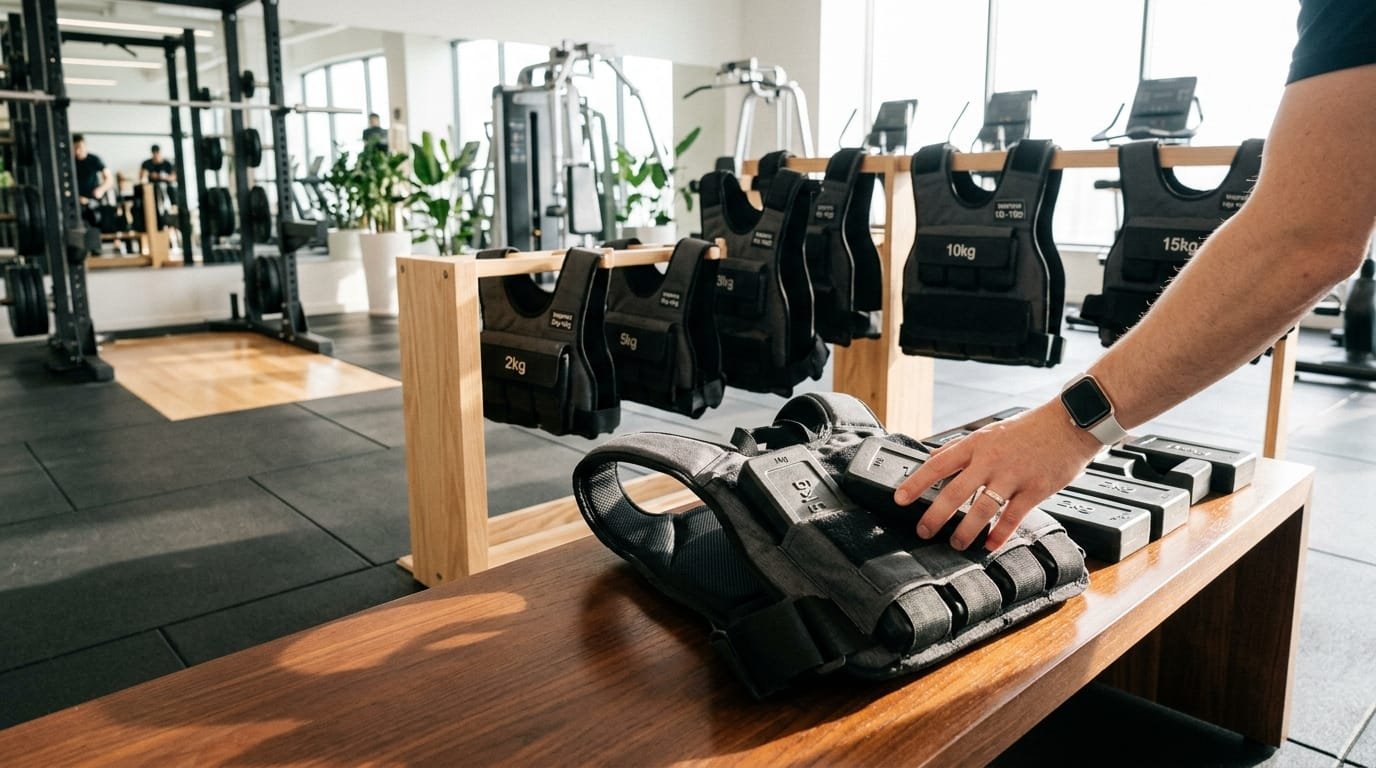
- Select a vest that allows small incremental loading within that range.
- Prioritise fit: the vest should sit securely on the torso without restricting breathing or digging into the shoulders.
- Begin with the lowest effective load for short sessions (15–25 minutes).
- Focus on controlled tempo and full range of motion.
- Record how the session felt (form, breathing, joint comfort, recovery).
- Increase volume before load for the first several weeks.
- Add weight only when the current load feels clearly manageable.
- Reassess every 3–4 weeks and adjust based on progress and recovery.
Vest Design Features That Matter for Beginners
- Adjustable weight in small increments
- Secure, non-shifting fit
- Even weight distribution (front and back)
- Breathable materials
- Easy on/off design
- Durable plate or sand compartments that do not leak or rattle excessively
A vest that fits poorly will make even a light load feel uncomfortable and increase the chance of compensatory movement.
Common Beginner Mistakes with Weighted Vests
| Mistake | Consequence | Better Approach |
|---|---|---|
| Starting at 15–20% of bodyweight | Form breakdown, excessive fatigue, joint stress | Begin at 5–10% |
| Adding the vest before bodyweight mastery | Reinforced poor patterns | Earn the load with clean bodyweight technique |
| Jumping up in large weight increments | Sudden spike in recovery demand | Progress 2–4 kg at a time |
| Using the vest for high-impact work too soon | Higher injury risk | Stay with low-impact patterns initially |
| Ignoring fit | Shifting load and discomfort | Choose and adjust for secure torso placement |
| Training to failure in every session | Accumulated fatigue and stalled progress | Leave 1–3 repetitions in reserve |
Safety and Recovery Considerations
Weighted vests increase axial loading. Beginners should pay attention to:
- Spinal neutrality during squats and hinges
- Shoulder position during upper-body work
- Gradual volume progression
- Adequate protein intake and sleep
- Joint comfort signals (distinguish muscle fatigue from joint pain)
If any joint pain appears, reduce the load or return to bodyweight versions until symptoms resolve. Strength training with appropriate progressive loading remains one of the most effective ways to build muscle, bone, and resilience (strength training guidance). Practical home-gym approaches favour conservative, sustainable progression over aggressive loading (home gym equipment prioritisation and budget home gym principles).
How Weighted Vests Fit into a Broader Beginner Programme
A vest works best as a supplement rather than the centrepiece of training. Combine it with:
- Basic bodyweight or dumbbell strength work
- Resistance band assistance or resistance
- Walking for recovery and additional low-level loading
- Mobility and technique practice
This keeps overall stress manageable while still providing progressive stimulus.
Frequently Asked Questions
Is a 20 lb vest too heavy for a complete beginner?
For many beginners, yes. It can work for larger individuals or those with a solid bodyweight training base, but most people do better starting lighter.
Can I start with a vest if I have never strength trained?
It is usually better to spend 2–4 weeks mastering bodyweight patterns first. The vest then becomes a clear progression rather than an early complication.
How often should beginners wear a weighted vest?
2–4 sessions per week is sufficient. Daily use is rarely necessary and can impede recovery when starting out.
Should the vest weight be the same for walking and for strength circuits?
Not necessarily. Many people use a lighter load for longer walks and a slightly heavier load for shorter strength sessions.
What if my vest only adjusts in large jumps?
Stay at the lower weight longer and progress through added repetitions, slower tempos, or more challenging exercise variations until the next plate is appropriate.
Are weighted vests safe for older beginners?
Yes when loading stays conservative, fit is good, and movements remain controlled. The added axial loading can even support bone health when progressed intelligently.
Do I need an expensive vest as a beginner?
No. A simple, well-fitting vest with incremental weight options is enough. Prioritise fit and adjustable loading over advanced features.
How long before I can move to heavier loads?
Most beginners can consider an increase after 3–6 weeks of consistent training with solid form and good recovery. Individual variation is large.
Final Recommendation
For beginners, the weighted vest weight that makes sense is almost always lighter than expected—typically 5–10% of bodyweight or 4–10 kg (10–20 lb). Master bodyweight movement quality first, choose a well-fitting vest, begin at the low end of the range, and progress in small steps only when technique and recovery allow.
A conservative starting load builds confidence, protects joints, and creates a clear runway for long-term progress. Pair the vest with solid fundamental patterns, adequate recovery, and patience. The result is sustainable overload rather than early frustration or setbacks.
Calculate 5–10% of your bodyweight, select a vest that allows that loading with good fit, and begin with short, controlled sessions. The right starting weight turns the vest into a useful long-term tool instead of a source of strain. Start light, stay consistent, and let progressive adaptation do the work.