How to Organize and Maintain a Home Gym So It Stays Usable
Quick Answer
Keep a home gym usable long-term by designing clear zones, assigning every item a fixed storage home, performing brief pre- and post-session habits, and following a simple monthly maintenance routine. Prioritise vertical and under-furniture storage, maintain open floor space for movement, wipe equipment after use, inspect for wear, and tighten connections regularly. When organization and maintenance become automatic, the gym remains inviting, safe, and ready for consistent training instead of turning into cluttered storage.
Why Organization and Maintenance Determine Long-Term Usability
A home gym that is difficult to navigate, visually chaotic, or unreliable quickly loses its appeal. Equipment left on the floor becomes a tripping hazard and a psychological barrier. Dust, sweat residue, and loose bolts reduce both safety and motivation. Conversely, a well-organized space with predictable maintenance habits stays functional for years, supports higher training adherence, and protects the financial investment in the equipment. Organization and maintenance are not separate chores—they are part of the training system.
Core Principles for a Permanently Usable Home Gym
- Every item has one fixed home – Eliminates decision fatigue and clutter.
- Open floor space is non-negotiable – Movement requires clear area.
- Vertical and under-furniture storage first – Floors stay free.
- Pre- and post-session habits are automatic – Inspection and wipe-down take minutes.
- Monthly maintenance prevents surprises – Bolts, bands, and moving parts are checked on schedule.
- Visual order supports consistency – A tidy space is easier to enter and use.
- Seasonal reviews catch slow problems – Humidity, wear, and layout drift are addressed before they escalate.
Organization Framework: Zones and Storage
| Zone | Purpose | Recommended Storage Solutions | Key Rule |
|---|---|---|---|
| Training floor | Actual exercise area | Keep permanently clear | Nothing lives here except during the session |
| Vertical storage | Bands, straps, light accessories | Wall hooks, pegboard, over-door organisers | Frequently used items at easy reach |
| Heavy storage | Dumbbells, kettlebells, plates | Rubber mats, low racks, under-bed containers | Stable and non-slip |
| Bench / rack area | Larger fixed or semi-fixed items | Designated footprint with clearance | Allow safe entry and exit |
| Consumables & tools | Bands, collars, cleaning supplies | Drawer, small bin, or wall pouch | Easy to access and inventory |
Shoulder-friendly technique and controlled training reduce unnecessary wear on equipment during use (Bent Arms vs. Straight Arms in Lateral Raises, The Hidden Mistake in Lateral Raises, and 3 Lateral Raise Modifications). Grip tools and other small accessories should also have assigned homes (Do Hand Grippers Really Work?).
Step-by-Step System to Organize and Maintain the Space
- Clear and measure the available area
Remove everything non-essential and note the true usable footprint. - Define the training zone
Mark or mentally designate the minimum clear floor space required for your main movements. - Assign every item a permanent home
Vertical storage for bands and straps, low stable storage for weights, and a specific place for the mat or bench. - Create a one- or two-trip deployment system
Everything needed for a session should move from storage to the floor quickly and return the same way. - Install pre-session inspection habits
Thirty seconds of visual and tactile checking before loading. - Install post-session wipe-down and reset
Clean high-touch surfaces and return every item to its home. - Schedule a monthly 10–15 minute maintenance block
Tighten bolts, inspect bands, test adjustable mechanisms, and check flooring. - Perform a seasonal deep review
Lift mats, check for moisture or rust, re-evaluate layout, and purge unused items. - Log issues and resolutions
A simple note prevents repeated problems. - Protect the system with household agreement
If others share the space, ensure they understand the “everything has a home” rule.
Daily and Session-Based Habits
Before Training
- Clear the training zone of any stray items
- Quick visual inspection of the equipment you will load
- Confirm bands have no fraying and locking mechanisms are secure
After Training
- Wipe handles, bench pads, and bar shafts
- Return every item to its assigned storage location
- Sweep or quick-vacuum the training floor if needed
These habits take 3–5 minutes total and keep the space continuously usable.
Monthly Maintenance Checklist
- Tighten all accessible bolts on benches, racks, and adjustable equipment
- Inspect resistance bands across their full length
- Test collars, adjustable dumbbell locks, and bench adjustment pins
- Check for early rust or moisture under mats and around metal equipment
- Verify that storage solutions remain stable and accessible
- Replace any consumable item showing clear wear
Seasonal / Quarterly Deep Maintenance
- Lift all flooring and clean underneath
- Full rust inspection and treatment if required
- Evaluate whether the current layout still matches how you train
- Purge equipment that has not been used in the previous 8–12 weeks
- Review humidity and temperature conditions (especially in garages or spare rooms)
- Update the organization system if new equipment has been added
Equipment-Specific Organization and Care Notes
Dumbbells and Kettlebells
Store on a low rack, rubber mat, or in a sturdy under-bed container. Wipe handles after use and check for loose heads or coating damage.
Resistance Bands
Hang on hooks or keep in a dedicated drawer. Inspect before every use and retire at the first significant sign of wear.
Barbells and Collars
Store horizontally on a rack or wall mounts when possible. Brush knurling periodically and confirm collars lock securely.
Benches and Racks
Keep a clear footprint around them. Tighten bolts monthly and confirm adjustable parts lock in every position used.
Mats and Flooring
Roll or stack neatly after sessions if the space is multi-use. Sweep regularly and lift periodically to prevent moisture buildup.
Small Accessories (grippers, straps, ab wheels, etc.)
Use a single bin, drawer, or wall pouch so they never scatter across the floor.
Common Organization and Maintenance Failures
| Failure | Result | Solution |
|---|---|---|
| No assigned homes for items | Permanent clutter and lost time | Label or photograph the correct storage layout |
| Training floor used as storage | Restricted movement and trip hazards | Strict “floor is only for training” rule |
| Skipping post-session reset | Gradual takeover of the space | Make reset part of the workout |
| Ignoring loose hardware | Unstable equipment under load | Monthly bolt check |
| Continuing with worn bands | Sudden failure risk | Inspect and replace proactively |
| Poor moisture control | Rust and mold | Improve airflow and dry storage |
| Adding equipment without storage planning | Rapid loss of usability | Solve storage before purchasing |
Layout Strategies for Different Spaces
Dedicated Spare Room
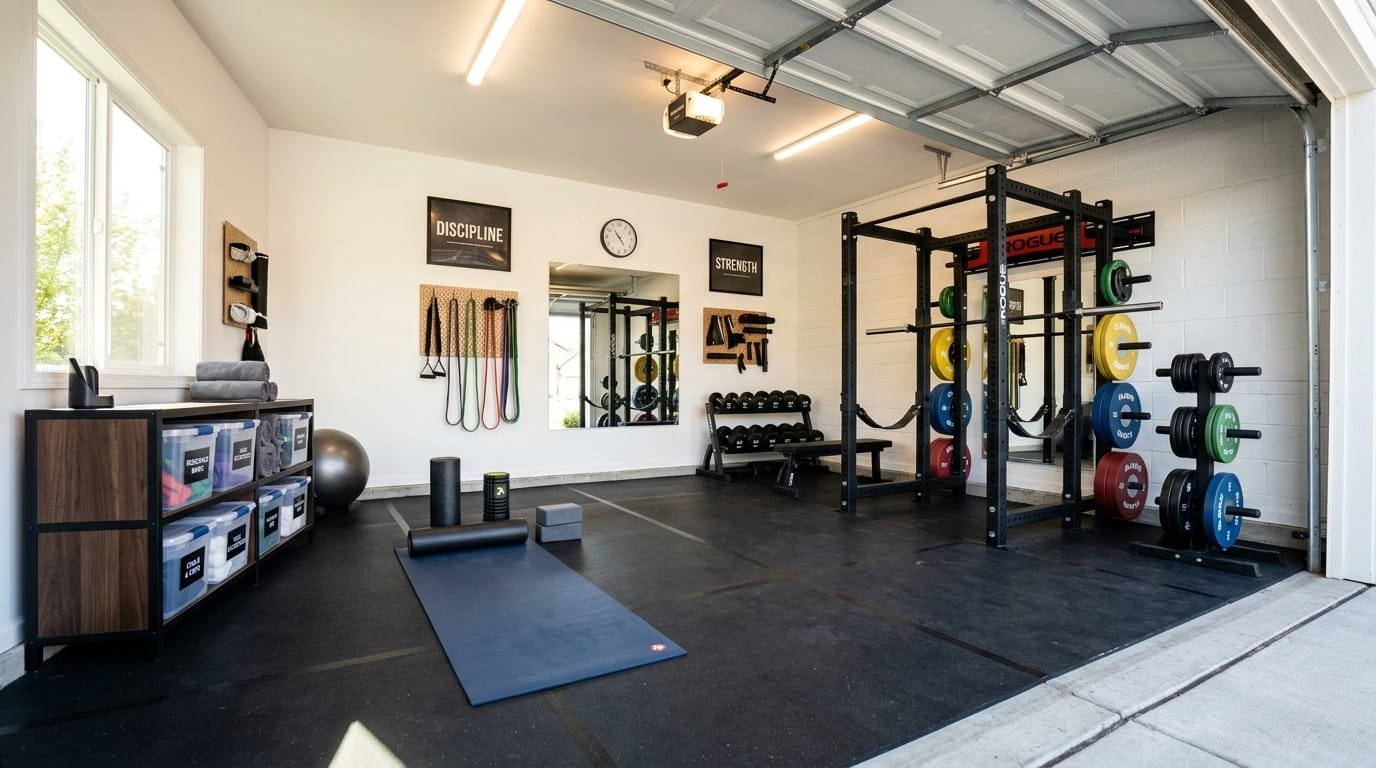
Create permanent zones with wall storage and a clear central training area. A mirror and good lighting improve both form and the feeling of order.
Garage
Prioritise moisture control and robust flooring. Use wall-mounted racks and keep a clear lane for movement. Seasonal temperature swings require more frequent rust checks.
Multi-Use Living Space or Studio
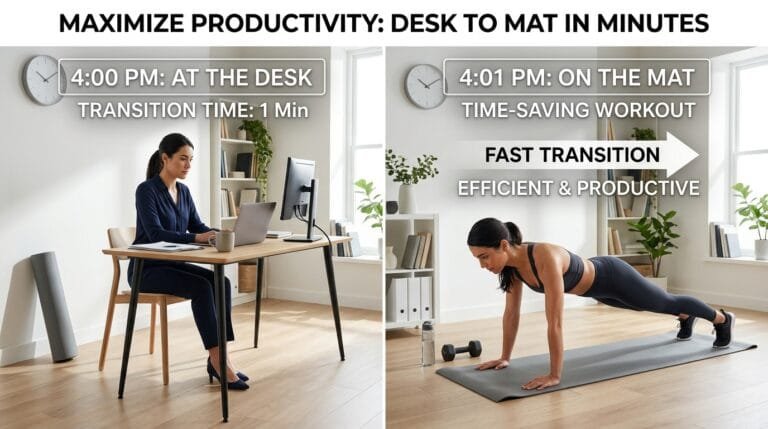
Emphasise fully storable equipment and a rapid deployment/teardown system. Everything should disappear into closets, under furniture, or vertical storage after each session.
Integrating Organization with Training Consistency
A usable gym lowers the activation energy required to start a session. When equipment is easy to access, the floor is clear, and the space looks orderly, training happens more often. Conversely, a chaotic or unreliable space increases friction and makes skipped sessions more likely. Organization and maintenance therefore directly support adherence and long-term results.
Strength training equipment remains effective and safe when the environment is deliberately managed (strength training guidance). Practical home-gym approaches emphasise systems that stay functional in real living conditions (home gym equipment prioritisation and budget home gym principles).
Frequently Asked Questions
How much time does ongoing organization and maintenance actually take?
Pre- and post-session habits require 3–5 minutes. A monthly maintenance block takes 10–15 minutes. Seasonal reviews take 30–60 minutes.
What is the highest-leverage organization rule?
Every item has one fixed home, and the training floor stays clear except during sessions.
How often should I deep-clean flooring?
Lift and clean underneath mats or tiles at least quarterly, or more often in humid environments.
What if I keep adding equipment?
Solve storage for the new item before it enters the space. If storage cannot be solved, the item will reduce usability.
Is a dedicated room necessary for long-term usability?
No. Multi-use spaces work well when equipment is fully storable and the reset habit is consistent.
How do I handle shared spaces with family or roommates?
Agree on the storage layout and the rule that everything returns to its home after training. Visual labels or a shared photo of the organised space help.
What is the most common reason home gyms become unusable?
Gradual clutter from items that never received an assigned storage location, combined with neglected maintenance.
Can I maintain a home gym with almost no tools?
Yes. A microfibre cloth, a basic set of Allen keys or sockets, and manufacturer-approved lubricant cover most needs.
Final Recommendation
A home gym stays usable when organization and maintenance are treated as permanent parts of the training system. Define clear zones, give every item a fixed home, keep the floor open, inspect before loading, wipe down after use, tighten connections monthly, and perform seasonal deep reviews. These habits require little time yet prevent the clutter, unreliability, and safety issues that cause most home gyms to decline.
Clear your training floor today, assign storage locations to every item, and perform a full inspection. Install the pre- and post-session habits immediately and schedule the first monthly maintenance block. When the space remains orderly and the equipment remains trustworthy, training stays consistent and enjoyable for the long term. Start with the next session—the systems you build now determine whether the gym remains an asset or becomes a burden.