Smith Machine: Why Is It Called the “Smith Machine”? (The Surprising History & How to Use It Properly)
Quick answer: A Smith machine is a barbell fixed within two vertical steel rails, guiding the bar along a strictly straight (or slightly angled) path rather than allowing free movement in every direction. This added stability makes it safer to train without a spotter, but research shows it reduces muscle activation compared to free weights — particularly in stabilizing muscles — since your body doesn’t need to work as hard to control the bar’s path.
Researched and written by the GymGoodies team, fact-checked against manufacturer specs and current fitness guidance.
Nearly every commercial gym has one — a barbell that seems to float along two vertical rails, hooking into place at various heights. If you’ve wondered exactly what a Smith machine offers compared to a standard barbell, here’s a complete, evidence-based breakdown.
What a Smith Machine Actually Is
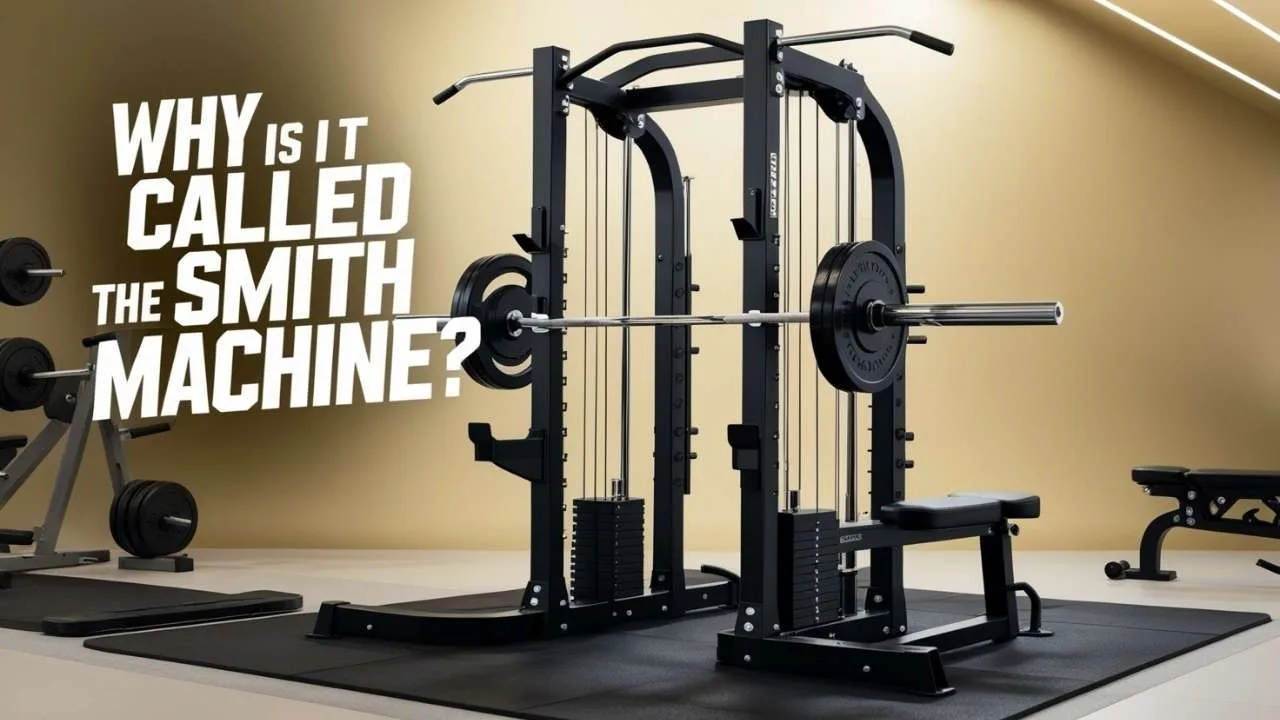
A Smith machine consists of a barbell attached to (or running within) two parallel vertical rails, constraining the bar to move only along a fixed vertical or slightly angled path. Small hooks or catches along the rails let you lock the bar in place at any point in the range of motion, functioning as a built-in safety mechanism — you can rack the weight at any height without needing a spotter, which is one of the machine’s most practical advantages.
The Core Mechanical Difference From Free Weights
With a free barbell, your body has to stabilize the weight in every direction simultaneously — forward/backward, side to side, and through the vertical lifting path itself. A Smith machine removes the need for that lateral and rotational stabilization, since the rails do that job for you. This is the central tradeoff behind everything else about how Smith machines perform compared to free weights.
What the Research Actually Shows
A well-known study published in the Journal of Strength and Conditioning Research directly compared EMG muscle activation during free weight squats versus Smith machine squats, using the same relative intensity (8-rep max) for both conditions. The results were substantial: muscle activation was significantly higher during the free weight squat, specifically by 49% in the vastus medialis (inner quad), 34% in the gastrocnemius (calf), and 26% in the biceps femoris (hamstring) compared to the Smith machine version. Averaged across all measured muscles, free weight squats produced roughly 43% higher overall EMG activity than Smith machine squats.
Similar research comparing free weight and Smith machine bench press has found the same general pattern — free weights consistently produce greater activation in prime movers and stabilizing muscles alike, attributed directly to the increased demand for the body to control an unstable load.
Why This Doesn’t Necessarily Mean the Smith Machine Is “Bad”
It’s worth being careful about the conclusion here — lower EMG activation doesn’t automatically mean a Smith machine is an inferior tool across the board; it means the exercises are training somewhat different things. Some research examining actual strength outcomes over a training program (rather than just single-session EMG) has found both free weight and Smith machine training can produce comparable muscle architecture adaptations, even when the underlying EMG and movement mechanics differ meaningfully. The right tool depends heavily on your specific goal.
When a Smith Machine Genuinely Makes Sense
- Training without a spotter — the built-in safety catches let you push closer to failure on presses and squats without needing another person present, since you can simply hook the bar back into the rails if you fail a rep.
- Isolating a specific muscle group — since the machine removes the stabilization demand, you can potentially focus more directly on the prime mover you’re targeting, which some lifters use deliberately for accessory or isolation-style work.
- Beginners building initial confidence and technique — the fixed path can reduce some of the coordination demands of a completely free barbell, making it a reasonable stepping stone for some new lifters, though this shouldn’t fully replace learning proper free-weight technique long-term.
- Rehab or return-to-training phases — the added stability and safety features can be genuinely useful when working back up to heavier loads after time away or during recovery from an injury, ideally with professional guidance.
When Free Weights Are Likely the Better Choice
- If your goal includes building stabilizing muscle strength, not just the primary movers — since the research consistently shows free weights demand significantly more from these muscles.
- If you’re training for a sport or activity that requires real-world stability and coordination — the carryover from a fixed-path machine to genuinely unstable, real-world movement patterns is more limited than training with free weights.
- If you’re an experienced lifter working toward a true, unassisted barbell squat, deadlift, or bench press — since the Smith machine’s fixed path is mechanically different from an unassisted barbell, heavy reliance on it alone may not fully prepare you for free-weight technique demands. Our Barbell Basics for Beginners guide covers building this foundation with free weights directly.
A Balanced, Practical Approach
Rather than treating this as an either/or decision, many well-rounded programs use both intentionally:
- Prioritize free weights for your primary compound lifts (squat, deadlift, bench press, overhead press) where building genuine strength and stability matters most.
- Use the Smith machine selectively — for safely training close to failure without a spotter, for specific isolation work, or during phases where the added stability genuinely serves your current goal (like early rehab).
- Don’t rely on the Smith machine exclusively if your long-term goal includes free-weight strength and stability, since the research is fairly clear that the two aren’t training identical qualities.
How This Connects to Functional Lower-Body Training
The squat pattern, whether performed with free weights or a Smith machine, directly trains muscles relevant to everyday function — our guide on the muscles used for sitting and standing covers why this movement pattern matters beyond the gym. If building genuine functional strength and stability is part of your goal (not just muscle size), that’s a real point in favor of prioritizing free weights, given the stabilization demands they add that a Smith machine removes. Similarly, our guide on hip thrusts vs. squats for glute development covers another example of how exercise selection — and the stability demands involved — affects your specific training outcome.
Common Mistakes When Using a Smith Machine
- Using it exclusively and never training free weights, missing out on the stabilizer strength and real-world carryover free weights provide.
- Assuming identical form to a free-weight squat — because the bar path is fixed, your foot positioning and body angle often need to be adjusted relative to a standard free-weight squat setup to move naturally within the machine’s fixed rail path.
- Loading up excessively simply because the machine feels more stable — the added stability doesn’t eliminate other injury risks from poor form or excessive load, and safety catches are a backup, not a substitute for reasonable weight selection.
- Never progressing to free weights if free-weight strength is genuinely part of your goals, treating the Smith machine as a permanent substitute rather than one tool among several.
Frequently Asked Questions
Is a Smith machine squat “cheating” compared to a free weight squat?
Not exactly “cheating,” but it is training somewhat different qualities — research shows meaningfully lower muscle activation, particularly in stabilizing muscles, so it’s a genuinely different exercise rather than a direct equivalent.
Can beginners start with Smith machine squats before progressing to free weights?
This can be a reasonable stepping stone for some beginners, but shouldn’t fully replace learning free-weight technique if free-weight strength is an eventual goal, since the mechanics and stabilization demands differ meaningfully.
Is it safer to train alone on a Smith machine than with free weights?
Generally yes, for pushing close to failure specifically — the built-in safety catches reduce the risk of being trapped under a failed rep without a spotter present, which is one of the machine’s most practical genuine advantages.
Bottom Line
A Smith machine offers real practical advantages — primarily safety and the ability to train close to failure without a spotter — but research consistently shows it produces meaningfully lower muscle activation than free weights, particularly for stabilizing muscles, since the fixed rail path removes much of the stabilization demand your body would otherwise handle. It’s a genuinely useful tool for specific purposes, but shouldn’t fully replace free-weight training if building comprehensive strength and stability is part of your goal.
Do you use a Smith machine as part of your regular training, or stick primarily to free weights? Let us know in the comments what’s worked for your goals.