How Grip Strength Training Helps with Daily Tasks and Healthy Aging
Quick Answer
Grip strength training improves the ability to perform everyday tasks such as opening jars, carrying groceries, holding handrails, and maintaining independence, while also serving as a marker and modifiable factor in healthy aging. Progressive grip work—using grippers, towel holds, farmer carries, and thick-bar or band variations—increases hand, forearm, and supporting musculature strength. Two to four short weekly sessions, integrated into existing training or performed separately, produce measurable gains that transfer to daily function and support long-term physical resilience.
Why Grip Strength Matters Beyond the Gym
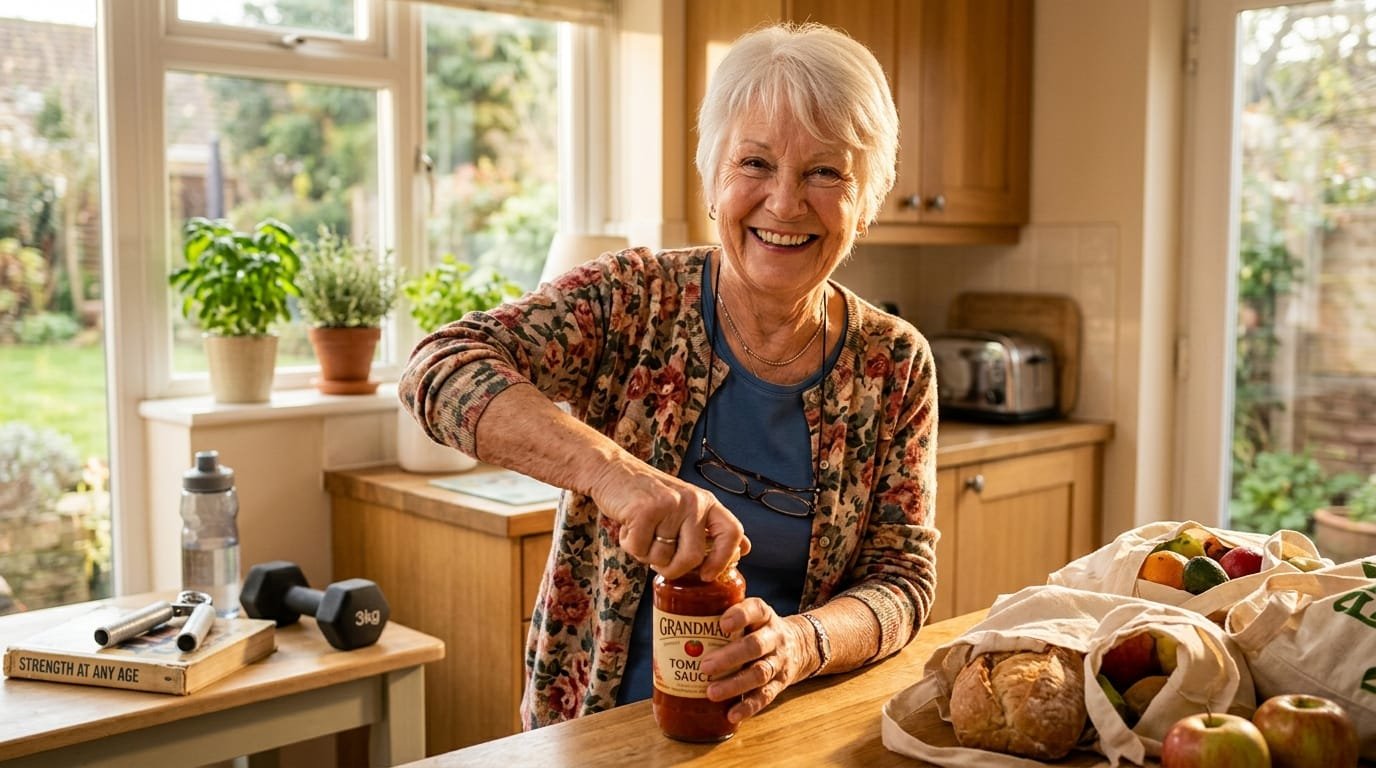
Grip strength is one of the most practical and well-researched expressions of overall physical capacity. It correlates with the ability to perform activities of daily living, reduces risk of functional decline, and has been linked in large observational studies to broader health outcomes in aging populations. Unlike many isolated gym metrics, grip strength is used constantly in real life: holding shopping bags, turning door handles, carrying children or grandchildren, opening packaging, and stabilising the body during balance challenges. When grip declines, these tasks become harder, slower, or unsafe. Targeted training reverses or slows that decline.
Grip Strength as a Marker of Healthy Aging
Research consistently shows that higher grip strength in mid- and later life is associated with better mobility, lower fall risk, and greater independence. Age-related losses in muscle mass and strength (sarcopenia) affect the hands and forearms as well as larger muscle groups. The good news is that the hands respond to progressive resistance across the lifespan. Studies in older adults have demonstrated that structured grip-training programmes produce meaningful strength improvements even in people well beyond age 70 or 80. Maintaining grip capacity is therefore both a functional goal and a contributing factor to broader physical resilience.
Daily Tasks Improved by Stronger Grip
| Daily Task | How Grip Strength Helps | Training Carry-Over |
|---|---|---|
| Opening jars and bottles | Higher crushing and supporting force | Grippers, towel wringing |
| Carrying groceries or luggage | Sustained isometric strength and endurance | Farmer carries, suitcase carries |
| Holding handrails or supports | Secure grip under body-weight load | Dead hangs, towel hangs |
| Gardening and household tools | Crushing, pinching, and wrist stability | Pinch holds, wrist rollers |
| Opening doors or packages | Functional crushing and twisting strength | Grippers, band rotations |
| Catching or stabilising objects | Reactive grip and forearm control | Ball catches, thick-object holds |
These tasks share common demands: crushing grip, supporting grip, pinch grip, and wrist stability. A well-rounded grip programme addresses all of them.
Types of Grip Strength and How to Train Them
Crushing Grip
The ability to close the hand against resistance (grippers, handshakes, closing a fist around an object).
Supporting Grip
The ability to hold onto something for time (farmer carries, dead hangs, suitcase carries).
Pinch Grip
Thumb and finger opposition (plate pinches, block holds).
Wrist and Forearm Strength
Extension, flexion, and rotational control that stabilise the hand under load.
A complete approach includes at least two of these qualities most weeks.
Practical Home Grip-Training Methods
| Method | Equipment Needed | Primary Quality | Progression |
|---|---|---|---|
| Hand grippers | Grippers of varying resistance | Crushing | Higher resistance, more reps, longer holds |
| Farmer / suitcase carries | Dumbbells, kettlebells, bags | Supporting | Heavier load, longer distance, slower pace |
| Dead hangs or towel hangs | Pull-up bar or towels | Supporting | Longer time, single arm, towel thickness |
| Plate or block pinches | Weight plates or wooden blocks | Pinch | Heavier weight, longer holds |
| Wrist curls and extensions | Light dumbbell or band | Wrist strength | Load, range, tempo |
| Band finger extensions | Light band | Finger balance | Higher tension, more reps |
These methods require minimal space and equipment, making them ideal for home training. Detailed guidance on gripper progression and benefits is available in Do Hand Grippers Really Work?.
Step-by-Step Grip Training Integration
- Assess current grip capacity with a simple test (maximum gripper closes, dead-hang time, or farmer-carry distance).
- Choose 2–3 methods that cover crushing and supporting qualities.
- Add grip work 2–4 times per week at the end of strength sessions or on separate short sessions.
- Begin with manageable volumes (2–4 sets per method) and controlled effort.
- Progress by increasing resistance, time, distance, or difficulty of the implement.
- Keep most work 1–3 repetitions or seconds short of failure to manage forearm fatigue.
- Include light finger-extension or wrist-extension work if elbows or forearms become irritated.
- Track performance on the chosen tests every 2–4 weeks.
- Deload grip volume when overall training fatigue is high.
- Maintain grip work year-round as a low-cost investment in daily function and aging resilience.
Sample Weekly Grip Plan (Home-Based)
Option A – Integrated with Strength Training
After main lifts, 2–3 times per week:
- Farmer or suitcase carries – 3 sets of 20–40 seconds
- Gripper work – 3 sets of 5–10 controlled closes
- Optional dead hang – 2 sets of max comfortable time
Option B – Stand-Alone Mini Sessions
On separate days or as a short evening routine:
- Grippers – 3–4 sets
- Pinch holds – 3 sets of 15–30 seconds
- Band finger extensions – 2 sets of 15–20
Total added time is usually 8–15 minutes per session.
Programming Guidelines for Different Goals
General Daily Function
Emphasise supporting grip (carries and hangs) and moderate crushing work 2–3 times per week.
Healthy Aging Focus
Include all grip types at moderate intensity, prioritise consistency over high intensity, and pair with overall strength training and balance work.
Performance or Climbing/Grip-Intensive Sports
Higher frequency and more specialised work, still balanced with recovery and finger-extension training.
Shoulder and upper-back health support lasting grip capacity by maintaining stable posture and scapular control during loaded carries and hangs (Bent Arms vs. Straight Arms in Lateral Raises, The Hidden Mistake in Lateral Raises, and 3 Lateral Raise Modifications).
Recovery and Injury Prevention for Grip Training
Forearms and elbows can become irritated if volume jumps too quickly. Preventive practices include:
- Gradual progression of resistance and volume
- Light wrist and finger-extension work
- Avoiding constant training to failure
- Deloading grip work during high overall fatigue periods
- Ensuring adequate protein and sleep for tissue repair
If medial or lateral elbow discomfort appears, reduce crushing volume and emphasise supporting grips and extension work until symptoms resolve.
Common Mistakes in Grip Training
| Mistake | Result | Better Approach |
|---|---|---|
| Only training crushing grip | Imbalanced development | Include supporting and pinch work |
| Too much volume too soon | Elbow or forearm irritation | Start low and progress gradually |
| Neglecting finger extensors | Muscle imbalance | Add light band extensions |
| Inconsistent practice | Minimal functional transfer | 2–4 short sessions most weeks |
| Treating grip as warm-up only | Limited strength gains | Dedicated progressive sets |
| Ignoring overall strength training | Missed systemic benefits | Combine grip work with full-body strength |
Strength training that includes grip work remains one of the most effective ways to support long-term function and resilience (strength training guidance). Practical home-gym approaches emphasise simple, sustainable tools that deliver measurable daily-life benefits (home gym equipment prioritisation and budget home gym principles).
Frequently Asked Questions
How quickly can I expect grip strength to improve?
Noticeable gains often appear within 3–6 weeks of consistent progressive training. Functional changes in daily tasks may follow shortly after.
Is grip strength really linked to healthy aging?
Yes. Large observational studies consistently associate higher grip strength with better mobility, lower disability risk, and other positive health markers in older adults. Training can improve the quality itself.
Do I need specialised grippers?
Useful but not essential. Carries, hangs, towel holds, and household objects can produce excellent results. Grippers simply make progressive crushing work more convenient.
Can older adults train grip safely?
Yes. Start with lighter resistances, higher control, and moderate volumes. Many studies show meaningful improvements in older populations.
How does grip training affect elbow health?
When progressed gradually and balanced with extension work, it is usually beneficial. Rapid volume increases can irritate the elbows; early reduction of load solves most issues.
Should grip work come before or after main strength training?
After is better for most people so that grip fatigue does not limit pulling or carrying performance in the main session.
Is one type of grip training enough?
A combination of crushing and supporting work covers most daily needs. Adding pinch and wrist work makes the programme more complete.
Can I train grip every day?
Possible at low intensity, but most people progress well on 2–4 focused sessions per week with recovery between harder efforts.
Final Recommendation
Grip strength training is one of the highest-return additions to any home programme aimed at daily function and healthy aging. It improves the ability to carry, open, hold, and stabilise in everyday life, while also serving as a modifiable factor linked to broader physical resilience. Use a mix of crushing tools (grippers or equivalents) and supporting methods (carries and hangs), train them progressively 2–4 times per week, and keep total time short.
Assess your current grip capacity today, choose two methods that cover crushing and supporting qualities, and add them to the end of your next two strength sessions. Track simple performance markers every few weeks and maintain the work year-round. Strong hands support independent living and confident movement at every age—start building them now with the tools you already have.