Glute and Posterior Chain Development with Minimal Equipment
Quick Answer
Develop the glutes and posterior chain with minimal equipment by prioritising hip-hinge and bridge patterns, single-leg variations, and progressive overload through tempo, range, pauses, and unilateral loading. Effective home tools include resistance bands, a single pair of dumbbells or one kettlebell, and bodyweight. Train the posterior chain 2–4 times per week with controlled technique, full pain-free ranges, and systematic progression. Consistency and progressive tension produce stronger, more resilient glutes and hamstrings without a full gym.
Why the Posterior Chain Matters
The posterior chain—primarily the glutes, hamstrings, and supporting erector spinae—drives hip extension, supports posture, protects the lower back, and contributes to athletic performance and daily function. Weak or under-active glutes are common after prolonged sitting and can lead to lower-back discomfort, knee stress, and reduced power. Targeted training with progressive resistance restores strength, improves muscle balance, and enhances both aesthetics and function. Minimal equipment is more than sufficient when exercise selection and progression are intelligent.
Core Principles for Minimal-Equipment Posterior Chain Training
- Hip extension is the priority – Movements that train the glutes and hamstrings to extend the hips produce the largest stimulus.
- Progressive overload remains essential – Add tension through load, tempo, pauses, range, or unilateral work.
- Full pain-free range and control – Quality of movement determines both safety and results.
- Frequency over occasional high volume – 2–4 sessions per week outperform rare exhaustive workouts.
- Balance with the rest of the body – Posterior chain work pairs with squats, pushes, and pulls for complete development.
- Recovery supports growth – Sleep and protein intake determine how well the muscles adapt.
High-Value Exercises with Minimal Equipment
| Exercise | Primary Target | Equipment Needed | Progression Options | Notes |
|---|---|---|---|---|
| Glute Bridge | Glutes | Bodyweight or band | Single-leg, feet elevated, pause, band resistance | Excellent starting point |
| Hip Thrust | Glutes | Bodyweight, dumbbell, or band | Single-leg, paused, loaded | Higher range of hip extension |
| Romanian Deadlift (RDL) | Hamstrings & glutes | Dumbbells or kettlebell | Single-leg, slower eccentric, deficit | Joint-friendly hinge |
| Single-Leg RDL | Hamstrings, glutes, balance | Bodyweight or light load | Tempo, reach distance, load | High stability demand |
| Reverse Lunge or Bulgarian Split Squat | Glutes & quads | Bodyweight or dumbbells | Front-foot elevated, tempo, load | Strong glute bias when torso leans slightly forward |
| Kickbacks or Banded Hip Extensions | Glutes | Band | Higher tension, pause, tempo | Useful isolation finisher |
| Back Extension (floor or elevated) | Erectors & glutes | Bodyweight | Weighted, paused, single-leg | Controlled range only |
| Kettlebell Swing (if available) | Posterior chain power | Kettlebell | Higher volume or load | Hip-hinge pattern under dynamic conditions |
Shoulder and upper-back health support overall training capacity and posture during hinges and carries (Bent Arms vs. Straight Arms in Lateral Raises, The Hidden Mistake in Lateral Raises, and 3 Lateral Raise Modifications). Grip strength aids loaded carries and hinge variations (Do Hand Grippers Really Work?).
Step-by-Step Program Design for Glute and Posterior Chain Focus
- Select 3–5 posterior chain exercises
Include at least one bridge/thrust pattern and one hinge pattern. - Choose equipment you already have or can store easily
Bands, one pair of dumbbells, or a single kettlebell are sufficient. - Train the posterior chain 2–4 times per week
Full-body sessions or lower-body emphasis both work. - Use 2–4 sets of 8–15 repetitions
Leave 1–3 repetitions in reserve on most sets. - Emphasise controlled eccentrics
A 3-second lowering phase increases tension and improves control. - Progress one variable at a time
Add reps, slow the tempo, add a pause, move to single-leg, or increase load. - Pair with complementary movements
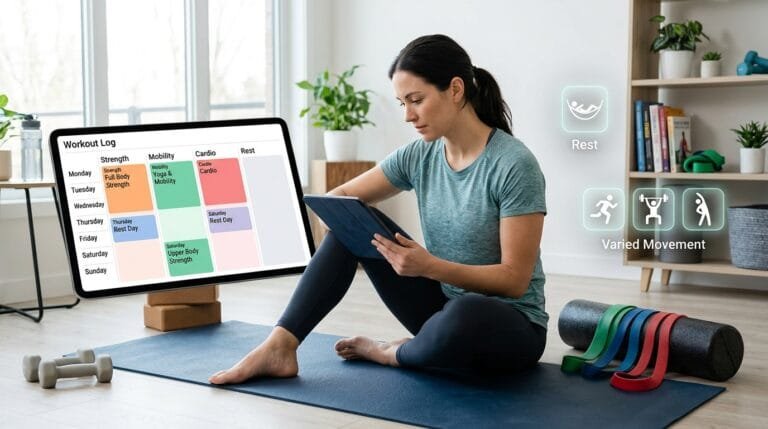
Include a squat or lunge pattern, a push, and a pull for balance. - Track performance
Log exercises, sets, reps, and how the muscles felt. - Recover adequately
Prioritise sleep and protein intake. - Reassess every 4–6 weeks
Adjust volume or exercise selection based on progress.
Sample Minimal-Equipment Workouts
Session A – Bridge and Hinge Focus
- Glute bridge or hip thrust – 3 × 10–15
- Romanian deadlift – 3 × 8–12
- Reverse lunge – 3 × 8–12 per leg
- Band pull-apart or single-arm row – 3 × 12–15
- Optional: banded kickbacks – 2 × 12–15 per side
Session B – Unilateral and Stability Emphasis
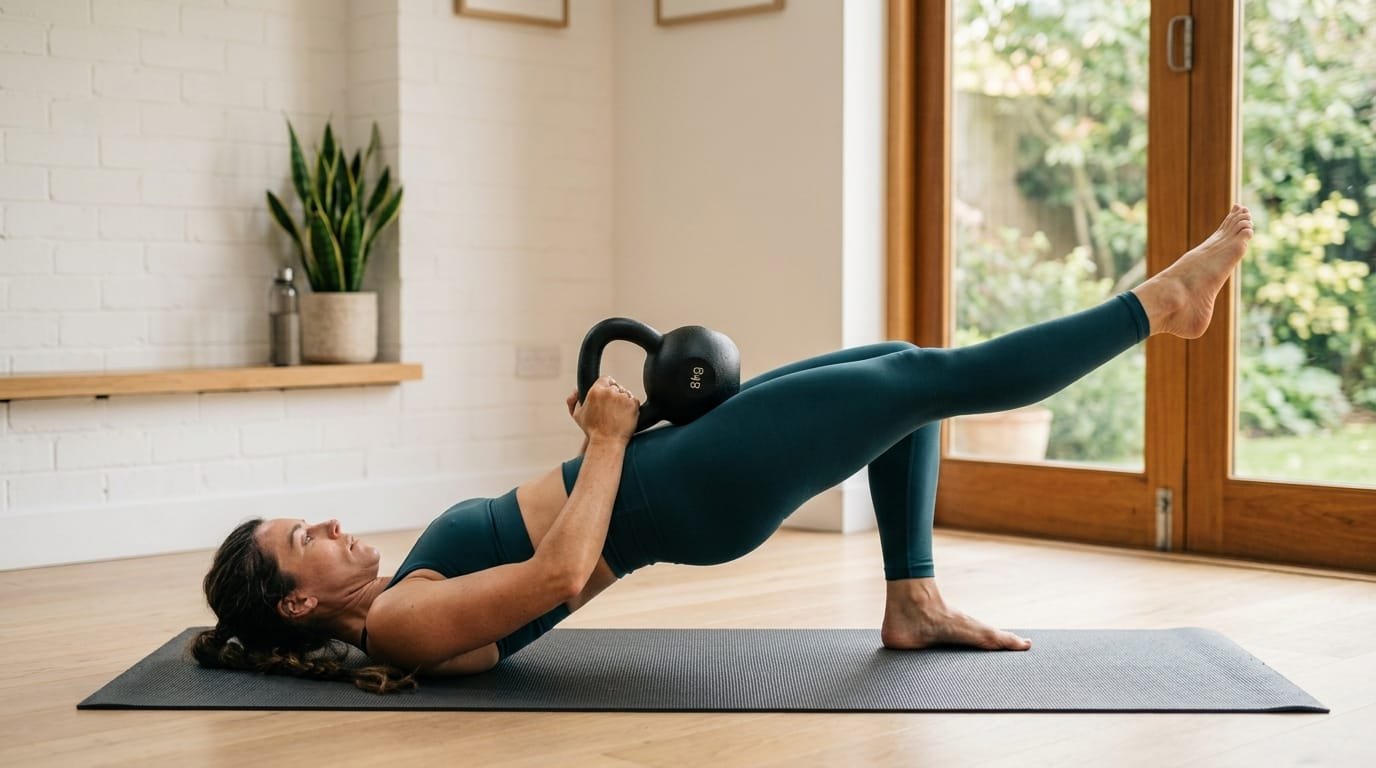
- Single-leg glute bridge – 3 × 8–12 per side
- Single-leg RDL – 3 × 8–12 per side
- Bulgarian split squat or step-back lunge – 3 × 8–12 per leg
- Inverted row or band row – 3 × 10–15
- Bird dog or dead bug – 2 × 6–8 per side
Rest as needed to maintain form. Total session time is typically 30–45 minutes.
Progressive Overload Methods Without a Full Gym
- Increase repetitions within the target range
- Slow the eccentric phase to 3–5 seconds
- Add a 1–3 second pause at peak contraction or the hardest point
- Move from bilateral to unilateral versions
- Elevate the feet or shoulders to increase range
- Add band resistance or hold a dumbbell/kettlebell
- Reduce rest periods once technique is solid (density method)
These methods allow months of continued progress with the same basic equipment.
Technique Cues for Maximum Glute and Hamstring Recruitment
Glute Bridge / Hip Thrust
- Drive through the heels
- Achieve full hip extension without over-arching the lower back
- Squeeze the glutes hard at the top
- Keep ribs down and pelvis neutral
Romanian Deadlift
- Hinge at the hips, not the waist
- Maintain a neutral spine
- Feel the stretch in the hamstrings
- Push the floor away to return to standing
Single-Leg Variations
- Keep the pelvis level
- Control the movement on both the lowering and lifting phases
- Use a light support for balance if needed while learning
Common Mistakes That Limit Posterior Chain Development
| Mistake | Result | Better Approach |
|---|---|---|
| Using only light band kickbacks | Insufficient progressive tension | Prioritise bridges, thrusts, and hinges |
| Rushing the eccentric | Reduced time under tension | Slow the lowering phase |
| Over-arching the lower back | Lumbar stress instead of glute loading | Keep ribs down, focus on hip extension |
| Neglecting single-leg work | Side-to-side imbalances remain | Include unilateral variations regularly |
| Inconsistent training | Limited cumulative stimulus | Train the patterns 2–4 times most weeks |
| No progression plan | Stagnation after initial gains | Apply one overload method systematically |
Equipment Options Ranked for Posterior Chain Focus
| Equipment | Effectiveness | Storage | Best Use |
|---|---|---|---|
| Resistance bands | High | Excellent | Bridges, kickbacks, assisted or resisted hinges |
| Dumbbells (one pair) | Very high | Good | RDLs, loaded bridges, lunges, carries |
| Single kettlebell | Very high | Good | Swings, goblet variations, RDLs, carries |
| Bodyweight only | High (with progression) | Perfect | Bridges, single-leg work, tempo and pause methods |
| Bench or sturdy chair | Medium–high | Conditional | Elevated hip thrusts, Bulgarian split squats |
Most trainees achieve excellent results with bands plus one form of external load (dumbbells or kettlebell).
Recovery and Supporting Habits
- Sleep 7–9 hours most nights
- Consume adequate protein (approximately 1.6–2.2 g per kg of body weight)
- Include daily walking for blood flow and recovery
- Manage overall training volume so posterior chain work can recover
- Deload every 4–8 weeks by reducing sets
Strength training with progressive compound movements remains highly effective for building muscle and strength (strength training guidance). Practical home-gym approaches emphasise minimal effective equipment and sustainable progression (home gym equipment prioritisation and budget home gym principles).
Frequently Asked Questions
How often should I train glutes and the posterior chain?
Two to four times per week is effective for most people. Frequency can be higher if volume per session stays moderate.
Can I grow my glutes with only bodyweight?
Yes, especially as a beginner or intermediate, by using tempo, pauses, single-leg variations, and elevated positions. External load eventually becomes helpful for continued progress.
Are hip thrusts better than glute bridges?
Hip thrusts generally allow a larger range of motion and easier loading. Glute bridges are an excellent starting point and remain useful.
How important is the mind-muscle connection?
Useful for ensuring the glutes are the primary movers, especially in bridge and thrust variations. Pair it with progressive tension for best results.
What if I feel lower-back stress during hinges?
Reduce the range of motion, focus on hip hinge mechanics, brace the core, and consider starting with glute bridges until control improves.
Do I need to train hamstrings separately?
Hinge patterns (RDLs and single-leg RDLs) train the hamstrings effectively. Additional isolation is optional.
How long before I see visible or strength changes?
Strength and muscle activation improvements often appear within 3–6 weeks. Visible changes depend on consistency, progressive overload, and nutrition.
Can I combine this with running or other cardio?
Yes. Schedule posterior chain strength work on separate days or earlier in the day from hard running sessions, and monitor recovery.
Final Recommendation
Glute and posterior chain development with minimal equipment succeeds when hip-extension movements are trained progressively 2–4 times per week. Prioritise glute bridges or hip thrusts, Romanian deadlifts, single-leg variations, and controlled lunges. Apply overload through repetitions, tempo, pauses, unilateral work, or added resistance from bands, dumbbells, or a kettlebell. Maintain controlled technique and support the training with adequate sleep and protein.
Select 3–5 of the recommended exercises today, schedule two sessions this week, and begin with loads or variations you can control for 8–12 repetitions. Track your workouts and progress one variable at a time. When the posterior chain is trained this way, strength, muscle development, and functional resilience improve steadily without the need for a fully equipped gym. Start with the next session—the combination of smart exercise selection and consistent progressive tension delivers reliable results.