Single-Limb Training to Fix Strength Imbalances at Home
Quick Answer
Single-limb (unilateral) training fixes strength imbalances at home by forcing each side of the body to work independently, revealing and correcting differences in strength, stability, and control. Prioritise single-leg squats or split squats, single-leg Romanian deadlifts, single-arm rows, and single-arm presses. Train the weaker side first, match the stronger side’s volume without exceeding the weaker side’s capacity, and use controlled tempos. Consistent unilateral work reduces asymmetries, improves joint stability, and raises overall strength without requiring machines or bilateral-only equipment.
Why Strength Imbalances Develop and Why They Matter
Strength imbalances between left and right sides are extremely common. They arise from daily habits (dominant-side use), previous injuries, sport-specific patterns, or years of bilateral lifting that allows the stronger side to dominate. At home, where training is often self-coached, these asymmetries can quietly widen. Left unaddressed, they increase injury risk, limit performance on bilateral lifts, and create uneven muscle development. Single-limb training removes the ability of the stronger side to compensate, making imbalances visible and trainable.
Core Principles of Effective Unilateral Training
- Train the weaker side first – Start every unilateral exercise with the lagging limb while fresh.
- Match volume, do not exceed the weaker side – Perform the same number of quality repetitions on both sides; stop the stronger side when the weaker side is done.
- Prioritise control over load – Stability and full range matter more than heavy weight in the early stages.
- Use slow tempos and pauses – These increase demand and improve motor control without extra equipment.
- Integrate, do not isolate completely – Keep some bilateral work while emphasising unilateral variations.
- Track side-to-side differences – Log repetitions and perceived effort for each limb separately.
Bilateral vs Unilateral Training Comparison
| Aspect | Bilateral Training | Unilateral Training | Advantage for Imbalances |
|---|---|---|---|
| Load potential | Higher absolute loads | Lower absolute loads per limb | Unilateral reveals true side capacity |
| Stability demand | Moderate | High | Unilateral builds joint control |
| Compensation possible | Yes – stronger side dominates | Minimal | Unilateral forces equal work |
| Equipment needs | Often higher | Low (bodyweight, dumbbell, band) | Unilateral fits home constraints |
| Injury-risk reduction | Indirect | Direct | Unilateral addresses asymmetry |
| Time cost | Lower | Higher (each side trained) | Worth the investment for balance |
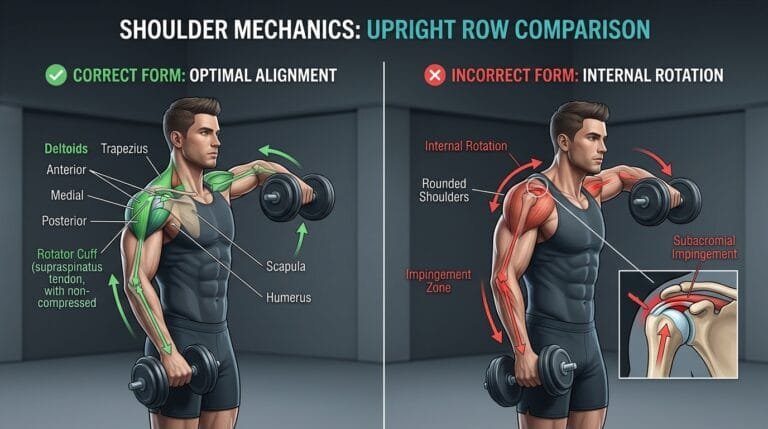
Shoulder-friendly technique supports balanced upper-body development when single-arm pressing and raising variations are used (Bent Arms vs. Straight Arms in Lateral Raises, The Hidden Mistake in Lateral Raises, and 3 Lateral Raise Modifications). Grip strength imbalances can also be addressed with unilateral carries and dedicated work (Do Hand Grippers Really Work?).
Step-by-Step System for Fixing Imbalances at Home
- Assess current asymmetries
Perform key unilateral movements and note differences in repetitions, range of motion, or stability between sides. - Select 3–5 primary unilateral exercises
Cover lower-body squat pattern, hinge pattern, upper-body push, and upper-body pull. - Always begin with the weaker side
This ensures the lagging limb receives full attention and sets the volume ceiling. - Match the stronger side to the weaker side
Do not perform extra repetitions on the stronger limb. - Use controlled tempos
A 3-second eccentric and optional pause improve control and increase stimulus. - Train unilateral patterns 2–4 times per week
Frequency helps close gaps faster than rare high-volume sessions. - Keep some bilateral work
Maintain overall strength while the unilateral emphasis corrects imbalances. - Track side-specific performance
Log reps, load, and notes for left and right separately. - Reassess every 4–6 weeks
Measure whether the gap in repetitions or control has narrowed. - Progress the weaker side deliberately
Once the gap narrows, both sides can advance together.
High-Value Unilateral Exercises for Home Training
Lower Body – Squat Pattern
- Rear-foot elevated split squat (Bulgarian split squat)
- Reverse lunge
- Step-up
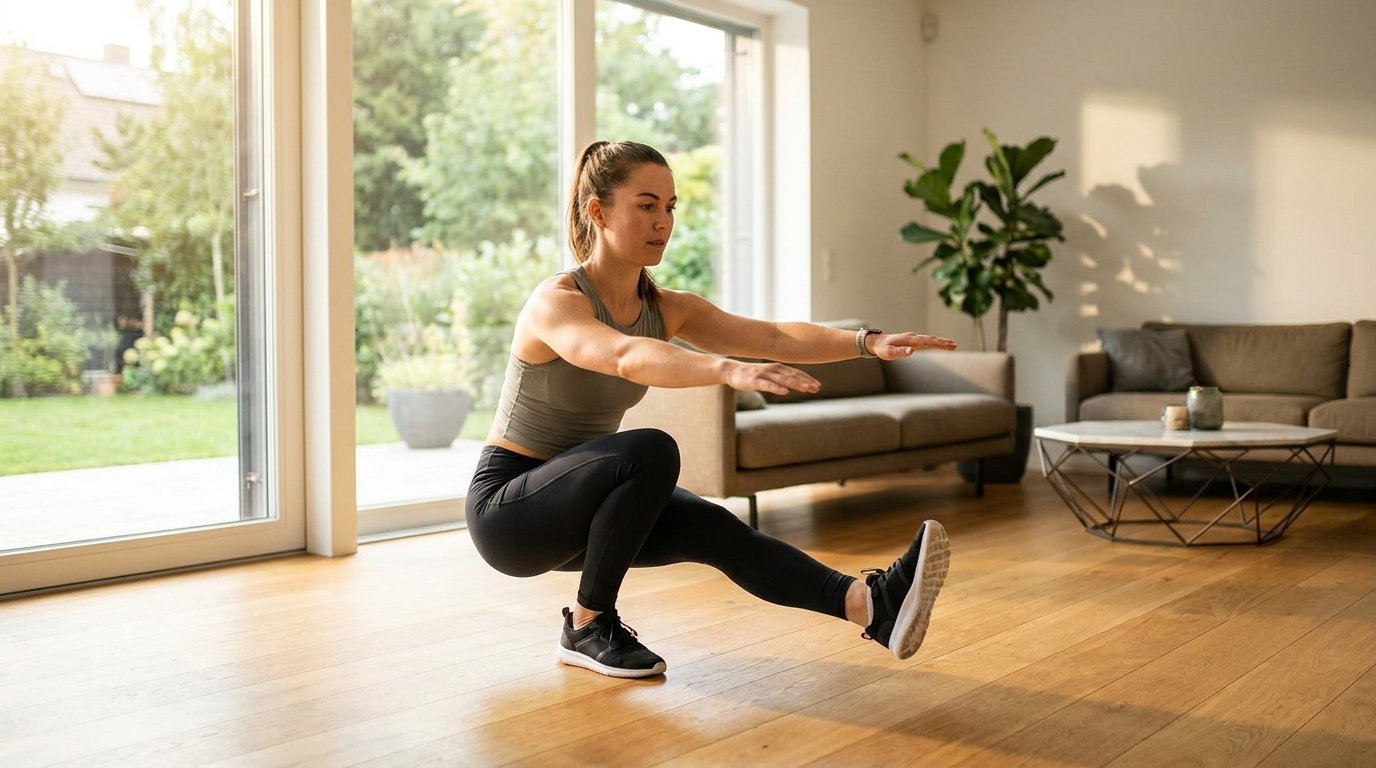
- Single-leg box squat or assisted pistol progression
Lower Body – Hinge Pattern
- Single-leg Romanian deadlift
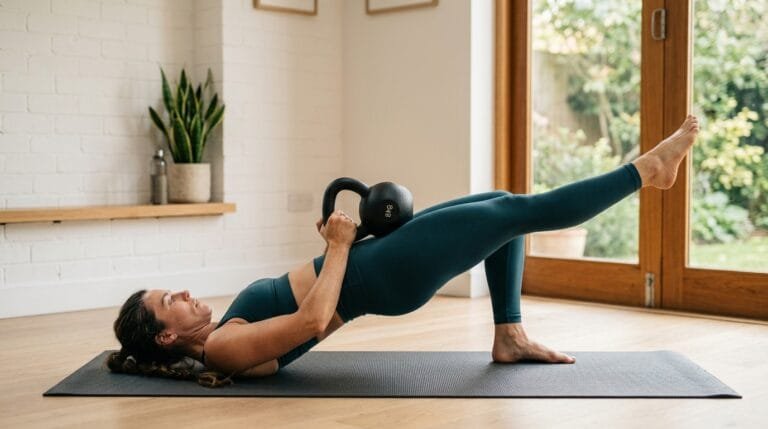
- Single-leg hip thrust or glute bridge
- Single-leg good morning (bodyweight or light load)
Upper Body – Push
- Single-arm floor press or dumbbell press
- Single-arm push-up progression
- Single-arm band or dumbbell overhead press
Upper Body – Pull
- Single-arm dumbbell or band row
- Single-arm inverted row variation
- Single-arm lat-style pulldown with band
Core and Carry
- Suitcase carry
- Single-arm farmer carry
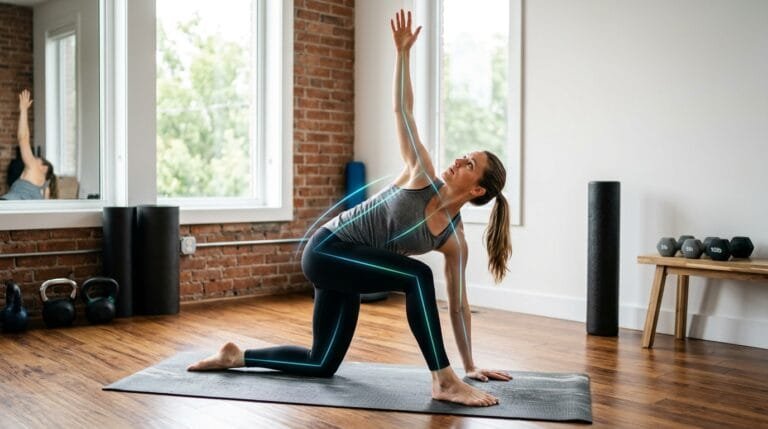
- Side plank variations
- Single-arm pallof press
Sample Unilateral-Focused Sessions
Session A – Lower-Body Emphasis
- Rear-foot elevated split squat – 3 × 6–10 per leg (weaker first)
- Single-leg Romanian deadlift – 3 × 6–10 per leg
- Single-leg glute bridge – 2–3 × 8–12 per leg
- Optional bilateral hinge or squat for overall strength
- Suitcase carry – 2 × 30–40 seconds per side
Session B – Upper-Body Emphasis
- Single-arm row – 3 × 8–12 per arm
- Single-arm floor press – 3 × 8–12 per arm
- Single-arm band face pull or reverse fly – 2–3 × 12–15
- Optional bilateral pull or push
- Side plank or single-arm carry – 2 sets per side
Rest as needed to maintain control. Always complete the weaker side first and match volume on the stronger side.
Progressive Overload for Unilateral Training
- Increase repetitions on the weaker side
- Slow the eccentric phase
- Add pauses at the hardest point
- Increase range of motion
- Add modest external load once control is solid
- Reduce assistance (for assisted single-leg variations)
- Improve density while keeping form perfect
Because each limb works independently, small improvements on the weaker side produce noticeable changes in overall balance.
Programming Guidelines for Imbalance Correction
- Dedicate 40–70 % of lower- and upper-body work to unilateral variations during a correction phase
- Keep total weekly volume manageable so recovery remains intact
- Use bilateral lifts as secondary movements rather than removing them entirely
- Expect the weaker side to feel more challenging for several weeks
- Be patient—meaningful reduction in asymmetry often takes 6–12 weeks of consistent work
Common Mistakes When Addressing Imbalances
| Mistake | Result | Better Approach |
|---|---|---|
| Training the stronger side harder | Widens the gap | Always match volume to the weaker side |
| Using too much load too soon | Form breakdown and compensation | Prioritise control and full range |
| Ignoring single-leg hinge work | Persistent posterior-chain asymmetry | Include single-leg RDLs or bridges regularly |
| No tracking of side differences | Invisible progress | Log left and right separately |
| Completely dropping bilateral lifts | Unnecessary strength loss | Keep some bilateral work |
| Inconsistent frequency | Slow correction | Train unilateral patterns 2–4 times weekly |
Equipment Needs for Effective Unilateral Training
Most imbalances can be addressed with:
- Bodyweight
- A single dumbbell or kettlebell
- Resistance bands
- A sturdy elevated surface for split squats or step-ups
No machines or bilateral-only equipment are required. This makes unilateral training especially practical for home gyms.
Strength training that includes unilateral work improves both performance and resilience (strength training guidance). Practical home-gym approaches emphasise methods that correct limitations without expanding equipment needs (home gym equipment prioritisation and budget home gym principles).
Frequently Asked Questions
How do I know which side is weaker?
Perform unilateral exercises and compare the number of controlled repetitions, range of motion, and stability. The side that fatigues first or shows less control is typically the weaker side.
Should I do extra sets on the weaker side?
In most cases, no. Matching volume and prioritising the weaker side first is sufficient. Extra volume on the weaker side can be used cautiously if recovery allows and the gap is large.
How long does it take to fix an imbalance?
Noticeable improvement often occurs within 6–12 weeks of consistent unilateral emphasis. Larger or long-standing imbalances may take longer.
Can unilateral training replace bilateral lifting?
It can form the majority of training during a correction phase, but keeping some bilateral work maintains overall strength and efficiency.
Is single-limb training safe for beginners?
Yes, provided progressions are appropriate. Begin with assisted or shorter-range variations and emphasise control.
What if one side still lags after several months?
Reassess technique, recovery, and whether the weaker side is truly being prioritised. Persistent gaps sometimes benefit from professional movement assessment.
Do I need to train unilaterally forever?
No. Once balance is improved, unilateral work can drop to a maintenance level (1–2 exercises per session) while bilateral lifts resume primary status.
Can imbalances cause pain?
Yes. Significant side-to-side differences can contribute to joint stress over time. Addressing them is both a performance and injury-prevention strategy.
Final Recommendation
Single-limb training is one of the most effective ways to fix strength imbalances at home. By forcing each side to work independently, prioritising the weaker limb, matching volume, and using controlled tempos, you reduce asymmetries and build more resilient, balanced strength. Integrate unilateral versions of squats, hinges, pushes, and pulls 2–4 times per week while keeping some bilateral work for overall capacity.
Assess your current side-to-side differences today, select 3–5 unilateral exercises, and begin the next session by training the weaker side first. Log performance separately for each limb and reassess after 4–6 weeks. When unilateral work is applied consistently, imbalances shrink and overall training quality rises—without any need for additional machines or equipment. Start with the next workout—the stronger, more balanced body you want is built one limb at a time.