How to Use Tempo and Pauses When You Can’t Add Weight
Quick Answer
When you can’t add weight, use tempo and pauses to create progressive overload by increasing time under tension, eliminating momentum, and raising control demands. Slow the eccentric phase to 3–5 seconds, add 1–3 second pauses at the hardest point of the lift, or combine both methods. Apply these techniques to the same exercises and loads you already use, track the new variables, and progress by lengthening the tempo or pause before needing heavier weights. These methods work with bodyweight, bands, dumbbells, and kettlebells.
Why Tempo and Pauses Work When Load Is Limited
Progressive overload requires the muscles to experience a greater demand over time. When additional weight is unavailable, the demand must come from other variables. Tempo (the speed of each phase of the repetition) and pauses (deliberate stops at specific points) increase mechanical tension and metabolic stress without changing the external load. A slower eccentric lengthens the time the muscle spends under tension. A pause removes the stretch-shortening cycle and forces the muscles to generate force from a dead stop. Both methods make the same weight significantly more challenging and stimulate continued adaptation.
Core Principles for Tempo and Pause Training
- Control is the stimulus – The slower and more deliberate the repetition, the higher the demand.
- Apply one change at a time – Isolate tempo or pauses so progress is measurable.
- Track the new variable – Log eccentric seconds and pause length just as you would log load.
- Maintain full range when possible – Tempo and pauses are most effective through a complete, controlled range of motion.
- Technique stays perfect – Slower reps reveal form breakdown; fix it rather than rushing.
- Progress systematically – Lengthen the tempo or pause before adding other forms of difficulty.
Tempo and Pause Methods Compared
| Method | How It Increases Demand | Best Application | Progression Path | Difficulty |
|---|---|---|---|---|
| Slow eccentric (3–5 sec) | Longer time under tension | Squats, hinges, push-ups, rows | 3 sec → 4 sec → 5 sec | Low |
| Pause at bottom / stretch position | Removes stretch reflex, raises positional strength | Squats, lunges, push-ups, Romanian deadlifts | 1 sec → 2 sec → 3 sec | Low–moderate |
| Pause at midpoint or lockout | Increases control and weak-point strength | Presses, rows, hinges | 1–2 sec holds | Low |
| Combined slow eccentric + pause | Highest tension per rep | Any compound movement | Increase either variable | Moderate |
| Slow concentric (less common) | Raises control demand on the lifting phase | Selected isolation or rehab contexts | Use sparingly | Moderate |
Shoulder-friendly technique is critical when applying tempo and pauses to upper-body lifts (Bent Arms vs. Straight Arms in Lateral Raises, The Hidden Mistake in Lateral Raises, and 3 Lateral Raise Modifications). Grip strength can also be trained with paused and slow-tempo holds (Do Hand Grippers Really Work?).
Step-by-Step System for Implementing Tempo and Pauses
- Identify the stalled exercises
Choose the movements where load can no longer increase. - Select one primary method
Start with either a slow eccentric or a single pause position. - Standardise the prescription
Example: 3-second eccentric or 2-second pause at the bottom. - Reduce volume slightly at first
Tempo and pause work is more fatiguing per repetition; 2–4 sets are often enough. - Log the tempo or pause length
Treat these numbers as the progressive variable. - Run the method for 3–6 weeks
Consistency allows adaptation to occur. - Progress the variable
Move from a 3-second to a 4-second eccentric, or from a 1-second to a 2-second pause. - Combine methods only after single methods are established
Slow eccentric plus pause is highly effective but more demanding. - Reassess load capability
After a cycle of tempo or pause work, the original load often feels easier and small increases may become possible again. - Rotate methods over time
Alternate tempo blocks and pause blocks to keep the stimulus fresh.
How to Apply Tempo and Pauses to Major Patterns
Squat Pattern
- 3–5 second lowering phase
- 1–3 second pause in the bottom position
- Maintain upright torso and controlled knee tracking
Hinge Pattern
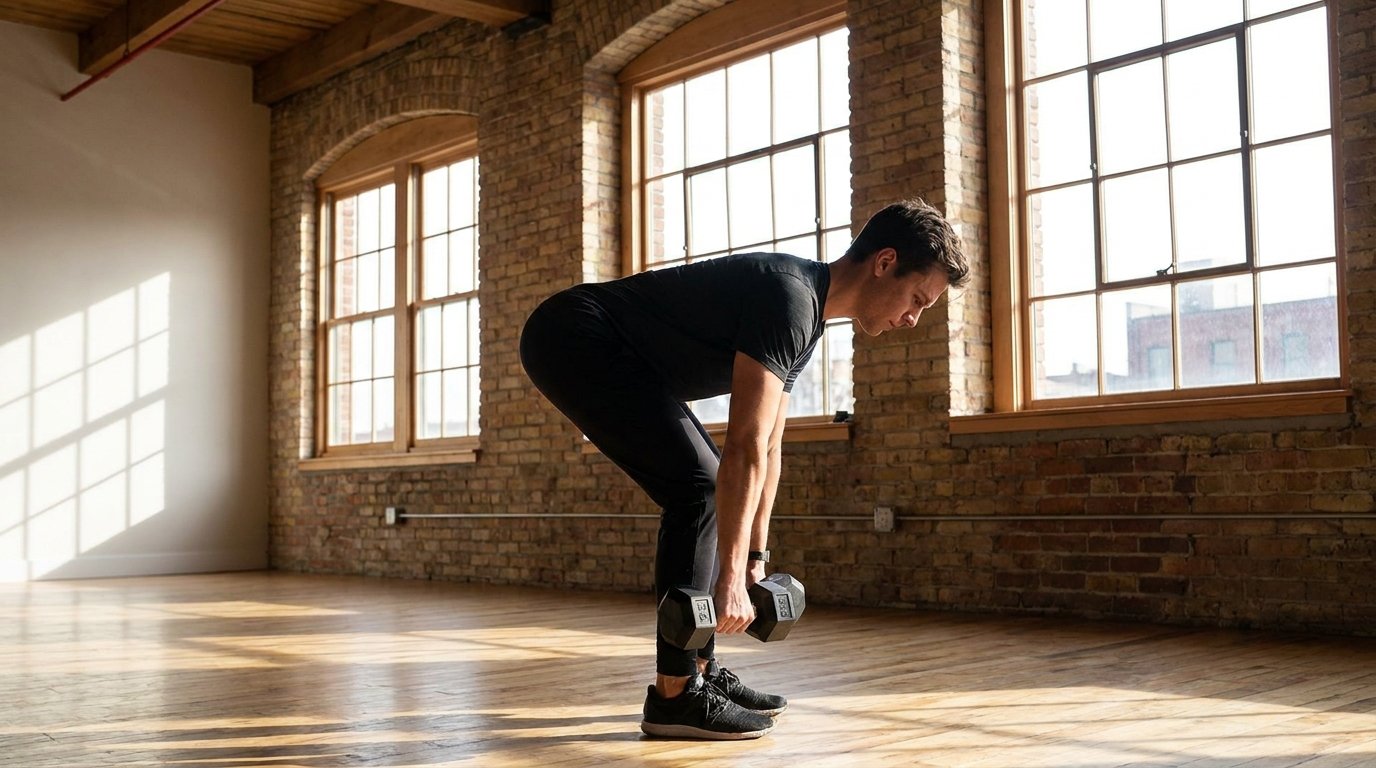
- Slow eccentric on Romanian deadlifts or good mornings
- Pause at the deepest controlled position while keeping a neutral spine
- Single-leg variations amplify the effect
Push Pattern
- 3-second lowering on push-ups or floor presses
- Pause just above the floor or at the chest
- Avoid bouncing or losing scapular control
Pull Pattern
- Slow eccentric on rows
- Pause at full scapular retraction
- Emphasise the contracted position without shrugging
Single-Leg and Unilateral Work
Tempo and pauses are especially potent here because the relative load is already higher. A paused split squat or slow single-leg Romanian deadlift creates substantial demand with light external load.
Sample Progressions
Goblet Squat Cycle
Weeks 1–3: 3-second eccentric, normal ascent
Weeks 4–6: 3-second eccentric + 2-second bottom pause
Then: Attempt a small load increase or move to a harder variation
Push-Up Cycle
Weeks 1–3: 3-second lowering
Weeks 4–6: 3-second lowering + 1–2 second pause at the bottom
Then: Elevate feet or move to archer progressions
Romanian Deadlift Cycle
Weeks 1–3: 4-second eccentric
Weeks 4–6: 3-second eccentric + 2-second pause at the deepest position
Then: Single-leg version or added load if available
Row Cycle
Weeks 1–3: 3-second eccentric with pause at contraction
Weeks 4–6: Longer pause or slower eccentric
Then: Single-arm focus or denser set structures
Programming Guidelines
- Use tempo and pause work on 1–3 exercises per session rather than every movement
- Keep total sets moderate (2–4 per exercise) because the fatigue cost per set is higher
- Rest long enough to maintain the prescribed tempo or pause quality
- Pair with normal-tempo work on other exercises if desired
- Deload every 4–8 weeks or when performance quality drops
Common Mistakes When Using Tempo and Pauses
| Mistake | Result | Better Approach |
|---|---|---|
| Rushing the prescribed tempo | Lost stimulus | Count seconds out loud or use a metronome app |
| Adding pauses while letting form break down | Injury risk and reduced effectiveness | Shorten the pause or reduce range until control is solid |
| Applying tempo to every exercise at once | Excessive fatigue | Limit to the main stalled movements |
| No tracking of tempo or pause length | Invisible progress | Log the seconds just like load |
| Progressing tempo too quickly | Form failure | Advance by only 1 second at a time |
| Neglecting recovery | Stalled progress or aches | Maintain sleep and overall volume control |
Combining Tempo and Pauses with Other Non-Load Methods
Once basic tempo and pause work is established, it can be layered with:
- Unilateral variations
- Increased range of motion
- Density (shorter rests between sets)
- Higher frequency on the targeted pattern
Change only one primary variable at a time so the effect remains clear.
Strength training continues to produce results as long as some form of progressive overload is present (strength training guidance). Practical home-gym approaches emphasise maximising existing equipment through intelligent programming (home gym equipment prioritisation and budget home gym principles).
Frequently Asked Questions
How slow should the eccentric phase be?
Three to five seconds is effective for most trainees. Longer than five seconds is rarely necessary and can reduce the number of quality repetitions.
Where should I pause?
The most common and effective location is the hardest point of the lift—usually the bottom of a squat or push-up or the stretched position of a hinge or row.
Will tempo and pause training build muscle?
Yes. Increased time under tension and mechanical stress are potent stimuli for hypertrophy when effort and progressive overload are present.
How long should I use a tempo or pause block?
Three to six weeks is a practical timeframe before progressing the variable or switching methods.
Can I use tempo and pauses with bands?
Absolutely. Slow the stretch and contraction phases and pause at peak tension for a strong stimulus.
Do I need to count the seconds out loud?
Counting (out loud or in your head) is the simplest way to stay honest. A metronome app also works well.
Should I reduce the weight when starting tempo work?
Often yes. A load you can lift quickly may become very challenging with a 4-second eccentric and pause. Choose a weight that allows perfect control.
Can beginners use these methods?
Yes, provided they already demonstrate solid technique at normal tempo. Tempo and pauses can also teach better control.
Final Recommendation
When you cannot add weight, tempo and pauses provide reliable progressive overload by increasing time under tension and removing momentum. Slow the eccentric phase to 3–5 seconds, add 1–3 second pauses at the hardest point, track these variables, and progress them systematically over 3–6 week blocks. Apply the methods to stalled compound movements while keeping technique perfect.
Choose one stalled exercise today, prescribe a 3-second eccentric or a 2-second pause, and begin logging the new variable with the next session. Run the method consistently for several weeks before advancing or combining techniques. When tempo and pauses are used deliberately, the same bands, dumbbells, kettlebells, and bodyweight continue to drive strength and muscle progress for a long time. Start with the next workout—the control you add now becomes the new source of overload.