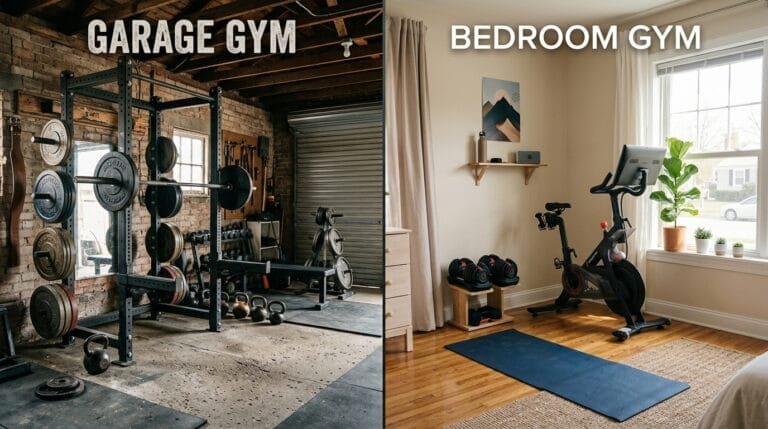

How to Build a Sustainable Progression Plan with Minimal Equipment
Quick Answer
A sustainable progression plan with minimal equipment relies on systematic double progression (adding repetitions within a range, then increasing difficulty), combined with non-load methods such as slower tempos, pauses, expanded range of motion, unilateral variations, and density improvements. Choose a small number of compound movements that cover the main patterns, track every session, change only one variable at a time, and schedule regular deloads. This approach allows continuous progress for months or years using fixed dumbbells, a kettlebell, resistance bands, or bodyweight alone. The key is treating progression as a planned, measurable process rather than a series of random hard workouts.
Why Minimal Equipment Demands a Better Plan
When heavier weights or more machines are unavailable, progress depends entirely on how intelligently you manipulate the variables you control. Random hard sessions produce short-term fatigue but little long-term advancement. Without external load increases, the body adapts quickly to the same stimulus, and results stall. A written, sustainable plan turns limited equipment into a reliable long-term training system by ensuring progressive overload remains consistent, recoverable, and visible.
Home trainees who succeed long-term with minimal gear share one trait: they replace the missing weight stack with deliberate control of tempo, volume, density, range, and exercise difficulty. This requires more thought than simply adding plates, but it produces a deeper understanding of training that often leads to better overall results.
Core Principles of Sustainable Progression
- Progressive overload must be measurable – Every training block should have a clear, written target such as more repetitions, slower tempo, added pauses, or a harder variation. If you cannot measure the improvement, it is difficult to confirm that overload occurred.
- Change one primary variable at a time – Changing multiple factors simultaneously makes it impossible to know what produced the result and increases the risk of excessive fatigue. Focused blocks create clearer feedback.
- Prioritise compound movement patterns – Squat or lunge, hinge, horizontal push, horizontal pull, and vertical push or pull deliver the largest return on limited equipment and limited time. Isolation work can be added later but should never displace the basics.
- Track everything – Without a log, progression becomes guesswork and motivation fades. A simple record of sets, reps, tempo, and variation is enough.
- Build in recovery – Regular deloads prevent the accumulation of fatigue that is especially common when training at home with high frequency.
- Plan in blocks – 4–8 week focused periods followed by review and adjustment keep the programme fresh and progressive without constant overhaul.
These principles form the foundation of any long-term minimal-equipment system.
Essential Movement Patterns and Minimal-Equipment Options
| Pattern | Minimal-Equipment Examples | Progression Pathway |
|---|---|---|
| Squat / Lunge | Goblet squat, split squat, Bulgarian split squat, bodyweight squat progressions | Reps → tempo → pauses → unilateral → harder leverage |
| Hinge | Romanian deadlift, single-leg RDL, kettlebell swing, good-morning | Reps → tempo → pauses → single-leg → increased range |
| Horizontal Push | Floor press, push-up variations, single-arm press | Reps → tempo → pauses → decline or archer variations |
| Horizontal Pull | Single-arm row, inverted row, band row | Reps → tempo → pauses → unilateral or feet-elevated |
| Vertical Push / Pull | Overhead press variations, pike push-up progressions, band pulldown | Reps → tempo → harder leverage or unilateral |
| Core / Carry | Plank variations, suitcase carry, dead bug | Longer holds → harder variations → added instability |
Shoulder-friendly technique on all pressing and raising patterns protects long-term progress and should be monitored as difficulty increases (Bent Arms vs. Straight Arms in Lateral Raises, The Hidden Mistake in Lateral Raises, and 3 Lateral Raise Modifications). Grip strength supports rows and carries and can be progressed directly with minimal extra time (Do Hand Grippers Really Work?).
Building the Progression System in Detail
Step 1: Choose Your Core Exercises
Select 1–2 exercises per movement pattern that you can perform with good form and that offer clear progression options. A total of 5–7 main exercises is ideal for most home trainees. Fewer exercises done with full attention outperform a long list performed inconsistently. Choose movements you can load or progress with the equipment you already own.
Step 2: Establish Starting Points
For each exercise, determine a realistic baseline: the weight, band, or variation and the rep range you can complete with solid technique across the planned number of sets (for example, 3 sets of 8–12). Starting too heavy forces early form breakdown; starting too light delays progress. The correct starting point leaves room to add repetitions for several weeks.
Step 3: Apply Double Progression
Add repetitions within the chosen range until you reach the top for all sets with good form and residual capacity (usually 1–3 repetitions left in reserve). Then increase difficulty—move to the next variation, slow the tempo, add a pause, or take a small load increase if available—and return to the low end of the rep range. This single method can sustain progress for many months.
Step 4: Layer Non-Load Methods
When load increases are limited or unavailable, cycle through the following methods in planned blocks:
- Tempo emphasis (3–5 second eccentrics)
- Paused repetitions at the hardest point
- Expanded range of motion
- Unilateral versions
- Density (shorter rest or more work in a fixed time)
Each method creates a distinct stimulus and prevents the programme from becoming stale.
Step 5: Structure Training Frequency
Two to four sessions per week covering the main patterns is sufficient for most people. Full-body sessions work especially well with minimal equipment because each pattern is hit more frequently, supporting both strength and skill retention. Split routines can be used but are usually less efficient when equipment and time are limited.
Step 6: Track and Review
Log every working set. A simple template that includes exercise, variation, load, sets, reps, tempo or pause notes, and a brief form comment is enough. Review the log weekly to confirm that progressive overload is occurring. Every 4–8 weeks, step back and evaluate broader trends in strength, technique, and recovery.
Step 7: Schedule Deloads
Every 4–8 weeks of hard training, reduce volume by 40–60% for 5–7 days. This clears residual fatigue that is common in home training environments where it is easy to do “just one more session.” Deloads are not optional if the plan is to remain sustainable for years.
Sample 6-Week Progression Block (Minimal Equipment)
Weeks 1–2
Focus: Double progression on repetitions.
All main exercises in the 8–12 range. Add one repetition whenever possible while keeping form clean.
Weeks 3–4
Focus: Tempo.
Keep the same weights or variations but use a 3–4 second eccentric on every working repetition. Aim to maintain or slightly increase total repetitions.
Weeks 5–6
Focus: Pauses or harder variations.
Add 1–2 second pauses at the most challenging point or move selected exercises to the next unilateral or leverage progression. Reset the rep range if the difficulty jump is large.
After week 6, take a deload week, review the log in detail, and design the next block based on which methods produced the best combination of progress and recovery.
Long-Term Planning Horizon
Months 1–3
Master technique on the core exercises and become proficient at basic double progression. Establish the tracking habit and learn how your body responds to the chosen frequency.
Months 4–9
Rotate non-load methods systematically. Introduce unilateral work and expanded range of motion. Begin to refine which progressions suit each movement pattern best.
Months 10–18+
Emphasise advanced variations, higher density, and more precise control of tempo and pauses. At this stage many trainees still progress on the same limited equipment while developing a high level of movement skill.
Reassess whether additional equipment is truly needed only when a clear, repeated limitation appears that cannot be solved with the methods above. Most home trainees discover they can continue far longer than they initially expected.
Tracking Template for Sustainability
For each working set record:
- Exercise and specific variation
- Load, band strength, or bodyweight progression
- Sets and repetitions completed
- Tempo or pause notes
- Brief form or effort comment
Weekly review questions:
- Did I improve at least one variable on each main lift?
- Is technique still solid under the current difficulty?
- How is recovery between sessions?
Monthly or bi-monthly additions:
- Progress photos or simple measurements
- A repeated performance test (maximum clean repetitions of a key movement)
This level of tracking takes only a few minutes per session and provides the feedback loop that makes long-term progression possible.
Recovery and Sustainability Factors
Progress only occurs when the body can adapt. With minimal equipment it is tempting to add extra sessions, extra sets, or extra exercises because the barrier to training is so low. Resist this urge. The most common reason minimal-equipment plans stall is not lack of intensity but lack of recovery.
Prioritise:
- Consistent sleep duration and quality
- Adequate protein intake spread across the day
- Stress management and, when necessary, reduced life load
- Regular scheduled deloads
These factors often determine whether a minimal-equipment plan remains productive for years or stalls after a few months. Training hard is only half of the equation; recovering adequately is the other half.
Common Pitfalls That Undermine Minimal-Equipment Plans
| Pitfall | Result | Solution |
|---|---|---|
| Too many exercises | Diluted focus and recovery | Limit to 4–7 main movements |
| Changing variables randomly | No clear progression | Plan blocks with one primary focus |
| Ignoring deloads | Accumulated fatigue and plateaus | Schedule them in advance |
| Poor tracking | Invisible progress | Log every session simply and consistently |
| Chasing fatigue instead of progress | Stagnation | Aim for measurable improvement each week |
| Neglecting technique | Joint stress and reduced stimulus | Film key lifts regularly |
| Expecting linear progress forever | Frustration | Accept that progress rate slows and adjust methods |
| Adding equipment too early | Unnecessary expense and complexity | Exhaust non-load methods first |
Integrating Joint Health and Longevity
Sustainable progression requires healthy joints. As variations become harder and volumes accumulate, maintain strict attention to:
- Elbow position and scapular control on all pressing movements
- Neutral spine and braced core on all hinges and squats
- Controlled range of motion rather than forced depth
- Balance between pushing and pulling volume
These habits allow the plan to continue for years instead of being interrupted by recurring irritation.
Strength training with intelligent progressive overload remains one of the most reliable ways to build and maintain muscle and strength (strength training guidance). Practical home-gym approaches emphasise sustainable systems that work with limited equipment (home gym equipment prioritisation and budget home gym principles).
Frequently Asked Questions
How long can a minimal-equipment progression plan keep producing results?
Many people progress for 12–24 months or longer by systematically rotating non-load methods and variations. Some continue even longer when advanced unilateral and leverage progressions are fully exploited.
Do I need to change exercises every block?
No. Keeping core exercises and progressing them is usually more effective than constant novelty. Change an exercise only when a clear limitation or technique issue appears.
What is the single most important factor for sustainability?
Consistent tracking combined with planned progressive overload and regular recovery. Without measurement, progression becomes accidental.
Can bodyweight alone support a long-term plan?
Yes, provided you advance leverage, tempo, pauses, and unilateral difficulty in a structured way. The progression ladder for bodyweight movements is longer than most people realise.
How often should I deload?
Every 4–8 weeks of hard training, or sooner if performance, joint comfort, or motivation decline. Deloads are a core part of the plan, not an interruption.
Should I prioritise strength or hypertrophy with minimal equipment?
Both can be achieved. Lower-rep ranges with harder variations favour strength; moderate-to-higher reps with controlled tempo and pauses favour hypertrophy. Most trainees benefit from periods of each.
What if I stall completely?
Take a deload, review technique on film, switch the primary progression method, and ensure recovery basics (sleep, protein, stress) are covered. Most stalls are recoverable without new equipment.
Is one kettlebell or a pair of fixed dumbbells enough?
Yes for the majority of trainees when the progression methods in this article are applied consistently. Many people achieve excellent long-term results with exactly this setup.
How detailed does tracking need to be?
Enough to show whether progressive overload is occurring. Exercise, variation, load, sets, reps, and a brief note on tempo or form are sufficient.
Can I use this plan if I only train two days per week?
Yes. Full-body sessions performed twice per week with focused progression on each main pattern can produce excellent sustainable results.
Final Recommendation
A sustainable progression plan with minimal equipment is built on clear movement patterns, double progression, planned non-load methods, consistent tracking, and regular deloads. Choose a small number of high-value exercises, apply one primary progression variable at a time, log every session, and recover deliberately. This system turns limited gear into a long-term platform for strength and muscle gains.
Design your first 6-week block today: select the exercises, set the starting rep ranges, choose the first progression focus (usually adding repetitions), and prepare a simple log. Execute consistently, review at the end of the block, and build the next one on the results. With this approach, minimal equipment becomes more than enough for continuous, sustainable progress. The limiting factor is rarely the gear—it is the quality and consistency of the plan you build around it. Start building that plan now.