How to Train Legs Effectively Without a Squat Rack
Quick Answer
You can train legs effectively at home for strength, muscle growth, athleticism, and balanced physique development using only bodyweight, resistance bands, dumbbells, and a kettlebell. Focus on the fundamental patterns — squat, hinge, lunge/split stance, and hip extension — plus targeted glute-medius and hamstring isolation work. The highest-value exercises include goblet squats, Bulgarian split squats, Romanian deadlifts, hip thrusts or glute bridges, reverse lunges, slider/towel hamstring curls, and lateral band walks. Train legs 2–4 times per week with progressive overload through harder variations, slower tempos, added resistance, or increased volume. This system builds powerful quads, hamstrings, glutes, and calves without machines or a barbell.
Why Dedicated Leg Training Matters
Strong legs improve daily movement quality, athletic performance, metabolic health, injury resilience, and overall physique proportion. The major muscle groups of the lower body — quadriceps, hamstrings, gluteus maximus, medius and minimus, adductors, and calves — respond exceptionally well to mechanical tension and progressive overload.
Home training tools are fully capable of delivering the required stimulus. Research and practical coaching data show that resistance bands and free weights can produce strength and hypertrophy outcomes comparable to traditional gym equipment when intensity, proximity to failure, and progression are managed properly. Bodyweight variations remain highly effective when leverage, unilateral loading, tempo, and range of motion are manipulated.
Complete Movement Pattern Framework
| Pattern | Primary Muscles Targeted | Best Home Exercises | Common Tools | Progression Path |
|---|---|---|---|---|
| Squat | Quads, glutes, adductors | Goblet squat, bodyweight squat, heel-elevated squat | Dumbbell, kettlebell, bodyweight | Add load → slower tempo → pause → deficit |
| Hinge | Hamstrings, glutes, spinal erectors | Romanian deadlift, single-leg RDL, good morning | Dumbbell, kettlebell, band | Heavier load → single-leg → slower eccentric |
| Lunge / Split | Quads, glutes, stabilisers | Bulgarian split squat, reverse lunge, walking lunge | Bodyweight, dumbbells | Rear-foot elevated → added load → deficit |
| Hip Extension | Glute max, hamstrings | Hip thrust, glute bridge, single-leg bridge | Bodyweight, band, dumbbell | Elevated shoulders → band → single-leg → pause |
| Abduction | Glute medius | Lateral band walk, monster walk, clamshell | Mini-band | Stronger band → lower stance → longer time under tension |
| Knee Flexion | Hamstrings | Slider/towel curl, Nordic curl progression | Towel or sliders | Single-leg → slower eccentric → elevated hips |
| Calf | Gastrocnemius & soleus | Standing calf raise, single-leg calf raise | Bodyweight, dumbbell | Single-leg → pause → slower tempo → added load |
Detailed Exercise Library with Form Cues
Goblet Squat
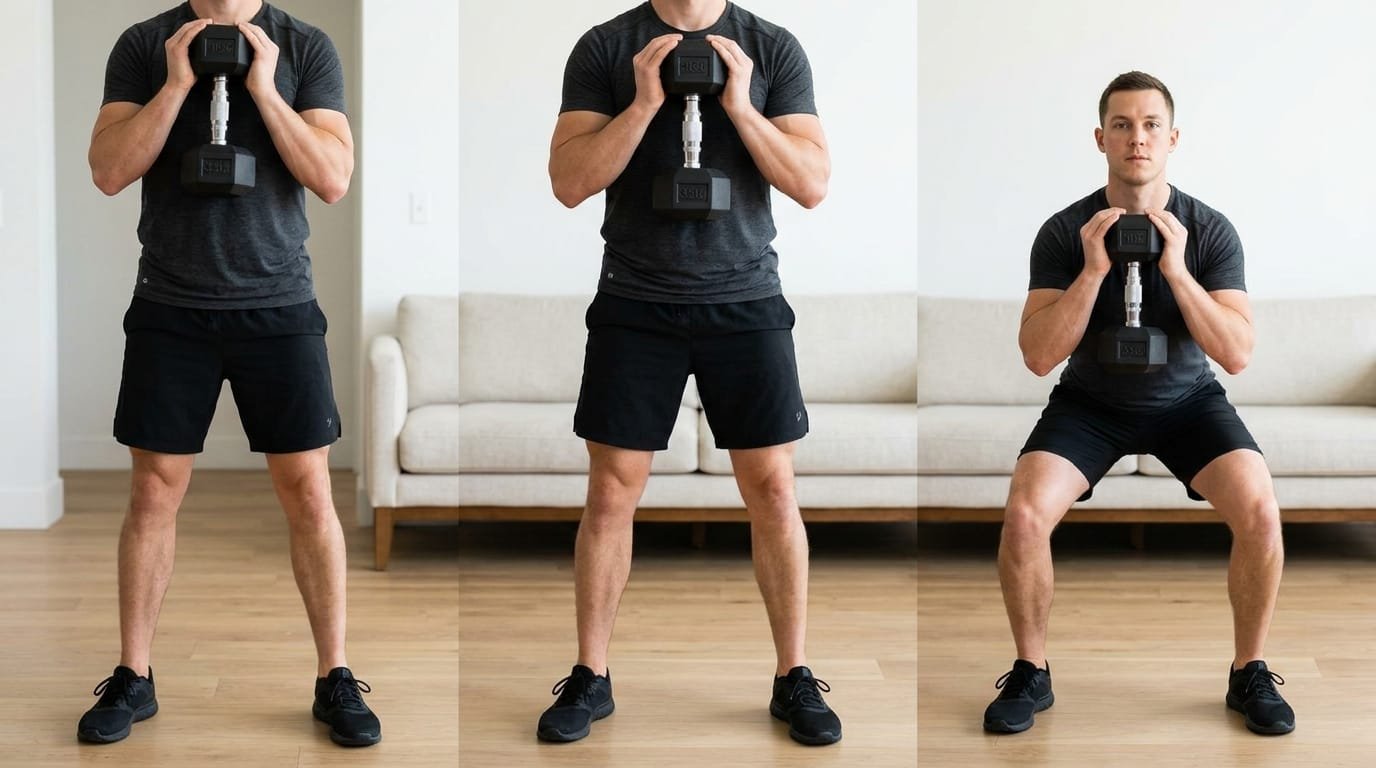
Hold a dumbbell or kettlebell close to the chest with elbows pointing down. Set the feet roughly shoulder-width, toes slightly out. Sit between the knees while keeping the torso relatively upright and the heels flat. Drive through the mid-foot to stand tall, squeezing the glutes at the top.
Key cues: knees track over toes, full depth if mobility allows, controlled descent.
Bulgarian Split Squat
Place the rear foot on a chair, couch, or bench. Keep the front foot far enough forward so the knee stays roughly above the ankle at the bottom. Lower until the front thigh is near parallel to the floor, then drive up through the front heel.
This exercise is one of the highest-value unilateral movements available at home and heavily taxes the quads and glutes.
Romanian Deadlift (RDL)
Hold dumbbells or a kettlebell in front of the thighs. Soften the knees slightly and push the hips backward while keeping the spine neutral. Lower until a strong stretch is felt in the hamstrings, then drive the hips forward to return to standing.
Avoid rounding the lower back or turning the movement into a squat.
Hip Thrust / Glute Bridge
For bridges, lie on the floor; for thrusts, elevate the shoulders on a sturdy couch or bench. Place a band just above the knees if desired. Drive through the heels, extend the hips fully, and squeeze the glutes hard at the top. Lower under control.
Pause at full extension for greater glute emphasis.
Reverse Lunge
Step backward into a lunge, lowering until both knees are bent at approximately 90 degrees. Keep the torso upright and the front heel planted. Drive through the front foot to return to the start.
Easier on the knees for many people compared with forward lunges.
Slider or Towel Hamstring Curl
Lie on your back with heels on a towel or furniture sliders. Lift the hips into a bridge position, then curl the heels toward the glutes while maintaining hip height. Extend the legs slowly.
One of the best pure hamstring isolation options without machines.
Lateral Band Walk
Place a mini-band above the knees or around the ankles. Drop into a quarter-squat and step sideways while keeping constant tension on the band. Avoid letting the knees cave inward.
Critical for glute-medius strength and knee stability.
Single-Leg Romanian Deadlift
Hinge on one leg while the free leg travels backward. Keep the hips square and the spine neutral. This builds hamstring strength, balance, and single-leg control simultaneously.
Calf Raises
Stand on the floor or a step. Rise onto the balls of the feet through a full range, pause, and lower into a stretch. Progress to single-leg versions as soon as possible.
Sample Progressive Workouts
Beginner Full-Leg Session (2–3× per week)
- Bodyweight or Goblet Squat – 3 sets of 10–15
- Glute Bridge – 3 sets of 12–15
- Reverse Lunge – 3 sets of 8–10 per leg
- Banded Lateral Walk – 3 sets of 10–12 steps each direction
- Standing Calf Raise – 3 sets of 12–15
Rest 60–90 seconds between sets.
Intermediate Session
- Goblet Squat or Bulgarian Split Squat – 3–4 sets of 8–12
- Romanian Deadlift – 3 sets of 8–12
- Hip Thrust or Single-Leg Bridge – 3–4 sets of 10–15
- Slider Hamstring Curl – 3 sets of 8–12
- Lateral Band Walk – 3 sets
- Single-Leg Calf Raise – 3 sets of 10–15 per side
Advanced / Higher-Volume Session
- Bulgarian Split Squat – 4 sets of 8–12 per leg
- Single-Leg RDL – 3 sets of 8–10 per leg
- Elevated Hip Thrust – 4 sets of 10–15
- Slider Curl or Nordic-lean progression – 3 sets
- Lateral Walk + Clamshell superset – 3 rounds
- Calf raises – 4 sets
Progressive Overload Without a Barbell
- Add external load (heavier dumbbell, stronger band, weighted backpack)
- Advance to more difficult variations (single-leg, rear-foot elevated, deficit, pause)
- Lengthen the eccentric phase (3–5 seconds)
- Insert pauses at the hardest portion of the movement
- Increase total weekly sets
- Reduce rest periods while preserving form
- Improve range of motion or movement control
Log every workout. Consistent small improvements compound into significant strength and size gains.
Step-by-Step Implementation Plan
- Select 4–6 exercises that cover the major patterns listed above.
- Schedule leg training 2–4 times per week according to recovery capacity.
- Begin each session with light activation (bodyweight squats, leg swings, band walks).
- Perform compound movements first while fresh.
- Emphasise full range of motion and controlled tempos.
- Progress only one variable at a time.
- Include unilateral work to correct side-to-side differences.
- Support training with sufficient protein (typically 1.6–2.2 g per kg of body weight) and sleep.
- Reassess performance and exercise selection every 4–6 weeks.
- Stay consistent — leg development rewards repeated progressive stimulus over months.
Volume, Frequency, and Recovery Guidelines
- Frequency: 2–4 sessions per week
- Weekly volume: 10–20 hard sets per major muscle group is a practical target for most trainees
- Proximity to failure: Leave 1–3 reps in reserve on compounds; isolation work can go closer to failure
- Recovery: Most beginners and intermediates benefit from at least 48 hours between hard lower-body sessions
Integration with the Rest of Your Training
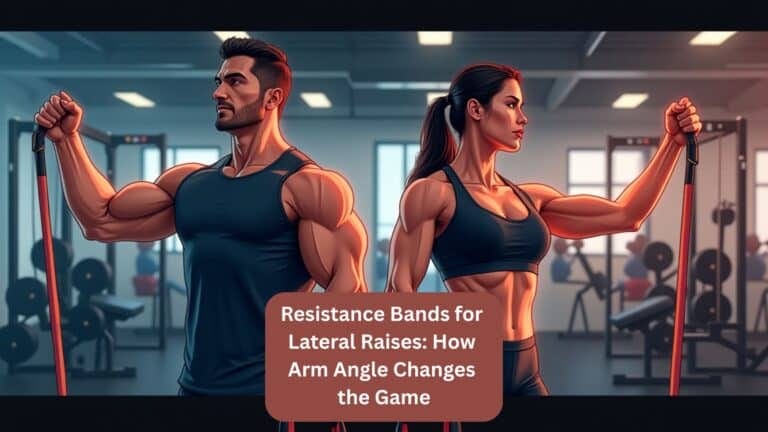
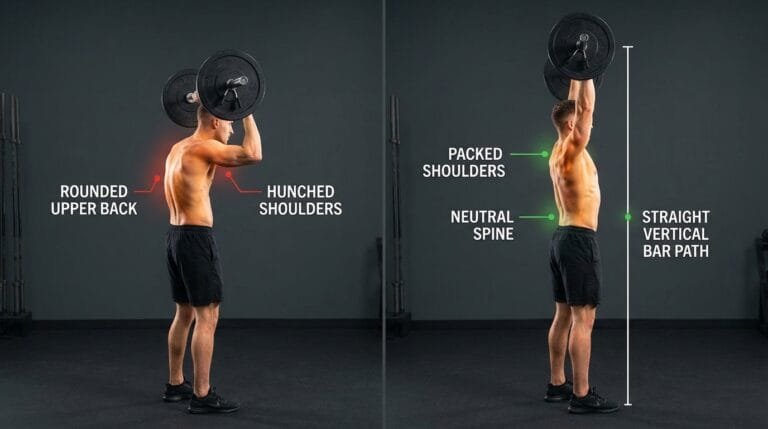
Strong legs enhance overall athleticism and support better performance in full-body movements. Maintain balanced upper-body development and healthy shoulder mechanics by applying the technique principles in safe lateral-raise guidance.
Grip strength is important when holding dumbbells or kettlebells for lower-body work — develop it with the methods in grip strength guidance. Kettlebell swings, goblet squats, and carries are excellent complementary tools (kettlebell sizing guide).
For band selection and additional glute/hamstring work, refer to Resistance Bands Buying Guide: Loop vs. Tube vs. Fabric – Which Wins?. Core stability from bracing during squats and hinges carries over to advanced movements such as ab-roller progressions. Low-impact conditioning options are covered in manual treadmill guidance. A budget massage gun can help manage residual tension in the quads, hamstrings, glutes, and calves.
External evidence supports the effectiveness of dumbbell, band, and bodyweight leg training when progressive overload is applied (dumbbell leg exercise science and resistance band leg training research).
Common Mistakes and Corrections
- Cutting depth short on squats and lunges → prioritise range of motion over load
- Allowing the knees to collapse inward → actively push the knees outward and strengthen the glute medius
- Neglecting hamstrings and glutes → ensure hinge and hip-extension patterns are present every week
- Using momentum instead of controlled tension → slow the tempo and focus on the working muscles
- Skipping unilateral exercises → include split squats or single-leg work to address imbalances
- Adding load before technique is solid → master movement quality first
- Training legs too infrequently or with insufficient effort → aim for progressive, challenging sessions
Frequently Asked Questions
Can I build impressive legs at home without a barbell or machines?
Yes. Progressive bodyweight, band, dumbbell, and kettlebell training produces significant strength and hypertrophy for the large majority of people.
How often should legs be trained?
2–4 times per week is optimal for most. Beginners often progress well with 2–3 full sessions; more advanced trainees may use higher frequency with moderated per-session volume.
What is the single most effective home leg exercise?
There is no single best movement, but the Bulgarian split squat, goblet squat, Romanian deadlift, and hip thrust consistently rank among the highest-value options.
Do I need resistance bands?
Strongly recommended. Bands provide variable resistance, improve glute-medius activation, and make progression simple for many patterns.
How long until visible results appear?
Strength and control improvements often show within 2–4 weeks. Noticeable muscle and shape changes typically require 6–12 weeks of consistent progressive training.
Should calves be trained directly?
Yes if balanced development or specific aesthetic/performance goals require it. Standing and single-leg calf raises are sufficient for most home trainees.
Is muscle soreness required for growth?
No. Progressive overload, sufficient volume, and good technique matter far more than the degree of soreness experienced.
Can I train legs on consecutive days?
Possible with low volume or easy variations, but most people recover and progress better with at least one day of rest between hard lower-body sessions.
Final Recommendation
Train legs effectively at home by emphasising the squat, hinge, and lunge patterns together with targeted glute and hamstring work. Use bodyweight, resistance bands, dumbbells, and a kettlebell to perform goblet squats, Bulgarian split squats, Romanian deadlifts, hip thrusts or bridges, lunges, slider curls, and band walks. Schedule these sessions 2–4 times per week and apply progressive overload systematically.
Master movement quality, log your performance, and support training with adequate protein and recovery. When consistency and progression are present, common home equipment is fully capable of building strong, muscular, well-balanced legs. Begin with the beginner session, focus on controlled technique, and advance methodically for long-term results.