Best Home Exercises for Bigger Shoulders Without Heavy Barbells
Quick Answer
You can build significantly bigger, rounder, and more balanced shoulders by doing home exercises without any heavy barbells by prioritising dumbbell overhead presses, strict lateral raises, rear-delt isolation (face pulls, reverse flyes, band pull-aparts), and progressive bodyweight or band variations. The three deltoid heads — anterior (front), lateral (side), and posterior (rear) — each require targeted stimulus. Dumbbells, resistance bands, a bench, and a pull-up bar supply all necessary angles and progressive overload. Focus on controlled tempos, full range of motion, balanced volume across all three heads, and consistent progression for visible width and 3D development.
Understanding Shoulder Anatomy for Targeted Growth
The deltoid is a multipennate muscle with three distinct heads that perform different primary functions:
- Anterior deltoid – shoulder flexion and internal rotation; heavily involved in overhead pressing and front raises.
- Lateral (medial) deltoid – shoulder abduction; the primary driver of shoulder width and the “capped” look.
- Posterior deltoid – horizontal abduction and external rotation; critical for posture, shoulder health, and rear-view thickness.
EMG studies consistently demonstrate that overhead pressing movements produce high anterior-delt activation, while lateral-raise variations produce superior lateral-delt activation compared with presses. Rear delts respond best to reverse flyes, face pulls, and specific rowing angles. A well-rounded programme must address all three heads; neglecting the lateral or posterior heads is the most common reason home trainees fail to achieve impressive shoulder development (EMG rankings and exercise analysis).
Why Heavy Barbells Are Completely Unnecessary
Barbells are effective tools but far from essential. Dumbbells allow a more natural scapular plane of motion, greater unilateral stability demand, and independent arm paths that many lifters find more shoulder-friendly. Resistance bands provide accommodating resistance (increasing tension where the muscle is stronger) and constant tension throughout the range. Bodyweight progressions (pike push-ups and advanced variations) deliver high mechanical tension with zero equipment cost.
Hypertrophy is driven by mechanical tension, metabolic stress, and progressive overload — all of which can be achieved with dumbbells, bands, and bodyweight when programming is intelligent. Multiple EMG analyses and practical coaching data confirm that dumbbell and cable/band lateral raises rank among the highest for side-delt activation, while dumbbell presses effectively target the front delts.
Complete Home Exercise Library by Deltoid Head
| Head | Exercise | Equipment | Key Advantage | Ideal Rep Range | Progression Options |
|---|---|---|---|---|---|
| Lateral | Strict Dumbbell Lateral Raise | Dumbbells | Highest practical side-delt stimulus | 10–20 | Weight, tempo, pause, lean-away |
| Lateral | Band Lateral Raise | Bands | Peak tension at the top | 12–20 | Band strength, tempo |
| Lateral | Incline or Supported Lateral Raise | Dumbbells + bench | Reduced momentum, stretch emphasis | 10–15 | Angle, weight |
| Anterior | Seated/Standing Dumbbell Overhead Press | Dumbbells | Primary mass builder for front delts | 6–12 | Weight, pause at bottom |
| Anterior | Arnold Press | Dumbbells | Added rotational component | 8–12 | Weight, control |
| Anterior | Pike Push-Up / Elevated Pike | Bodyweight | Pure bodyweight overload | 6–15 | Elevation, deficit, tempo |
| Posterior | Band Face Pull with External Rotation | Bands | Rear delt + rotator cuff health | 12–20 | Band strength, pause |
| Posterior | Chest-Supported or Bent-Over Reverse Fly | Dumbbells | Isolation with stable torso | 12–20 | Weight, tempo |
| Posterior | Band Pull-Apart | Bands | High-volume posture work | 15–25 | Band strength, hand position |
| Overall | Y-Raise or Diagonal Raise | Dumbbells or bands | Combined front + side stimulus | 10–15 | Weight or band tension |
Detailed Form and Execution Guides
Strict Dumbbell Lateral Raise (Highest Priority for Width)
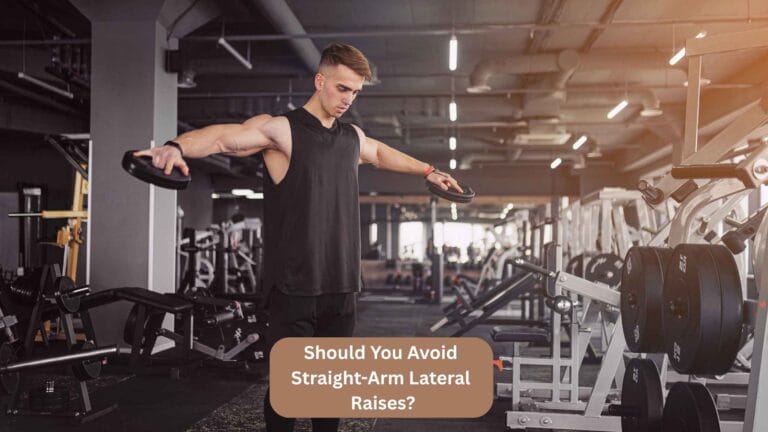
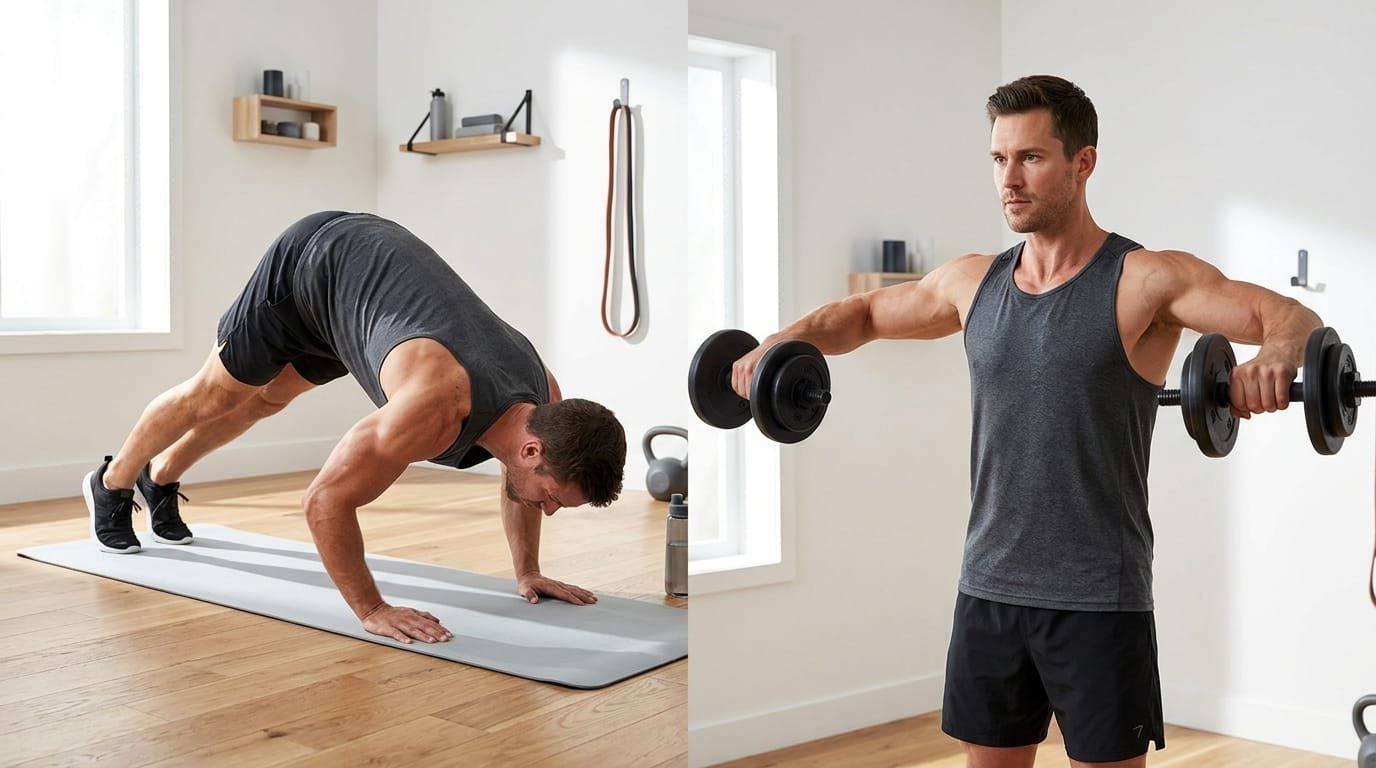
Stand with feet shoulder-width, core braced, slight bend in the elbows. Raise the dumbbells out to the sides until the upper arms are parallel to the floor (or slightly above). Lead with the elbows, keep the pinkies slightly higher than the thumbs, and avoid shrugging. Lower under full control.
For shoulder-friendly execution and modifications if you have a history of impingement, follow the detailed cues in How to Perform Safe Lateral Raises if You Have Shoulder Impingement History. Common errors include swinging the torso, using excessive weight, and cutting the range of motion short.
Dumbbell Overhead Press
Start with dumbbells at shoulder height, palms facing forward or slightly inward. Press upward until the arms are fully extended, then lower with control. Keep the ribs down and avoid excessive lumbar extension. Seated variations increase stability; standing variations add core demand.
Band Face Pull
Anchor a band at upper-chest or face height. Pull toward the face while externally rotating the shoulders (thumbs point backward at the end). Squeeze the rear delts and upper back. This movement simultaneously builds the posterior delts and improves external-rotation strength.
Chest-Supported Reverse Fly
Set a bench to a low incline or lie face-down. With a slight elbow bend, raise the dumbbells out to the sides until they are in line with the torso. Focus on moving the arms through the frontal plane and squeezing the rear delts at the top.
Pike Push-Up Progressions
Begin in a downward-dog position. Lower the head toward the floor by bending the elbows, then press back to the start. Elevating the feet increases the percentage of bodyweight loaded onto the shoulders. Advanced versions include deficit pike push-ups or weighted variations (backpack).
Band Pull-Apart
Hold a light-to-moderate band at shoulder height with arms extended. Pull the band apart until it touches the chest, focusing on rear-delt and mid-back contraction. Excellent high-rep finisher.
Sample Programmes for Different Levels
Beginner Full-Shoulder Session (Perform 2× per week)
- Dumbbell Overhead Press – 3 sets of 8–12
- Strict Dumbbell Lateral Raise – 3 sets of 12–15
- Band Face Pull – 3 sets of 15–20
- Band Pull-Apart – 2–3 sets of 15–25
Intermediate Dedicated Shoulder Focus
- Dumbbell Overhead Press or Arnold Press – 4 sets of 6–10
- Strict Lateral Raise – 4 sets of 10–15 (consider one drop set on the final set)
- Chest-Supported Reverse Fly – 3 sets of 12–15
- Band Face Pull – 3 sets of 12–20
- Optional: Elevated Pike Push-Up – 2–3 sets near failure
Upper-Body Day Integration
Pair the priority shoulder movements with horizontal pressing and pulling. Keep total weekly lateral-raise volume at 8–15 hard sets and rear-delt work at 6–12 hard sets for most trainees.
Rest 90–120 seconds on compound presses and 60–90 seconds on isolation movements. Use controlled tempos (e.g., 2 seconds concentric, 2–3 seconds eccentric) on raises and flyes.
Progressive Overload Strategies Without Barbells
- Increase dumbbell load when the top of the target rep range is achieved with clean form
- Add repetitions within the target zone
- Lengthen the eccentric phase or add pauses at the hardest point
- Increase total weekly sets gradually
- Improve range of motion or reduce momentum
- Advance bodyweight variations (higher elevation, slower tempos, deficit positions)
- Combine methods (e.g., heavier weight + slower tempo)
Track every working set. Stronger grip supports heavier dumbbell pressing and longer sets of raises — develop it with dedicated work as outlined in grip strength guidance.
Programming Science and Frequency Recommendations
Lateral delts often respond well to higher frequencies (2–3 times per week) and moderate-to-high rep ranges because they recover relatively quickly and are not heavily taxed by pressing. Anterior delts receive substantial indirect work from any horizontal or vertical pressing, so direct volume can be more moderate. Posterior delts benefit from frequent, higher-rep work and pair well with upper-back training.
Total weekly volume of 10–20 hard sets per head (adjusted for recovery) is a practical starting range for most intermediate trainees. Beginners should start at the lower end.
Kettlebells can substitute for dumbbells on presses or provide swing variations for overall power; see kettlebell sizing guidance.
Common Mistakes and How to Fix Them
- Excessive momentum on lateral raises → Reduce the weight, slow the tempo, and focus on leading with the elbows.
- Neglecting rear delts → Add face pulls and reverse flyes 2–3 times per week.
- Overdoing front raises → Front delts already receive heavy stimulus from presses; prioritise lateral and rear work.
- Incomplete range of motion → Use lighter loads and full controlled arcs.
- Upper-trap dominance → Keep the shoulders down and back; think “push the floor away” rather than shrugging.
- Inconsistent progressive overload → Log every session and aim for small improvements weekly or bi-weekly.
Recovery, Nutrition, and Supporting Habits
Shoulder growth still requires sufficient protein (generally 1.6–2.2 g per kg of body weight), caloric alignment with goals, and adequate sleep. Manage total pressing volume from chest and shoulder work to avoid overuse. Mobility work and band pull-aparts support long-term joint health.
A foam roller or budget massage gun can help manage residual tension. Low-impact conditioning options such as those discussed in Does a Manual Treadmill Burn Belly Fat? pair well on non-shoulder-focused days. Core stability work, including progressions toward ab-roller variations, improves overall pressing performance.
Frequently Asked Questions
Can I build impressive shoulders without any barbells?
Yes. Dumbbells, bands, and progressive bodyweight movements provide all necessary mechanical tension and overload for significant hypertrophy.
What is the single most important exercise for wider shoulders?
Strict lateral raises (dumbbell or band) are repeatedly ranked highest for lateral-delt activation and are the primary driver of shoulder width.
How often should I train shoulders directly?
2–3 times per week works well for most people when volume per session is moderated and recovery is adequate.
Are front raises necessary?
Rarely. Overhead pressing already heavily loads the anterior delts. Additional front-raise volume often provides diminishing returns and increases overuse risk.
What is the minimum equipment required?
A pair of adjustable dumbbells and a set of resistance bands. A bench and pull-up bar meaningfully expand exercise options.
How long until visible results appear?
With consistent progressive training and adequate protein, noticeable improvements in roundness and width frequently become apparent within 8–12 weeks.
Should I train shoulders on a dedicated day or with other upper-body work?
Both approaches are effective. Dedicated sessions allow higher focus; upper-body days are more time-efficient. Manage total weekly volume either way.
Can resistance bands alone build bigger shoulders?
Bands are excellent for lateral raises, face pulls, and pull-aparts and can produce meaningful growth, especially for beginners. Combining them with dumbbells provides superior progressive overload long-term.
Final Recommendation
Build bigger, rounder shoulders at home without heavy barbells by emphasising dumbbell overhead presses for the front delts, strict lateral raises for the side delts, and face pulls, reverse flyes, and band pull-aparts for the rear delts. Add pike push-up progressions for high-tension bodyweight work. Prioritise controlled technique, balanced volume across all three heads, and relentless progressive overload.
Master the key movements, log every set, and support training with sufficient protein and recovery. When these elements are consistent, home equipment is more than sufficient for impressive shoulder development. Start with the priority exercises, use the sample programmes, and progress systematically — wider, more muscular shoulders are fully achievable without ever loading a heavy barbell.