Scapular Retraction Explained: Why It Matters for Almost Every Upper-Body Lift
Quick Answer Scapular retraction is the movement of the shoulder blades (scapulae) toward the spine. It creates a stable base for the shoulder joint, improves force transfer, protects the rotator cuff, and enhances performance in nearly every upper-body exercise—especially horizontal presses, rows, and many pulling variations. Proper retraction (usually combined with slight depression) keeps the glenoid fossa in an optimal position, helps maintain subacromial space, and allows the larger prime movers to work more efficiently. Neglecting it is one of the most common reasons for shoulder irritation, weak lockouts, and stalled upper-body progress.
What Exactly Is Scapular Retraction?
The scapulae are flat, triangular bones that glide on the posterior ribcage. They can move in several directions:
- Retraction (adduction): Shoulder blades slide toward the midline of the spine
- Protraction (abduction): Shoulder blades slide away from the spine and around the ribcage
- Elevation: Shoulder blades shrug upward
- Depression: Shoulder blades slide downward
- Upward and downward rotation: Critical for overhead work
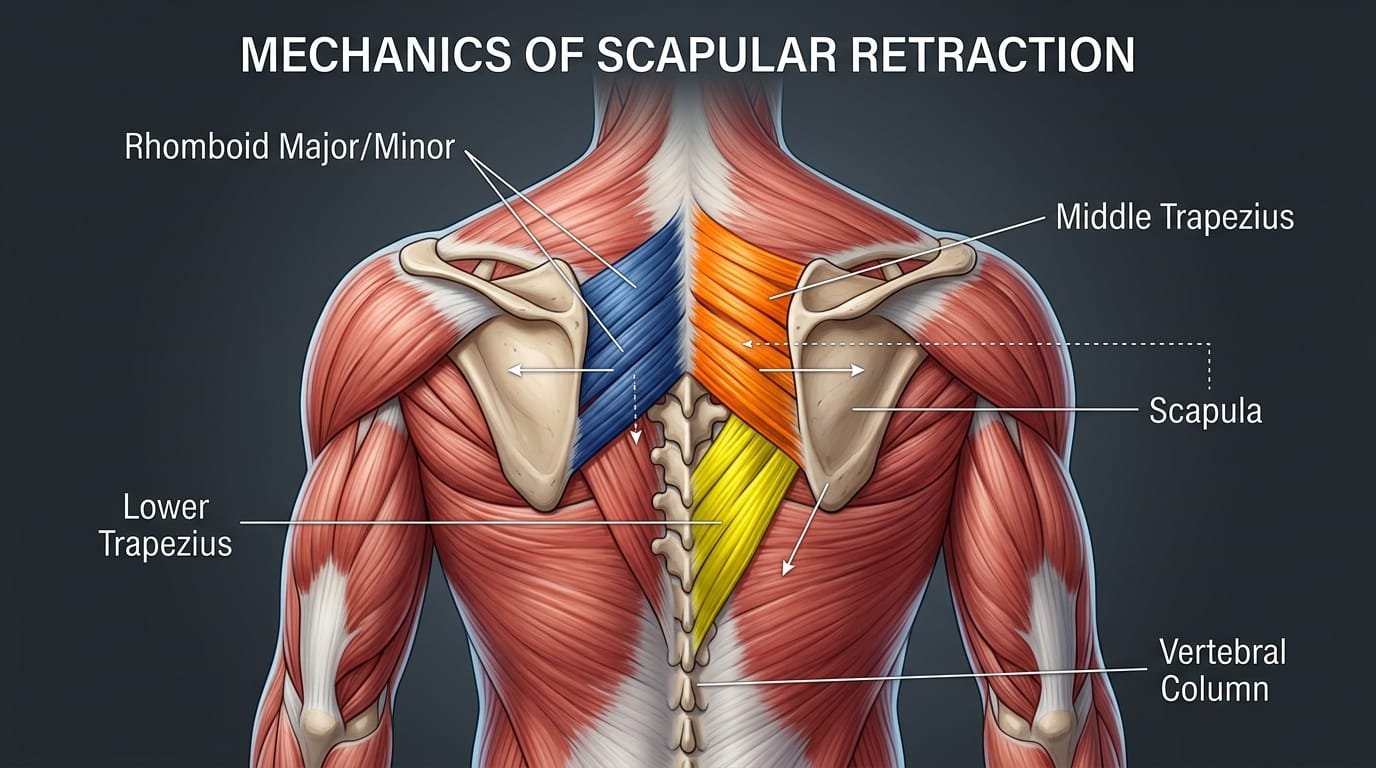
Scapular retraction is produced primarily by the middle trapezius, rhomboids (major and minor), and assisted by the lower trapezius and latissimus dorsi. When performed correctly, the blades move back and slightly down without excessive shrugging of the upper trapezius.
This position stabilizes the glenohumeral joint by providing a firm platform for the humeral head. Clinical and biomechanical literature consistently links inadequate retraction to increased stress on the anterior capsule, reduced rotator-cuff efficiency, and higher risk of impingement. Detailed discussions of scapular muscle function appear in resources such as the review available via PMC and practical guides from strength coaches.
Why Scapular Retraction Matters Across Upper-Body Lifts
1. Horizontal Pressing (Bench Press, Dumbbell Presses, Floor Press) Retracting and slightly depressing the scapulae creates a stable “shelf” for the shoulders. This shortens the effective range of motion slightly, improves leverage, protects the anterior shoulder structures, and allows greater force production from the pecs and triceps. On the bench press, most experienced lifters set the scapulae in retraction before unracking and maintain that position throughout the set. Allowing the scapulae to protract under heavy load frequently leads to shoulder discomfort and loss of power at the bottom or mid-range.
2. Horizontal Pulling (Barbell Rows, Dumbbell Rows, Cable Rows, Face Pulls) Rows require active retraction at the top of the movement to fully load the mid-back musculature. Starting from a more protracted position and finishing in full retraction maximizes the range of motion and trains the retractors through their strongest range. Chest-supported rows make it especially easy to isolate and feel this pattern.
3. Vertical Pulling (Pull-Ups, Chin-Ups, Lat Pulldowns) Full retraction is most pronounced near the top of the movement. Initiating the pull with a slight depression and controlled retraction improves lat engagement and reduces unnecessary upper-trap dominance. Many lifters who struggle to feel their lats working are actually failing to control the scapulae properly.
4. Overhead Pressing Here the role of retraction is more nuanced. Excessive locked retraction can limit the natural upward rotation required for full overhead range. The better approach is to maintain a stable, slightly retracted and depressed starting position while allowing the scapulae to rotate upward as the arms elevate. Forcing rigid retraction throughout an overhead press often causes compensatory lumbar extension or limited lockout.
5. Isolation and Accessory Work Lateral raises, face pulls, rear-delt flyes, and band pull-aparts all benefit from controlled scapular positioning. Proper retraction (or controlled movement between retraction and protraction) keeps the joint centered and reduces compensatory shrugging.
Benefits of Strong, Controlled Scapular Retraction
- Improved shoulder joint stability and centering of the humeral head
- Increased subacromial space, lowering impingement risk
- Better force transfer from the torso to the arms
- Enhanced mid-back strength and postural control
- Reduced compensatory upper-trap and levator scapulae dominance
- Greater potential for progressive overload on pressing and pulling lifts
- Lower long-term injury risk in both training and daily activities
Research on scapular kinematics and muscle activation supports these benefits. Studies examining retraction exercises (including work published in the Journal of Orthopaedic & Sports Physical Therapy and related clinical literature) show that proper retractor strength helps maintain healthy scapulothoracic rhythm.
Common Problems When Retraction Is Missing or Excessive
Insufficient Retraction
- Rounded shoulders under load
- Anterior shoulder stress during pressing
- Weak lockouts or mid-range sticking points on bench press
- Inability to fully engage the mid-back on rows
- Increased reliance on upper traps and neck muscles
Excessive or Rigid Retraction
- Restricted overhead range of motion
- Over-arched lumbar spine during pressing
- Reduced natural scapular upward rotation
- Difficulty with protraction-dependent movements such as the push-up “plus” or serratus-focused work
The goal is controlled, context-appropriate retraction—not permanent pinching of the shoulder blades together at all times.
How to Teach and Strengthen Scapular Retraction
Beginner Isolation Drills
- Scapular wall slides (back against wall, arms in “W” or “Y” position)
- Band pull-aparts focused purely on blade movement
- Prone Y-T-W raises with light or no weight
- Seated or standing scapular squeezes with a 2–3 second hold
Intermediate Progressions
- Chest-supported rows with a deliberate pause in full retraction
- Face pulls finishing with external rotation and strong squeeze
- Single-arm dumbbell rows emphasizing the end-range retraction
- Inverted rows with a controlled protraction-to-retraction cycle
Advanced Integration
- Maintain retraction throughout heavy bench-press sets
- Initiate pull-ups and lat pulldowns with depression + controlled retraction
- Use tempo rows (3-second eccentric, 1-second pause in full retraction)
Perform dedicated retractor work 2–4 times per week, often as part of a warm-up or as higher-rep accessory sets (12–20 reps). Clinical progressions for scapular control are outlined in resources such as those discussed in PMC reviews and practical coaching material.
Comparison of Scapular Positions Across Key Lifts
| Lift | Ideal Scapular Behavior | Common Error | Consequence of Error |
|---|---|---|---|
| Bench Press | Retracted + slightly depressed, held throughout | Allowing protraction under load | Shoulder stress, loss of power |
| Push-Up | Protract at top, retract at bottom | Staying locked in one position | Reduced serratus or mid-back stimulus |
| Barbell / Dumbbell Row | Protract at bottom, full retract at top | No scapular movement | Limited mid-back development |
| Pull-Up / Lat Pulldown | Depression + controlled retraction near top | Excessive shrugging | Upper-trap dominance, poor lat engagement |
| Overhead Press | Stable start, allow upward rotation | Forced rigid retraction | Limited range, lumbar compensation |
| Face Pull | Strong retraction + external rotation at finish | Turning into a pure shrug | Missed rear-delt and rhomboid work |
Integrating Scapular Control with the Rest of Your Training
Strong scapular retractors improve every pressing and pulling movement. Use adjustable dumbbells for chest-supported rows, rear-delt work, and controlled pressing. Kettlebell rows and bottoms-up variations further challenge stability and grip. Robust grip endurance helps you maintain control during high-rep face pulls and band work.
Core stability from ab roller variations or hanging leg raises supports the braced torso needed for effective retraction under load. Recovery tools such as a budget massage gun can help manage residual upper-back, trap, and rhomboid tension. Light cardio on a manual treadmill or mobility flows with resistance bands aid recovery between sessions. Review lateral raise form guidance to ensure isolation work does not reinforce poor scapular patterns that later appear in compound lifts.
Sample Weekly Scapular Emphasis
- Most sessions (warm-up): 2 sets of band pull-aparts + 2 sets of face pulls
- Pull-focused days: Add one dedicated retraction-focused row variation with a pause
- Push-focused days: Set the scapulae in retraction before every pressing set and maintain it
- Accessory or recovery day: Prone Y-T-Ws, wall slides, or higher-rep band work
Consistency matters more than extreme volume. Two to four focused exposures per week produce noticeable improvements in control and strength within a few weeks.
Frequently Asked Questions
Should I retract my scapulae on every single upper-body exercise? No. Context matters. Horizontal presses generally benefit from maintained retraction. Rows benefit from a full protraction-to-retraction cycle. Overhead presses require controlled movement that allows upward rotation. Forcing the same rigid position on every lift is counterproductive. Practical discussions of these differences appear in coaching resources and biomechanical reviews.
Is “shoulders back and down” always the correct cue? It is an excellent starting cue for bench pressing and many rows, but it can limit overhead range if applied too rigidly. Learn the difference between setting a stable base and locking the scapulae in place permanently.
How do I know if my retractors are weak? Difficulty holding a retracted position during rows, excessive upper-trap fatigue, rounded posture under fatigue, or inability to feel the mid-back working are common signs. Simple tests include holding a prone T-position or performing slow band pull-aparts with perfect form.
Can too much retraction work create imbalance? Yes, if protraction and serratus anterior strength are neglected. Balance retractor training with push-up plus variations, serratus punches, and controlled protraction drills.
How long does it take to improve scapular control? Most people notice better awareness and strength within 3–6 weeks of consistent, focused practice. Long-term postural and performance changes continue for months with continued attention.
Does scapular retraction help with shoulder impingement history? Yes. Proper retraction helps maintain subacromial space and reduces excessive anterior stress. It is frequently included in rehabilitation and prehabilitation programs (see clinical discussions such as those in PMC).
Final Recommendation
Scapular retraction is a foundational skill for almost every upper-body lift. It provides stability, improves leverage, protects the shoulder joint, and allows greater long-term progress in both strength and muscle development. Master the basic isolation drills first, then integrate the correct scapular behavior into your main compound movements according to the specific demands of each exercise.
Do not treat retraction as a rigid, one-size-fits-all cue. Instead, develop the strength and motor control to place the scapulae where they need to be for the task at hand—retracted and stable for heavy horizontal pressing, dynamically moving through a full range on rows, and allowing natural upward rotation on overhead work.
Consistent attention to scapular position transforms upper-body training from a source of irritation into a reliable driver of strength and muscle. Start with the simple drills, film your compound lifts, and make controlled retraction an automatic part of your technique. Your shoulders, posture, pressing numbers, and pulling strength will all benefit over time.