
How to Know When It’s Time to Increase Load vs Just Add Reps
Quick Answer
Increase load when you can complete the top of your target rep range for all planned sets with good form and 1–3 repetitions still in reserve on the final set. Continue adding repetitions when you are still inside the rep range or when form, control, or recovery would suffer if load were increased. Use a double-progression approach: add reps first within a set range (for example 8–12), then increase the weight and drop back to the low end of the range. This method maximises progress while protecting technique and joints.
Why the Decision Matters
Choosing between adding weight and adding repetitions is one of the most common practical questions in strength training. Adding load too early often causes form breakdown, joint stress, or stalled progress. Staying with the same weight for too long after the rep range has been maxed out leaves potential gains on the table. A clear, repeatable rule removes guesswork and keeps progressive overload consistent.
The Double-Progression Framework
Double progression is the simplest and most effective system for most trainees:
- Choose a rep range (commonly 6–10, 8–12, or 10–15).
- Start at the low end with a weight you can lift for the target sets with good form.
- Each session, attempt to add repetitions.
- When you reach the top of the range for all sets with solid technique and leftover capacity, increase the load by the smallest available increment and return to the low end of the rep range.
This approach works with dumbbells, kettlebells, barbells, bands, and bodyweight progressions.
Clear Signals It Is Time to Increase Load
- You complete the top of the rep range for every set.
- The final set still leaves 1–3 repetitions in reserve (you are not grinding to absolute failure).
- Form remains crisp—no excessive momentum, range reduction, or compensatory movement.
- Recovery between sessions is good (no lingering joint irritation or excessive fatigue).
- The weight feels manageable rather than maximal.
When these conditions are met, increasing the load is the logical next step.
Clear Signals to Keep Adding Reps (or Use Another Method)
- You have not yet reached the top of the prescribed rep range.
- Form begins to break when you attempt more weight.
- Joint discomfort appears with heavier loads but not with higher-rep sets at the current weight.
- You are still making weekly progress by adding repetitions.
- Equipment limitations prevent a small load increase (fixed dumbbells or bands).
In these cases, continue adding reps, slow the tempo, add pauses, or reduce rest periods before forcing a heavier weight.
Decision Table
| Situation | Recommended Action | Reason |
|---|---|---|
| Hit top of rep range with good form and reps in reserve | Increase load | Progressive overload via intensity |
| Still inside rep range | Add repetitions | Continue current progression |
| Form breaks with heavier weight | Stay at current load, improve control or use tempo/pauses | Protect technique and joints |
| Joint irritation with heavier load | Add reps or use alternative progression | Avoid aggravating tissues |
| No small load increment available | Add reps, slow tempo, add pauses, or move to harder variation | Maintain progressive stimulus |
| Recovery is poor | Hold load and reps or reduce volume temporarily | Allow adaptation |
Step-by-Step Decision Process for Every Session
- Warm up thoroughly and perform the planned working sets.
- Note the number of clean repetitions completed on each set.
- Assess form quality (film periodically if possible).
- Estimate repetitions left in reserve on the final set.
- Check how the joints and recovery feel from recent sessions.
- If all sets hit the top of the range with good form and leftover capacity → increase load next session.
- If still inside the range or form/recovery is limiting → aim for more repetitions or apply another non-load method.
- Log the decision so the next session has a clear target.
- Re-evaluate after the next 2–3 sessions.
- Deload if progress stalls across multiple weeks despite consistent effort.
Special Cases: Fixed Dumbbells, Kettlebells, and Bands
When small load jumps are unavailable:
- Fully exhaust the rep range.
- Then slow the eccentric, add pauses, or reduce rest.
- Move to a harder variation (unilateral, increased range, or more leveraged version).
- Only then consider the next available weight or band.
This sequence keeps the stimulus progressive without requiring new equipment.
How Technique and Joint Health Influence the Choice
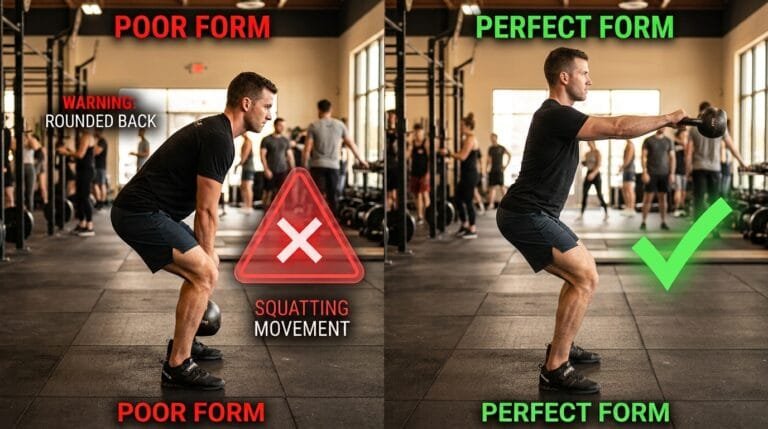
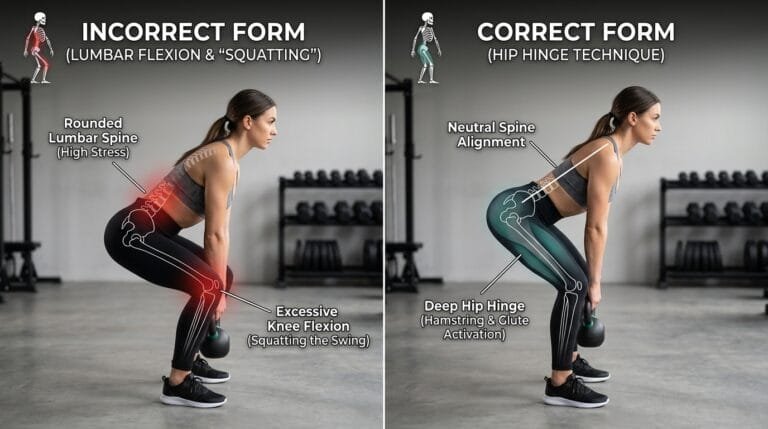
Heavier loads amplify any existing technique flaws or joint stress. If elbows flare excessively on presses, if the lower back rounds on hinges, or if wrists complain on push-ups, adding weight is usually premature. Clean up technique first, possibly by staying at the current load while improving control and range. Shoulder-friendly mechanics on raising and pressing patterns are especially important (Bent Arms vs. Straight Arms in Lateral Raises, The Hidden Mistake in Lateral Raises, and 3 Lateral Raise Modifications). Grip strength can also limit pulling movements and should be addressed directly when it becomes the bottleneck (Do Hand Grippers Really Work?).
Programming Guidelines That Support Good Decisions
- Use clear rep ranges rather than open-ended “as many as possible.”
- Leave 1–3 repetitions in reserve on most sets so weekly progress remains possible.
- Track every working set.
- Film key lifts regularly.
- Schedule deloads every 4–8 weeks.
- Balance pushing and pulling volume.
Strength training with consistent progressive overload remains one of the most reliable ways to build muscle and strength (strength training guidance). Practical home-gym approaches emphasise mastering progression decisions with the equipment you have (home gym equipment prioritisation and budget home gym principles).
Common Mistakes in the Load-vs-Reps Decision
| Mistake | Consequence | Better Approach |
|---|---|---|
| Adding weight as soon as a single set hits the top of the range | Form breakdown on later sets | Require all sets to hit the top cleanly |
| Staying at the same weight for months after maxing reps | Missed progress | Increase load or change variation once the range is fully achieved |
| Ignoring form quality | Higher injury risk and reduced stimulus | Make clean technique a prerequisite for load increases |
| Training to absolute failure every set | Poor recovery and stalled weekly progress | Leave 1–3 reps in reserve most of the time |
| No tracking | Inconsistent decisions | Log sets, reps, and how sets felt |
Frequently Asked Questions
How many times should I hit the top of the rep range before increasing load?
Once you achieve it for all planned sets with good form and residual capacity, you can increase at the next session. Some prefer to confirm it across two sessions for consistency.
What if the next weight jump is very large?
Exhaust all non-load methods (tempo, pauses, density, harder variations) before making the large jump, or use intermediate strategies such as adding a set or further slowing tempo.
Should beginners add weight or reps more often?
Beginners often progress rapidly on both. Prioritise form and use double progression so they learn the relationship between reps and load.
Is it better to add weight on upper-body or lower-body movements first?
Apply the same rules to both. Lower-body movements often tolerate slightly larger jumps, but technique remains the limiting factor.
How does this apply to bodyweight exercises?
Treat harder variations as the “load” increase. Max out reps on the current variation, then move to the next harder version and reset the rep range.
What if I feel stronger but joint discomfort appears with heavier loads?
Stay at the current load, improve technique and tissue capacity, and use alternative progression methods until the discomfort resolves.
Can I increase load and reps at the same time?
Rarely optimal. Change one primary variable at a time so you can clearly identify what produced the improvement.
How important is leaving reps in reserve?
Very. It allows consistent weekly progress and better recovery compared with training to absolute failure on every set.
Final Recommendation
The decision to increase load versus add repetitions becomes straightforward when you follow a double-progression system: add reps within a defined range until you reach the top with good form and residual capacity, then increase the load and return to the low end of the range. Use form quality, joint comfort, and recovery as gatekeepers. When small load increments are unavailable, exhaust tempo, pauses, density, and harder variations before forcing a larger jump.
Track every session, film periodically, and treat clean technique as non-negotiable. This approach maximises long-term progress while minimising unnecessary stress on the joints.
Apply the decision rules to your next training session. When you can clearly answer whether it is time for more weight or more reps, progressive overload becomes consistent, measurable, and sustainable. That clarity is one of the highest-leverage skills in strength training.