How to Fit Strength Training Around Family and Work Demands
Quick Answer
Strength training fits around family and work demands when it is treated as a non-negotiable but flexible weekly target rather than a rigid daily appointment. Use short full-body sessions (20–40 minutes), schedule them into existing gaps or early mornings, keep a minimum viable workout for the hardest days, involve the family when possible, and protect recovery with realistic expectations. Two to four focused sessions per week built on compound movements deliver meaningful strength and health benefits without requiring large blocks of uninterrupted time.
The Reality of Competing Demands
Work deadlines, childcare, household responsibilities, and relationship time create genuine constraints. The traditional “gym for 90 minutes five days a week” model fails most people with significant family and work loads. Successful integration comes from reducing friction, shortening sessions, increasing flexibility, and linking training to broader family and personal values rather than treating it as an isolated selfish activity.
Core Principles for Sustainable Integration
- Weekly frequency targets over fixed days – Aim for a total number of sessions each week.
- Short, efficient sessions – 20–40 minutes of focused compound work.
- Minimum viable workouts – A 15-minute version exists for crisis days.
- Full-body structure – Each session trains the major patterns so missing one day does not create imbalance.
- Environment and equipment ready – Reduce setup time to near zero.
- Family alignment – Communicate benefits and, when appropriate, involve others.
- Recovery realism – Accept that some weeks are maintenance weeks.
Recommended Weekly Framework
| Family / Work Load | Weekly Sessions | Session Length | Priority Focus |
|---|---|---|---|
| Very high | 2 | 25–40 min | Maintenance + consistency |
| High | 3 | 25–35 min | Steady progress |
| Moderate | 3–4 | 20–40 min | Progressive overload |
All sessions are full-body and centre on the same movement patterns.
Essential Movement Patterns and Time-Efficient Exercises
| Pattern | Efficient Options | Time / Setup Advantage |
|---|---|---|
| Squat / Lunge | Goblet squat, Bulgarian split squat, reverse lunge | Minimal equipment, high return |
| Hinge | Romanian deadlift, single-leg RDL, kettlebell swing | Posterior-chain strength quickly |
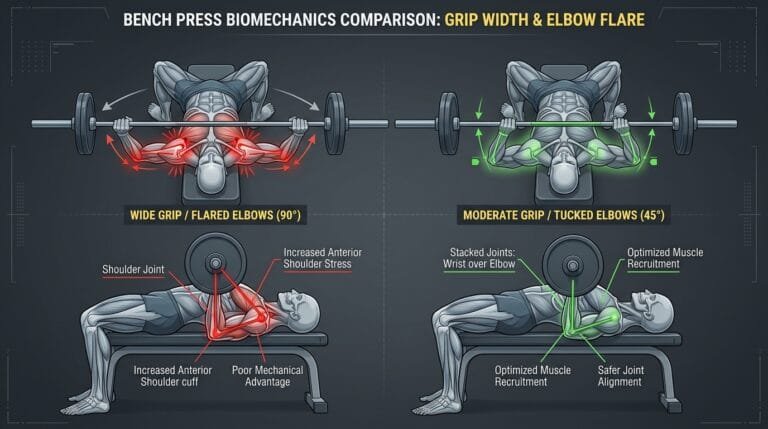
| Horizontal Push | Floor press, push-up variations | Fast setup, easy progression |
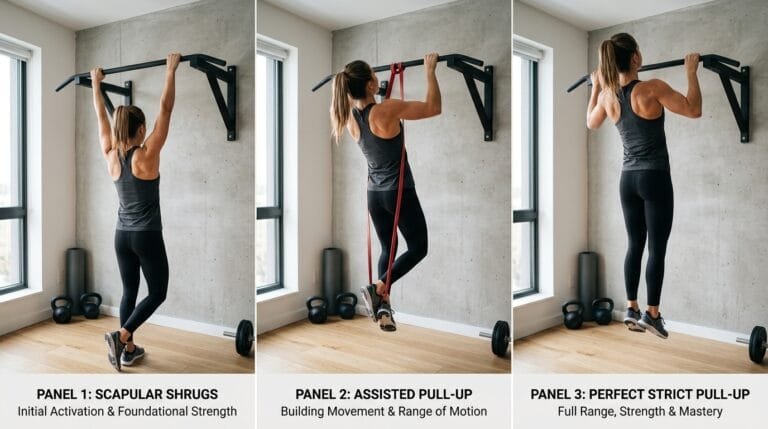
| Horizontal Pull | Single-arm row, inverted row, band row | Balances pushing in limited time |
| Core / Carry | Suitcase carry, plank variations | Finisher that improves resilience |
Shoulder-friendly technique on all pressing and raising patterns protects long-term consistency (Bent Arms vs. Straight Arms in Lateral Raises, The Hidden Mistake in Lateral Raises, and 3 Lateral Raise Modifications). Grip strength supports rows and carries with minimal extra investment (Do Hand Grippers Really Work?).
Sample Time-Efficient Workouts
Standard 30-Minute Full-Body
- Squat or split-squat variation – 3 sets of 8–12
- Hinge variation – 3 sets of 8–12
- Horizontal push – 3 sets of 8–12
- Horizontal pull – 3 sets of 8–12
- Optional carry or core – 1–2 sets
Minimum Viable 15-Minute Session
- Squat or lunge – 2 sets
- Hinge – 2 sets
- Push – 2 sets
- Pull – 2 sets
Early-Morning or Late-Evening Density Option
Set a timer for 20–25 minutes and rotate through the four main patterns with controlled repetitions. Rest only as needed. Track total quality rounds.
Step-by-Step System for Fitting Training In
- Decide a realistic weekly session target (usually 2–4).
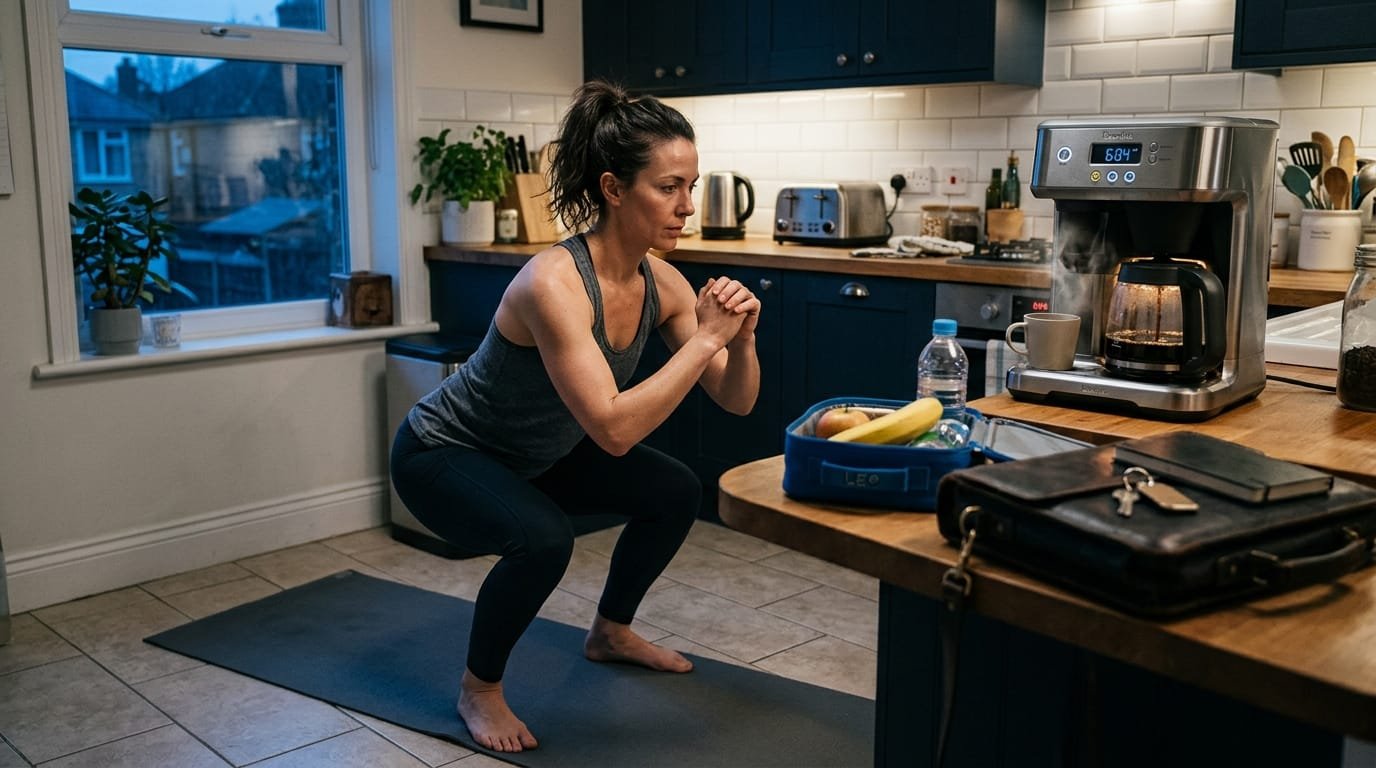
- Identify the most reliable time gaps in a typical week (early morning, lunch, after children’s bedtime, weekend windows).
- Create three pre-written workouts of different lengths.
- Prepare equipment or clear space the night before whenever possible.
- Treat the weekly number of sessions as the primary goal.
- On high-demand days, perform the minimum viable session without guilt.
- Communicate the schedule and benefits to family members.
- Log every completed session so adherence remains visible.
- Review the week and adjust expectations for the next one.
- Protect sleep and protein intake as foundational recovery tools.
Integrating Training with Family Life
- Train during times when children are occupied or asleep.
- Use a home setup so travel time is eliminated.
- Occasionally involve older children in simple movements or make training visible as a positive example.
- Frame strength training as an investment in long-term energy, mood, and health that benefits the whole family.
- Avoid letting perfect conditions become a requirement—short sessions still count.
Integrating Training with Work Demands
- Use lunch breaks or the transition period immediately after work.
- Keep a gym bag or home equipment ready so decisions are minimised.
- On heavy work weeks, drop to the lower end of the frequency target and maintain intensity on the sets you complete.
- Treat training as a productivity and stress-management tool rather than an additional burden.
Progressive Overload with Limited Time
Progress remains possible and necessary:
- Add repetitions within the target range
- Slow the eccentric phase
- Insert pauses at the hardest point
- Move to harder variations or unilateral versions
- Improve density
Track these variables so improvement stays visible even when total training time fluctuates.
Recovery Realism
Family and work demands often reduce sleep and increase stress. Adjust expectations accordingly:
- Some weeks will be pure maintenance—this is still success.
- Deload every 4–8 weeks or when accumulated fatigue appears.
- Prioritise sleep where possible; it multiplies the return on limited training time.
- Keep protein intake consistent to support recovery and muscle retention.
Common Obstacles and Solutions
| Obstacle | Typical Result | Practical Solution |
|---|---|---|
| Unpredictable evenings | Missed sessions | Early-morning or lunch training + minimum viable workouts |
| Guilt about time away from family | Inconsistency | Communicate benefits and keep sessions short |
| Low energy after work | Skipped training | Reduce session length and decision load |
| Lack of reliable schedule | All-or-nothing collapse | Weekly frequency target instead of fixed days |
| Equipment or space friction | Delayed starts | Prepare the night before |
| Perfectionism | Waiting for ideal conditions | Accept short or imperfect sessions |
Strength training remains one of the highest-leverage investments in long-term health, energy, and resilience (strength training guidance). Practical home-gym approaches emphasise systems that survive real family and work demands (home gym equipment prioritisation and budget home gym principles).
Frequently Asked Questions
How many sessions per week are realistic with a demanding job and family?
Two to three focused full-body sessions are achievable for most people and sufficient for meaningful strength and health benefits. Four is possible with shorter sessions.
Is early morning the best time?
It is often the most reliable, but the best time is the one you can protect most consistently.
What if I can only train when the children are present?
Use short sessions, bodyweight or minimal equipment, and frame it as positive modelling. Many parents successfully train in short windows while children play nearby.
Should I use a split routine or full-body?
Full-body is almost always superior when time and schedule are constrained. Missing a day does not leave muscle groups untrained for long periods.
How do I progress when sessions are sometimes shortened?
Track weekly totals and apply progressive overload across the week. Focus on improving reps, tempo, or variation on the sessions you complete.
Is it better to do longer sessions less often?
No. Frequency and consistency of shorter sessions usually produce better adherence and results for people with high family and work demands.
What is the minimum effective dose during extremely busy periods?
Two 20-minute full-body sessions per week using the main compound patterns will maintain most strength and the training habit.
How important is communication with family?
Very. Clear communication about why training matters and how long sessions will take reduces friction and guilt.
Final Recommendation
Strength training fits around family and work demands when it is redesigned for reality: short full-body sessions, weekly frequency targets, minimum viable workouts for hard days, and low-friction setup. Two to four efficient sessions per week built on compound movements deliver lasting strength, energy, and health benefits without requiring large uninterrupted blocks of time.
Define your weekly session target today, write three workouts of different lengths, identify the most reliable time gaps, and prepare the training space in advance. Treat consistency of weekly stimulus as the primary goal and accept that some weeks will be maintenance-focused. This approach turns limited time into a sustainable advantage and produces results that support both family life and long-term physical capability. Start with the next available window—the system will adapt around the rest of your responsibilities.