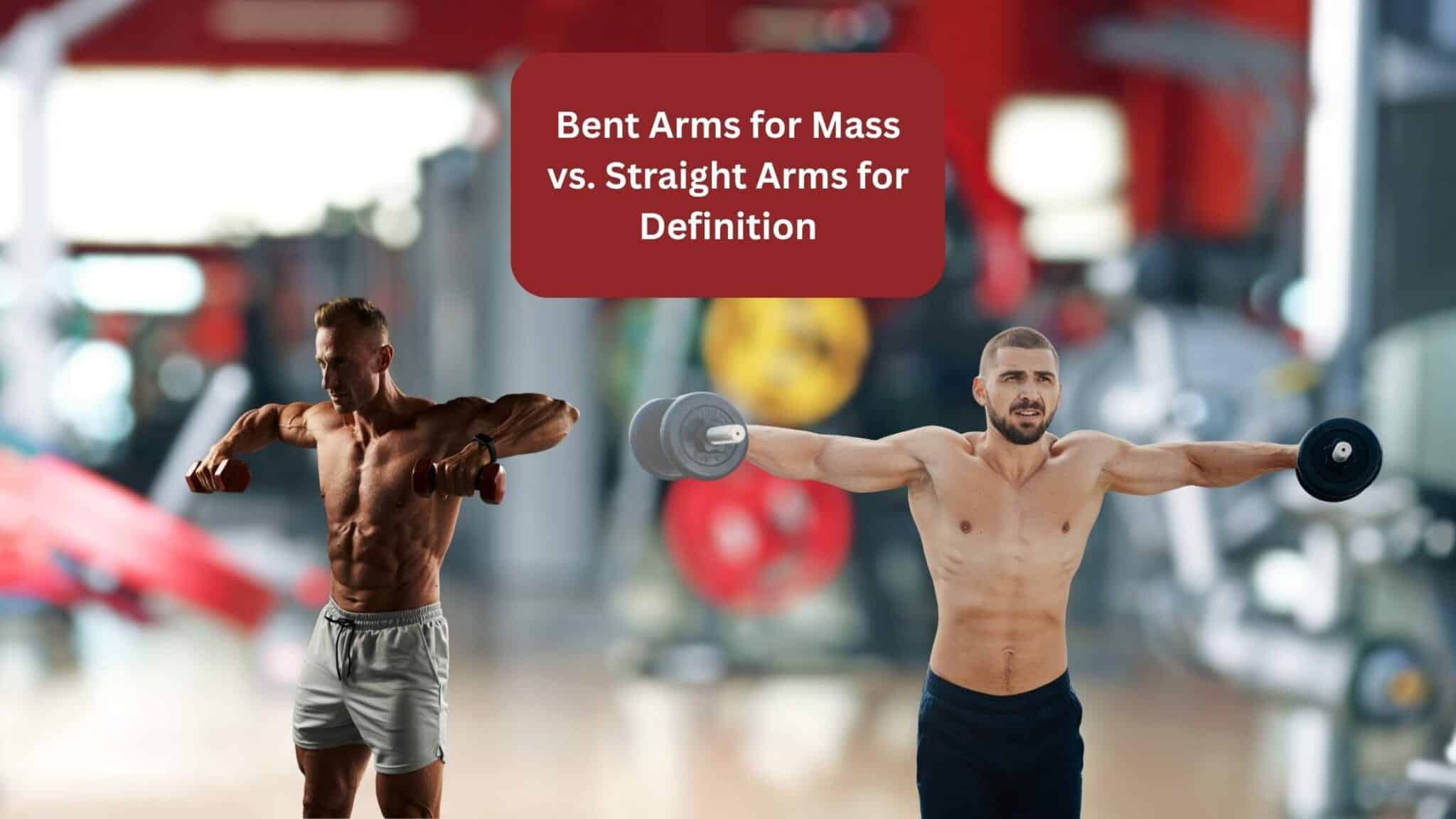
Bent Arms for Mass vs. Straight Arms for Definition: Myth or Reality?
Quick answer: The “bent arms build mass, straight arms build definition” idea is an oversimplification. Muscle growth depends far more on training variables like load, volume, and progressive overload than on whether your elbow is bent or straight during a given exercise — but the two arm positions do train your muscles somewhat differently, which is why blending both tends to work better than picking one exclusively.
Researched and written by the GymGoodies team, fact-checked against manufacturer specs and current fitness guidance.
Bodybuilders have leaned on bent-arm exercises like curls for building bicep and tricep mass for decades, while calisthenics athletes have long favored straight-arm work like planches, L-sits, and ring holds for building visibly defined, functional arm strength. This has hardened into a popular belief: bent arms for size, straight arms for definition. It’s a catchy rule of thumb, but it oversimplifies what’s actually driving muscle growth.
What Actually Drives Muscle Growth
According to a comprehensive review published as an American College of Sports Medicine position stand, muscle hypertrophy in healthy adults is most reliably driven by higher training volume (generally 10+ sets per muscle per week) and eccentric overload — not by joint angle or arm position specifically. The same review found that voluntary strength gains responded best to heavier loads performed through a full range of motion, while power responded best to moderate loads performed with fast concentric movement. Time under tension and exercise type didn’t consistently predict outcomes on their own.
This lines up with the broader principle of progressive overload — gradually increasing the demand placed on a muscle over time, whether through added weight, added volume, or slower, more controlled tempo. Overload is what actually signals your body to adapt and grow; arm position is a secondary factor that shapes how that overload gets applied, not whether it happens at all.
Where Bent-Arm Exercises Genuinely Excel
Bent-arm movements — barbell curls, preacher curls, close-grip presses — allow you to isolate specific muscles (like the biceps or triceps) and progressively add external load in a controlled, trackable way. This makes it straightforward to apply progressive overload consistently, which is a big part of why bent-arm isolation work has remained a bodybuilding staple for so long.
Where Straight-Arm Exercises Genuinely Excel
Straight-arm movements — planks, ring holds, L-sits, straight-arm plank-to-pike transitions — demand more from stabilizing muscles and connective tissue, since you’re maintaining tension through a fully extended joint rather than a bent one. This tends to build a different kind of strength: isometric endurance, joint stability, and often visible definition in the smaller stabilizing muscles that bent-arm isolation work doesn’t directly target.
Why the “Versus” Framing Misses the Point
Treating bent-arm and straight-arm training as competing strategies ignores that they’re often complementary rather than interchangeable:
- Bent-arm work is generally easier to progressively overload with added weight, making it well-suited to a primary mass-building phase.
- Straight-arm work adds a stimulus that isolation-focused training often neglects: stabilizer engagement and connective tissue resilience, which can support long-term joint health and reduce injury risk.
- Neither one substitutes for the other if your goal is genuinely well-rounded arm development — most well-designed programs use both rather than picking a side.
This mirrors a broader theme we’ve covered elsewhere on the site: our Bodybuilding vs. Functional Fitness piece covers a similar false-dichotomy pattern in how arm position gets framed during lateral raises specifically, and our Bent-Arm Lateral Raises guide breaks down the joint-mechanics side of the bent-vs-straight question for that particular movement.
A Simple Way to Combine Both in Training
Rather than choosing one style permanently, a practical approach:
- Anchor your program with bent-arm isolation work (curls, presses) where you can reliably track and progress load week to week.
- Add straight-arm stability work (planks, ring holds, or simpler options like straight-arm plank-to-pike movements) as an accessory, either the same session or on a separate day.
- Progress both over time — increasing load on bent-arm work, and increasing hold duration or difficulty on straight-arm work.
Common Mistakes With This Approach
- Doing only bent-arm isolation work and neglecting stabilizers — this can leave connective tissue and smaller stabilizing muscles underdeveloped relative to the primary muscle groups, which may show up as joint discomfort over time.
- Doing only straight-arm work expecting significant mass gains — bodyweight straight-arm holds are excellent for stability and definition but are harder to progressively overload with the same precision as adding external weight to a bent-arm exercise.
- Ignoring recovery — combining both training styles adds volume; make sure total weekly training load stays appropriate for your recovery capacity rather than just stacking more work indefinitely.
Frequently Asked Questions
Do I need equipment for straight-arm training?
Not necessarily — many straight-arm exercises (planks, L-sits, ring holds if you have access to rings or a bar) rely primarily on bodyweight, though added resistance (like our resistance band guide covers for a related movement) can increase difficulty over time.
Which should I prioritize if I only have time for one?
If your primary goal is muscle size, bent-arm isolation work with progressive overload is generally the more efficient choice. If your goal is joint health, stability, or a more well-rounded functional base, straight-arm work deserves more attention.
How long before I notice a difference from adding straight-arm work?
This varies by individual, but most people notice improved stability and endurance within a few weeks of consistent practice; visible changes in definition typically take longer and depend on overall training volume and nutrition.
Bottom Line
“Bent arms for mass, straight arms for definition” is a memorable rule of thumb, but the real driver of muscle growth is progressive overload — applied consistently over time — rather than arm position alone. Bent-arm and straight-arm training genuinely do different things well, which is exactly why combining both, rather than picking a side, tends to produce the most well-rounded results.
Do you currently train bent-arm and straight-arm work separately, or do you blend them in the same session? Let us know in the comments what’s worked for you.