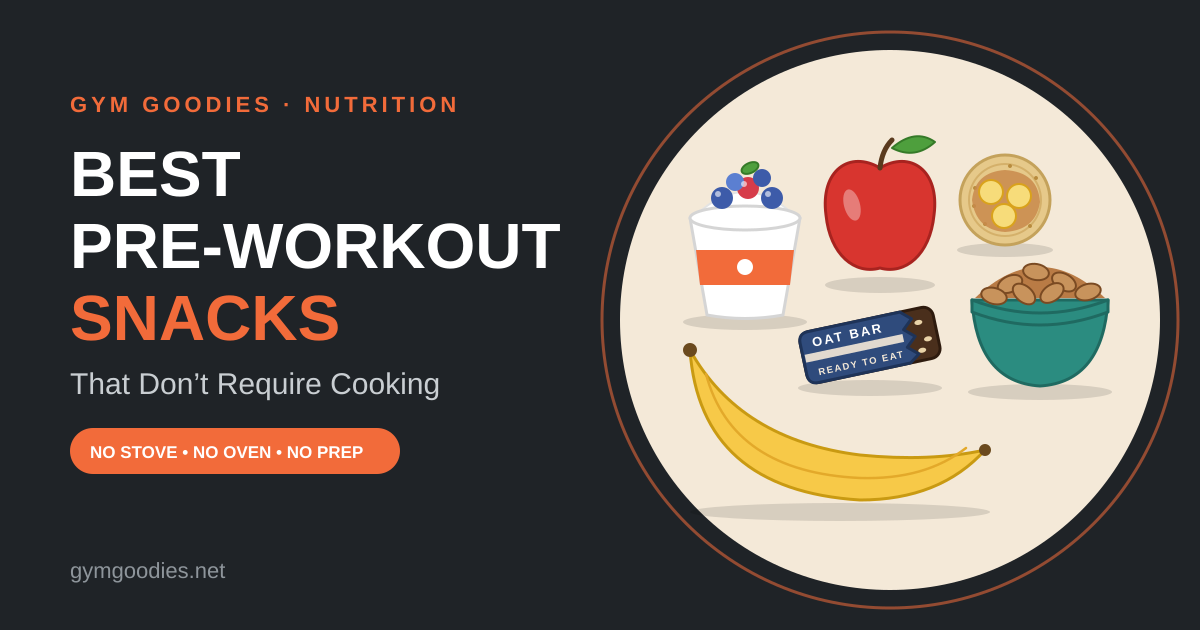
Best Pre-Workout Snacks That Don’t Require Cooking
Quick Answer
The best pre-workout snacks that require no cooking are easy-to-digest combinations of carbohydrate and a moderate amount of protein, consumed 30–90 minutes before training. Top options include Greek yogurt, ripe bananas, rice cakes with honey or jam, ready-to-drink protein shakes, cottage cheese, applesauce, and simple toast or cereal with low-fiber toppings. These foods provide usable energy, minimise digestive discomfort, and need zero preparation time—ideal for short home training windows.
Why No-Cook Pre-Workout Snacks Matter for Home Lifters
Home training often happens in compressed time slots—early mornings, lunch breaks, or evenings after work. Turning on the stove or waiting for food to cook adds friction that causes many people to train fasted or under-fueled. A reliable set of no-cook snacks removes that barrier. The ideal snack supplies carbohydrate for immediate energy, a modest amount of protein for satiety and muscle support, and minimal fat and fiber so digestion stays comfortable during the session.
Core Principles for Effective No-Cook Pre-Workout Snacks
- Prioritise digestibility – Low-to-moderate fiber and low fat reduce bloating risk.
- Include usable carbohydrate – 20–40 g is sufficient for most home sessions.
- Add moderate protein when possible – 10–25 g supports satiety without slowing digestion excessively.
- Keep preparation at zero – The snack must be grab-and-go.
- Time it correctly – 30–90 minutes before training works for most people.
- Test individual tolerance – Personal digestive response is the final guide.
No-Cook Pre-Workout Snack Comparison
| Snack | Approx. Carbs | Approx. Protein | Digestibility | Prep Time | Best For |
|---|---|---|---|---|---|
| Greek yogurt (plain or lightly flavored) | 8–15 g | 15–20 g | High | None | Balanced energy + protein |
| Ripe banana | 25–30 g | 1 g | Very high | None | Fast carbohydrate |
| Rice cakes + honey/jam | 20–30 g | 1–3 g | Very high | None | Quick carbs, very light |
| Ready-to-drink protein shake | 5–20 g | 20–30 g | High | None | Protein emphasis |
| Cottage cheese | 5–8 g | 14–20 g | High | None | Protein + minimal carbs |
| Applesauce (unsweetened or lightly sweetened) | 20–25 g | 0 g | Very high | None | Sensitive stomachs |
| White toast or plain bagel | 20–30 g | 4–8 g | High | None | Simple starch |
| Low-fiber cereal + milk | 25–35 g | 8–12 g | Moderate–High | None | Combined carbs + protein |
| Protein bar (lower-fiber options) | 15–25 g | 15–20 g | Variable | None | Convenience on the go |
| Fruit + string cheese | 15–25 g | 6–8 g | High | None | Balanced mini-meal |
Shoulder-friendly training and grip work still benefit from stable pre-session energy (Bent Arms vs. Straight Arms in Lateral Raises, The Hidden Mistake in Lateral Raises, 3 Lateral Raise Modifications, and Do Hand Grippers Really Work?).
Step-by-Step Guide to Choosing and Using No-Cook Pre-Workout Snacks
- Identify your typical training time
Early morning, midday, or evening determines which snacks are most practical. - Decide whether you need more carbohydrate or more protein
Short or fasted-feeling sessions often benefit from higher carbohydrate. Sessions after a long gap since the last meal may need both. - Select 2–3 reliable options and keep them stocked
Consistency of supply is more important than constant variety. - Match portion size to session demands
20–40 g of carbohydrate is adequate for most 30–50 minute home workouts. - Eat 30–90 minutes before training
This window allows partial digestion while still providing energy. - Start conservatively if you have a sensitive stomach
Begin with smaller portions or the lowest-fiber options (banana, rice cakes, applesauce). - Note energy and digestive comfort after the session
Adjust source or amount based on real feedback. - Create a “training snack station”
Keep the chosen foods in one visible place so the decision is automatic. - Have a liquid backup
Ready-to-drink shakes or diluted juice work when solid food is unappealing. - Reassess when training stress or schedule changes
Heavier sessions or very early mornings may need slight modifications.
Top No-Cook Pre-Workout Snack Recommendations
1. Greek Yogurt or Skyr
High protein, modest carbohydrate, excellent digestibility for most people. Choose plain or lightly flavored versions to limit added sugar if desired. Add a small drizzle of honey if extra carbohydrate is needed.
2. Ripe Banana
One of the fastest-digesting whole-food carbohydrate sources. Minimal preparation, portable, and gentle on the stomach. Pair with a small protein source if the gap since the last meal is long.
3. Rice Cakes with Honey or Jam
Extremely light and fast-digesting. Ideal for people who feel heavy after more substantial snacks. Two to three rice cakes with a thin spread provide reliable carbohydrate.
4. Ready-to-Drink Protein Shakes
Useful when protein is the priority or when solid food is unappealing. Look for versions with at least 10–15 g of carbohydrate if energy is also needed, or add a banana.
5. Cottage Cheese
High protein with very low carbohydrate. Best when you already have some carbohydrate available from an earlier meal or when training intensity is moderate.
6. Applesauce
Smooth, low-fiber, and easy to digest. Excellent for sensitive stomachs or very early sessions. Choose unsweetened or lightly sweetened depending on carbohydrate needs.
7. Simple Toast or Plain Bagel
White bread products digest more quickly than high-fiber alternatives. A single slice or half bagel is often sufficient.
8. Low-Fiber Cereal with Milk
Provides both carbohydrate and protein in one bowl. Choose cereals that are not extremely high in fiber to keep digestibility high.
Sample Pre-Workout Snack Combinations (No Cooking)
- Greek yogurt (170–200 g) + small drizzle of honey
- 1 medium ripe banana + 1 string cheese
- 2–3 rice cakes + thin layer of jam
- Ready-to-drink protein shake + half banana
- Cottage cheese (150 g) + small handful of low-fiber crackers
- Single-serving applesauce + small protein shake
- 1 slice white toast + thin spread of jam or honey
- Small bowl of low-fiber cereal with milk
All of these can be ready in under one minute.
Timing and Portion Guidelines
| Session Type | Suggested Carbohydrate | Suggested Protein | Timing Window |
|---|---|---|---|
| Short technique or light session (20–30 min) | 15–25 g | 10–15 g | 30–60 min prior |
| Standard strength session (35–50 min) | 25–40 g | 15–25 g | 45–90 min prior |
| Higher-density or longer session | 30–50 g | 15–25 g | 60–90 min prior |
| Very early morning (limited appetite) | 15–30 g | 10–20 g | 20–45 min prior or liquid |
Common Mistakes With Pre-Workout Snacks
| Mistake | Result | Better Approach |
|---|---|---|
| Choosing high-fiber foods too close to training | Bloating and discomfort | Select lower-fiber options |
| Eating too large a portion | Heaviness during the session | Start with moderate amounts |
| Relying only on protein with almost no carbohydrate | Flat energy | Include 20–40 g carbohydrate |
| Waiting until 10 minutes before training | Insufficient digestion time | Aim for 30–90 minutes |
| Keeping snacks hidden or out of stock | Defaulting to training fasted | Maintain a visible, stocked station |
| Ignoring personal tolerance | Repeated digestive issues | Test and refine |
Strength training performance improves when sessions are properly fueled (strength training guidance). Practical home-gym approaches emphasise simple, repeatable nutrition habits that remove friction (home gym equipment prioritisation and budget home gym principles).
Frequently Asked Questions
How long before training should I eat a no-cook snack?
Most people do best 30–90 minutes prior. Experiment within that window to find your optimal timing.
Can I train effectively on an empty stomach instead?
Yes for some people, especially on shorter sessions. If energy or performance feels consistently low, a small no-cook snack is worth testing.
What if I have a very sensitive stomach?
Start with the lowest-fiber options: ripe banana, applesauce, rice cakes, or a ready-to-drink shake. Keep portions modest.
Do I need both carbohydrate and protein?
Carbohydrate is the priority for immediate energy. Adding moderate protein improves satiety and contributes to daily protein targets.
Are protein bars good pre-workout snacks?
Some are. Choose bars lower in fiber and sugar alcohols if digestive comfort is a concern. Whole-food or simpler options are often better tolerated.
What should I do if I only have 15–20 minutes before training?
Use a liquid or very fast-digesting option (half banana, small shake, or diluted juice) or train fasted if that feels better for you.
Can these snacks replace a full meal?
They are intended as pre-workout fuel, not full meal replacements. Total daily nutrition remains important.
How do I know if my pre-workout snack is working?
You should feel steady energy during the session and minimal digestive discomfort. Track both variables for a week while testing options.
Final Recommendation
The best pre-workout snacks that require no cooking are simple, easily digested combinations of carbohydrate and moderate protein such as Greek yogurt, ripe bananas, rice cakes with honey, ready-to-drink shakes, cottage cheese, and applesauce. Consume 20–40 g of carbohydrate (with optional protein) 30–90 minutes before training, keep portions moderate, and stock 2–3 reliable options so the choice is automatic.
Choose two no-cook snacks today, place them where you will see them, and test one before your next home session. Note your energy and comfort, then refine portion size or timing as needed. When pre-workout fueling is this simple, you remove a major source of friction and give yourself a better chance of consistent, high-quality training. Start with the next workout—the right snack can make a noticeable difference in how the session feels and performs.