Long-Term Home Training Systems That Prevent Boredom and Burnout
Quick Answer
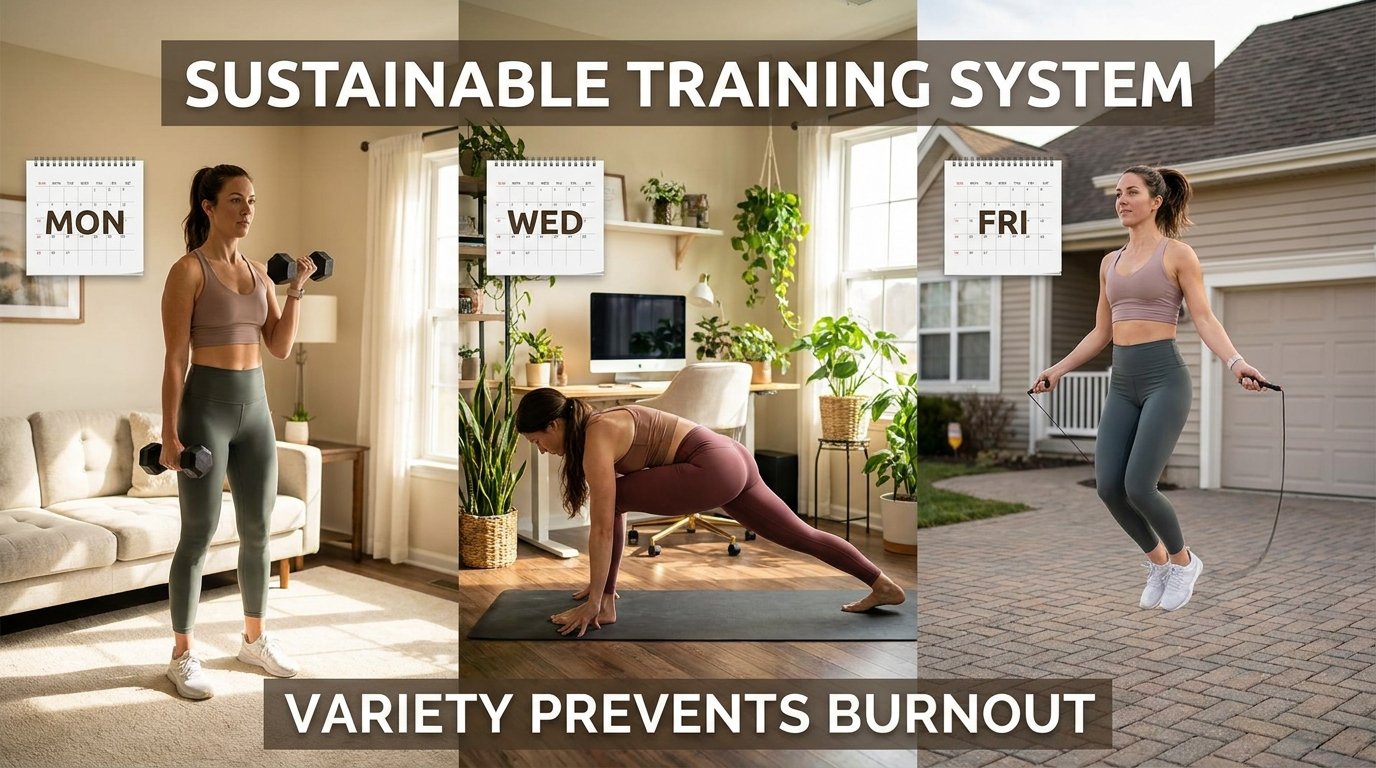
Long-term home training systems that prevent boredom and burnout rely on planned variation within a stable structure, regular deloads, rotating progression methods, clear but flexible goals, and environment design that keeps starting easy. Keep core movement patterns consistent while changing exercises, tempos, or set structures every 4–8 weeks. Track adherence and performance, schedule recovery periods, and periodically refresh goals so training remains challenging without becoming monotonous or exhausting. Sustainability comes from systems, not constant novelty or perpetual high intensity.
Why Boredom and Burnout Appear in Home Training
Home training removes commuting and waiting for equipment, but it also removes external variety and social cues. The same space, the same limited tools, and the same self-directed routine can become repetitive. At the same time, the absence of forced rest days or coaching oversight makes it easy to push too hard for too long. Boredom usually stems from lack of perceived progress or excessive sameness. Burnout usually stems from insufficient recovery, monotony, or misaligned goals. Effective long-term systems address both problems simultaneously.
Core Principles of Sustainable Home Training Systems
- Stable movement patterns, variable execution – Keep squat, hinge, push, pull, and core work while rotating how they are performed.
- Progression method rotation – Cycle through load, tempo, pauses, unilateral work, and density so stimulus stays fresh.
- Planned recovery – Deloads and easier weeks prevent cumulative fatigue.
- Goal cycling – Shift emphasis between strength, work capacity, skill, or consistency over time.
- Low-friction environment – Training must remain easy to start even on low-motivation days.
- Simple tracking – Visible progress reduces boredom; excessive metrics increase burnout risk.
- Identity over outcomes – Viewing yourself as someone who trains at home supports consistency across years.
System Elements That Prevent Boredom vs Burnout
| System Element | Primary Benefit | How It Helps Longevity | Implementation Frequency |
|---|---|---|---|
| Exercise rotation within patterns | Reduces boredom | New stimulus without changing goals | Every 4–8 weeks |
| Progression method cycling | Prevents stagnation | Fresh overload signals | Every 4–8 weeks |
| Scheduled deloads | Prevents burnout | Restores recovery capacity | Every 4–8 weeks |
| Goal cycling | Maintains motivation | Matches training to current life phase | Every 8–16 weeks |
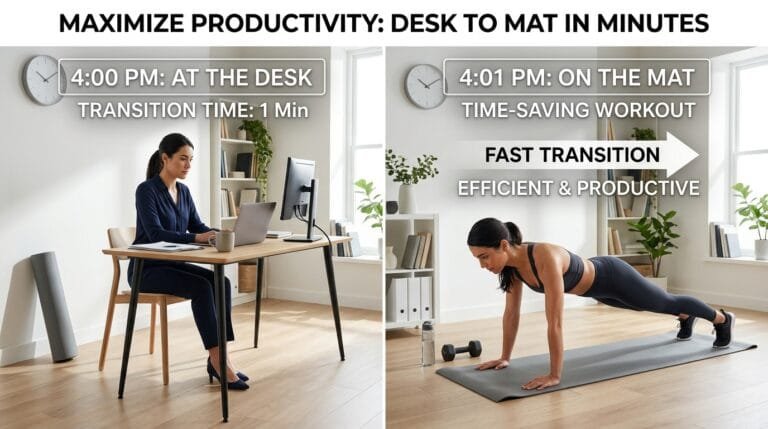
| Minimum viable session | Protects adherence | Keeps habit alive on hard days | As needed |
| Environment design | Lowers friction | Makes starting automatic | Ongoing |
| Simple performance tracking | Shows progress | Counters boredom from invisible gains | Every session |
| Weekly review | Course correction | Prevents slow drift into ineffective routines | Weekly |
Shoulder-friendly technique supports long-term upper-body training without overuse (Bent Arms vs. Straight Arms in Lateral Raises, The Hidden Mistake in Lateral Raises, and 3 Lateral Raise Modifications). Grip training can serve as a low-friction, high-reward finisher that adds variety (Do Hand Grippers Really Work?).
Step-by-Step Construction of a Long-Term System
- Lock in the fundamental patterns
Every training week should include squat/lunge, hinge, push, pull, and core or carry work. - Create a small menu of exercises for each pattern
Two to four options per pattern allow rotation without decision fatigue. - Choose a default progression method
Load, tempo, pauses, or density—select one primary method for the current block. - Set a block length
4–8 weeks is practical for most home trainees. - Schedule deloads in advance
Insert a lower-volume week at the end of each block. - Define success metrics for the block
Adherence percentage plus one or two performance markers. - Design the training environment for automatic starts
Equipment ready, space clear, minimum viable session written down. - Install a weekly review habit
Ten minutes to check adherence, recovery, and any rising friction. - Plan goal shifts every 2–4 blocks
Move between strength emphasis, work-capacity emphasis, or consistency emphasis as life requires. - Protect the system during disruptions
Use the minimum viable session so the habit never fully stops.
Practical Exercise Rotation Framework
Squat / Lunge Pattern Options
- Goblet squat
- Reverse lunge
- Bulgarian split squat
- Step-up
Hinge Pattern Options
- Romanian deadlift
- Single-leg Romanian deadlift
- Hip thrust / glute bridge
- Good morning (bodyweight or light load)
Push Pattern Options
- Floor press
- Push-up variations
- Overhead or incline press
- Band press
Pull Pattern Options
- Single-arm row
- Inverted row
- Band face pull
- Two-arm band row
Rotate one or two exercises every 4–8 weeks while keeping the overall structure identical. The familiarity of the template prevents overwhelm; the small changes prevent boredom.
Progression Method Cycling
A simple annual or semi-annual rotation might look like:
- Block 1: Linear load or repetition progression
- Block 2: Tempo and pause emphasis
- Block 3: Unilateral emphasis
- Block 4: Density and work-capacity emphasis
Then repeat or adjust based on goals. Each method provides a different stimulus and psychological novelty without requiring new equipment.
Deload and Recovery Integration
Deloads are not optional for long-term training. A typical deload reduces volume by 40–60 % while keeping some movement. Many home trainees benefit from a deload every 4–8 weeks depending on intensity and life stress. Easier weeks restore motivation as well as physical capacity.
Goal Cycling for Sustained Motivation
Long-term systems work better when goals evolve:
- Strength block focused on progressive overload of main lifts
- Consistency block focused on high adherence during busy periods
- Work-capacity block focused on density and conditioning
- Technique or imbalance block focused on unilateral control
Cycling goals prevents the stagnation that comes from chasing the same outcome indefinitely.
Environment and Habit Supports
Sustainable systems reduce reliance on daily motivation:
- Equipment lives in a ready state
- Training times are pre-scheduled
- A written minimum viable session exists for low-energy days
- Tracking is simple and visible
- Weekly reviews are calendar appointments
These supports keep training alive across years of changing life circumstances.
Common Causes of Boredom and Burnout—and System Fixes
| Problem | Typical Cause | System Fix |
|---|---|---|
| Boredom | Identical sessions for months | Exercise and progression rotation every 4–8 weeks |
| Boredom | No visible progress | Simple performance tracking and regular reviews |
| Burnout | No planned recovery | Scheduled deloads |
| Burnout | Perpetual high intensity | Goal cycling that includes lower-stress blocks |
| Both | Excessive complexity | Stable template with limited exercise menu |
| Both | All-or-nothing mindset | Minimum viable session rule |
| Both | Isolated training with no feedback | Weekly review and occasional external check-in |
Sample Annual Structure (Flexible)
- Weeks 1–6: Strength emphasis, load progression
- Week 7: Deload
- Weeks 8–13: Tempo/pause or unilateral emphasis
- Week 14: Deload
- Weeks 15–20: Density / work-capacity emphasis
- Week 21: Deload
- Weeks 22–26: Consistency or technique focus (especially useful during busy seasons)
Adjust block length and emphasis to personal recovery and schedule.
Strength training delivers lasting benefits when it is sustainable across years rather than intense for short periods (strength training guidance). Practical home-gym approaches emphasise systems that remain usable and engaging over the long term (home gym equipment prioritisation and budget home gym principles).
Frequently Asked Questions
How often should I change exercises to avoid boredom?
Every 4–8 weeks is sufficient for most people. More frequent changes can reduce progressive overload clarity.
Do I need completely new workouts to stay motivated?
No. Small changes within a stable template provide enough novelty while preserving progress tracking.
How do I know if I need a deload?
Rising joint irritation, stalled performance, persistent fatigue, or declining motivation are common signals. Planned deloads prevent these from accumulating.
Can I stay on the same program for years?
Yes, if progression methods and minor exercise variations are rotated and recovery is managed. Many successful trainees use very similar templates for long periods.
What is the biggest risk to long-term home training?
Loss of the habit during busy or low-motivation periods. A minimum viable session and strong environment design are the main protections.
How detailed should tracking be?
Simple adherence and key performance metrics are enough. Excessive tracking often becomes a source of friction.
Should I take complete time off?
Short complete breaks (one week) can be useful occasionally, but most people do better with reduced-load deloads that keep the habit intact.
How do I handle long periods of low motivation?
Shrink the session to the minimum viable version, protect the scheduled days, and focus only on completion. Motivation often returns after consistency is re-established.
Final Recommendation
Long-term home training systems that prevent boredom and burnout combine stable movement patterns with planned variation, rotating progression methods, scheduled deloads, goal cycling, and low-friction environment design. Keep the structure familiar, change the details every 4–8 weeks, recover deliberately, and measure success by consistency as well as performance.
Build or refine your template today: list two to four exercise options per pattern, choose the next progression method, schedule the next deload, and write down your minimum viable session. Install a weekly review and protect the training times. When these systems are in place, home training remains productive and sustainable for years instead of months. Start with the next session—the habits and structures you reinforce now determine whether training stays a permanent part of your life.