How to Handle Plateaus Without Buying More Equipment
Quick Answer
Handle training plateaus without buying more equipment by changing how you apply progressive overload: slow the tempo, add pauses, increase range of motion, switch to unilateral variations, improve density (more work in less time), or raise weekly frequency while keeping total volume manageable. These methods create new stimulus using the same bands, dumbbells, kettlebells, or bodyweight you already own. Track the new variables, apply one change at a time, and give each approach 3–6 weeks before deciding it has stopped working.
Why Plateaus Happen in Home Training
A plateau occurs when the body has adapted to the current level of stress and no longer needs to get stronger or more muscular to meet the demand. In a home gym this often appears as stalled load increases, unchanged repetitions, or a lack of progress in body composition despite consistent training. Because equipment is limited, many trainees assume the only solution is heavier weights or new machines. In reality, progressive overload has multiple dimensions. Load is only one of them. When load cannot increase, the other dimensions—tempo, range, complexity, density, and frequency—become the primary tools.
Core Principles for Breaking Plateaus with Existing Equipment
- Progressive overload is multi-dimensional – Load, volume, density, range, tempo, and complexity all count.
- Change one variable at a time – Isolating the change makes it clear what is working.
- Track the new metric – What gets measured gets managed.
- Allow enough time – Most methods need 3–6 weeks of consistent application.
- Maintain technique quality – Harder variations performed poorly create injury risk rather than progress.
- Recover adequately – Plateaus sometimes signal under-recovery rather than insufficient stimulus.
Plateau-Breaking Methods Compared
| Method | How It Creates Overload | Best For | Equipment Needed | Difficulty to Implement |
|---|---|---|---|---|
| Slow eccentrics | Increases time under tension | Strength and muscle | Any | Low |
| Paused reps | Eliminates stretch-reflex and adds control demand | Strength and weak-point training | Any | Low |
| Increased range of motion | Greater muscle lengthening and work | Mobility + strength | Any | Low–moderate |
| Unilateral variations | Raises relative load per limb and stability demand | Balance and continued progress | Any | Moderate |
| Density training | More work in less time | Work capacity and metabolic stress | Any | Low |
| Higher frequency | More practice and weekly stimulus | Skill and cumulative volume | Any | Moderate |
| Advanced bodyweight leverage | Changes mechanical disadvantage | Calisthenics progressions | Bodyweight | Moderate–high |
| Band + free-weight combinations | Adds accommodating or constant extra tension | Intermediate lifters | Bands + dumbbells/kettlebell | Low |
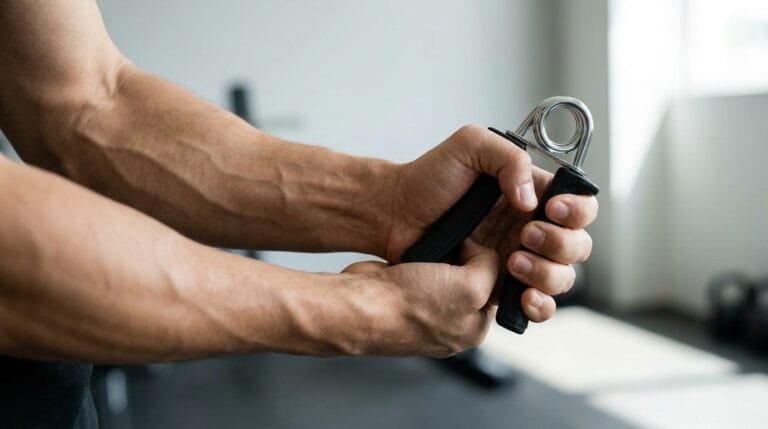
Shoulder-friendly technique supports long-term upper-body progress when using any of these methods (Bent Arms vs. Straight Arms in Lateral Raises, The Hidden Mistake in Lateral Raises, and 3 Lateral Raise Modifications). Grip strength can continue progressing with simple high-tension holds and carries (Do Hand Grippers Really Work?).
Step-by-Step System for Handling a Plateau
- Confirm it is a true plateau
Look at 3–4 weeks of logs. If load, reps, and performance density are all unchanged despite good recovery, treat it as a plateau. - Audit recovery first
Sleep, protein intake, stress, and total weekly volume influence progress. Fix obvious recovery gaps before adding training stress. - Choose one primary plateau-breaking method
Select from tempo, pauses, range, unilateral work, or density based on the lift or goal that is stuck. - Apply the method to the stalled movement
Keep other exercises relatively stable so the new stimulus is clear. - Track the new variable
Log tempo speed, pause length, range achieved, or rounds completed. - Run the method for 3–6 weeks
Consistency matters more than frequent changes. - Reassess
If progress resumes, continue or layer a second method. If not, switch to a different variable. - Deload if performance declines
Persistent stagnation plus rising fatigue often responds better to a short reduction in volume than to harder training. - Return to load progression when possible
Once the new method has raised capacity, small load increases may become available again. - Document what worked
Build a personal menu of plateau-breaking tools for future use.
Detailed Plateau-Breaking Methods
1. Slow Eccentric Tempo
Lower the weight or body in 3–5 seconds. This increases time under tension and mechanical stress without heavier load. Apply to squats, Romanian deadlifts, push-ups, rows, and lunges.
2. Paused Repetitions
Pause for 1–3 seconds at the hardest point (bottom of a squat or push-up, stretched position of a row or hinge). Pauses remove momentum and improve positional strength.
3. Increased Range of Motion
Elevate heels for squats, use a deficit for hinges, or perform deeper controlled lunges. Greater range often creates new stimulus even with the same load.
4. Unilateral Variations
Shift from bilateral to single-leg or single-arm versions. Rear-foot elevated split squats, single-leg Romanian deadlifts, and single-arm rows raise the relative demand dramatically.
5. Density Training
Complete the same amount of work in less time or more work in the same time. Track total rounds of a circuit or reduce rest periods systematically.
6. Higher Frequency with Managed Volume
Train the stalled pattern more often (e.g., three times per week instead of two) while keeping per-session volume moderate. More practice can restart progress.
7. Advanced Bodyweight Leverage
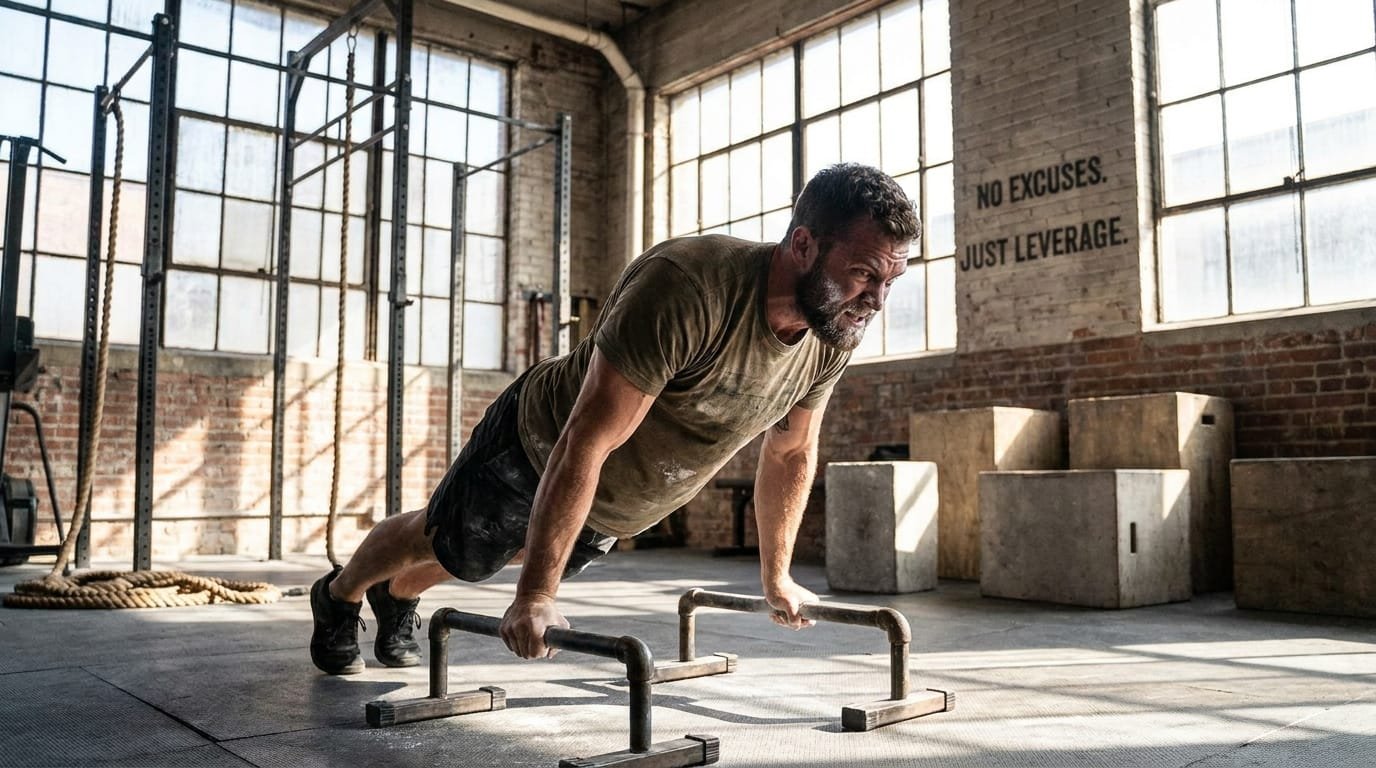
Move from regular push-ups to archer, typewriter, or elevated-feet versions. Apply similar leverage changes to inverted rows and squat progressions.
8. Combination Methods
Pair a slow eccentric with a pause, or combine unilateral work with density. Add complexity only after single methods have been explored.
Sample Progressions Using Existing Equipment
Goblet Squat Plateau
Week 1–3: 3-second eccentric
Week 4–6: Add 2-second pause at the bottom
Then: Move to rear-foot elevated split squat or increase load if available
Push-Up Plateau
Week 1–3: 3-second lowering phase
Week 4–6: Pause at the bottom or elevate feet
Then: Archer push-ups or band-resisted variations
Romanian Deadlift Plateau
Week 1–3: Deficit stance or slower eccentric
Week 4–6: Single-leg Romanian deadlift
Then: Add pauses or density work
Row Plateau
Week 1–3: 3-second eccentric and pause at contraction
Week 4–6: Single-arm focus with longer pause
Then: Inverted rows with elevated feet or slower tempo
Recovery and Programming Considerations
Plateaus sometimes indicate that recovery capacity has been exceeded rather than that stimulus is insufficient. Before adding more difficulty, confirm:
- Sleep is consistently 7–9 hours
- Protein intake is adequate
- Weekly hard sets are not excessively high
- Joint feeling remains stable
A planned deload of 40–60 % volume for one week often restores progress more effectively than continued pushing.
Common Mistakes When Trying to Break Plateaus
| Mistake | Result | Better Approach |
|---|---|---|
| Changing too many variables at once | Unclear what worked | Change one primary variable |
| Abandoning a method after one week | Insufficient stimulus time | Run each method 3–6 weeks |
| Adding intensity while recovery is poor | Deeper fatigue | Fix sleep and volume first |
| Ignoring technique under harder variations | Injury risk | Film sets and regress when form fails |
| Assuming new equipment is the only solution | Unnecessary cost and clutter | Exhaust non-load methods first |
| No tracking of the new variable | Invisible progress | Log tempo, pauses, or density |
Strength training continues to produce results as long as progressive overload is applied in some form (strength training guidance). Practical home-gym approaches emphasise maximising the tools already present rather than constant expansion (home gym equipment prioritisation and budget home gym principles).
Frequently Asked Questions
How long should I try a new method before deciding it failed?
Three to six weeks of consistent application is a reasonable test period for most plateau-breaking techniques.
What if I have already tried tempo and pauses?
Move to unilateral variations, increased range of motion, or density training. Layer methods only after single changes have been explored.
Can I break a plateau with pure bodyweight training?
Yes. Advanced leverage progressions, tempo work, pauses, and density methods allow continued progress for a long time.
Should I reduce volume when adding harder variations?
Often yes. Harder variations raise the stress per set, so keeping set count moderate prevents excessive fatigue.
How do I know if the plateau is caused by under-recovery?
Look for rising joint discomfort, declining sleep quality, persistent fatigue, or stalled performance across multiple lifts. A deload is the simplest diagnostic tool.
Is it okay to keep the same exercises for years?
Yes, provided progressive overload continues through load, tempo, range, complexity, or density. Exercise rotation is optional, not mandatory.
What is the fastest plateau-breaker for most home trainees?
Slow eccentrics and paused repetitions are usually the easiest to implement and produce rapid new stimulus.
Do I ever need more equipment?
Eventually some trainees benefit from additional load options. Exhaust the non-load methods first so any future purchase is truly necessary.
Final Recommendation
Training plateaus can be broken without buying more equipment by applying progressive overload through tempo, pauses, range of motion, unilateral variations, density, and frequency. Confirm that recovery is adequate, choose one primary method, track the new variable, and run it for 3–6 weeks. Maintain technique quality and use deloads when fatigue accumulates.
Review your training log this week, identify the stalled movements, and select one plateau-breaking method to apply starting with the next session. Log the new variable carefully and reassess after three to six weeks. When overload is treated as multi-dimensional rather than load-only, existing bands, dumbbells, kettlebells, and bodyweight continue to drive progress for years. Start with the next workout—the solution is already in your current toolkit.