
Sleep and Recovery Habits That Make Home Training More Effective
Quick Answer
Sleep and recovery habits make home training more effective by improving muscle repair, hormone balance, skill retention, and readiness for progressive overload. Aim for 7–9 hours of quality sleep most nights, keep a consistent sleep schedule, manage caffeine and light exposure, eat sufficient protein, use planned deloads, and monitor joint and energy signals. These fundamentals increase the return on every training session and reduce injury risk more than any advanced recovery modality.
Why Sleep and Recovery Determine Home-Training Results
Home training removes many external barriers, but it also removes external recovery cues. Without a coach or training partners, it is easy to train hard more frequently while under-recovering. Sleep is the primary recovery process: it drives muscle protein synthesis, restores nervous-system readiness, consolidates motor learning, and regulates the hormones that support strength and fat loss. When sleep is short or fragmented, progressive overload becomes harder, form deteriorates, and joint irritation appears sooner. Recovery habits therefore act as a multiplier on the training you already do.
Core Sleep and Recovery Principles for Home Trainees
- Prioritise sleep duration and consistency – 7–9 hours on a stable schedule outperforms occasional long nights.
- Protect sleep quality – Darkness, cool temperature, and low stimulation matter as much as total hours.
- Match training stress to recovery capacity – Higher frequency or volume requires better sleep and more deliberate unloading.
- Support recovery with nutrition – Adequate protein and overall energy intake enable the repair that sleep initiates.
- Use active recovery intelligently – Light movement and mobility help; aggressive extra work often hinders.
- Monitor and adjust – Track energy, joint feeling, and performance so recovery stays proactive rather than reactive.
Sleep Habits That Directly Improve Training Outcomes
| Habit | Training Benefit | Practical Implementation | Common Obstacle & Fix |
|---|---|---|---|
| Fixed sleep and wake times | Better hormone rhythm and readiness | Same bedtime and wake time ±30 min, including weekends | Social schedule → gradual 15-min shifts |
| 7–9 hours most nights | Muscle repair, cognitive recovery | Calculate backward from required wake time | “Not enough hours” → protect the wind-down |
| Dark, cool, quiet room | Deeper sleep stages | Blackout curtains, 16–19 °C, earplugs or white noise | Partner differences → compromise or separate solutions |
| Caffeine cut-off | Faster sleep onset | No caffeine 8–10 hours before bed | Afternoon habit → switch to decaf or herbal |
| Screen and light management | Melatonin preservation | Dim lights and avoid bright screens 30–60 min before bed | Evening work → blue-light filters + strict cut-off |
| Wind-down routine | Lower arousal | 20–30 min of reading, light stretching, or quiet conversation | Racing mind → brain-dump list earlier in evening |
Step-by-Step Sleep Optimisation for Home Trainees
- Calculate the bedtime that allows 7–9 hours before your realistic wake time.
- Set a consistent alarm and bedtime, then protect both for at least two weeks.
- Create a 20–30 minute wind-down that does not involve bright screens or intense discussion.
- Make the bedroom as dark and cool as practical.
- Move caffeine consumption earlier in the day.
- Keep training sessions far enough from bedtime that body temperature and arousal can fall (usually finish hard training at least 2–3 hours before sleep).
- Track sleep duration and how you feel on waking for two weeks.
- Adjust one variable at a time (earlier caffeine cut-off, darker room, etc.).
- Reassess training performance and joint feeling after the new sleep habits stabilise.
- Maintain the schedule even when motivation or social plans fluctuate.
Recovery Habits Beyond Sleep
Protein and Energy Intake
Muscle repair requires both the stimulus of training and the raw materials of nutrition. Most trainees benefit from 1.6–2.2 g of protein per kilogram of body weight per day, distributed across meals. Chronic energy deficits impair recovery even when protein is adequate. Home trainees who train in the evening should still ensure a protein-containing meal or snack after the session.
Planned Deloads
Every 4–8 weeks of hard training, reduce total sets by 40–60 % for 5–7 days while keeping loads moderate. This clears residual fatigue, protects joints, and often produces a performance rebound. Solo home trainees who skip deloads eventually encounter forced layoffs.
Daily Low-Intensity Movement
Short walks, easy cycling, or light mobility work promote blood flow without adding meaningful fatigue. These sessions improve recovery more reliably than complete inactivity or additional hard conditioning.
Symptom Monitoring
Track resting joint discomfort, motivation, and performance. Rising joint ache, dropped performance for several sessions, or declining sleep quality are signals to reduce volume immediately. Early regression prevents longer interruptions.
Joint-Friendly Training Practices
Controlled tempos, full pain-free ranges, and balanced pushing and pulling reduce the recovery demand of each session. Shoulder-friendly technique is especially important when training frequency is high (Bent Arms vs. Straight Arms in Lateral Raises, The Hidden Mistake in Lateral Raises, and 3 Lateral Raise Modifications). Grip work can be maintained at low volume without excessive recovery cost (Do Hand Grippers Really Work?).
Comparison of Recovery Approaches
| Approach | Impact on Training Effectiveness | Time & Cost | Sustainability |
|---|---|---|---|
| Sleep optimisation | Very high | Free, daily | High once habitual |
| Protein & energy intake | High | Low–moderate | High |
| Planned deloads | High | Free, periodic | High |
| Daily light movement | Moderate | Free, 10–30 min | High |
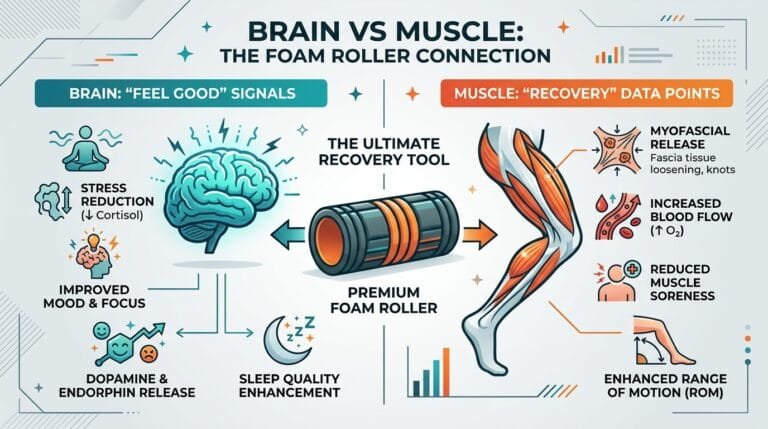
| Soft-tissue work / foam rolling | Low–moderate | Low | Moderate |
| Advanced modalities (ice baths, etc.) | Low for most people | Variable | Low |
The highest-return habits are also the simplest and cheapest.
Sample Daily Recovery Routine for Home Trainees
Evening (60–90 minutes before bed)
- Dim lights and stop bright screens
- Light mobility or easy walk if desired
- Protein-containing meal or snack if needed
- Wind-down activity (reading, quiet conversation)
- Consistent bedtime
Morning
- Fixed wake time
- Brief exposure to daylight
- Protein-rich breakfast
- Short mobility or walk if it improves readiness
Training Day Additions
- Finish hard sessions early enough for body temperature to fall
- Post-session protein if the main meal is delayed
- Note joint feeling and energy in the training log
Weekly
- One easier day or full rest day
- Review sleep consistency and joint symptoms
- Schedule the next deload when accumulated fatigue appears
Integrating Recovery with Home-Training Programming
High-frequency programmes require especially good recovery habits. When training four or more days per week, keep intensity moderate on most sets, reduce volume per session, and treat sleep as non-negotiable. Lower-frequency programmes still benefit from the same fundamentals but have more margin for imperfect nights. In both cases, recovery quality determines how much progressive overload the body can absorb.
Common Recovery Mistakes That Limit Home-Training Progress
| Mistake | Result | Better Approach |
|---|---|---|
| Inconsistent sleep schedule | Reduced readiness and repair | Fixed bedtime and wake time |
| Training late and hard every night | Elevated arousal at bedtime | Finish intense work earlier |
| Ignoring early joint signals | Escalation to injury | Reduce volume at first warning |
| Skipping deloads | Accumulated residual fatigue | Schedule them every 4–8 weeks |
| Under-eating protein or calories | Impaired repair | Track intake for 1–2 weeks and adjust |
| Adding extra hard conditioning on rest days | Competing fatigue | Use light movement only |
| Relying on supplements instead of sleep | Marginal returns | Fix sleep first |
Strength training remains highly effective when recovery is treated as part of the programme (strength training guidance). Practical home-gym approaches emphasise sustainable systems that include recovery as a core component (home gym equipment prioritisation and budget home gym principles).
Frequently Asked Questions
How many hours of sleep do most trainees need?
7–9 hours is the evidence-based range for most adults. Individual needs vary; consistent energy and performance are better guides than a rigid number.
Can I make progress on 6 hours of sleep?
Some people can for short periods, but most experience reduced recovery, slower strength gains, and higher injury risk. Extending sleep usually improves results more than adding extra training.
Is it better to train in the morning or evening for sleep?
Whatever allows consistency and leaves enough time for arousal to fall before bed. Late-evening high-intensity sessions disrupt sleep for many people.
Do I need trackers or apps?
Useful for some, but not required. Duration, consistency, and how you feel on waking provide most of the necessary information.
How does protein timing affect recovery?
Total daily intake matters most. A protein-containing meal or snack after training is helpful if the next main meal is delayed, but obsessive timing is unnecessary.
Should I take rest days or only deload weeks?
Both. Most programmes benefit from at least one easier or full rest day per week plus a planned deload every 4–8 weeks.
What is the fastest way to improve recovery right now?
Fix sleep duration and consistency for the next 14 days while reducing training volume slightly. Most people notice better energy and performance within two weeks.
Can mobility or foam rolling replace sleep?
No. They are useful adjuncts but cannot compensate for inadequate sleep.
Final Recommendation
Sleep and recovery habits make home training more effective by increasing the adaptive return on every session and protecting long-term joint health. Prioritise 7–9 hours of consistent, high-quality sleep, support it with adequate protein and energy intake, use planned deloads, monitor symptoms, and keep training stress matched to recovery capacity. These fundamentals outperform advanced recovery tools for the large majority of trainees.
Set a fixed bedtime and wake time today, calculate the schedule that allows 7–9 hours, and protect the wind-down routine for the next two weeks. Track how joints and training performance respond. When sleep and recovery are treated as seriously as the workouts themselves, progressive overload becomes more productive and sustainable. Start with the highest-leverage habit—consistent sleep—and build the rest of the system around it.