Best Adjustable Dumbbells That Don’t Waste Money or Space
Quick Answer
The best adjustable dumbbells for most home users are selectorized or dial-adjustment models that replace an entire rack of fixed weights in a compact footprint while offering durable construction and smooth weight changes. Prioritise systems with a wide weight range (typically 5–50 lb or more per hand), reliable locking mechanisms, reasonable plate-change speed, and solid warranties. Measure your storage space, decide the maximum weight you will need in the next 1–2 years, and choose quality over the absolute cheapest option. A well-chosen pair eliminates the need for multiple fixed dumbbells, saves floor space, and provides years of progressive training without repeated purchases.
The Real Problem Adjustable Dumbbells Solve
Fixed dumbbells deliver excellent training stimulus but create two major home-gym problems: they consume large amounts of floor or rack space, and buying a full set becomes expensive quickly. Adjustable dumbbells address both issues by letting one pair cover a broad range of loads. When selected correctly they save money over time and free up valuable space. When selected poorly they feel awkward, change weights slowly, or fail early—wasting both money and the space they still occupy.
Key Features That Prevent Wasted Money and Space
| Feature | Why It Matters | What to Look For |
|---|---|---|
| Weight range | Determines how long the set remains useful | At least 5–50 lb per hand; higher if you are intermediate+ |
| Adjustment mechanism | Affects speed and reliability | Dial, pin, or selector pin systems with secure locks |
| Footprint when stored | Direct space impact | Compact base or vertical storage capability |
| Durability & warranty | Protects the investment | Metal construction where it counts + 1–2 year minimum warranty |
| Handle ergonomics | Influences training quality | Comfortable diameter and knurling or grip texture |
| Balance and plate security | Safety and feel under load | Minimal wobble, secure plate retention |
| Expansion options | Future-proofing | Ability to add heavier plates or kits if available |
Main Types of Adjustable Dumbbells
1. Selectorized / Dial Systems
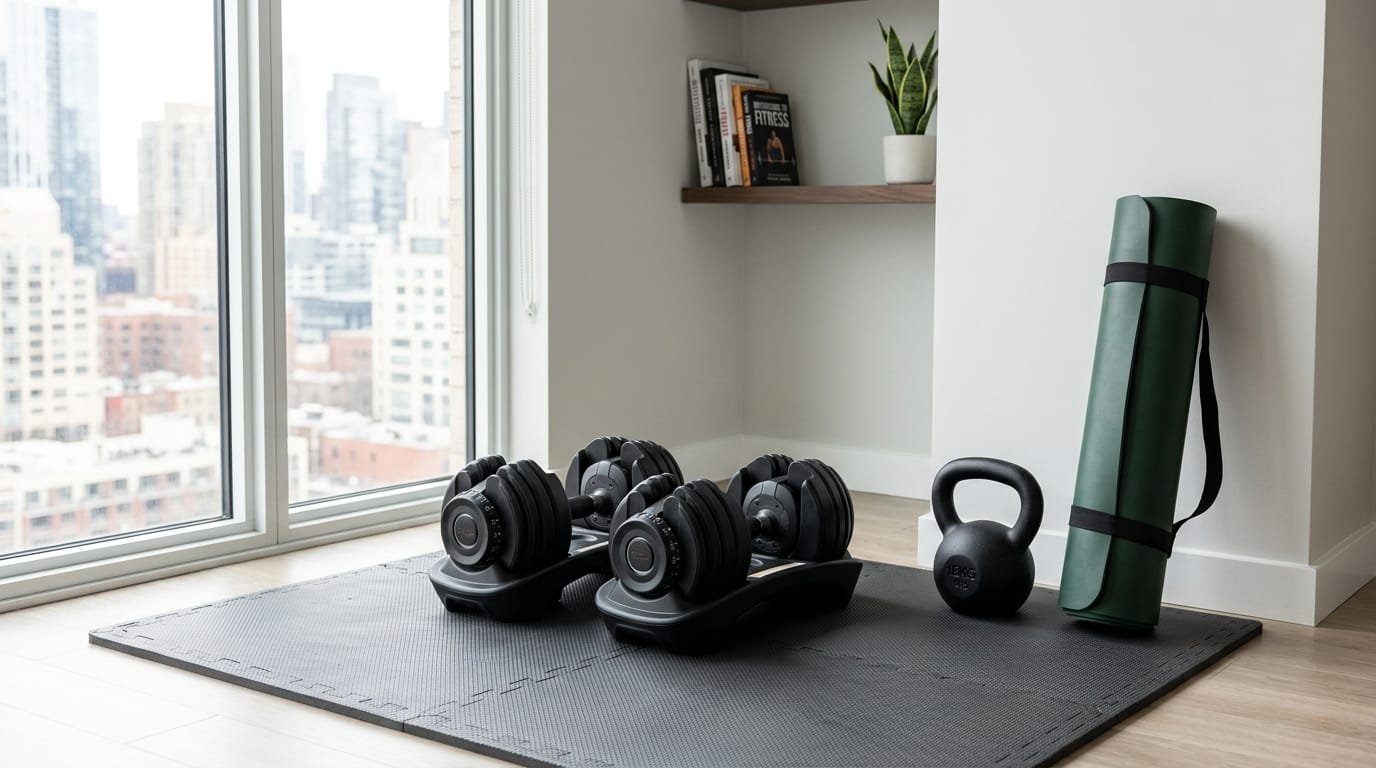
Turn a dial or move a selector pin to choose the weight. The unused plates stay on the base. These are usually the fastest to adjust and the most space-efficient. Higher-quality versions feel close to traditional dumbbells.
2. Spin-Lock or Plate-Loaded Adjustable Dumbbells
Traditional handles with spin-lock collars and removable plates. Very durable and often cheaper per pound, but slower to change weights and require more storage for the plates.
3. Modern Hybrid or Loadable Designs
Some newer systems combine quick adjustment with the ability to expand the maximum weight. These can offer a good middle ground when long-term progression is a concern.
For pure space and convenience, selectorized systems usually win. For maximum durability and lower cost per pound, spin-lock designs remain competitive.
How to Match Adjustable Dumbbells to Your Training Needs
Beginner or Early Intermediate
A 5–50 lb pair is sufficient for most upper-body and accessory work. Focus on smooth adjustment and comfortable handles.
Intermediate Lifters
Look for 5–70 lb or 10–90 lb ranges, or systems that allow expansion. Balance and plate security become more noticeable at heavier loads.
Strength-Focused or Advanced Users
Consider whether adjustable dumbbells will remain the primary loading tool or will eventually be supplemented by a barbell. Some lifters keep adjustables for accessories and use a barbell for main lifts.
Space-Saving Benefits in Real Homes
A full set of fixed dumbbells from 5–50 lb in 5 lb increments can require a long rack or multiple shelves. A single pair of adjustable dumbbells plus its base typically occupies a footprint similar to a small suitcase or a pair of large fixed weights. In apartments, spare rooms, and multi-use spaces this difference is decisive. Practical home-gym guidance repeatedly highlights adjustable dumbbells as one of the highest-leverage space-saving investments (home gym equipment prioritisation and budget home gym principles).
Cost Analysis: When Adjustables Save Money
Buying fixed dumbbells piece by piece often costs more over time once you reach intermediate loads. A quality adjustable pair has a higher upfront price but replaces dozens of individual weights. Factor in:
- Initial purchase price
- Expected lifespan
- Whether you would otherwise keep buying heavier fixed pairs
- Storage solutions you will not need to buy
In most cases the adjustable set becomes the lower-cost option within 1–3 years of progressive training.
Step-by-Step Selection Process
- Measure the exact storage space available.
- Estimate the heaviest dumbbell weight you will need in the next 12–24 months.
- Decide how quickly you need to change weights between exercises (circuit-style vs straight sets).
- Set a realistic budget that prioritises durability.
- Shortlist 3–4 models that meet your weight range and footprint requirements.
- Read recent owner reviews focusing on longevity, wobble, and adjustment reliability.
- Check warranty terms and return policy.
- Confirm handle diameter and grip feel if possible.
- Purchase and test with moderate loads before heavy training.
- Establish a storage and cleaning routine to maximise lifespan.
Training Considerations with Adjustable Dumbbells
Adjustable dumbbells excel at:
- Presses (flat, incline, floor, overhead)
- Rows and single-arm pulling variations
- Lunges, split squats, and goblet-style lower-body work
- Accessory movements for arms, shoulders, and core
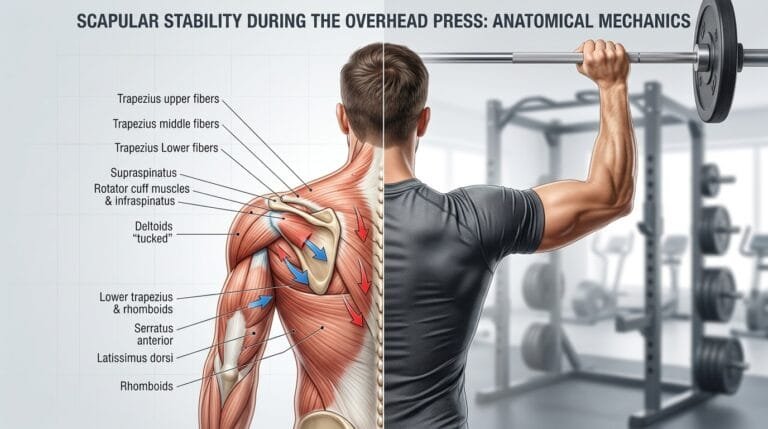
Shoulder-friendly pressing and raising technique remains important regardless of the implement. Detailed guidance on lateral-raise variations and common errors can be found in Bent Arms vs. Straight Arms in Lateral Raises, The Hidden Mistake in Lateral Raises, and 3 Lateral Raise Modifications. Grip demands are often higher with thicker or shaped adjustable handles; dedicated grip work can help (Do Hand Grippers Really Work?).
Strength training with progressive resistance continues to be one of the most effective ways to build and maintain muscle and function (strength training guidance).
Common Mistakes That Waste Money or Space
| Mistake | Result | Better Approach |
|---|---|---|
| Buying the cheapest no-name set | Early failure or poor feel | Invest in proven adjustment mechanisms |
| Choosing too light a maximum weight | Outgrowing the set quickly | Project 1–2 years of progression |
| Ignoring stored footprint | Equipment still clutters the room | Measure storage space before purchase |
| Expecting identical feel to fixed dumbbells | Disappointment with balance or shape | Accept minor differences for the space savings |
| Neglecting maintenance | Shortened lifespan | Wipe handles and check locks regularly |
| Buying adjustables when a barbell would serve better | Unnecessary expense | Evaluate whether barbell + adjustables is the better long-term plan |
Maintenance for Longevity
- Wipe handles and plates after sessions to remove sweat.
- Check locking mechanisms monthly.
- Store on the intended base or in a dry location.
- Avoid dropping selectorized dumbbells; many are not designed for it.
- Keep the adjustment tracks or pins clean.
Proper care significantly extends the useful life of the investment.
Frequently Asked Questions
Are adjustable dumbbells durable enough for long-term use?
Quality models from reputable designs last many years when not dropped and when locks are kept clean. Cheaper versions often fail sooner.
How quickly can I change weights?
Dial or selector systems usually take 5–15 seconds. Spin-lock designs take longer, especially with multiple plates.
Can I do every exercise with adjustable dumbbells?
Almost all dumbbell exercises are possible. Certain moves (for example, some cleans or high pulls) may feel slightly different due to plate shape or handle design.
Do adjustable dumbbells save money compared with fixed sets?
Yes for most people who would otherwise buy a wide range of fixed weights. The break-even point is typically within a couple of years of progressive training.
What weight range is best for most home users?
A 5–50 lb or 10–52.5 lb pair covers the majority of beginners and intermediates. Stronger lifters may need higher maximums or a complementary barbell.
Are they safe?
When the locking mechanism is fully engaged and the weight is within the rated capacity, they are safe. Always confirm the lock before lifting.
Should I buy one pair or two?
One pair is sufficient for the vast majority of home training. Two pairs only become useful for specialised advanced programming or when training partners share equipment.
How do they compare with resistance bands for space and cost?
Bands are cheaper and more portable but provide a different resistance profile. Many lifters eventually use both.
Final Recommendation
The best adjustable dumbbells for home use are those that deliver a wide, usable weight range in a compact footprint with reliable adjustment and solid construction. Selectorized systems usually provide the greatest space savings and convenience, while quality spin-lock designs offer durability and lower cost per pound. Measure your storage space, project your strength needs for the next 1–2 years, and prioritise proven locking mechanisms and warranties over the lowest price.
A well-chosen pair removes the need for an entire dumbbell rack, keeps the training area usable, and supports progressive strength training for years. Pair them with sound technique on pressing and raising movements, maintain the equipment, and apply consistent progressive overload.
Decide your required weight range and maximum footprint this week, shortlist models that meet both criteria, and invest in the set that solves the space and cost problems without compromising training quality. The right adjustable dumbbells become one of the highest-value purchases in a home gym.