Summer Body Prep at Home: Efficient Full-Body Circuits
Quick Answer
Summer body preparation at home is most effectively achieved through progressive full-body circuits that combine strength, metabolic conditioning, and muscle-building stimulus in 30–45 minute sessions. Use compound movements (squats, hinges, pushes, pulls, and carries) performed in circuit fashion with moderate loads, controlled rest, and weekly progression. Train 3–5 days per week, prioritise protein intake and recovery, and track performance so intensity rises over 6–12 weeks. This approach builds muscle, improves body composition, and boosts conditioning without requiring a commercial gym or complicated split routines.
Why Full-Body Circuits Work for Summer Goals
Summer body goals typically centre on visible muscle, lower body fat, and improved energy. Full-body circuits deliver three key benefits simultaneously:
- Mechanical tension for muscle growth through compound lifts
- Metabolic stress and calorie expenditure from limited rest
- Time efficiency that supports consistency during warmer, busier months
Research and practical programming consistently show that full-body training performed with progressive overload produces robust strength and hypertrophy outcomes while remaining sustainable. Circuits simply organise that work into a denser, more conditioning-oriented format ideal for body-composition phases (strength training principles).
Core Equipment for Home Summer Circuits
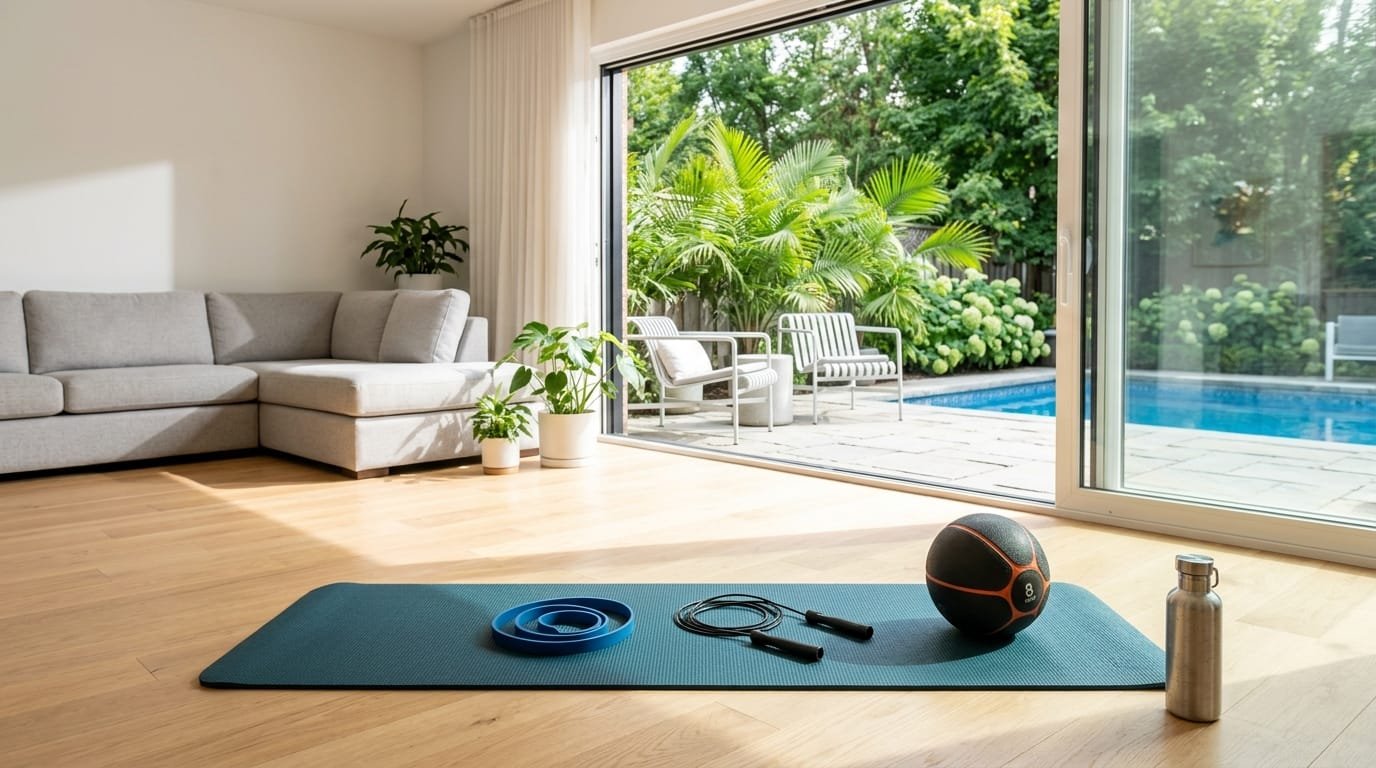
You do not need a full gym. The most effective setups use:
- Adjustable dumbbells or a pair of fixed dumbbells
- One or two kettlebells
- Resistance bands
- A sturdy chair, bench, or elevated surface
- Optional jump rope or mat
These tools cover every major pattern and allow clear progression. Versatile, multi-use equipment is repeatedly recommended for productive home training (home gym equipment prioritisation and practical home gym principles).
Fundamental Movement Patterns for Circuits
Every circuit should include:
- Squat or knee-dominant movement
- Hinge or hip-dominant movement
- Upper-body push
- Upper-body pull
- Carry, core, or conditioning finisher
This structure ensures balanced development and high work density.
Sample Efficient Full-Body Circuit Templates
Circuit A – Strength-Biased (35–45 minutes)
Perform 3–4 rounds:
- Goblet squat or dumbbell front squat – 8–12 reps
- Romanian deadlift or single-leg RDL – 8–10 reps per side
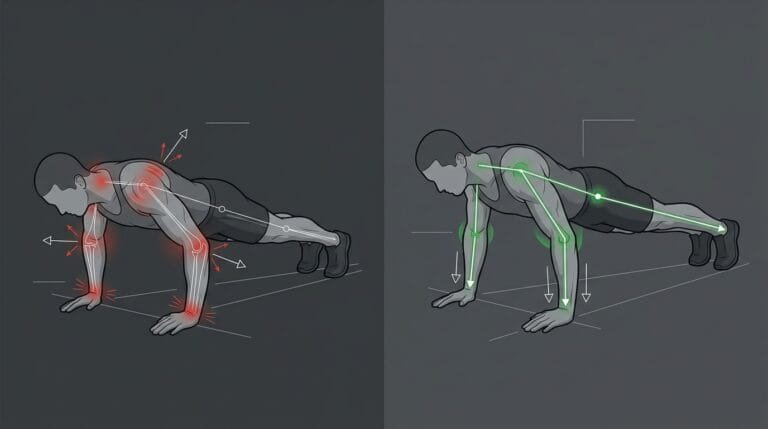
- Push-up or dumbbell floor press – 8–15 reps
- Single-arm row or band row – 8–12 reps per side
- Farmer carry – 30–45 seconds
Rest 60–90 seconds between rounds.
Circuit B – Conditioning-Biased (30–40 minutes)
Perform 4–6 rounds:
- Kettlebell swing – 15–20 reps
- Reverse lunge or step-up – 10 reps per leg
- Band or dumbbell push press – 8–12 reps
- Band pull-apart or face pull – 15–20 reps
- Mountain climbers or jump rope – 30–40 seconds
Rest 45–75 seconds between rounds.
Circuit C – Minimal Equipment / Travel (25–35 minutes)
Perform 3–5 rounds:
- Chair or backpack squat – 12–15 reps
- Backpack or single-leg RDL – 10 reps per side
- Elevated or regular push-up – 10–15 reps
- Towel or band row – 12 reps per side
- Suitcase carry or plank – 30–40 seconds
Rest 45–60 seconds between rounds.
Circuit D – Glute & Posterior Focus
- Hip thrust or glute bridge (weighted if possible) – 10–15 reps
- Kettlebell swing or Romanian deadlift – 10–15 reps
- Step-up or reverse lunge – 8–12 per leg
- Band pull-apart – 15–20 reps
- Side plank or dead bug – 20–30 seconds per side
Progressive Overload for Circuit Training
Progression keeps results coming across a 6–12 week summer prep phase:
- Add repetitions within the target range
- Reduce rest intervals by 10–15 seconds
- Increase load (heavier dumbbell, stronger band, larger kettlebell)
- Add a round
- Slow the eccentric phase
- Advance to more challenging variations (single-leg, single-arm, deficit, pause)
Track every session so progression is deliberate rather than random.
Weekly Scheduling Options
| Goal Emphasis | Frequency | Example Split |
|---|---|---|
| Balanced strength + conditioning | 4 days | Mon A / Tue B / Thu A / Fri B |
| Maximum fat-loss support | 5 days | Circuits + one longer walk or conditioning day |
| Strength priority | 3–4 days | Strength-biased circuits with longer rest |
| Busy schedule | 3 days | Full-body circuits on non-consecutive days |
Consistency of frequency outperforms sporadic high-volume sessions.
Shoulder and Grip Details Inside Circuits
Shoulder health remains important when circuits include pressing and raising patterns. Use controlled technique and appropriate ranges—detailed guidance on lateral-raise variations and common errors is available in Bent Arms vs. Straight Arms in Lateral Raises, The Hidden Mistake in Lateral Raises, and 3 Lateral Raise Modifications.
Grip often becomes a limiting factor during rows and carries; dedicated attention improves performance (Do Hand Grippers Really Work?).
Step-by-Step 8-Week Summer Prep Framework
Weeks 1–2 – Foundation
Learn the circuits with conservative loads. Record baseline rounds, reps, and rest times. Focus on technique.
Weeks 3–4 – Volume & Density
Add repetitions or reduce rest. Increase band tension or dumbbell load where form remains solid.
Weeks 5–6 – Intensity
Push closer to the top of the rep ranges. Add a round on conditioning-biased days. Introduce harder variations.
Weeks 7–8 – Peak & Assess
Perform peak efforts on key circuits. Retest a benchmark circuit and compare total work completed. Note changes in energy, clothing fit, and strength.
Warm-Up and Cool-Down for Circuit Training
Warm-up (5–7 minutes)
- Light cardio or jumping jacks
- Band pull-aparts and shoulder circles
- Bodyweight squats and hip hinges
- One light round of the first two circuit exercises
Cool-down (5 minutes)
- Easy walking or marching
- Band-assisted chest, hip, and hamstring stretches
- Controlled breathing
Nutrition and Recovery Support for Visible Results
Circuits create the training stimulus; nutrition and recovery determine how visible the results become.
- Prioritise protein at each meal (roughly 1.6–2.2 g per kg of body weight daily).
- Maintain a modest calorie deficit if fat loss is the primary goal, or eat at maintenance if strength and muscle are prioritised.
- Stay hydrated, especially in warmer weather.
- Sleep 7–9 hours whenever possible—circuit training is demanding.
- Manage stress; chronic elevation impairs body-composition progress.
Common Mistakes in Summer Circuit Training
| Mistake | Result | Solution |
|---|---|---|
| Turning every session into a race | Form breakdown and joint stress | Control tempo and stop short of technical failure |
| Neglecting progressive overload | Plateau after 3–4 weeks | Track sessions and advance one variable at a time |
| Too much variety | No measurable progress | Stick to 2–3 core circuits for at least 4 weeks |
| Ignoring recovery | Accumulated fatigue and stalled fat loss | Schedule rest days and protect sleep |
| All-or-nothing weekly mindset | Missed sessions become missed weeks | Treat any completed circuit as a win |
Frequently Asked Questions
How many days per week are ideal for summer body circuits?
Three to five sessions produce excellent results for most people. Four days is a sweet spot for balanced progress.
Can I build muscle with circuits or are they only for fat loss?
Circuits build muscle when loads are challenging and progressive overload is applied. They simultaneously support fat loss through higher energy expenditure.
How long should each circuit session last?
Thirty to forty-five minutes is sufficient for most goals. Shorter 25-minute sessions still work when intensity is high.
Do I need to add extra cardio?
Circuits already provide conditioning. Additional walking is beneficial for recovery and calorie burn, especially in a fat-loss phase.
What if I only have resistance bands?
Bands alone can run effective circuits. Focus on controlled tempo, higher repetitions, and shorter rest to maintain intensity.
How soon will I see visible changes?
Strength and energy improvements often appear within 2–3 weeks. Noticeable body-composition changes typically require 6–8 weeks of consistent training and nutrition.
Should women and men run the same circuits?
Yes. The templates are movement-pattern based. Load, volume, and progression are individualised regardless of gender.
Is it better to do circuits fasted or fed?
Most people perform better with some food in the system. Choose the approach that supports energy and adherence.
Final Recommendation
Summer body preparation at home is best served by efficient, progressive full-body circuits that combine strength and conditioning in time-effective sessions. Use compound movements organised into 30–45 minute circuits, train 3–5 days per week, apply clear progressive overload, and support the work with adequate protein and recovery.
Select two or three of the templates above, track every session, protect technique (especially at the shoulders and grip), and stay consistent for 6–12 weeks. The combination of mechanical tension, metabolic demand, and high adherence produces visible muscle, improved conditioning, and better body composition without requiring a commercial gym.
Choose your equipment, schedule the first circuit this week, and begin. Focused, repeatable full-body work performed consistently is one of the most reliable paths to looking and feeling stronger by summer. Start now and let the cumulative effect of these efficient sessions deliver the results.